
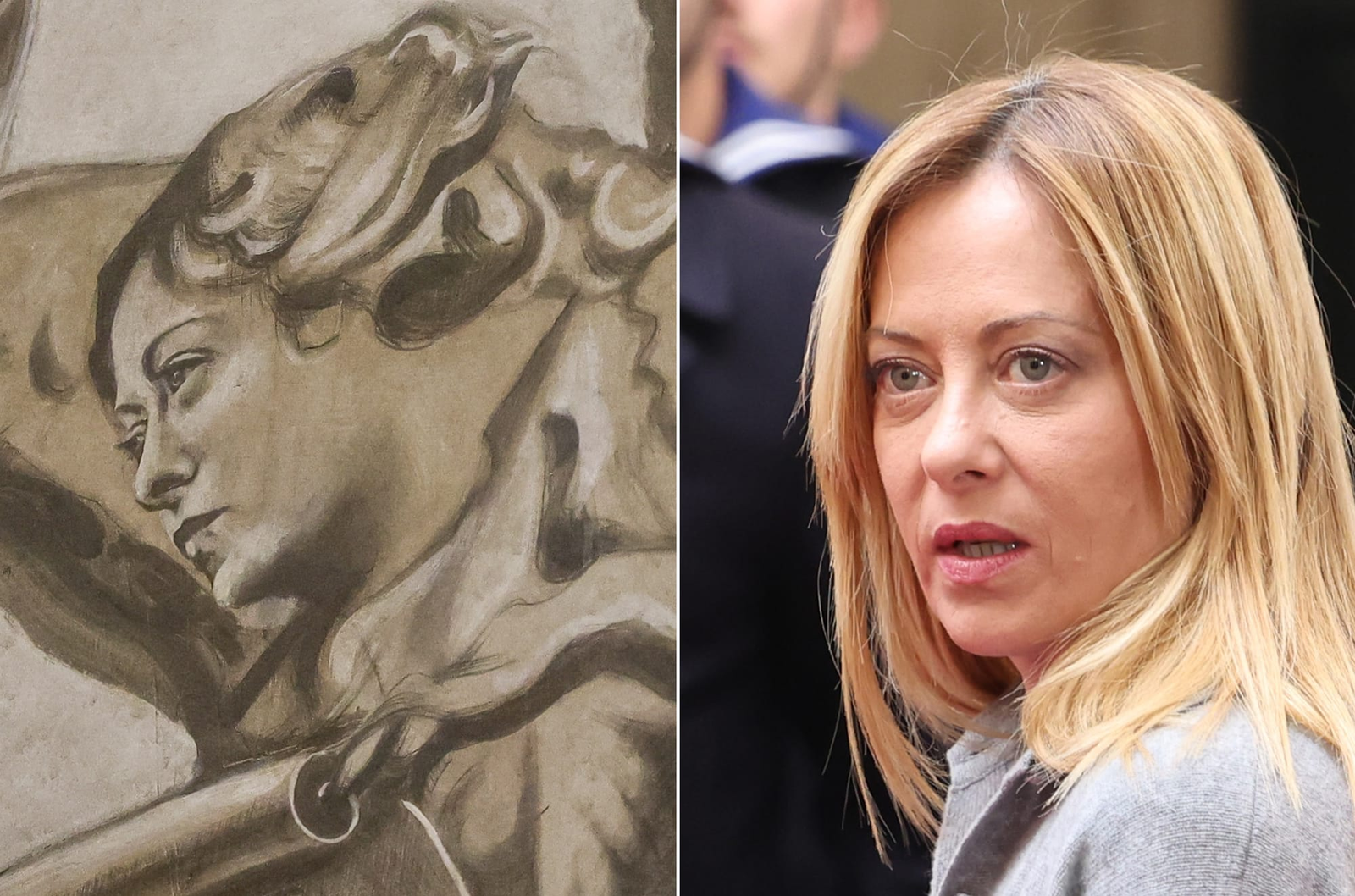
The sudden disappearance of an angel’s face from the Basilica of San Lorenzo in Lucina in Rome brought to a close a brief but intense controversy that blended religion, politics, art restoration, and public spectacle. For several days, a single cherub painted on the wall of one of Rome’s oldest basilicas became the focus of national debate after observers noticed that its facial features bore a striking resemblance to Italy’s prime minister, Giorgia Meloni.
What might once have been dismissed as an artistic curiosity quickly escalated into an issue serious enough to prompt investigations by both church and state authorities, raising deeper questions about the boundaries between sacred art and contemporary political imagery. The episode unfolded against a backdrop of heightened sensitivity in Italy over the use of religious spaces, the role of public officials, and the stewardship of cultural heritage.
Although the painting itself was relatively modern, dating back only to the year 2000, the basilica in which it appeared carries centuries of religious and historical significance. The reaction was swift and, in the end, decisive. By the time the church reopened its doors one Wednesday morning, the angel’s face had been erased, leaving behind a faceless cherub and a lingering debate over how such a likeness came to exist in the first place.
A Cherub, a Basilica, and an Unexpected Resemblance
San Lorenzo in Lucina is among Rome’s oldest churches, with origins stretching back to the early Christian era. Over the centuries, it has undergone numerous renovations and restorations, accumulating layers of art and architecture that reflect different historical moments. In 2000, one such renovation involved a front chapel that was redecorated to include a bust of Umberto II, the last king of Italy. The decorative scheme also featured a cherub holding a map of Italy, an image that appeared to symbolically connect national identity with the historical figure being honored.
At the time of its creation, the cherub attracted little attention. It was one element among many in a church already filled with visual detail. For more than two decades, it remained largely unnoticed by the wider public. That changed only after recent restoration work brought the painting back into view following damage caused by water leaks that began in 2023. When the restored image emerged, observers were quick to note that the cherub’s face looked remarkably similar to that of Giorgia Meloni.
The resemblance was not subtle enough to be dismissed as coincidence by many who saw it. Once the Italian newspaper La Repubblica featured the image prominently, curiosity turned into controversy. Crowds gathered at the basilica to see the angel for themselves, snapping photographs and sharing them online. The sudden influx of visitors disrupted regular religious services, transforming a place of worship into an impromptu tourist attraction centered on a political controversy.
The face of a restored fresco of an angel which bore a striking resemblance to Italian premier Giorgia Meloni has been erased after days of controversy in Rome. pic.twitter.com/P5iOaJMsa8
— Wanted in Rome (@wantedinrome) February 4, 2026
Restorer Bruno Valentinetti, who had worked on the painting, later acknowledged that he had indeed modeled the cherub’s face on Meloni. He did not, however, publicly explain his motivation for doing so. Whether it was intended as homage, provocation, or simply a personal artistic choice remains unclear. What is certain is that the revelation intensified the backlash, shifting the focus from accidental resemblance to deliberate representation.
Church, State, and the Limits of Sacred Art
The reaction from religious authorities was swift. Cardinal Baldassare Reina, the pope’s vicar for Rome, made it clear that depicting a contemporary political figure in church art was unacceptable. From the perspective of the Catholic Church, sacred spaces are meant to transcend current political realities, offering a spiritual environment free from partisan associations. Even if the artwork was modern, its placement within a historic basilica imposed expectations about its appropriateness.
The Italian state also became involved. The Culture Ministry, which oversees Italy’s vast cultural heritage, launched its own investigation alongside the diocese of Rome. Although the painting dated from 2000 and did not constitute ancient patrimony, the basilica itself is owned by the government and operated by the church, placing it under multiple layers of authority. This dual oversight meant that decisions about the artwork required coordination between secular and ecclesiastical institutions.
Read : Giorgia Meloni under Investigation for Releasing Libyan Police Officer Wanted by ICC
Investigators sought to establish what the original cherub had looked like when it was first painted. The aim was to determine whether the Meloni-like features were present from the beginning or introduced during the recent restoration. According to accounts that emerged, the original version did not clearly resemble the prime minister, suggesting that the likeness was a later development rather than an inherent aspect of the artwork.
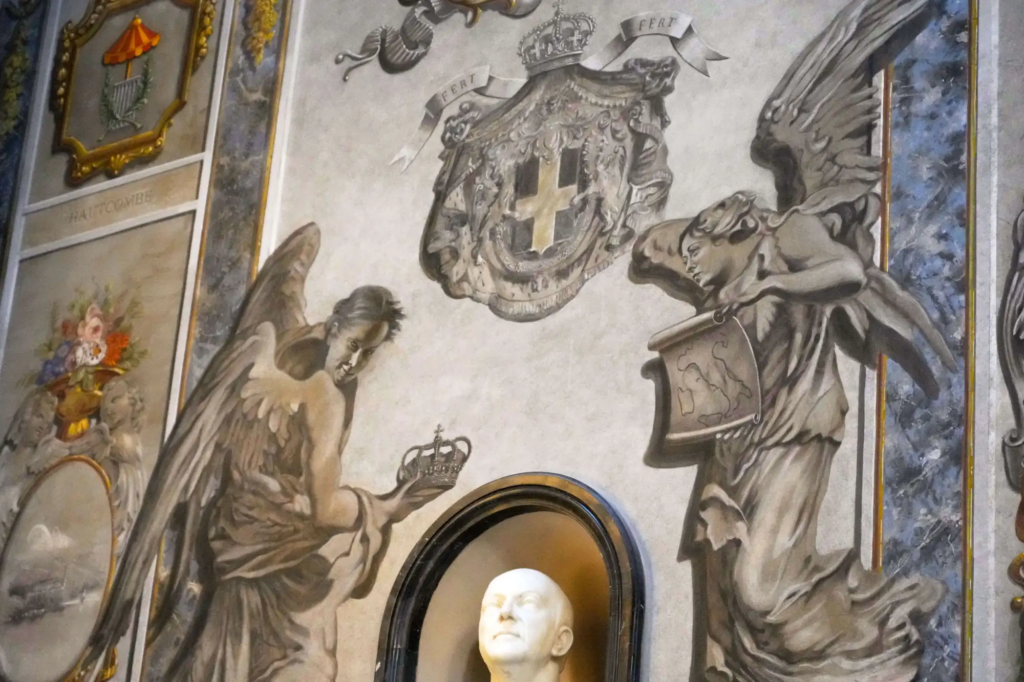
As public attention grew, so did pressure to act quickly. Church officials faced the practical problem of maintaining order and preserving the sanctity of the basilica, which had become a magnet for curious visitors. The decision to erase the angel’s face appeared to be a temporary but effective solution. When the church reopened, the cherub’s body remained intact, but its face had been covered with a rough application of paint or plaster. The result was visually jarring, but it achieved its immediate goal of removing the controversial likeness.
The Culture Ministry later clarified the rules for any future intervention. Should the basilica wish to repaint the cherub’s face, it must first obtain authorization from the government, the diocese of Rome, and the ministry’s special superintendency for Rome. Any request must also be accompanied by a sketch of the proposed image, ensuring that no similar controversy arises again without prior scrutiny. This statement underscored the seriousness with which authorities viewed the incident and their determination to prevent a recurrence.
Public Reaction, Political Irony, and Lasting Implications
The public response to the episode revealed a mixture of amusement, criticism, and reflection. For some Italians, the idea of a prime minister’s likeness appearing in the form of a cherub was seen as absurd or humorous. For others, it raised concerns about the politicization of religious spaces and the blurring of boundaries between personal expression and public responsibility. The fact that the basilica briefly became a destination for crowds eager to photograph the angel highlighted the power of visual symbols to capture public imagination.
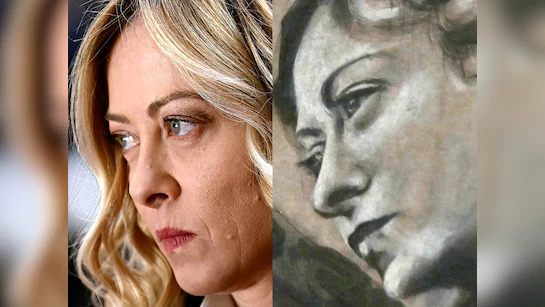
Giorgia Meloni herself responded with levity. On social media, she dismissed the idea that she resembled an angel, accompanying her comment with a laughing emoji. Her reaction helped defuse some of the tension, but it did not alter the underlying issues that the controversy had exposed. Even a lighthearted response could not fully address questions about why a restorer chose to depict a sitting prime minister in a sacred context or how such a choice went unnoticed until it became public.
The episode also drew attention to the challenges of art restoration in historically and symbolically charged spaces. Restorers are often tasked with balancing fidelity to original works, artistic judgment, and respect for the context in which the art exists. In this case, the decision to introduce a recognizable contemporary face into a church setting proved to be a miscalculation with far-reaching consequences. It demonstrated how restoration is not a purely technical process but one laden with cultural and political implications.
Beyond the immediate scandal, the affair left San Lorenzo in Lucina with an unexpected moment of fame. The basilica’s newfound visibility, though disruptive, reminded observers of how quickly attention can shift in the digital age. A single image, amplified by media coverage and social sharing, was enough to transform a quiet church into the center of a national conversation. While the crowds have since thinned, the incident remains a case study in how art, authority, and public perception intersect in modern Italy.
In the end, the faceless cherub stands as a symbol of the resolution chosen by church and state: remove the source of controversy first, then decide carefully how to proceed. Whether the angel will one day regain a face, and what that face will look like, remains an open question. What is clear is that the brief existence of the so-called Angel Meloni has already secured its place in Italy’s ongoing dialogue about culture, politics, and the meaning of sacred art in a contemporary world.
Can I simply say what a aid to find somebody who actually knows what theyre speaking about on the internet. You positively know learn how to bring a difficulty to mild and make it important. Extra individuals have to learn this and perceive this side of the story. I cant consider youre no more standard since you positively have the gift.