
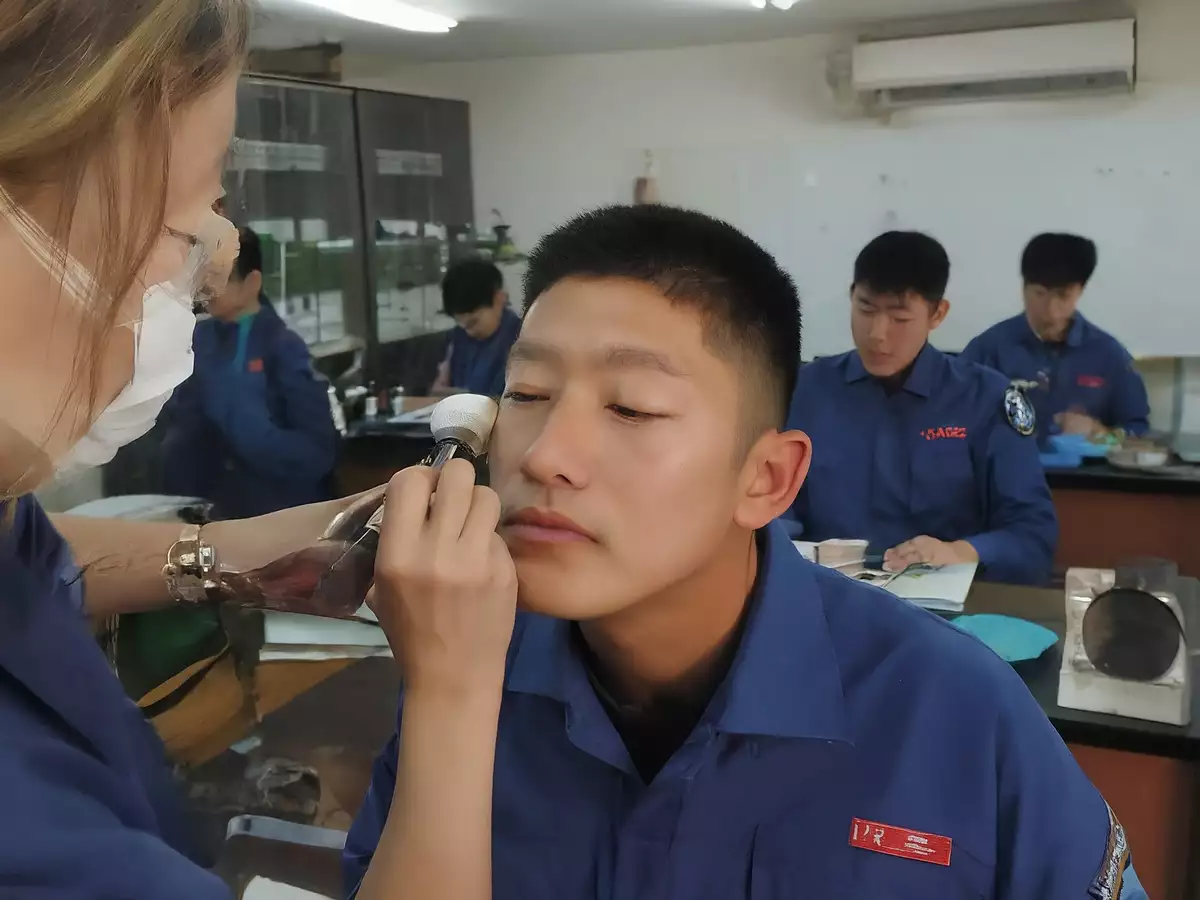
In a groundbreaking initiative, Fukushimaken Keisatsugakko, a police academy in Fukushima Prefecture, Japan, has introduced makeup training for its male cadets. The move, which has garnered widespread attention, aims to enhance officers’ grooming and personal presentation skills.
With the assistance of professional beauty consultants, cadets have been learning basic makeup application techniques and grooming methods, which have traditionally been seen as outside the scope of law enforcement training.
The initiative reflects a growing understanding that maintaining a well-groomed appearance is essential for police officers, who interact with the public regularly.
The Significance of Grooming in Law Enforcement
Law enforcement officers serve as the face of public safety and order. Their appearance not only impacts how they are perceived by the community but also influences their confidence and professionalism. Recognizing this, Fukushimaken Keisatsugakko has partnered with Shiseido, a renowned Japanese cosmetics brand, to offer professional training on essential grooming practices.
The training program covers fundamental beauty techniques, such as skin moisturizing, eyebrow trimming, and hairstyling. Male cadets have also been introduced to using primers and eyebrow pencils to achieve a well-maintained appearance.
This is a significant departure from the traditional police training curriculum, which has primarily focused on legal education and physical preparedness. By integrating grooming lessons, the academy is emphasizing the importance of personal presentation as an aspect of professional duty.
Takeshi Sugiura, the vice-principal of the academy, highlighted the importance of grooming, stating that officers must present themselves well because they frequently interact with the public. “We want to remind students that as both members of society and future police officers, maintaining a proper appearance is crucial,” he said during an interview with Nippon TV.
Read : 81-Year-Old Japanese Woman Unwillingly Commits Crime to Stay in Prison
For many cadets, this training marks their first exposure to makeup and grooming techniques. One male cadet expressed his thoughts on the initiative, saying, “I have never worn makeup before. I believe that being a police officer means often being in the public eye, so I want to ensure that I present myself well before going to work.”
Read : You Don’t Have to Go to University to Succeed in Life: UK PM Rishi Sunak
His statement reflects a broader shift in attitudes towards personal grooming among law enforcement officers, moving away from the notion that such practices are exclusively for women.
Reactions from the Public and Social Media
The introduction of makeup training for male officers has sparked a lively debate on social media. Some users have welcomed the initiative, recognizing it as a progressive step towards a more polished and professional police force.
Others have found humor in the concept, posting witty remarks about how officers might use their newfound makeup skills in unconventional ways.
One social media user joked, “Now they can throw loose powder into the suspects’ eyes to catch them!” while another commented, “This may seem absurd, but isn’t it a good idea for both men and women to take the makeup course?”
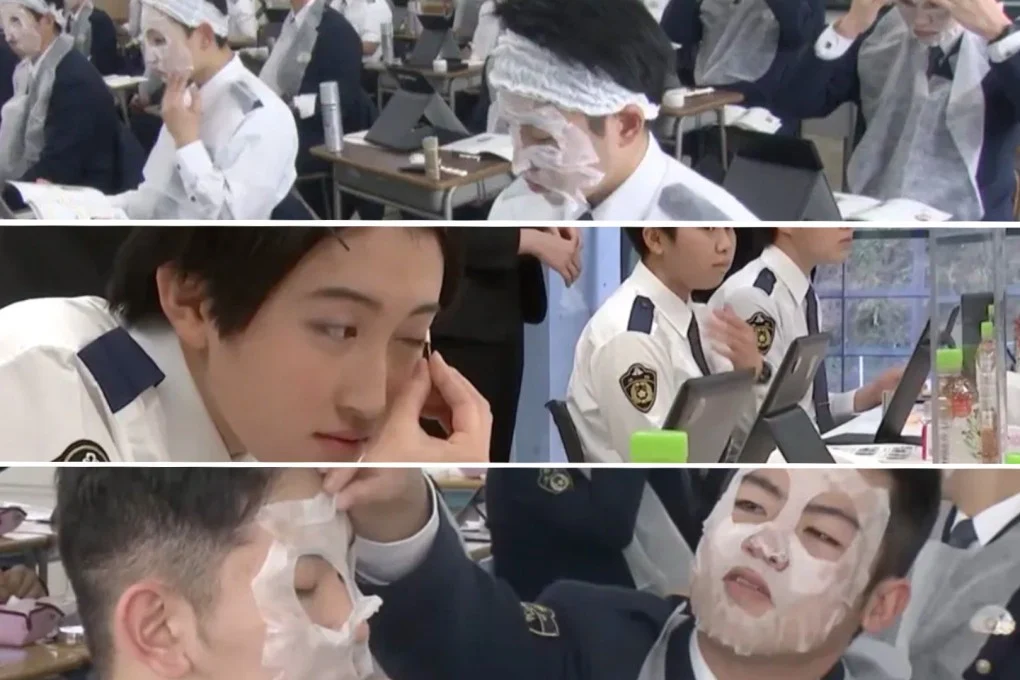
These reactions highlight the mixed perspectives on the initiative, with some people embracing the change and others viewing it with skepticism. Despite the varied responses, many experts argue that grooming and presentation are crucial elements of professionalism, regardless of gender.
The move aligns with broader societal trends in which personal grooming is increasingly recognized as a gender-neutral practice. Makeup is no longer seen as merely cosmetic; it serves practical functions, such as enhancing skin health and maintaining a neat and uniform appearance.
The training at Fukushimaken Keisatsugakko is not an isolated case. In Yamaguchi, another police academy has also introduced similar grooming programs, including facial cleansing techniques for male cadets.
The growing adoption of such initiatives suggests a shift towards modernizing police training to include elements that contribute to both personal and professional development.
The Future of Grooming in Law Enforcement
The introduction of grooming and makeup training for male officers at Fukushimaken Keisatsugakko raises important questions about the evolving expectations of law enforcement professionals.
Traditionally, police training has centered on discipline, physical fitness, and legal knowledge. However, as societal expectations change, so too must the training that prepares officers for their roles.
One of the primary benefits of this initiative is its potential to improve police-community interactions. A well-groomed officer may come across as more approachable and trustworthy, which can enhance public perception of law enforcement.
This is particularly relevant in Japan, where cultural norms place a strong emphasis on appearance and presentation. A neatly groomed officer is more likely to gain the public’s respect and cooperation.
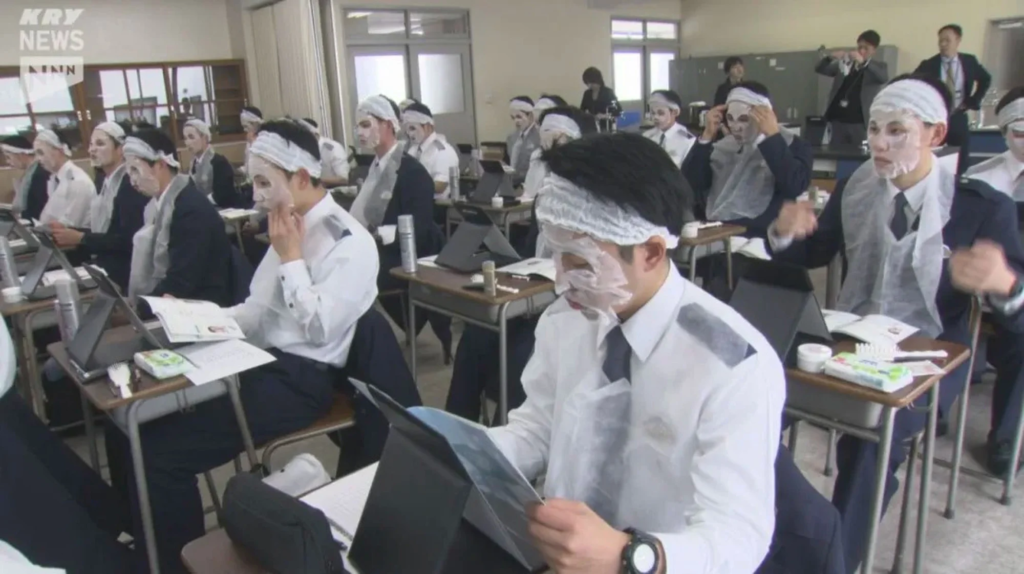
Additionally, this training could contribute to boosting officers’ self-confidence. Studies have shown that personal grooming can impact self-esteem, which in turn affects job performance. Officers who feel confident in their appearance may carry themselves with greater authority and professionalism, ultimately benefiting the communities they serve.
Despite these advantages, the initiative is not without its critics. Some argue that police training should focus solely on law enforcement skills rather than personal grooming. However, supporters counter that appearance is an integral part of professionalism and that the training does not replace traditional law enforcement education but rather complements it.
As grooming and personal presentation become increasingly recognized as important aspects of professional life, it is likely that more police academies will introduce similar programs. While Fukushimaken Keisatsugakko is one of the first to implement this initiative, it may serve as a model for other academies both in Japan and internationally.
In conclusion, the makeup training program for male officers at Fukushimaken Keisatsugakko represents a shift towards a more holistic approach to police training.
By incorporating grooming and personal presentation into their curriculum, the academy is preparing its cadets not only to enforce the law but also to present themselves as polished and professional representatives of the community.
While the initiative has sparked debate, it ultimately underscores the evolving role of law enforcement officers in modern society. The ability to maintain a clean and professional appearance is not just about aesthetics—it is about fostering trust, confidence, and respect in the communities they serve.