
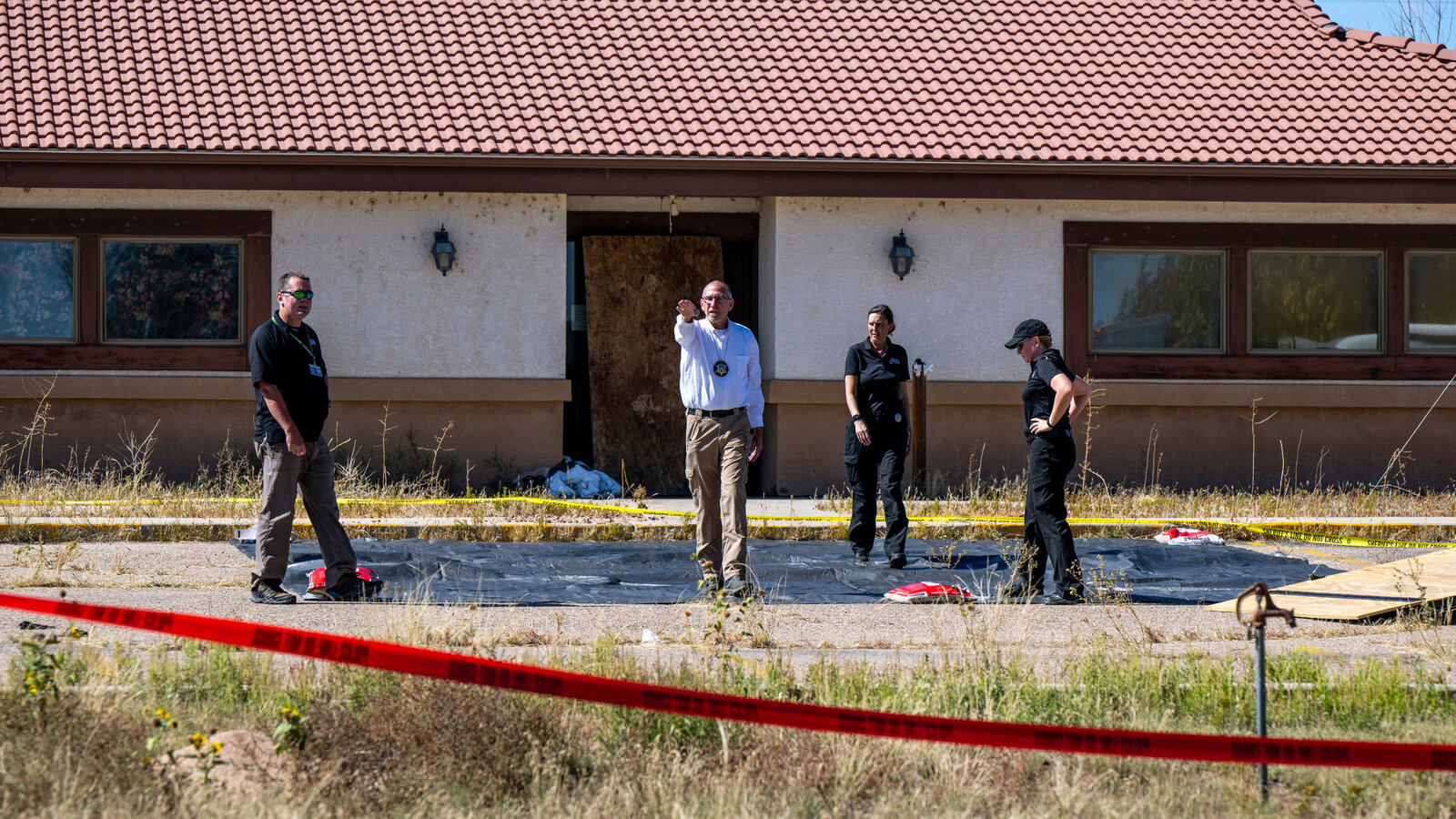
The sentencing of Colorado funeral home owner Jon Hallford marks the conclusion of one of the most disturbing funeral industry abuse cases in recent U.S. history. Over a period of nearly four years, Hallford and his business, Return to Nature Funeral Home, failed to cremate or properly care for the remains of 189 people entrusted to them by grieving families.
Instead, investigators found bodies stacked, neglected, and left to decompose in a building in Penrose, south of Colorado Springs. Families who believed they had received the cremated remains of their loved ones later learned they had been given fake ashes, in many cases consisting of dry concrete. On Friday, a state judge sentenced Hallford to 40 years in prison, citing the immense and lasting harm caused to hundreds of families.
The case has drawn national attention not only because of its scale, but also because it exposed serious gaps in Colorado’s funeral home oversight. As family members described the emotional devastation they endured, the court emphasized that the crime was not a matter of administrative negligence, but a prolonged pattern of deception driven by financial gain. The sentence, while less than the maximum 50 years sought by prosecutors and victims, reflects the court’s attempt to account for the unprecedented nature of the offense and the number of victims involved.
A Crime Uncovered After Years of Deception
The crimes committed by Jon Hallford came to light in 2023, when authorities responded to complaints about a strong, foul odor emanating from a building owned by Return to Nature Funeral Home in Penrose. Inside, investigators discovered a scene that law enforcement officials later described as overwhelming. Bodies were found throughout the structure, some stacked on top of one another, with decomposition fluids covering the floors and insects swarming the remains.
The bodies, which included adults, infants, and fetuses, had been stored at room temperature for years. Investigators determined that the remains had been accumulating since at least 2019. Families had paid more than $1,200 per person for cremation services, believing that their loved ones were being handled with dignity. Instead, prosecutors said, the bodies were left untouched while the Hallfords continued to operate their business and collect payments.
To maintain the deception, families were given containers that appeared to contain ashes. Subsequent testing revealed that many of these materials were not human remains at all, but substances resembling dry concrete. The identification process for the recovered bodies took months and required extensive forensic work. Authorities relied on fingerprints, DNA testing, and other methods to match remains with names.
For families, this prolonged process reopened grief they believed had already been resolved. Many had scattered ashes, kept urns in their homes, or conducted memorials under the assumption that their loved ones had been properly cremated. Learning the truth, relatives told the court, shattered their sense of closure and replaced it with distressing images of decay and neglect. Among the victims was a former U.S. Army sergeant first class whose family believed he had been buried at a veterans’ cemetery.
Read : Fire Breaks Out in 1000 year-old World-Famous Gothic Cathedral of Rouen in France: Watch
During the investigation, authorities exhumed a wooden casket at the cemetery and discovered the remains of a person of a different gender inside. The veteran’s body was later recovered from the Penrose building and subsequently reburied with full military honors at Pikes Peak National Cemetery. Prosecutors cited this case as an example of how far-reaching the consequences of the Hallfords’ actions had been.
Courtroom Testimony and the 40-Year Sentence
At the sentencing hearing, the courtroom was filled with relatives of the deceased and members of the media. Family members addressed Judge Eric Bentley directly, describing the emotional and psychological toll of the revelations. Several said they experienced recurring nightmares involving decomposition, insects, and the idea that their loved ones had been left to rot. Others spoke of guilt, anger, and the sense that their grieving process had been undone.
Victims referred to Hallford as a “monster” and urged the court to impose the maximum possible sentence of 50 years in state prison. Judge Bentley, while delivering a sentence of 40 years, acknowledged the severity of the harm. He described the impact of Hallford’s actions as “unspeakable and incomprehensible” and said the case tested the belief that people are fundamentally good. Bentley emphasized that the prolonged nature of the abuse and the sheer number of victims set the case apart from other crimes involving funeral service violations.

Hallford addressed the court before sentencing, offering an apology and stating that he would regret his actions for the rest of his life. He admitted that he had multiple opportunities to stop what he was doing and chose not to. His attorney argued unsuccessfully for a 30-year sentence, pointing out that the crimes did not involve direct physical violence and that Hallford had no prior criminal record. The judge ultimately rejected that argument, focusing instead on the cumulative harm inflicted on hundreds of families over several years.
Hallford had already been sentenced in federal court to 20 years in prison for fraud-related charges stemming from the same period. Federal prosecutors said the Hallfords cheated the government out of nearly $900,000 in pandemic-era small business aid. Under the plea agreement, the 40-year state sentence for corpse abuse will be served concurrently with the federal sentence, meaning Hallford will serve both at the same time rather than consecutively.
His former wife and business partner, Carie Hallford, pleaded guilty alongside him in December to nearly 200 counts of corpse abuse. She is scheduled to be sentenced in April and faces a potential prison term of 25 to 35 years. Judge Bentley previously rejected plea agreements for both defendants that would have limited their sentences to a maximum of 20 years, after families argued that such terms failed to reflect the gravity of the crimes.
Greed, Regulatory Failures, and Lasting Impact
Prosecutors characterized the Hallfords’ actions as crimes motivated primarily by greed. Court records showed that while bodies accumulated in the Penrose building, the couple spent heavily on luxury items. Purchases included a GMC Yukon SUV and an Infiniti luxury vehicle valued at more than $120,000 combined, along with $31,000 in cryptocurrency. They also bought high-end goods from retailers such as Gucci and Tiffany and paid for cosmetic procedures including laser body sculpting.
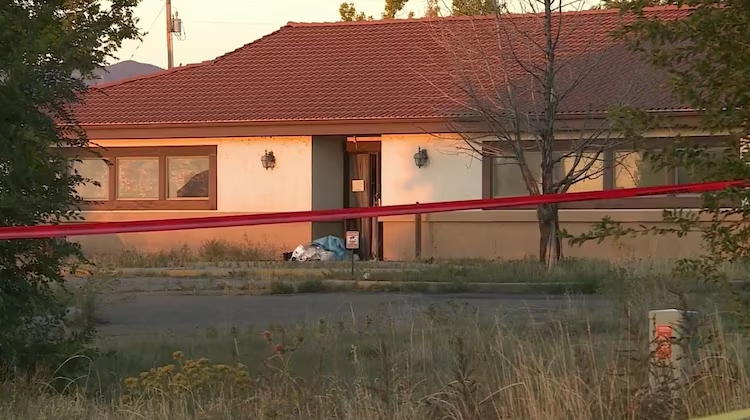
According to prosecutors, the money spent on luxury items would have been more than sufficient to cover the cost of cremating all 189 bodies multiple times over. Instead, the Hallfords continued to charge families full price for services that were never provided. Public records later revealed that the couple had missed tax payments, were evicted from one of their properties, and faced lawsuits over unpaid bills, indicating mounting financial pressure even as they maintained the appearance of a functioning funeral business.
The revelations prompted a broader examination of funeral home regulation in Colorado. At the time of the crimes, the state had relatively lax oversight of funeral service providers, with limited inspection requirements. In response to the case, lawmakers passed legislation in May 2024 granting regulators greater enforcement authority. The new law mandates routine inspections of funeral homes and extends oversight to facilities even after they have shut down, addressing a gap that allowed Return to Nature to operate without sufficient scrutiny for years.
For families, the legal outcomes have not erased the damage. Many told the court that discovering the truth about their loved ones’ remains fundamentally altered their memories of funerals and memorials. Some described being unable to reconcile the ceremonies they held with the reality that the bodies had never been cremated. Others said the knowledge affected their trust in institutions meant to provide care during moments of vulnerability.
The Hallford case stands as one of the largest known instances of corpse abuse in the United States and has become a reference point in discussions about funeral industry accountability. While the 40-year sentence reflects the seriousness with which the court viewed the crimes, it also underscores the scale of harm that can occur when regulatory systems fail and when those entrusted with the care of the dead exploit that trust for personal gain.