

A California man has recently made headlines after being arrested for allegedly terrorizing his neighborhood by blasting train horns and burglar alarms for months. The incident, which occurred in Van Nuys, Los Angeles, has left residents frustrated and concerned for their safety and peace of mind.
Gary Boyadzhayan, the man at the center of the controversy, claims that his actions were a desperate plea for help, citing threats from the mafia and the police. However, his neighbors and local authorities saw it as a prolonged nuisance that disrupted their daily lives.
Months of Disturbance in Van Nuys
Neighbors in Van Nuys, a residential area in Los Angeles, reported that Gary Boyadzhayan had been intermittently activating loud train horns and burglar alarms from his home since June. The recurring noise created an atmosphere of irritation and anxiety, leaving residents unsure when the next disturbance would occur. Bernarda Phipps, a neighbor, described the situation as “irritating” and expressed concern about the kind of help Boyadzhayan might need.
The repeated incidents prompted multiple noise complaints to the Los Angeles Police Department (LAPD). According to reports, the LAPD had responded to Boyadzhayan’s home more than five times prior to his arrest. Each time officers attempted to intervene, Boyadzhayan would turn off the sirens before they could take any action. This pattern frustrated both the authorities and the residents, as the persistent noise continued unabated.
Boyadzhayan has claimed that he had been seeking help from the LAPD for over a decade, alleging that he was the target of harassment and assault. He told KCAL News that he believed the mafia was attempting to kill him and that the LAPD was aiding in the plot. Despite these claims, Boyadzhayan provided no evidence to substantiate his allegations.
Claims of Desperation and Mental Health Concerns
In interviews with local news outlets, Boyadzhayan presented a different perspective on his actions, framing them as a desperate attempt to get attention and help. “I need help,” he told ABC7 Eyewitness News. “I don’t know how else to cry out for it.” He also expressed regret toward his neighbors, apologizing for causing them discomfort in their own homes. “I, honestly to God, am so sorry to discomfort you guys in your own homes, but I don’t know what else to do,” he told KTLA.
The incident has sparked conversations about mental health, as some neighbors suggested that Boyadzhayan might be experiencing psychological challenges. In response to these concerns, Boyadzhayan dismissed the idea that he had mental health problems, instead asserting that his life was in danger and that others simply did not understand his situation.
His statements highlight the complex intersection between mental health issues and community disturbances, raising questions about how authorities can effectively respond to similar cases.
A 50-year-old Los Angeles man, Gary Boyadzhayan, has been terrorizing neighbors with deafening train horns, loud enough to be heard 3.5 miles away, every single day since June.
— Camila🛩️ (@alielien87) August 16, 2025
Police say they found 10 massive horns, some strapped to trees, when they kicked in his door this week… pic.twitter.com/k9c6v8F3nc
The situation also underscores the challenge law enforcement faces when dealing with individuals who may have underlying psychological issues. While the LAPD attempted to address the noise complaints, they were limited in their ability to act without witnessing the disturbances firsthand. This gap in enforcement allowed Boyadzhayan to continue his disruptive behavior for months.
Arrest and Community Reactions
The situation came to a head on a Wednesday morning when Boyadzhayan was issued an administrative citation by the LAPD. Authorities advised him to cease using the horns due to the disruption they caused in the community. However, only two hours later, Boyadzhayan was reportedly turning the sirens on again, prompting his arrest later that evening.
Neighbors described the arrest as sudden and dramatic. Bob Donovan, another resident, recalled that Boyadzhayan had stepped outside to water his lawn, believing the situation had been resolved. “A couple of plainclothes vehicles just pulled up real quick and snatched him on the lawn. He was yelling and screaming and resisting arrest,” Donovan said. Despite the commotion, Boyadzhayan was released from jail the following day, although it remains unclear whether he faces any formal charges.
The arrest has had mixed reactions within the Van Nuys community. Many neighbors expressed relief that the disturbances may finally come to an end, while others sympathized with Boyadzhayan’s apparent plea for help. The incident has also raised broader questions about how communities handle disruptive behavior caused by individuals experiencing personal crises or mental health challenges.
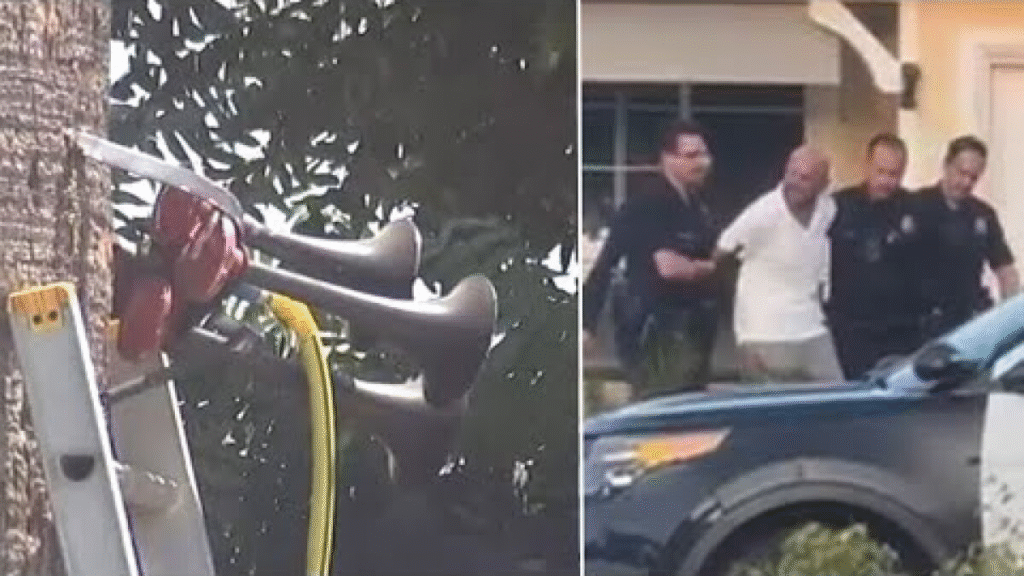
The prolonged nature of the noise disturbances in Van Nuys has highlighted the impact of individual actions on community well-being. Persistent loud noises like train horns and burglar alarms not only affect residents’ peace but can also contribute to stress and anxiety. In this case, Boyadzhayan’s actions have had a ripple effect on the community, drawing attention from neighbors, law enforcement, and the media.
While the arrest provides a temporary resolution, it also emphasizes the need for more comprehensive approaches to address conflicts involving mental health and community safety. Authorities and community organizations may need to explore strategies for providing support to individuals in crisis while maintaining public order and protecting residents’ rights to a peaceful living environment.
Gary Boyadzhayan’s case also serves as a cautionary tale about the importance of communication and seeking help through appropriate channels. While he claimed that he had been attempting to get assistance from the LAPD for years, his methods ultimately escalated the situation, leading to legal consequences and strained community relations.
In conclusion, the arrest of Gary Boyadzhayan for repeatedly blasting train horns and burglar alarms in Van Nuys is a complex story that touches on issues of mental health, community disturbance, and law enforcement challenges. Residents of Van Nuys endured months of disruption, while Boyadzhayan attempted to draw attention to his perceived threats.
The incident underscores the delicate balance between individual rights, public safety, and the need for mental health support. As communities continue to navigate such situations, it becomes clear that addressing the root causes of disruptive behavior is crucial to preventing similar incidents in the future.