

On August 20, 2025, a tragic incident shook the small agricultural community of Keenesburg, Colorado, when six workers were found dead at Prospect Valley Dairy. The Weld County Coroner’s Office is investigating the deaths as a possible result of toxic gas exposure in a confined space at the dairy, located at 32063 Weld County Road 18.
This devastating event has left the rural community in mourning, raising critical questions about workplace safety in agricultural settings. The victims, all Hispanic males, included a 50-year-old father, his two sons—one a high school student—and three others, four of whom were part of an extended family. As investigations continue, the incident underscores the dangers inherent in dairy farming and the need for stringent safety protocols.
The Incident and Initial Response
The tragedy unfolded on the evening of August 20, 2025, when the Southeast Weld Fire Protection District received a call around 6:00 p.m. for a confined space rescue at Prospect Valley Dairy, approximately 35 miles northeast of Denver. Emergency responders arrived at the scene expecting to perform a rescue but instead discovered the bodies of six men in a confined space.
According to the Weld County Coroner’s Office, led by Chief Deputy Coroner Jolene Weiner, the deaths are being investigated as potentially caused by exposure to toxic gas. Initial radio communications from first responders suggested a burst pipe may have been involved, with mentions of high levels of hydrogen sulfide (H2S), a gas known to be produced from decomposing manure and naturally occurring in crude petroleum and natural gas.
The Weld County Sheriff’s Office also responded to the scene, with spokesperson Melissa Chesmore stating that no evidence of criminal activity was found. The Occupational Safety and Health Administration (OSHA) has launched an investigation to determine the exact circumstances of the incident, but no further details have been released pending the completion of autopsies and toxicology reports.
Read : Gujarat Cooperative Dairy Network Achieves ₹80,000 Crore Turnover
Dairy Farmers of America, of which Prospect Valley Dairy is a member farm, issued a statement calling the event a “tragic accident” and expressed deep condolences to the families of the deceased, noting that further details were unavailable at this early stage. The confined space where the workers were found has not been publicly identified, nor has it been clarified why the men were in that area.
Read : What’s the Differences Between Yogurt and Curd ?
Confined spaces in dairy operations, such as tanks, silos, or manure pits, are known to pose significant risks due to the potential accumulation of hazardous gases like hydrogen sulfide, carbon monoxide, or biogas from manure. These gases can be invisible, odorless at high concentrations, and immediately toxic, making them particularly dangerous in enclosed environments where ventilation is limited.
Victims and Community Impact
On August 22, 2025, the Weld County Coroner’s Office released the identities of the deceased, revealing the profound personal toll of the tragedy. The victims were Alejandro Espinoza Cruz, 50, of Nunn; his sons Oscar Espinoza Leos, 17, a student at Highland High School in Ault, and Carlos Espinoza Prado, 29, of Evans; Jorge Sanchez Pena, 36, of Greeley, who was related to the Espinoza family by marriage; Ricardo Gomez Galvan, 40, of Keenesburg; and Noe Montanez Casanas, 32, of Keenesburg. Four of the men were part of an extended family, described by Tomi Rodriguez, an outreach worker for Project Protect Food System Workers, as “extremely hardworking and humble” and a “very united family.” The other two victims lived in employer-provided housing on the dairy’s grounds, highlighting the close-knit nature of the workforce.
The loss of these six men, particularly the inclusion of a high school student, has deeply affected the Keenesburg community, a town of about 2,000 residents where agriculture and oil and gas industries dominate. Weld County, Colorado’s leading dairy producer and a major agricultural hub, has a significant Hispanic population, with 30% of its residents identified as Hispanic or Latino in the 2020 census, compared to 22% statewide.
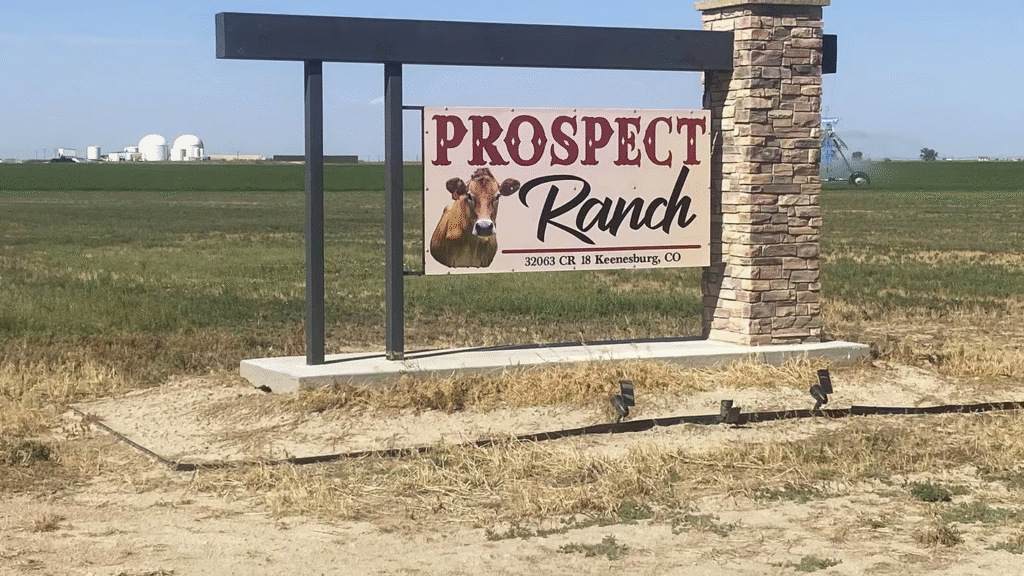
The deaths have resonated strongly within this community, prompting an outpouring of grief and support. Online message boards have been flooded with condolences, and community members have organized fundraisers, including a dance, haircuts, and a car wash over the weekend to support the victims’ families with funeral expenses and other immediate needs. A GoFundMe page has also been established to alleviate financial burdens for the affected families.
The Weld County Board of Commissioners issued a statement expressing collective sorrow, emphasizing the strength and compassion of the agricultural community: “Our Weld County community is hurting with the news of the accident at the Prospect Dairy in southern Weld County.
Our prayers for the families affected are focused on strength, healing, and compassion as they navigate this tragedy.” The Weld RE-9 School District, where Oscar Espinoza Leos was a student, has made counseling and support services available to students and staff, acknowledging the profound impact of the loss on the school community.
Safety Concerns and Ongoing Investigations
The incident at Prospect Valley Dairy has brought renewed attention to the inherent dangers of working in agricultural environments, particularly in confined spaces. Dairy farming is considered one of the most hazardous occupations in the United States, with risks including exposure to toxic gases, machinery accidents, and falls. Hydrogen sulfide, suspected as a possible cause in this incident, is especially dangerous because it can accumulate in low-lying areas like manure pits or tanks, becoming deadly at high concentrations.
The gas is heavier than air, meaning it can settle in confined spaces, and its characteristic “rotten egg” smell may not be detectable at lethal levels, leaving workers unaware of the danger. The initial report of a burst pipe suggests a possible mechanical failure that may have contributed to the release of hazardous gases, though this has not been confirmed. The Center for Dairy Excellence notes that gas releases in dairy operations can stem from various sources, including hydrogen sulfide in tanks and sump pumps, carbon monoxide in engine rooms, and biogas from manure accumulation.
These risks are heightened when manure is agitated or moved, as is common in dairy operations. The organization provides resources on farm safety, including signage and gas monitoring technology, to mitigate such hazards, but the effectiveness of these measures at Prospect Valley Dairy remains under investigation. OSHA’s ongoing investigation will likely focus on whether proper safety protocols were in place, including adequate ventilation, gas monitoring, and training for workers entering confined spaces.
The agency has emphasized that it will not release further information until the investigation is complete. The Weld County Coroner’s Office, having completed autopsies on all six victims, is awaiting toxicology results to confirm the exact cause of death. These results will be critical in determining whether hydrogen sulfide or another gas was responsible and whether additional factors, such as equipment failure or human error, played a role.
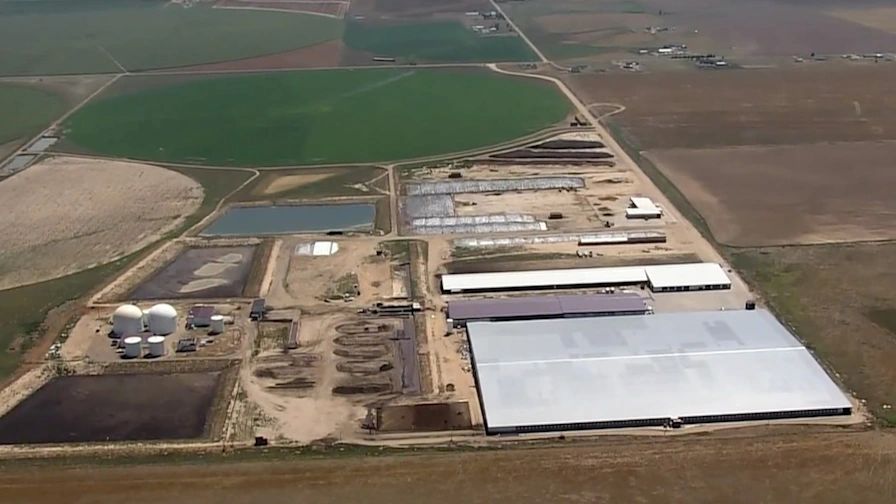
Prospect Valley Dairy, owned by Prospect Valley Dairy LLC with a listed address in Bakersfield, California, has not issued a public statement beyond the Dairy Farmers of America’s acknowledgment. County tax records indicate the dairy features a 32,500-square-foot milking parlor and two large free-stall barns, one built in 2017 at over 450,000 square feet and another constructed in 2024 at over 100,000 square feet.
The scale of the operation underscores the complexity of maintaining safety across large agricultural facilities, where workers may be exposed to multiple hazards daily. The tragedy has sparked broader discussions about the need for improved safety standards in the dairy industry.
Advocates like Project Protect Food System Workers are calling for enhanced protections for agricultural workers, many of whom are immigrants and may face additional vulnerabilities, such as language barriers or limited access to safety training. The incident serves as a somber reminder of the risks faced by those who work tirelessly to sustain the nation’s food supply, particularly in Weld County, where three-quarters of the land is dedicated to farming and livestock.
As the community mourns, the focus remains on supporting the families of Alejandro Espinoza Cruz, Oscar Espinoza Leos, Carlos Espinoza Prado, Jorge Sanchez Pena, Ricardo Gomez Galvan, and Noe Montanez Casanas. Their loss has left an indelible mark on Keenesburg, a tight-knit community where, as Mayor Aron Lam noted, “It’s mostly just farm fields.”
The collective grief has galvanized residents to come together, but it also highlights the urgent need for systemic changes to prevent such tragedies in the future. Until the investigations by OSHA and the Weld County Coroner’s Office provide definitive answers, the circumstances of this devastating event remain a sobering call to action for the agricultural industry to prioritize worker safety above all else.