

The arrest of 42-year-old Gaurav Kundi, a man of Indian origin living in Australia, has shocked the nation and drawn uncomfortable comparisons to the tragic death of George Floyd in the United States. Kundi is currently in a coma with critical brain injuries after police allegedly knelt on his neck during an attempted arrest in Adelaide’s eastern suburbs.
This incident has reignited global concerns about police conduct and the use of excessive force, especially involving minority communities. The unfolding story highlights serious questions about law enforcement practices and accountability, as well as the urgent need for reforms to prevent such tragedies in the future.
The Incident: A Harrowing Account of Excessive Force
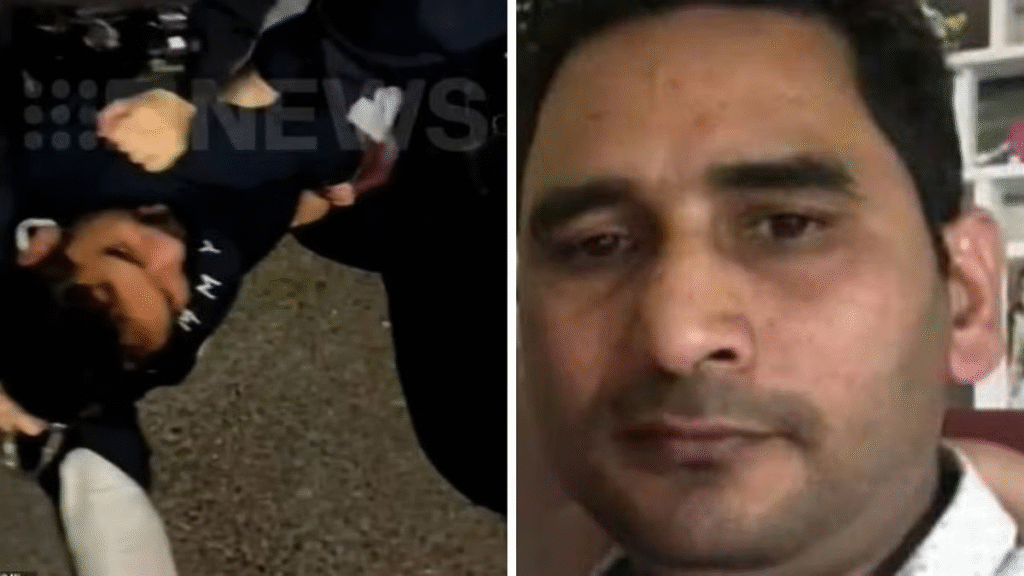
On a seemingly ordinary day in Adelaide, what should have been a routine police intervention quickly escalated into a life-threatening situation. Gaurav Kundi and his partner, Amritpal Kaur, were involved in an altercation that drew police attention. According to reports and a video shared by local media, officers arrived and attempted to arrest Kundi.
The video shows Gaurav Kundi being forced onto a road while both he and Kaur loudly protest his innocence. Kundi repeatedly shouts, “I’ve done nothing wrong,” while Kaur films the event, crying out that the police are acting unfairly. The situation took a drastic turn when Kundi was tackled to the ground.
It is at this moment that police allegedly drove a knee into his neck, a move chillingly reminiscent of the 2020 George Floyd case in Minneapolis. Kundi lost consciousness shortly after, and his condition rapidly deteriorated. Kaur’s cries and desperate pleas, recorded on video, depict a moment of extreme distress as she begs police to take her husband to the hospital instead of the police station. She also recounts that Kundi’s head collided with a police vehicle, an event she was unable to film due to her panic.
FAFO moment for Gaurav kundi
— JOE 🇦🇺 (@TO_VICTORY_WFP2) June 3, 2025
Drunk abusive menace Indian in Australia suspected assaulting his girlfriend & being a nuisance in public FAFO
NOW DEPORT HIM pic.twitter.com/uh8toAdn7z
The man, a father of two, remains on life support in critical condition with severe brain injuries. Doctors have warned that his brain damage is extensive, leaving the grim possibility that he may never regain consciousness. This tragic turn of events has struck a chord not only within the Indian community in Australia but also among advocates for police reform and human rights activists globally.
Official Responses and the Broader Context of Police Brutality
The authorities have offered their perspective on the incident, with police stating that Kundi violently resisted arrest following their intervention in a domestic dispute. However, the graphic video footage and eyewitness accounts raise serious doubts about the necessity and proportionality of the force used. Such clashes between police narratives and public perception are common in cases of alleged police brutality, often fueling mistrust between law enforcement and minority communities.
In response to the severity of Gaurav Kundi’s injuries, South Australia’s Police Commissioner Grant Stevens announced a Commissioner-level inquiry into the incident. The decision to launch such an inquiry immediately, rather than waiting for the case to unfold, underscores the gravity of the situation. Commissioner Stevens warned of the potential worst-case outcome, acknowledging that the man might not survive.
His statement reflects a somber awareness of the risks involved when police tactics escalate to dangerous levels. This incident, however, is not occurring in isolation. It resonates deeply with the global dialogue on racial injustice and police violence that has gained prominence over recent years.
The death of George Floyd in 2020 became a watershed moment, galvanizing protests worldwide and forcing governments to confront systemic issues within their policing institutions. Floyd’s death, caused by a white officer kneeling on his neck for over nine minutes despite Floyd’s repeated pleas of “I can’t breathe,” exposed the deadly consequences of excessive force and institutional racism.
In Australia, where policing practices have also come under scrutiny, particularly in relation to Indigenous and minority populations, Kundi’s case reignites debates over accountability and reform. Communities affected by police violence are demanding transparency, better training, and measures that prevent such abuses.
The incident highlights the urgent need to address not only how police officers intervene but also how cultural sensitivity and de-escalation tactics are integrated into law enforcement protocols.
The Human Cost and Call for Justice
Behind the headlines and official statements lies a human tragedy with profound emotional and social consequences. Gaurav Gaurav Kundi is not just a name in the news; he is a father, a partner, and a member of a community shaken by the devastating impact of the incident. His partner, Amritpal Kaur, has become a powerful voice in demanding justice and accountability. Her harrowing video footage and emotional appeals have brought the incident to public attention and galvanized calls for immediate action.
The uncertainty surrounding Gaurav Kundi’s recovery weighs heavily on his family and the broader community. Doctors have painted a grim picture of his brain damage, making the prospect of waking from the coma uncertain. The psychological toll on his loved ones is immeasurable, as they navigate the agonizing wait for news of his condition and the trauma of witnessing the violence he endured.

This tragedy underscores the importance of systemic changes to prevent future occurrences. Calls for reform include enhanced oversight of police conduct, implementation of body cameras, better training on the use of force, and policies prioritizing de-escalation techniques. Moreover, there is a growing demand for independent investigations into incidents of police violence to ensure impartiality and justice.
The case also opens a wider conversation about the treatment of ethnic minorities by law enforcement in multicultural societies like Australia. Ensuring equality before the law and protecting the rights of all citizens, regardless of their background, is fundamental to social cohesion and trust in public institutions.
As the inquiry proceeds, the eyes of the public, media, and international observers will remain fixed on Adelaide. The outcome will not only affect the family of Gaurav Kundi but could also influence broader reforms in policing practices in Australia and beyond.
The story of Gaurav Kundi is a stark reminder of the human cost of police excesses and the urgent need for accountability. It connects with a global movement demanding justice for victims of police brutality and a reevaluation of how law enforcement interacts with vulnerable communities. As the investigation unfolds, it remains to be seen how justice will be served for Kundi and whether his tragic experience will catalyze meaningful change in the way policing is conducted in Australia.