
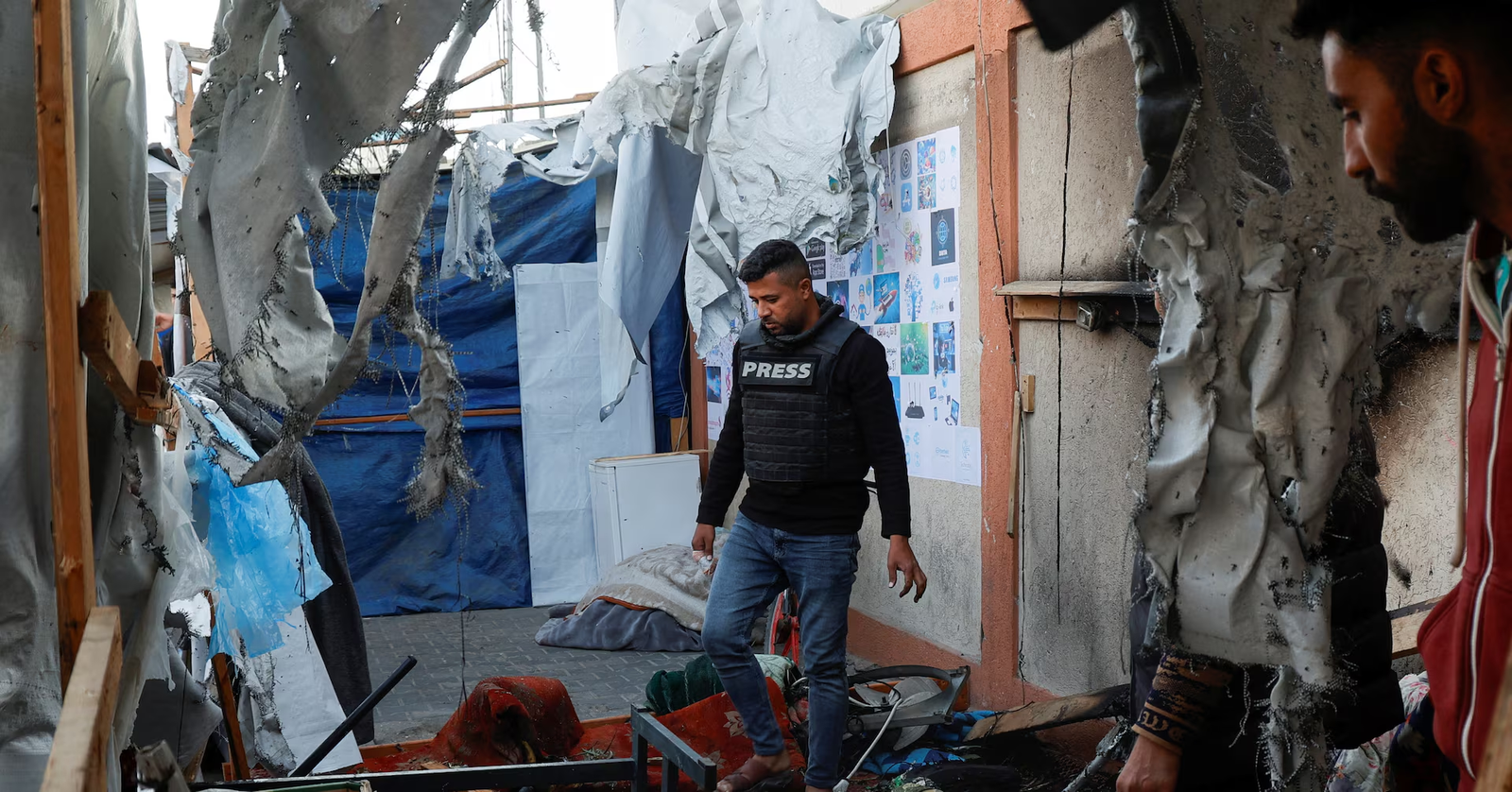
Fatima Hassouna, a fearless war documentarian known for her haunting images capturing life under siege in Gaza, was killed along with seven members of her family in an Israeli airstrike this week. Her death has sent shockwaves through the international journalist community and reignited global debate over the safety of reporters covering conflict zones.
Hassouna’s life and work were defined by courage, purpose, and a deep commitment to telling the stories of her people through powerful photography and storytelling. Her final days were marked by anticipation of a brighter moment: her forthcoming documentary debut at the Cannes Film Festival.
A life dedicated to truth and memory
Fatima Hassouna had spent the last 18 months embedded in Gaza, documenting the devastating impacts of the ongoing war. With over 35,000 followers on Instagram and Facebook, her work reached across borders, shedding light on the daily struggles of civilians living under siege.
Her photographs told intimate, often heartbreaking stories of families trying to survive amid airstrikes, displacement, and despair. Through her lens, Fatima showed the world not just the destruction, but also the resilience of Gaza’s people.
In August 2024, she posted a chilling and now prophetic message on Instagram: “If I die, I want a resounding death, I do not want me in urgent news, nor in a number with a group… I want a death that the world hears, an effect that remains for the extent of the ages.”
These words now echo hauntingly as Fatima’s death becomes part of the growing toll of journalists killed in the Gaza Strip since October 7, 2023 — a number which now stands at 212, according to the Palestinian Journalists’ Protection Center (PJPC). Fatima’s vision of a “resounding death” may have come to pass, but it is also a painful reminder of the cost of bearing witness in war zones.
Fatima was not just a reporter. She was a daughter, a sister, and a cousin. Her cousin Hamza Hassouna survived the attack and recounted the moment two rockets hit their home on Al-Nafaq Street in Gaza City. “The house fell on us and everything was a disaster,” he said. Both of Fatima’s parents survived the blast but were critically injured and remain in intensive care.
From Gaza’s rubble to Cannes’ spotlight
Fatima was the subject of an upcoming documentary titled Put Your Soul On Your Hand And Walk, directed by Iranian filmmaker Sepideh Farsi. The film has been selected to be screened in the ACID section at the 78th Cannes Film Festival in May 2025.
The documentary was a collaboration between the filmmaker and Fatima, described by Farsi as “a miraculous encounter” that offered a window into “the ongoing massacre of the Palestinians.”
Farsi shared her heartbreak upon learning of Fatima’s death. “My last image of her is a smile. I cling to it today,” she wrote alongside a photo of herself and Fatima.

The two had spoken just one day before the fatal strike, excitedly discussing plans for Fatima to travel to France for the film’s premiere. It would have been her moment of recognition, a spotlight on her extraordinary work and the people she represented.
Fatima’s tragic death robbed her of that moment. Yet, her legacy may still resonate globally through the documentary that seeks to tell her story — not just as a victim, but as a woman who chose to document the harshest truths, no matter the cost.
Farsi described Fatima as “bright and sunny,” someone who remained optimistic despite the relentless violence around her. Their friendship, built over a year of collaboration, was a testament to the trust Fatima extended to those who respected her voice and vision.
A call for accountability and justice
The PJPC has condemned the attack that killed Fatima and her family, calling it a “crime” against journalists and a violation of international law. The organization has urged the international community to launch an immediate investigation and hold those responsible accountable. Fatima’s death is not an isolated incident. It is part of a broader and disturbing pattern — a conflict that has cost the lives of over 200 journalists in less than two years, an unprecedented toll by all standards.
The Israeli Defense Forces (IDF), in their statement, claimed the strike was aimed at “a terrorist in Hamas’ Gaza City Brigade” and asserted that “steps were taken to mitigate the risk of harm to civilians.”
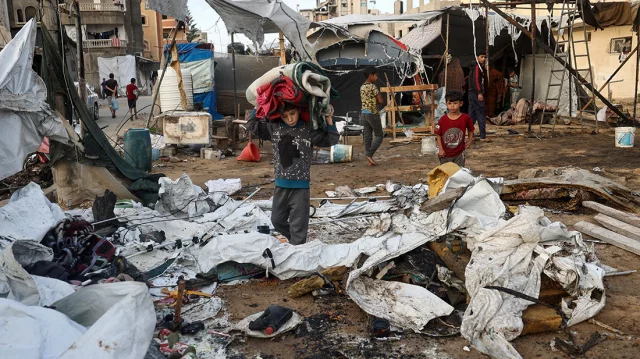
No additional details were provided about the identity of the alleged target or any intelligence justifying the strike on a residential area. Fatima’s neighbors and family have denied any connection to militant groups. “We have been neighbors for 35 years and have never heard that they are connected to any group,” said Um Aed Ajur, a longtime neighbor.
The strike has reignited conversations about the legality and morality of military actions in densely populated civilian areas. Fatima’s death, coming just days after she shared serene photos of Gaza fishermen accompanied by a poetic caption — “From here you get to know the city. You enter it, but you don’t leave, because you won’t leave, and you can’t” — underscores the stark contrast between her peaceful artistry and the violent reality that ultimately took her life.
In a region where truth is often the first casualty, Fatima Hassouna chose to speak, to photograph, to share. Her camera was her weapon, her shield, and her voice. She paid the ultimate price for her commitment to truth. But in doing so, she became a symbol of resistance, of storytelling in the face of silencing, and of light amid the darkness.
Fatima’s death leaves a void in Gaza’s press community and a wound that resonates globally among journalists, artists, and advocates for free expression. Her story, captured forever in her own work and in the film that will debut in Cannes, ensures that her voice will not be buried in rubble or reduced to a statistic.
Her final images — of the sea, of fishermen, of life persisting amid chaos — serve as both a farewell and a legacy. Through them, Fatima continues to speak. And the world, at least for now, is listening.