
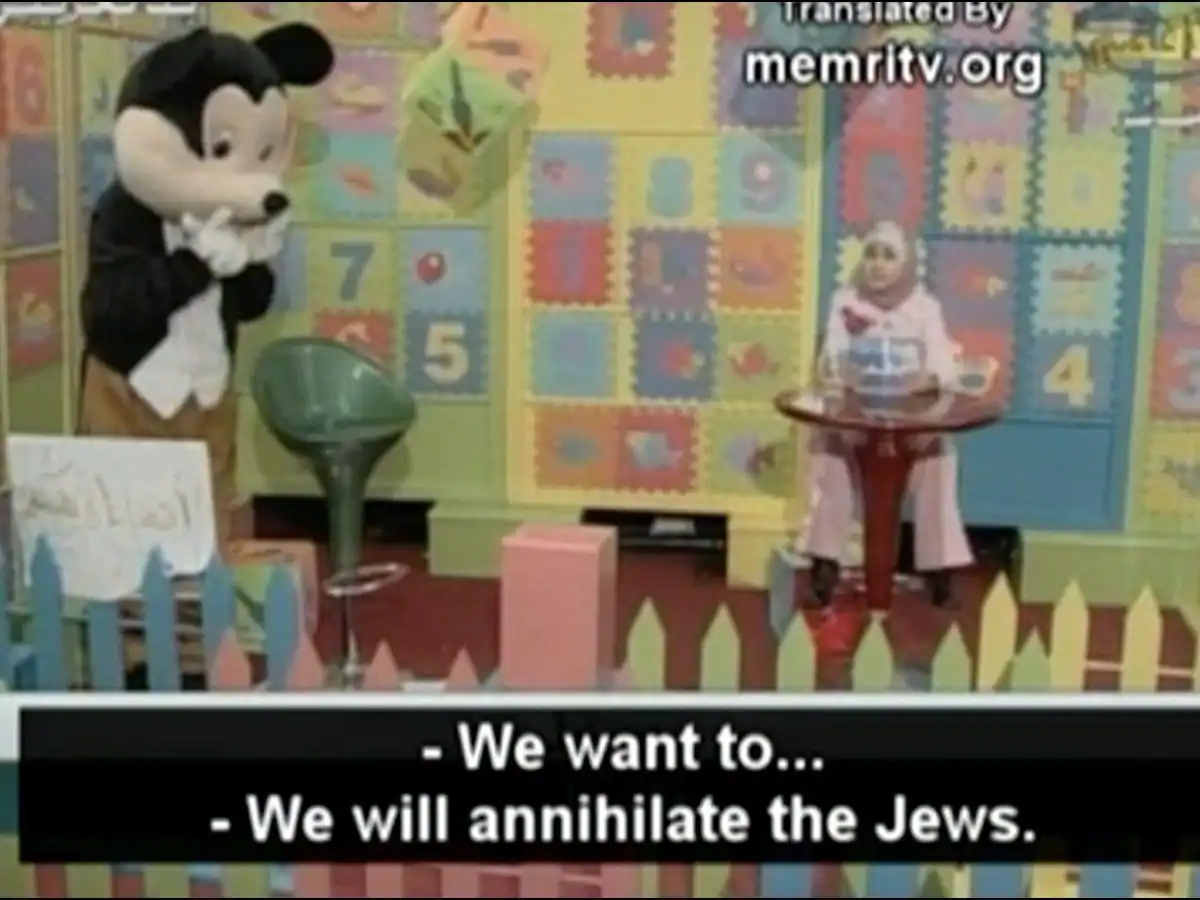
In recent weeks, social media platforms, particularly X, have been abuzz with a disturbing claim: a children’s cartoon aired on a Gaza-based television channel allegedly encourages young viewers to “kill Israelis.” The story, amplified by posts and some news outlets, paints a grim picture of media manipulation and indoctrination.
Reports, such as one from NDTV World on August 14, 2025, reference a program on a Hamas-run TV channel featuring a character described as a “jihadi bunny” that urges children to “Kill! Kill! Kill!” while promoting martyrdom and violence against Israelis. The claim has sparked outrage, but its veracity remains murky.
Origins and Spread of the Claim
The viral claim appears to have gained traction through posts on X, where users shared snippets and descriptions of the alleged cartoon. According to these posts, the program aired on a Hamas-affiliated channel, possibly Al-Aqsa TV, and featured a character—a rabbit-like figure dubbed a “jihadi bunny”—that explicitly called for violence against Israelis.
The character reportedly encouraged children to embrace martyrdom and engage in acts of aggression, with phrases like “Kill! Kill! Kill!” cited as evidence of genocidal rhetoric. The NDTV World report from August 14, 2025, echoed these details, framing the cartoon as part of a broader pattern of propaganda aimed at indoctrinating young viewers.
However, the specifics of the claim are notably vague. No primary source, such as a video clip, broadcast date, or episode title, has been widely circulated to substantiate the story. The reliance on social media posts and secondary reporting raises questions about the claim’s accuracy.
Read : Cartoonist Dogan Pehlevan and His Three Colleagues Arrested Over Alleged Cartoon of Prophet Muhammad
A post on X from August 7, 2025, suggested that a related claim was debunked, though it did not directly address the cartoon in question. This ambiguity underscores the difficulty of separating fact from exaggeration in a digital ecosystem where emotionally charged narratives spread rapidly. Without access to the original broadcast, the claim hinges on unverified accounts, making it susceptible to distortion or misinformation.
Historical Context of Hamas-Affiliated Media
To assess the plausibility of the 2025 claim, it’s worth examining the historical record of Hamas-run media in Gaza. The Anti-Defamation League (ADL) documented several instances in 2007 and 2008 where Al-Aqsa TV, a Hamas-affiliated channel, aired children’s programs that promoted anti-Semitic themes and violence against Israelis.
One notable example is Tomorrow’s Pioneers, a show that featured a Mickey Mouse-like character named Farfour. The program was criticized for glorifying martyrdom, encouraging militancy, and fostering hatred toward Jews and Israelis. Farfour’s messages included calls for resistance and sacrifice, presented in a format accessible to young children.
These historical cases lend some credibility to the possibility that similar content could reappear in 2025. Hamas has a documented history of using media to advance its ideological goals, including through children’s programming. Al-Aqsa TV, launched in 2006, has been a platform for disseminating political and religious messages, often blending entertainment with propaganda.
How Hamas turned kids into terrorists with TV show featuring jihadi mouse, bloodthirsty bunny https://t.co/3wLhIq4ZIx pic.twitter.com/DObey2HaDN
— New York Post (@nypost) August 13, 2025
Characters like Farfour, Nahoul the Bee, and Assud the Rabbit (who replaced Farfour after the character’s staged “martyrdom” on the show) were designed to appeal to children while promoting militant narratives. The ADL and other organizations, such as the Middle East Media Research Institute (MEMRI), have consistently flagged such content for its inflammatory rhetoric.
However, these older reports do not directly confirm the 2025 claim. The lack of recent, verifiable evidence—such as footage of the “jihadi bunny” cartoon or an official statement from Al-Aqsa TV—means the current allegation cannot be fully substantiated. While the historical precedent suggests that Hamas-affiliated media could produce such content, it does not prove that the specific cartoon described in recent posts exists or aired as claimed.
Challenges of Verification in a Polarized Media Landscape
Verifying the Gaza cartoon claim is fraught with challenges, particularly given the polarized nature of the Israeli-Palestinian conflict and the role of social media in amplifying unverified narratives. The absence of primary sources, such as video footage or an archived broadcast, makes it difficult to confirm the specifics of the alleged program.
Al-Aqsa TV’s archives are not readily accessible to international audiences, and Gaza’s restricted media environment complicates independent reporting. Without a verifiable clip or firsthand account, the claim remains in a gray zone—neither fully confirmed nor definitively debunked.

Social media platforms like X play a dual role in this context. They serve as a primary source of information for many users but also amplify unverified claims through rapid sharing and emotionally charged commentary. The “jihadi bunny” narrative, with its vivid imagery and shocking implications, is tailor-made for viral spread.
Yet, as seen in other cases, viral stories can be exaggerated or mischaracterized. For example, a 2009 claim about a Gaza children’s show was later clarified to involve mistranslations of dialogue, where calls for “resistance” were overstated as explicit incitement to murder. The August 7, 2025, X post hinting at a debunked claim suggests that similar misinterpretations could be at play here.
Moreover, the broader context of Gaza’s media landscape adds complexity. Hamas controls much of the region’s broadcasting, and Al-Aqsa TV has been used to promote its political and ideological agenda. However, not all content on the channel is overtly militant; children’s programming often includes educational or cultural elements alongside political messaging.
Distinguishing between propaganda and standard children’s fare requires careful analysis of the content’s intent and framing—something that’s impossible without access to the original material. The lack of transparency in Gaza’s media, combined with the conflict’s politicization, fuels skepticism about the claim’s accuracy.
On one hand, Hamas’s history of using media to promote militancy makes the cartoon allegation plausible. On the other, the absence of concrete evidence and the reliance on secondhand reports suggest the story could be exaggerated or misreported. The truth likely lies in a nuanced middle ground: the cartoon may exist but may not be as explicitly genocidal as claimed, or it could be a rehashing of older content misconstrued as new.

The claim that a Gaza TV cartoon urges children to “kill Israelis” is inconclusive based on available evidence. While Hamas-run media, particularly Al-Aqsa TV, has a documented history of broadcasting children’s programs that promote violence and anti-Semitic themes, no primary source directly confirms the specifics of the 2025 claim.
Social media posts and secondary reports, such as the NDTV World article, amplify the story, but the absence of verifiable footage or detailed documentation raises concerns about potential exaggeration. Historical precedents, like Tomorrow’s Pioneers, suggest that such content is plausible, but they do not prove the existence of a “jihadi bunny” cartoon in 2025.
In a media landscape where misinformation can spread as quickly as truth, this case underscores the importance of skepticism and rigorous fact-checking. Those seeking clarity on the claim should look for primary sources, such as video evidence or official statements from Al-Aqsa TV, though access to such materials may be limited. Monitoring platforms like X for firsthand accounts or translations of recent broadcasts could provide additional context, but users must approach such sources critically, given the potential for bias or mistranslation.
Ultimately, the viral claim serves as a reminder of the challenges in navigating conflict-related narratives. While the allegation aligns with past patterns of Hamas-affiliated media, its lack of substantiation demands caution. Until more evidence emerges, the story should be treated as unverified—a provocative but unproven piece of a complex and contentious puzzle. For now, the truth behind the “jihadi bunny” remains elusive, caught between historical precedent and the fog of modern media.