

The modern workplace has undergone a dramatic transformation in recent years, with remote work becoming a defining feature of professional life. Alongside this shift, workplace norms have evolved, sometimes in unexpected and even humorous ways. A viral video featuring a Gen Z employee attending an online meeting while wearing a neem face mask perfectly captures this changing dynamic. What could have been perceived as a breach of professionalism instead became a moment of amusement, curiosity, and debate across social media.
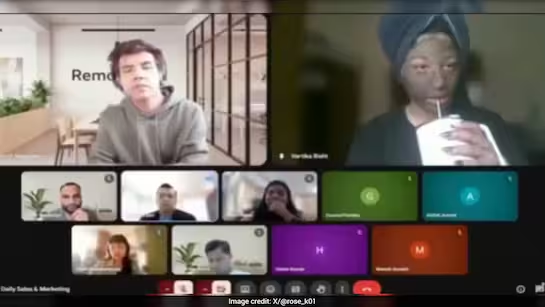
The incident not only entertained millions but also sparked deeper conversations about workplace culture, generational attitudes, and the boundaries of professionalism in a work-from-home environment. The video shows a young employee joining a routine office meeting with her face covered in a bright green neem mask and a towel wrapped around her head, as if she had stepped straight out of a skincare routine.
While her colleagues struggled to suppress laughter, the most striking aspect of the situation was her boss’s calm and curious reaction. Rather than reprimanding her, he engaged with the moment, asking about the mask and even entertaining the idea of trying it himself. This unexpected response played a major role in the video’s popularity and contributed to the wider discussion it ignited.
Changing Workplace Norms in the Age of Remote Work
Remote work has blurred the lines between personal and professional spaces, allowing employees to operate from the comfort of their homes. This shift has inevitably influenced behavior, dress codes, and communication styles. In a traditional office setting, appearing in a meeting with a face mask and towel would be unthinkable. However, in a home environment, where personal routines coexist with professional responsibilities, such incidents are becoming increasingly common.
The viral video highlights how Gen Z employees, who have grown up in a digital-first world, often approach work with a more relaxed and flexible mindset. For them, productivity is not necessarily tied to rigid formalities but rather to output and efficiency. The employee in the video did not miss the meeting or fail to contribute; she simply participated while continuing her skincare routine. This reflects a broader shift in priorities, where convenience and multitasking are often valued over traditional notions of presentation.
At the same time, this evolving culture raises questions about where boundaries should be drawn. While some view such behavior as harmless and even refreshing, others worry that it could undermine the seriousness of professional interactions. The debate is particularly relevant as companies continue to refine their remote work policies and expectations. The incident serves as a real-life example of how workplace norms are being renegotiated in real time, often without clear guidelines.
The Boss’s Reaction and Its Impact on Workplace Culture
One of the most widely discussed aspects of the viral video is the reaction of the employee’s boss. Instead of reacting with irritation or authority, he chose curiosity and humor. His willingness to engage with the situation rather than shut it down immediately was seen by many as a sign of strong leadership and emotional intelligence. This response resonated with viewers, many of whom praised the relaxed and supportive work environment it suggested.
Read : Nottingham College Introduces Course for Gen Z Who Have Phone Call Phobia
Leadership styles are evolving alongside workplace structures. In a remote setup, where employees may already feel isolated, maintaining a positive and approachable demeanor can significantly impact team morale. The boss’s reaction demonstrated that maintaining professionalism does not necessarily require strict rigidity. Instead, it can involve understanding context, reading the room, and responding in a way that balances authority with empathy.
A work call, a face mask, and a prank pulled off by a Gen Z employee got the whole team talking at this startup. pic.twitter.com/dsmQ4TRX0d
— Brut India (@BrutIndia) March 18, 2026
However, the response also sparked criticism from those who believe that such leniency could set a problematic precedent. Critics argue that allowing informal behavior during official meetings might encourage others to take professional settings less seriously. This perspective reflects a more traditional view of workplace discipline, where clear boundaries and expectations are considered essential for maintaining order and respect.
Despite differing opinions, the incident underscores the importance of adaptability in leadership. A one-size-fits-all approach may no longer be effective in a diverse and evolving workforce. Leaders are increasingly required to navigate complex social dynamics, balancing professionalism with relatability. The viral moment serves as a case study in how a simple reaction can influence perceptions of workplace culture on a much larger scale.
Social Media Reactions and the Broader Cultural Debate
The video’s widespread popularity was fueled by social media, where users quickly shared, commented, and debated the incident. Reactions ranged from admiration to criticism, reflecting the diverse perspectives on workplace behavior. Many users celebrated the moment as a representation of a more human and flexible work environment. They saw it as evidence that employees can be authentic and still perform their duties effectively.
Supporters of this view argued that as long as work is completed efficiently, minor deviations from traditional norms should not be a cause for concern. They appreciated the humor and relatability of the situation, noting that remote work has naturally introduced elements of personal life into professional settings. For them, the incident was not a sign of declining standards but rather an evolution of workplace culture.
On the other hand, critics expressed concern about the potential implications of such behavior. They argued that professionalism should remain a cornerstone of workplace interactions, regardless of the setting. According to this perspective, actions like attending meetings in a face mask could diminish the seriousness of professional commitments and create a perception of carelessness. Some even suggested that such incidents could negatively impact the credibility of remote work as a whole.
The debate reflects a broader cultural shift, where generational differences play a significant role. Older generations, who are more accustomed to structured environments, may find it difficult to accept these changes. Meanwhile, younger employees often prioritize flexibility, authenticity, and work-life integration. The viral video serves as a focal point for this ongoing conversation, highlighting the challenges and opportunities that come with a changing workforce.
Ultimately, the incident is more than just a humorous moment; it is a reflection of the evolving nature of work. It raises important questions about how professionalism is defined, how boundaries are established, and how different generations can coexist in a shared professional space. As remote work continues to shape the future of employment, such discussions are likely to become increasingly relevant, influencing policies, expectations, and workplace culture in the years to come.