
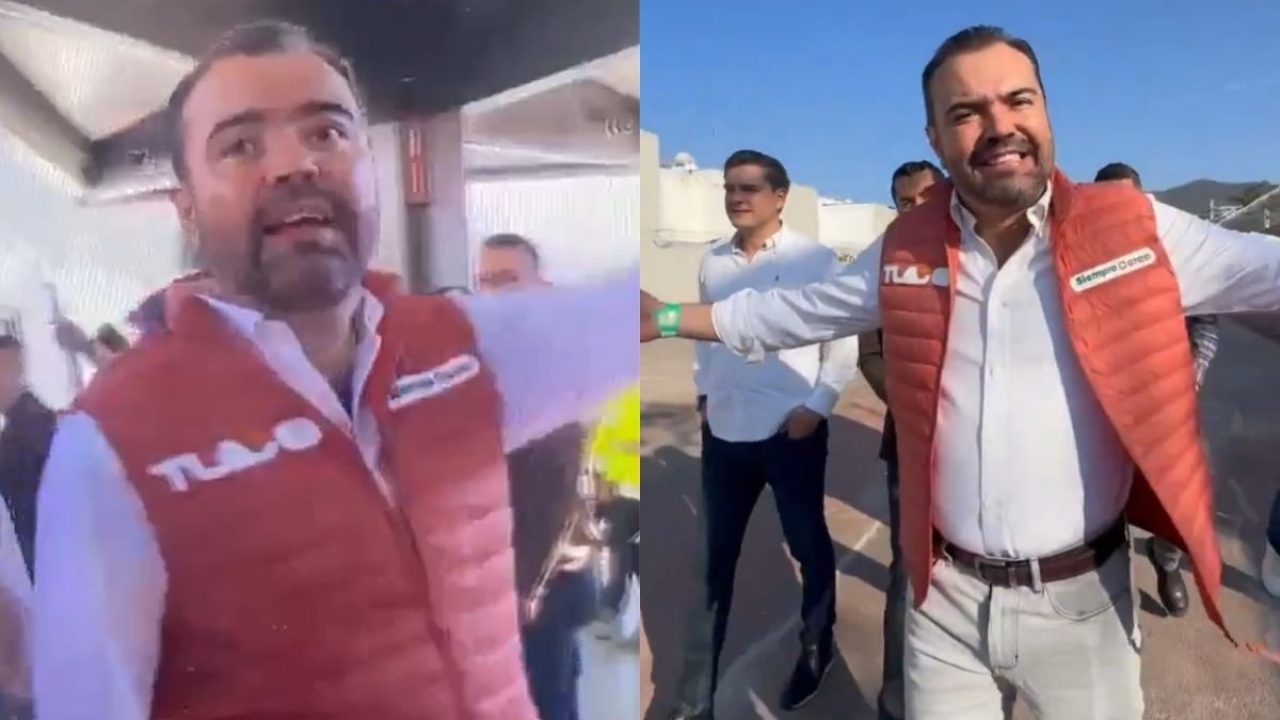
On December 15, a moment both humorous and revealing unfolded in Tlajomulco de Zúñiga, a municipality in the Mexican state of Jalisco, during the inauguration of Line 4 of the Tren Ligero light rail system. The event, meant to showcase progress in urban transport and governance, unexpectedly turned into a viral spectacle when the city’s mayor, Gerardo Quirino Velázquez, arrived moments too late for the ceremonial first ride. As the train departed exactly on schedule, cameras captured the mayor sprinting along the platform, attempting unsuccessfully to board the moving train.
Within hours, the clip spread widely across social media, sparking amusement, debate, and pointed international comparisons about punctuality, governance, and political privilege. The inauguration had been planned as a high-profile occasion. The platform was crowded with state officials, including the governor of Jalisco, municipal representatives, media personnel, and invited guests.
The launch of Line 4 marked a significant expansion of the Guadalajara metropolitan area’s public transport network, aimed at improving connectivity, reducing traffic congestion, and promoting sustainable urban mobility. The atmosphere was celebratory and carefully choreographed, with the inaugural ride intended as a symbolic gesture of leadership and civic pride. Yet the symbolism shifted dramatically when the train doors closed and the service departed without one of its most prominent guests.
Video footage shows Mayor Gerardo Quirino Velázquez arriving just after the final boarding moments. As the train began to move, he appeared to realise the situation and broke into a run, waving and stretching his arm toward the train. The effort was futile. The train accelerated smoothly out of the station, leaving the mayor behind on the platform as onlookers reacted with surprise and laughter. Unlike many ceremonial inaugurations around the world, there was no pause, no reopening of doors, and no intervention to accommodate the late arrival. The system functioned as designed: it ran on time.
Mayor Gerardo Quirino Velázquez later addressed the incident himself by sharing the video on social media. Rather than expressing frustration, he adopted a light-hearted tone. “¡No se preocupen, mi gente! Pasa cada nueve minutos,” he wrote, translating to, “Don’t worry, folks! It comes every nine minutes.” The remark underscored the operational frequency and punctuality of the new line, reframing personal embarrassment as a point of civic pride. His response was widely viewed as self-aware and good-humoured, further fueling the clip’s popularity.
A Viral Moment That Redefined a Public Inauguration
The virality of the video was driven not only by its comic timing but also by what it represented in a broader political and cultural sense. Public inaugurations of infrastructure projects often follow an unspoken rule: schedules bend to accommodate politicians, not the other way around. Trains, buses, flights, and even entire cities have waited while dignitaries arrive late to cut ribbons or deliver speeches. The Tlajomulco incident inverted this expectation in a way that was visually striking and instantly relatable.
Social media users across Mexico and beyond seized on the symbolism. Many praised the fact that the train departed on time regardless of who was on the platform. For them, the moment suggested institutional maturity, where systems are prioritised over individuals. The mayor’s inability to halt the departure, despite his position, was interpreted as evidence that public services were being run according to rules rather than personal influence. In an era where public trust in institutions is often fragile, such symbolism carried weight.
Read : Kansas Mayor Jose Ceballos Charged for Allegedly Voting Despite Not Being a US Citizen
The video also benefited from its clarity. There was no ambiguity about what happened. The mayor was late. The train left. The cause and effect were immediate and understandable. In a digital environment saturated with complex scandals and opaque controversies, this simplicity made the moment accessible to a wide audience. It did not require deep knowledge of Mexican politics or transport policy to appreciate the scene. Anyone who has ever run to catch a train could relate, even if most do not usually find themselves doing so in a mayoral sash.
Quirino Velázquez, mayor of Tlajomulco in Mexico, was late for the inauguration of the new train line and couldnt be part of the first trip. pic.twitter.com/hOcvoYJB1R
— Crazy Ass Moments in LatAm Politics (@AssLatam) December 18, 2025
Media coverage amplified the discussion by highlighting the broader implications. Headlines emphasised punctuality, governance, and the absence of special treatment. Commentators noted that while the incident was amusing, it also sent a subtle message about administrative culture. Infrastructure, once operational, was not paused for ceremonial convenience. The system existed to serve the public first, not to stage-manage political optics.
Mayor Gerardo Quirino Velázquez’s reaction further shaped the narrative. By leaning into the humour rather than protesting or downplaying the event, he avoided turning a minor embarrassment into a controversy. His message suggested acceptance of the rules and an understanding that punctuality applied to everyone. This response contrasted sharply with how similar situations have unfolded elsewhere, where late arrivals by officials have sometimes led to reprimands of staff or operational delays.
Why Netizens Compared It to India’s VIP Culture
As the video crossed borders, it found a particularly engaged audience in India, where users drew pointed comparisons with what is often referred to as “VIP culture.” In the Indian context, the term commonly describes the preferential treatment extended to politicians and senior officials, especially during public events. Train inaugurations, road openings, and airport operations have frequently been delayed to accommodate late-arriving ministers or dignitaries. In some instances, public transport services have reportedly been held back for extended periods, affecting ordinary passengers.
Indian netizens responded to the Mexican clip with a mix of humour and frustration. Comments contrasted the image of a mayor running after a train with familiar scenes of drivers and officials waiting anxiously for political arrivals. One widely shared remark noted that in Mexico, trains leave on time even if the mayor is late, while in India, drivers risk suspension or worse if they depart without a minister. Another comment joked that in India, schedules run on ministers rather than ministers running on schedules.
These reactions reflected deeper public sentiment. Infrastructure projects in India are often high-profile political achievements, and inaugurations can become elaborate affairs centred on personalities rather than services. Delays are sometimes rationalised as unavoidable protocol, but they also reinforce perceptions of inequality and inefficiency. Against this backdrop, the Mexican incident appeared refreshing, even aspirational, to some observers.

The comparisons were not necessarily intended as comprehensive judgments of either country’s governance. Rather, they used a single, vivid moment to highlight contrasting approaches to authority and public systems. In Mexico’s case, at least as portrayed in this incident, the system appeared indifferent to hierarchy once operational. In the Indian commentary, the implication was that hierarchy often overrides systems, at least symbolically.
Such comparisons resonated because public transport is a shared experience. Trains and metros are daily necessities for millions, and their punctuality directly affects work, education, and personal life. When people see a train depart on time without regard for political status, it reinforces the idea that public services exist for the collective good. When they see the opposite, it can deepen cynicism about fairness and accountability.
The discussion also touched on leadership styles. Some users suggested that true leadership is demonstrated not by commanding systems to wait, but by respecting the systems that serve the public. In this reading, the mayor missing the train was less important than his acceptance of the outcome. His casual remark about the next train arriving in nine minutes was interpreted as an endorsement of reliability over ceremony.
Punctuality, Power, and the Message Sent to the Public
Beyond humour and international comparison, the incident raised substantive questions about how societies balance authority and institutional integrity. Public transport systems are complex operations involving safety protocols, timetables, and coordination across multiple agencies. Deviating from schedules for ceremonial reasons can have cascading effects, disrupting services and undermining reliability. From an operational standpoint, the decision to let the train depart on time was arguably the most responsible choice.
Symbolically, that decision carried even greater significance. It suggested that once inaugurated, the Tren Ligero Line 4 was no longer a political prop but a functioning public service. The absence of special accommodation for the mayor reinforced the idea that infrastructure, once delivered, belongs to the public. This message was particularly powerful because it was not delivered through speeches or press releases but through action.
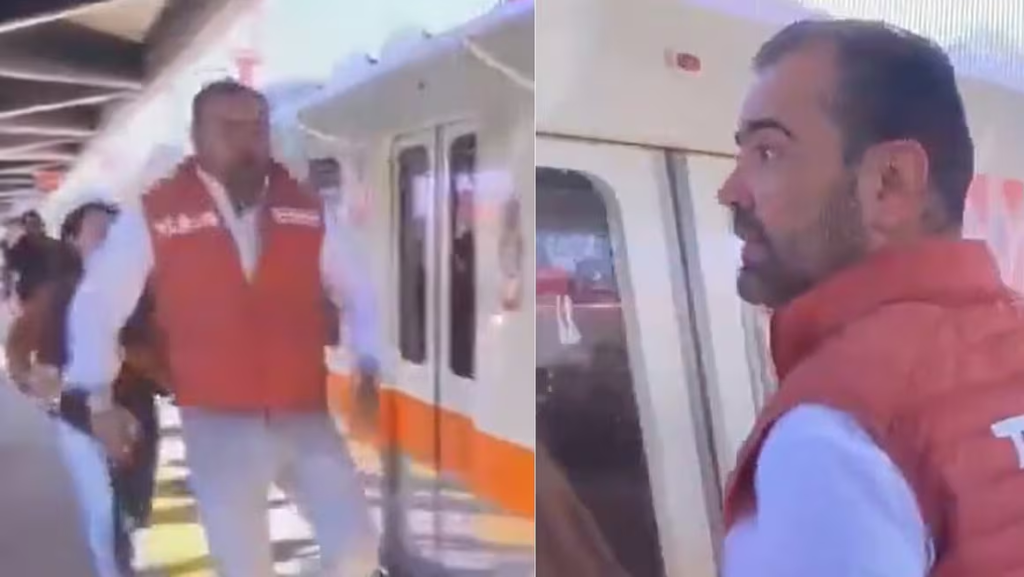
The mayor’s experience also humanised political leadership. Rather than appearing aloof or insulated, he was seen in a moment of ordinary frustration familiar to commuters everywhere. This visibility can have complex effects. On one hand, it can foster relatability and goodwill. On the other, it can expose leaders to ridicule. In this case, the overwhelmingly positive reaction suggested that audiences appreciated the humility implied by the scene and the response that followed.
For policymakers and administrators, the episode offered an unplanned lesson in public perception. Strict adherence to rules, even when inconvenient for those in power, can generate trust and admiration. Conversely, bending rules for the powerful can erode confidence, even if such actions are justified as protocol. The viral reach of the video demonstrated how quickly such moments can shape narratives about governance.
The broader conversation also hinted at changing expectations. In many democracies, citizens increasingly demand transparency, efficiency, and equality before the system. Visible displays of privilege are more likely to be criticised than celebrated. Against this backdrop, the image of a mayor running after a train, rather than a train waiting for a mayor, aligned with evolving public values.
Ultimately, the Tlajomulco incident will likely be remembered less as a personal misstep and more as a cultural snapshot. It captured a brief intersection of punctuality, power, and public service, distilled into a few seconds of video. The train departed. The mayor ran. The system prevailed. In an age where symbolism often matters as much as policy, that simple sequence resonated far beyond a single platform in Jalisco.
If some one desires to be updated with most recent technologies
after that he must be visit this web site and be up to date everyday.
Instead, the treatment will assist individuals attain a naturally
a lot more contoured look.
Kybella is a nonsurgical procedure for individuals wanting to shed their dual chin.
Novoline Casino Freispiele
References:
https://online-spielhallen.de/ggbet-casino-aktionscode-ihr-schlussel-zu-exklusiven-vorteilen/
Casino of Gold App
References:
https://online-spielhallen.de/bizzo-casino-auszahlung-dein-leitfaden-fur-schnelle-gewinnauszahlungen/