
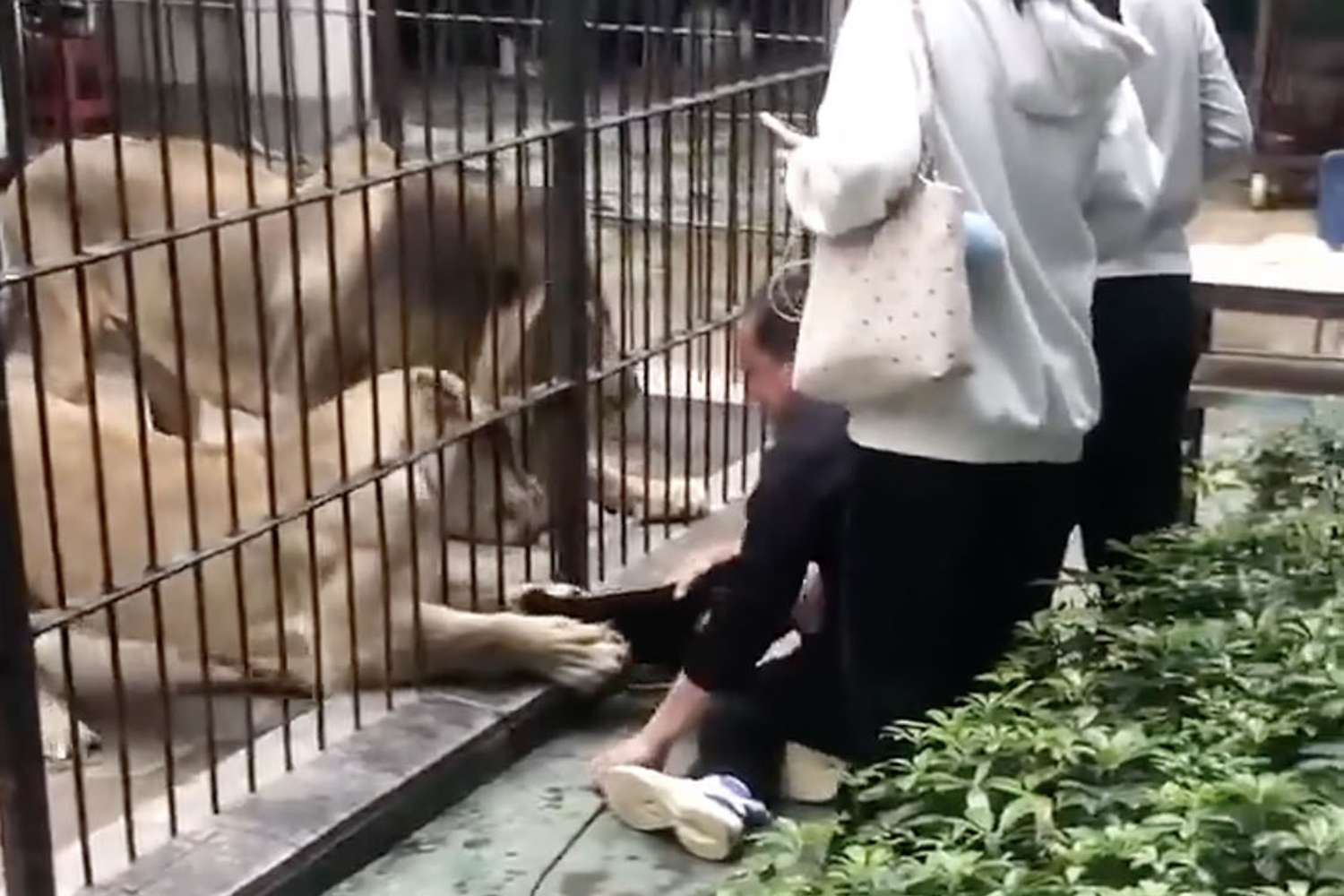
A 10-year-old girl in Guangdong, China, narrowly escaped serious injury after being attacked by two lions during a feeding session at Shantou Zhongshan Park Zoo. The incident, which occurred in the afternoon of February 26, has drawn significant public attention after a video of the attack circulated widely online.
According to official statements, the girl was allowed into a restricted isolation area designated for animal feeding when a lioness suddenly reached through the bars of the enclosure and grabbed her leg. The frightening episode lasted roughly 30 seconds and required the quick intervention of a nearby adult and zoo staff to prevent more severe consequences. Although the child sustained only minor injuries, the circumstances surrounding the attack have raised concerns about safety protocols and management practices at the facility.
The zoo confirmed in a statement released on February 28 that the girl was taken to hospital following the incident. Medical staff treated her for minor abrasions on her legs and administered a rabies vaccination as a precautionary measure. She was discharged later that evening at approximately 9 p.m. Authorities have since suspended the zoo’s operations pending a comprehensive review of its safety measures. The keeper involved in permitting access to the restricted area has also been suspended while investigations continue.
Terrifying Moments Captured on Video
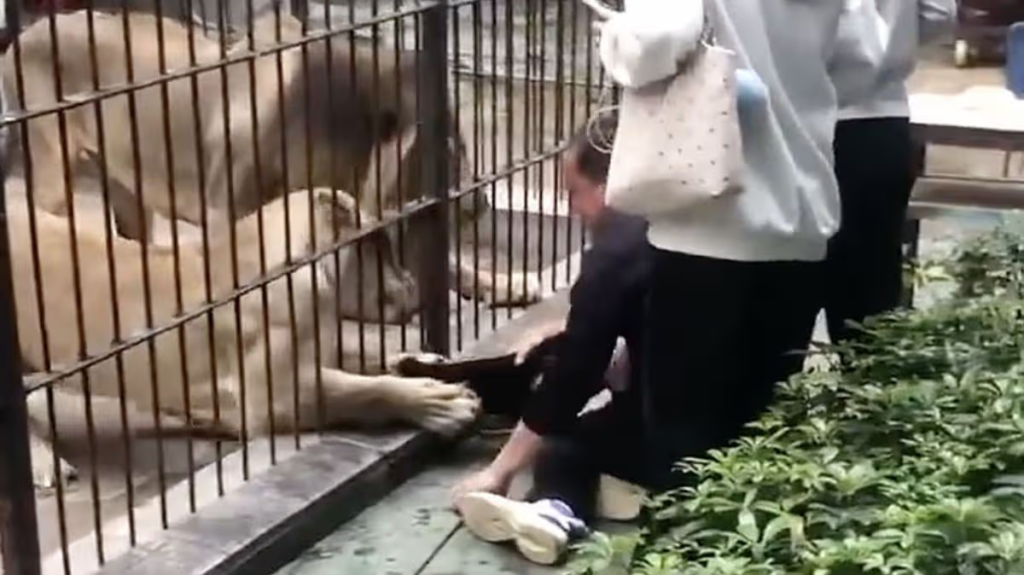
Footage posted on Xiaohongshu on February 28 shows the young girl standing close to the barred enclosure while attempting to feed the lions. She appears to be holding meat in her hand, reportedly part of an interactive feeding experience offered at the zoo. As she extends her hand toward the animals, a lioness abruptly thrusts her paw through the metal bars and clamps onto the girl’s trousers, pulling her forcefully toward the enclosure.
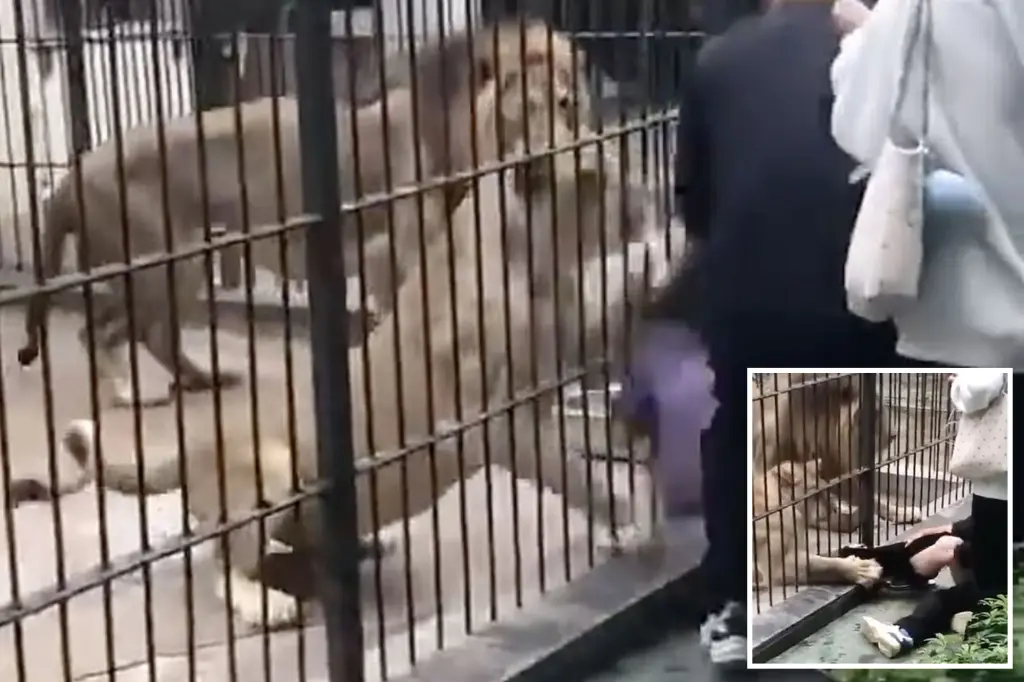
The child can be heard screaming as she struggles against the powerful animal’s grip. An adult male standing behind her immediately grabs hold of her upper body, attempting to pull her away from the cage. The lioness maintains its hold, creating a tense tug-of-war between human and animal. During the struggle, a second lion is seen attempting to reach through the bars as well, intensifying the danger.
A zoo staff member quickly intervenes, first using a branch and later a metal rod to strike at the lioness’s paw in an effort to force it to release its grip. The struggle lasts approximately half a minute before the lion finally lets go of the girl’s clothing. Once freed, the child is swiftly moved away from the enclosure.
Observers have described the scene as harrowing, noting how close the situation came to becoming a fatal attack. Lions possess immense strength, and even a brief grip could have resulted in severe trauma had the animal managed to pull the child further into the enclosure. The swift actions of the adult and staff member were instrumental in preventing more serious injury.
A young girl was attacked by a Lion at Shantou Zhongshan Park Zoo in Guangdong, China
— PROTECT ALL WILDLIFE (@Protect_Wldlife) March 3, 2026
This is a sad example of why animals shouldn’t be kept in captivity for human amusement.
These Lions are confined to tiny, barren spaces with no enrichment or access to nature. They deserve… pic.twitter.com/F18K8ffVGa
Zoo officials later indicated that the lioness may have been triggered by the sight or scent of meat in the girl’s hand. Feeding sessions can stimulate predatory instincts in large cats, and the proximity of a small child to the bars likely heightened the risk. The footage has sparked widespread discussion on social media, with many questioning how a young child was permitted to enter a restricted area designed for animal isolation and feeding.
Lapse in Management and Safety Protocols
Initial investigations conducted after the attack concluded that the incident stemmed from a lapse in management. Zoo authorities acknowledged that keepers allowed visitors to enter the isolation area to feed the animals, a zone that is typically off-limits to the general public. Reports indicate that the 10-year-old girl was too young to legally participate in the designated feeding activity, suggesting a breach of established guidelines.
Interactive animal-feeding sessions have become increasingly popular in zoos worldwide as a way to enhance visitor engagement. However, such experiences are generally accompanied by strict age restrictions and safety procedures. In this case, the enforcement of those rules appears to have been inadequate. Allowing a minor to approach the enclosure during feeding time significantly increased the risk of unpredictable animal behavior.
Read : Gwendolyn Westbrook Charged with Misspending $1.2 Million in Public Funds
The zoo’s statement emphasized that operations have been temporarily suspended while a comprehensive safety review is conducted. The goal of the review is to evaluate feeding protocols, visitor access policies, staff training procedures, and physical barriers around enclosures. The keeper involved in escorting the child into the restricted area has been suspended from duty pending further investigation.
Authorities have not indicated whether additional disciplinary measures will be taken or whether broader management accountability will be examined. However, public scrutiny has intensified following the release of the video, placing pressure on the zoo to demonstrate substantial corrective action.
Safety experts note that lions, even when raised in captivity, retain strong hunting instincts. Feeding sessions can heighten excitement and competitive behavior among animals, making them more reactive to movement and scent. Physical barriers such as bars are designed to prevent direct contact, but they do not eliminate the possibility of animals reaching through gaps if visitors stand too close.
The concept of an “isolation area” within zoo settings typically refers to a space where animals can be separated from general exhibit areas for feeding, medical care, or other management purposes. Such zones are not ordinarily intended for unrestricted public access. Allowing visitors into this space may have compromised standard safety buffers intended to protect both animals and guests.
Medical Response and Broader Implications
Following the rescue, the girl was immediately transported to a hospital for medical evaluation. Doctors treated minor abrasions on her legs, likely caused by the lion’s claws gripping her trousers. Although the physical injuries were not severe, medical personnel administered a rabies vaccination as a precaution. While rabies transmission from captive lions is rare, post-exposure vaccination is commonly provided in situations involving potential animal bites or scratches to mitigate any theoretical risk.
The girl was discharged later the same evening, suggesting that no deep wounds or structural injuries were identified. Nevertheless, the psychological impact of the incident has not been publicly addressed. Traumatic encounters with wild animals can have lasting emotional effects, particularly on children. The zoo, known for offering interactive experiences, now faces increased regulatory attention. Temporary closure during the safety review means that all visitor activities have been halted. The suspension of operations underscores the seriousness with which authorities are treating the breach.
This incident also raises broader questions about the balance between interactive attractions and safety. While feeding programs can create memorable educational experiences, they require rigorous enforcement of guidelines. Age restrictions, clearly defined boundaries, and constant staff supervision are essential components of risk management in zoological settings. The attack highlights how quickly circumstances can escalate when large predators are involved. Even brief lapses in oversight can expose visitors to significant danger.
The presence of meat in the child’s hand likely intensified the lioness’s instinctive reaction, transforming what may have seemed like a controlled encounter into a life-threatening situation. Public reaction has been divided between concern for the child’s safety and criticism of the zoo’s management. Many observers have called for stricter enforcement of regulations and clearer communication about risks associated with close animal encounters. Others have questioned whether interactive feeding of large carnivores should be permitted at all, given the inherent unpredictability of such animals.
As investigations continue, the focus remains on determining how the procedural failure occurred and what reforms will be implemented to prevent similar incidents. The suspension of the involved keeper suggests individual accountability, but the broader review indicates that systemic improvements may also be required. The case serves as a stark reminder that captive wildlife, regardless of habituation to human presence, remains fundamentally wild. Physical barriers and staff oversight are designed to mitigate risks, yet they cannot eliminate them entirely.
Ensuring that protocols are consistently followed is critical to maintaining visitor safety. For now, the young girl has returned home after her brief hospitalization, and the zoo remains closed pending the outcome of its safety assessment. The incident stands as a significant example of the potential dangers associated with close-contact animal experiences and the necessity of strict adherence to established safety standards in zoological environments.