
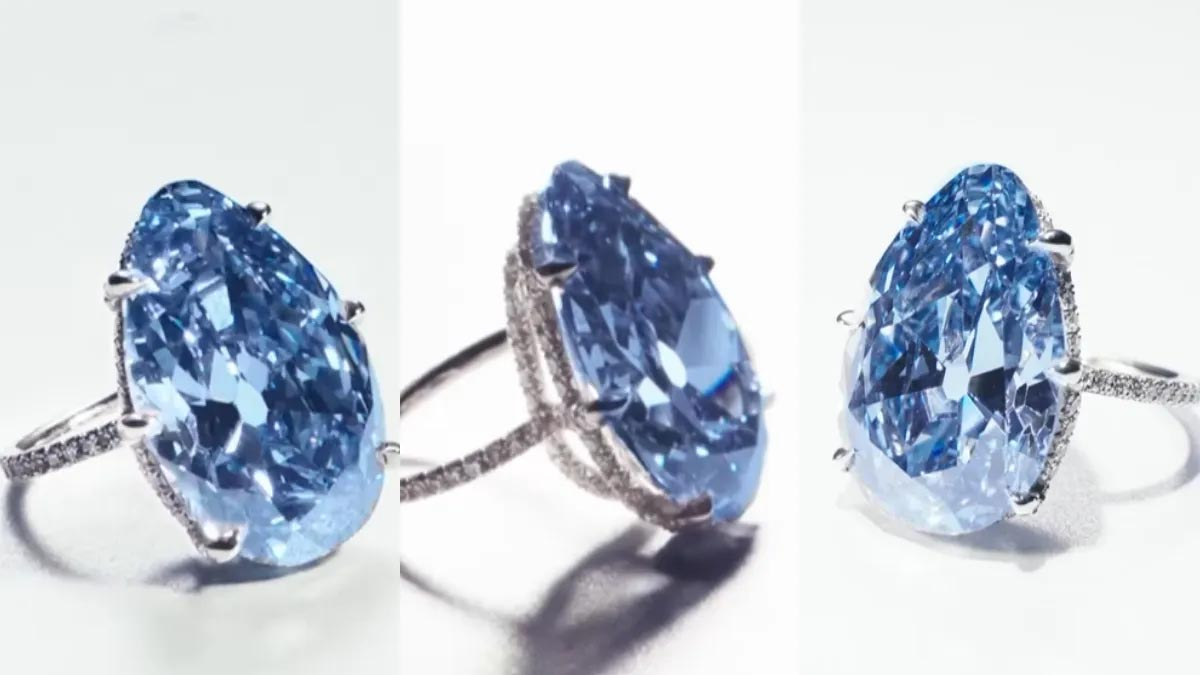
A rare jewel from India’s royal past, the Golconda Blue, a 23.24-carat vivid blue diamond, is set to make history at Christie’s “Magnificent Jewels” auction in Geneva on May 14, 2025.
Once owned by Maharaja Yeshwant Rao Holkar II of Indore, this extraordinary gem originates from the legendary Golconda mines in present-day Telangana, India, renowned for producing some of the world’s most iconic diamonds, such as the Koh-i-Noor and Hope Diamond.
Estimated to fetch between $35 million and $50 million, the diamond, now mounted in a modern ring by Parisian jeweler JAR, is celebrated for its royal provenance, exceptional color, and historical significance. This news blog explores the diamond’s illustrious journey, its cultural importance, and the anticipation surrounding its auction debut.
A Royal Legacy: The Golconda Blue’s Illustrious Provenance
The Golconda Blue’s story is deeply intertwined with Indian royalty, particularly the Holkar dynasty of Indore. Maharaja Yeshwant Rao Holkar II, a modernist ruler of the 1920s and 1930s, was known for his cosmopolitan lifestyle, refined taste, and passion for fine art and jewelry.
Educated in England and honored as a Knight of the Order of the Indian Empire, he cultivated strong ties with European jewelers, blending Indian opulence with Western sophistication.
The diamond’s documented journey began in 1923 when Yeshwant Rao’s father, Tukoji Rao Holkar III, commissioned a bracelet from the prestigious French jeweler Chaumet, setting the 23-carat pear-shaped blue diamond alongside the famed Indore Pears, two other significant Golconda diamonds.
In 1933, Yeshwant Rao appointed Mauboussin as his official jeweler, who reimagined the royal collection. The Golconda Blue was incorporated into a stunning necklace alongside the Indore Pears, a piece famously worn by the Maharani of Indore, Sanyogitabai Devi, and immortalized in a portrait by French artist Bernard Boutet de Monvel.
This artwork captures the elegance of Indo-European high society, showcasing the diamond’s role as a symbol of cultural fusion. The diamond later traveled to the United States, acquired by legendary jeweler Harry Winston in 1947, who set it in a brooch with a matching 23-carat white diamond.
Read : Florida Police Recovered 4 Diamond Earrings Swallowed by Thief During Arrest
It briefly returned to India in the collection of the Maharaja of Baroda before being reacquired by Winston and sold to its current owner. The Golconda Blue’s royal lineage and journey through the hands of iconic jewelers like Chaumet, Mauboussin, and Winston enhance its allure.
“With its royal heritage, extraordinary color, and exceptional size, The Golconda Blue is truly one of the rarest blue diamonds in the world,” said Rahul Kadakia, Christie’s International Head of Jewelry. Its connection to the Holkar dynasty and its storied past make it a significant artifact of India’s regal history, appealing to collectors and historians alike.
The Golconda Mines: A Source of Legendary Gems
The diamond’s origins in the Golconda mines add to its mystique. Located in what is now Telangana, these mines were the world’s primary source of diamonds for nearly 2,000 years until South African deposits were discovered in the late 19th century.
Golconda diamonds are renowned for their exceptional clarity, transparency, and purity, often described as “whiter than white” due to their lack of nitrogen. The mines, situated along fertile riverbeds, produced gems of unparalleled quality, including the Koh-i-Noor (now part of the British Crown Jewels), the Hope Diamond (housed at the Smithsonian), and the Darya-i-Nur in Iran.
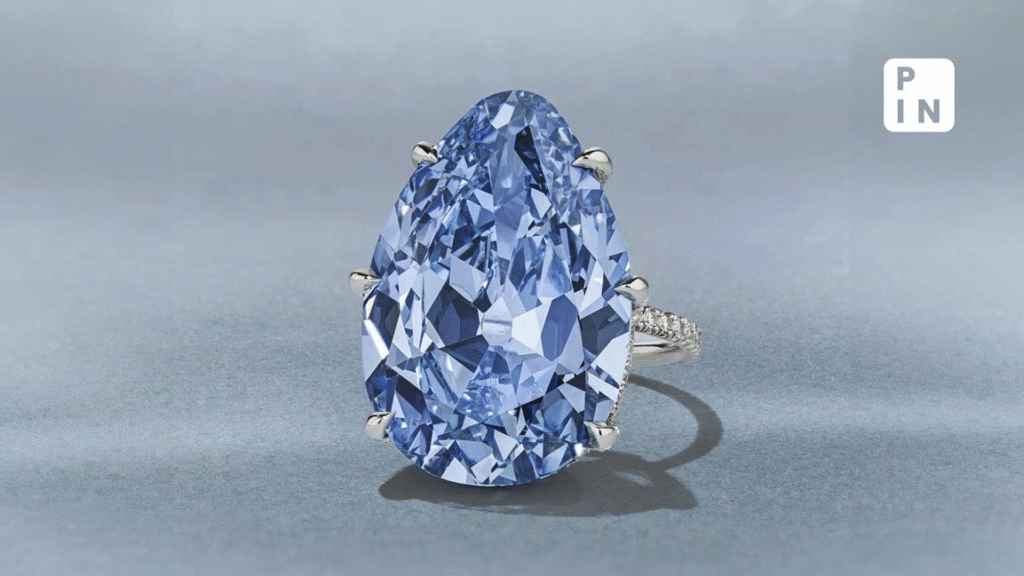
The legacy of Golconda diamonds dates back to ancient times, with references in a 4th-century Sanskrit manuscript and accounts of Alexander the Great bringing Indian diamonds to Europe in 327 BC. By 1292 AD, Marco Polo documented their captivating beauty.
The Golconda Blue, mined from this historic region, embodies this heritage, its vivid blue hue—a rare natural phenomenon caused by trace amounts of boron—setting it apart as a geological marvel.
Christie’s notes that the diamond’s “luminousness and innate purity” align with the finest Golconda gems, making it a once-in-a-lifetime offering. Its historical and geological significance elevates its value, drawing global attention to the upcoming auction.
The Auction Spotlight: A Global Stage for a Rare Gem
The Golconda Blue’s auction debut at Christie’s Geneva, held at the Four Seasons Hotel des Bergues, marks a pivotal moment in the gem’s journey. As the largest fancy vivid blue diamond ever offered at auction, it is expected to ignite intense bidding among collectors, museums, and investors.
Mounted in a contemporary ring by JAR (Joel Arthur Rosenthal), a celebrated Parisian designer, the diamond bridges its historical roots with modern luxury. Christie’s, with its 259-year history of auctioning notable Golconda diamonds like the Archduke Joseph, Princie, and Wittelsbach, positions the Golconda Blue as a centerpiece of its Magnificent Jewels sale.
While the Golconda Blue is the largest of its kind at auction, it is not the most expensive blue diamond sold. The 14.62-carat Oppenheimer Blue fetched $57.5 million at Christie’s Geneva in 2016, and the 15.10-carat De Beers Blue sold for $57.4 million at Sotheby’s Hong Kong in 2022.
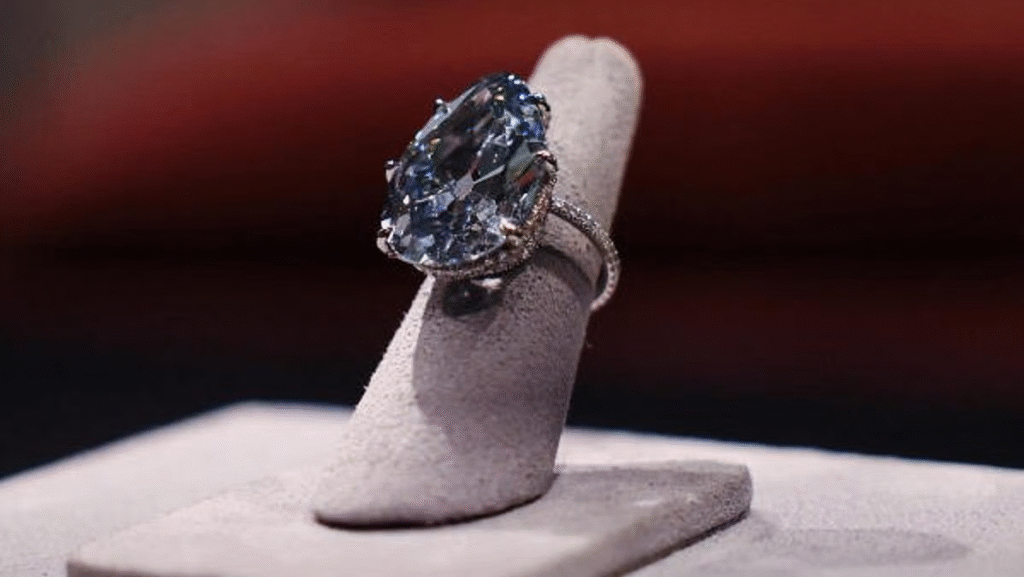
The largest known fancy vivid blue diamond, the 45.52-carat Hope Diamond, resides at the Smithsonian and is not for sale. Even at its high estimate of $50 million, the Golconda Blue may not surpass these records, but its size, provenance, and rarity ensure its significance.
The auction is poised to draw global interest, particularly from Indian collectors, given the diamond’s cultural ties to the Golconda mines and Holkar dynasty. The anticipation surrounding the auction reflects the diamond’s status as more than a gem—it is a piece of history.
“Today, the Golconda Blue stands not only as a naturalF marvel but also as a storied jewel—its provenance bridging continents, dynasties, and centuries,” Christie’s stated. Whether acquired by a private collector, a museum, or a modern-day magnate, the Golconda Blue’s next chapter promises to continue its legacy of elegance and intrigue.
In conclusion, the Golconda Blue’s journey from the mines of Telangana to the auction stage in Geneva encapsulates a remarkable narrative of royalty, craftsmanship, and global fascination with rare gems.
Its association with Maharaja Yeshwant Rao Holkar II, its origins in the fabled Golconda mines, and its transformation through the hands of legendary jewelers make it a unique artifact. As the world awaits the outcome of the May 14 auction, the Golconda Blue remains a testament to India’s enduring contribution to the world of luxury and heritage.