
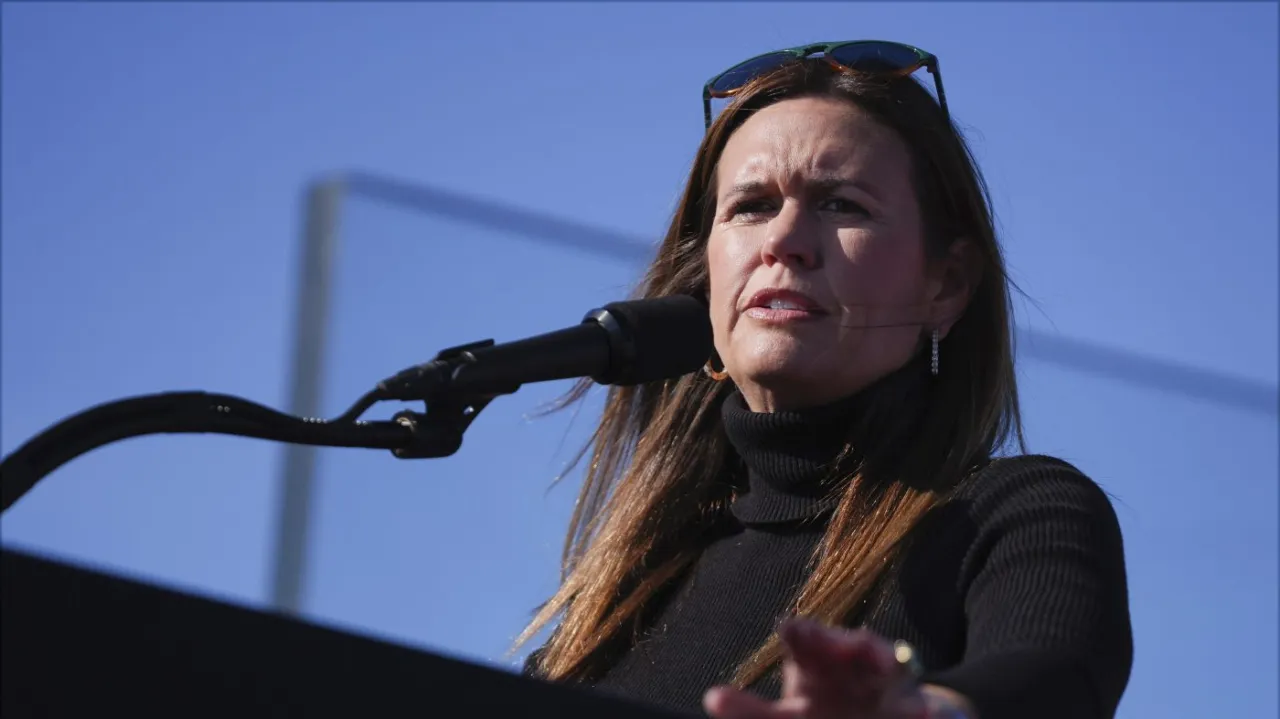
Sarah Huckabee Sanders has once again found herself at the center of national attention, this time due to a widely discussed incident at a Little Rock restaurant that sparked debate over politics, public figures, and social spaces. The situation, involving conflicting accounts between her office and the establishment, has reignited conversations about how political identity intersects with everyday interactions.
While the event itself drew headlines, it also led many to revisit Sanders’ political journey, public image, and role as one of the most recognizable conservative figures in the United States. Understanding who she is requires looking beyond a single moment and examining her rise in politics, her leadership style, and the broader influence she continues to wield.
From Political Roots to National Spotlight
Sarah Huckabee Sanders was born into a deeply political family, which significantly shaped her career trajectory from an early age. She is the daughter of former Arkansas governor Mike Huckabee, a well-known conservative figure who also ran for president. Growing up in such an environment gave her firsthand exposure to campaigns, governance, and public service, laying the foundation for her future ambitions.
Rather than stepping into politics hesitantly, she embraced it early, working behind the scenes on various campaigns, including her father’s presidential bids. Her political career gained national prominence when she joined Donald Trump’s presidential campaign in 2016 as a senior advisor. Following Trump’s victory, she became a key member of his administration, eventually serving as White House Press Secretary.
In that role, she became one of the most visible figures in American politics, regularly addressing the media and defending administration policies during a highly polarized period. Her tenure was marked by frequent press briefings that often turned into intense exchanges, reflecting the broader tensions of the political climate at the time. Serving as press secretary elevated Sanders’ public profile significantly.
She became known for her firm communication style and unwavering support of the administration she represented. While her approach earned praise from supporters who appreciated her directness and loyalty, it also drew criticism from opponents who challenged her statements and handling of controversial issues. Regardless of perspective, her time in Washington firmly established her as a prominent national figure.
Transition to State Leadership in Arkansas
After leaving her role in Washington, Sanders returned to Arkansas with a clear political goal. In 2022, she ran for governor and won, becoming the first woman to hold the office in the state’s history. Her campaign emphasized conservative values, economic growth, education reform, and public safety, themes that resonated strongly with voters in Arkansas.
As governor, she has focused on implementing policies aligned with her political ideology, including education changes and economic initiatives aimed at attracting business investment. Her leadership style reflects a continuation of her national persona—direct, assertive, and closely aligned with conservative priorities. Supporters view her as a strong advocate for their values, while critics often challenge her policy decisions and rhetoric.
Her tenure has also been characterized by efforts to position Arkansas as a state open to economic development and reform. She has promoted initiatives designed to modernize education systems and reduce regulatory burdens on businesses. At the same time, her administration has been involved in debates over social issues, further placing her in the national spotlight.
🚨 NEW: Gov Sarah Huckabee argues being asked to leave restaurant shows divide and vows not to let it define Arkansas.
— Derrick Evans (@DerrickEvans4WV) March 21, 2026
"I was there with two other moms, and as you know as well as anybody, Sean, the battle in this country is no longer between the left."pic.twitter.com/iSCufpNuNr
The transition from federal spokesperson to state executive represents a significant shift in responsibility. Unlike her previous role, where she communicated policies crafted by others, she now plays a direct role in shaping and implementing those policies. This shift has allowed her to build a distinct political identity beyond her time in the White House, though the connection to her earlier career remains a defining aspect of her public image.
The Restaurant Incident and Public Reaction
The recent incident at a Little Rock restaurant has added another chapter to Sanders’ public narrative, illustrating how political identity can influence everyday interactions. According to her account, she was asked to leave after dining for over an hour, with the request allegedly linked to discomfort among staff due to her political views. Her office described the experience as unwelcoming and inconsistent with the hospitality the state is known for.
Read : Who Is Lisa Cook, the Fed Governor in the Spotlight of Trump’s Supreme Court Clash Over Removal?
The restaurant, however, presented a different version of events. It stated that the situation was more complex, involving concerns from both staff and guests as her presence became widely recognized. The establishment denied that anyone felt threatened and emphasized that the request for her to leave was tied in part to its dining time policy, which limits table occupancy to 90 minutes. According to its statement, staff approached her security detail discreetly and asked that she conclude her visit, noting that the request was not immediately acted upon.
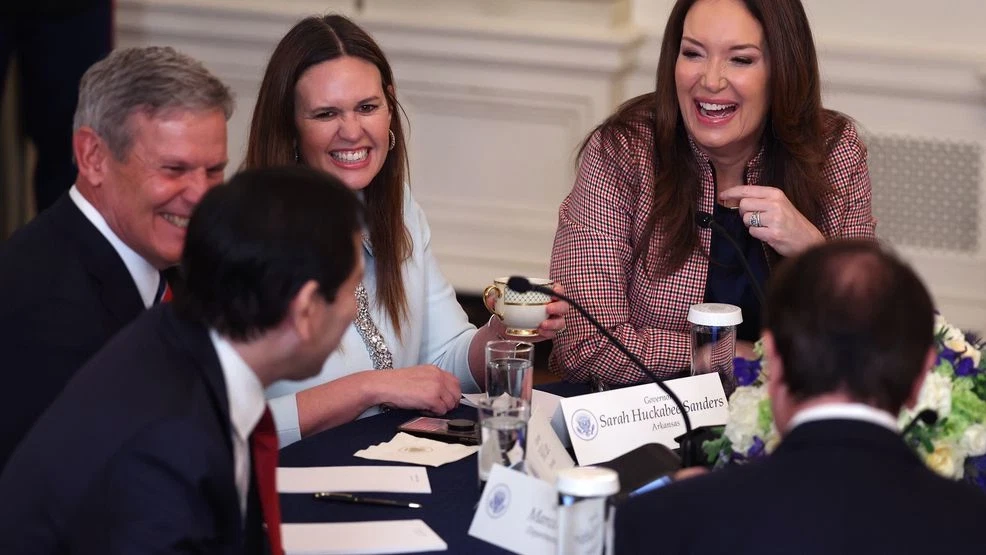
The differing accounts highlight how the same situation can be interpreted in multiple ways, especially when it involves a high-profile political figure. For Sanders’ supporters, the incident has been viewed as an example of political discrimination, reinforcing concerns about bias against conservative figures in certain social settings. For others, the restaurant’s explanation suggests a more nuanced scenario, where operational policies and the reactions of those present played a role in the decision.
Public reaction has been divided, reflecting broader political polarization. Some individuals have expressed sympathy for Sanders, arguing that personal beliefs should not affect how someone is treated in a public establishment. Others have defended the restaurant’s position, emphasizing the challenges businesses may face when hosting prominent political figures whose presence can attract attention or controversy.
The situation also underscores the unique challenges faced by public officials in everyday environments. Unlike private citizens, their presence often carries symbolic weight, influencing not only those around them but also how interactions are perceived and reported. Even routine activities, such as dining at a restaurant, can become politically charged events when they involve well-known figures.
Beyond the immediate debate, the incident has sparked broader discussions about the boundaries between personal beliefs and public service. It raises questions about how society navigates differences in political ideology and whether public figures should be treated differently in social spaces. These discussions are unlikely to fade quickly, as they touch on fundamental issues of identity, inclusion, and freedom of expression.
Sarah Huckabee Sanders remains a significant figure in American politics, and moments like this contribute to the ongoing narrative surrounding her career. Whether viewed through the lens of support or criticism, her experiences continue to reflect the complexities of political life in a deeply divided environment.