
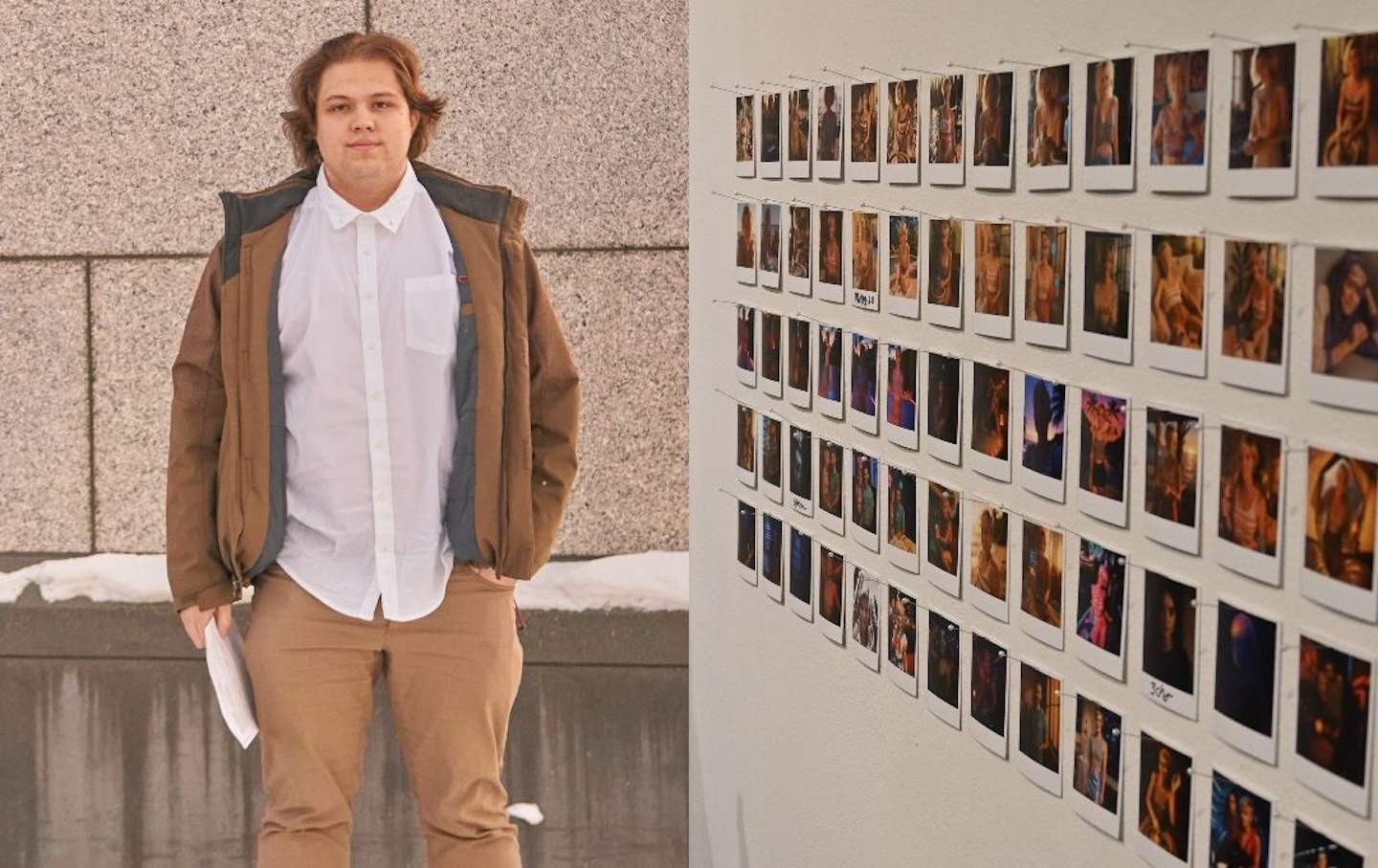
An unusual protest inside a University of Alaska Fairbanks campus gallery has drawn national attention to the growing tensions surrounding artificial intelligence in creative fields. What began as a routine rotating exhibition of graduate student work escalated into a criminal case after an undergraduate student tore AI-generated artwork from the gallery walls and consumed parts of it.
The incident has since become a flashpoint in the wider debate over authenticity, authorship, and the role of emerging technologies in contemporary art education. While the material damage was limited, the symbolic implications have resonated far beyond the university, prompting questions about protest, expression, and the boundaries of dissent within academic spaces.
The Incident at the University Gallery
According to university officials and police reports, the incident occurred during a scheduled exhibition featuring work by five Master of Fine Arts candidates. Among the displayed pieces were Polaroid-style prints created using artificial intelligence by MFA student Nick Dwyer. The works were installed as part of a rotating gallery show intended to showcase diverse approaches to contemporary art practice within the university’s graduate program.
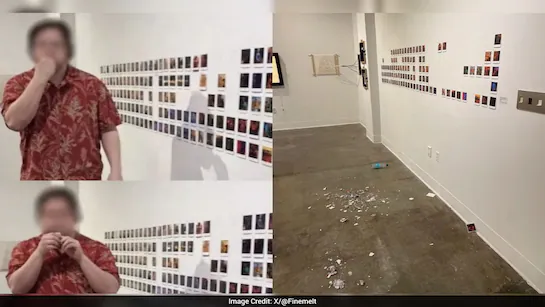
Graham Granger, an undergraduate student enrolled in a film and performing arts program, allegedly entered the gallery and began tearing the AI-generated prints from the walls. Officers later reported that at least 57 out of approximately 160 prints were damaged or removed. Some of the prints were reportedly eaten by Granger during what police described as an “anti-AI crusade.” The estimated damage to the artwork was placed at around $220.
Campus authorities detained Granger, and he was subsequently charged with fifth-degree criminal mischief, a Class B misdemeanour under Alaska law. While the charge reflects the relatively low monetary value of the damage, the act itself has been treated seriously by the university, given its disruption of an academic exhibition and the deliberate destruction of another student’s work.
Read : Seychelles: Discovering Paradise in the Indian Ocean
The incident was widely reported, including coverage by tabloids and national media outlets, which amplified its visibility and placed the University of Alaska Fairbanks at the centre of a cultural debate already unfolding across creative industries. For some observers, the act appeared as an extreme form of protest against the increasing presence of artificial intelligence in art. For others, it represented a violation of academic norms and a troubling dismissal of artistic freedom.
Nick Dwyer’s Use of Artificial Intelligence in Art
At the centre of the controversy is Nick Dwyer, the MFA candidate whose work was targeted. Dwyer has publicly stated that his use of artificial intelligence is neither casual nor opportunistic, but rather a deliberate extension of long-standing artistic inquiry. He began incorporating AI tools into his practice around 2017 or 2018, after spending years producing work without the assistance of such technology.
Dwyer’s artistic focus includes themes of identity, character creation, and the psychological effects of prolonged interaction with artificial intelligence. His work does not simply use AI as a shortcut for image generation, but instead examines how humans relate to algorithmic systems and how those systems, in turn, shape narrative and self-perception. In interviews with the university’s student newspaper, Dwyer described the vulnerability inherent in making art, noting that artworks, like their creators, are exposed to interpretation, critique, and, in this case, destruction.
Read : Franciscan University Students Luke Reimer and Mary Mich Found Dead in Car
He has argued that vulnerability is precisely what gives art its sense of immediacy and authenticity. From this perspective, the use of AI does not negate human involvement but complicates it, introducing new layers of authorship and intention. Dwyer’s inclusion in the MFA exhibition reflects the university’s broader acceptance of experimental and technologically mediated practices within its fine arts curriculum.
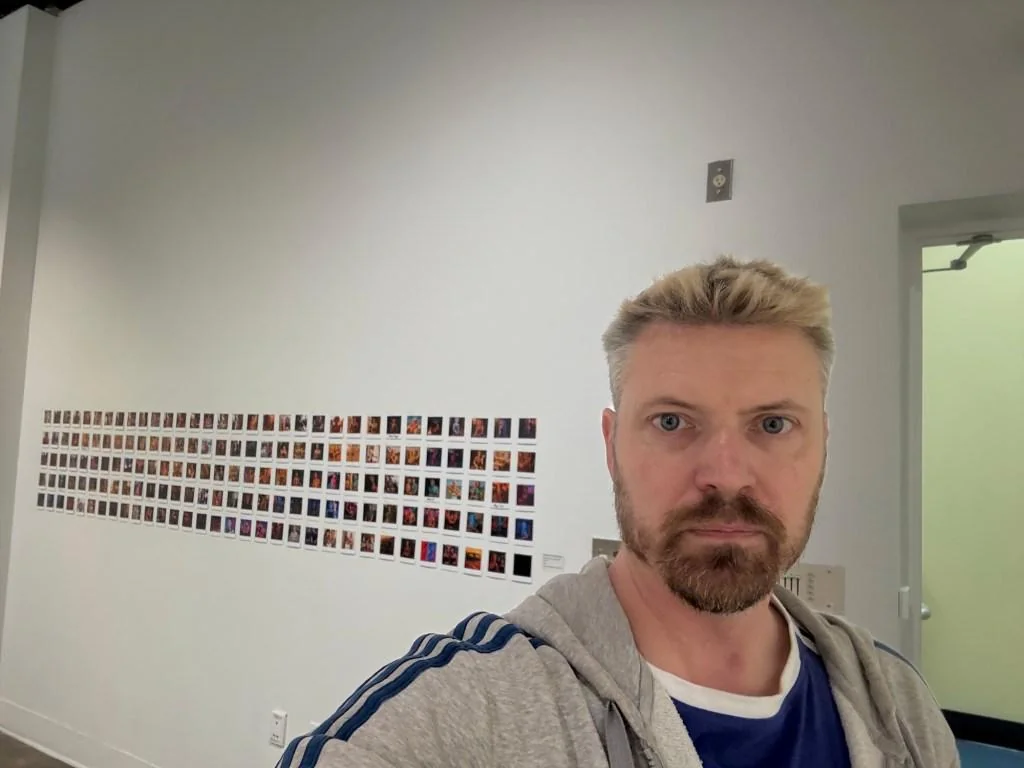
The gallery show itself was designed to present a range of artistic approaches, with AI-generated images displayed alongside works created using more traditional methods. University officials have emphasized that the exhibition was curated to encourage dialogue and critical engagement, not to endorse any single medium or philosophy of art-making. In that context, Dwyer’s work was intended as a contribution to an ongoing conversation rather than a provocation.
Despite this, the reaction from Granger suggests that, for some students, the presence of AI in art spaces is not merely an academic issue but a deeply emotional one. Dwyer’s experience highlights the personal stakes involved when emerging technologies intersect with creative identity, particularly in environments where artistic values are actively being shaped and contested.
AI, Artistic Authenticity, and the Rise of “AI Slop”
The protest at the University of Alaska Fairbanks cannot be understood in isolation from the broader cultural backlash against artificial intelligence. As AI tools have become increasingly accessible, they have been used to generate text, images, videos, and code at unprecedented scale. While this democratization of creative tools has been celebrated in some quarters, it has also sparked concerns about quality, originality, and the erosion of human labour.
Read : Parkland High School Student Arrested for Assaulting Teacher
The term “AI slop” has emerged as a shorthand for low-quality, automated content that floods online platforms. This phrase gained enough cultural traction that Merriam-Webster named “slop” its Word of the Year for 2025, acknowledging its expanded usage in relation to artificial intelligence. Critics argue that such content is easily recognisable due to its lack of imperfection, emotional depth, and contextual sensitivity, qualities traditionally associated with human creativity.
In professional and academic settings, these concerns are particularly acute. While AI can assist with ideation and production, the final output is often seen as formulaic or detached. Reports have even noted the rise of new jobs dedicated to making AI-generated content appear more human, underscoring the persistent value placed on authenticity and nuance.
Within this climate, Granger’s actions can be viewed as an extreme manifestation of resistance to what he perceived as the encroachment of artificial intelligence into spaces reserved for human expression. However, the method of protest raises difficult questions. Destroying another student’s work, regardless of medium, challenges the principles of academic discourse and mutual respect that universities are meant to uphold.
The incident also illustrates the tension between symbolic protest and material consequence. While eating the artwork was likely intended as a dramatic gesture, it resulted in legal charges and disrupted the educational experience of others. It further placed Dwyer, an individual artist, at the centre of a controversy that reflects systemic issues far beyond his own practice.
Universities now face the challenge of navigating these debates in real time. As AI continues to evolve, art institutions must balance openness to innovation with sensitivity to ethical and cultural concerns. The University of Alaska Fairbanks has not indicated that it plans to restrict the use of AI in future exhibitions, but the incident has highlighted the need for clearer dialogue around expectations, protest, and the limits of acceptable expression within academic communities.
In the end, the episode underscores a fundamental reality of the current moment: artificial intelligence is no longer a peripheral tool but a central force reshaping creative practice. The reactions it provokes, whether thoughtful critique or destructive protest, reveal the depth of unease and fascination it inspires. As debates over AI, authenticity, and artistic value continue to unfold, incidents like this serve as stark reminders that technological change is not only technical but deeply human in its consequences.