
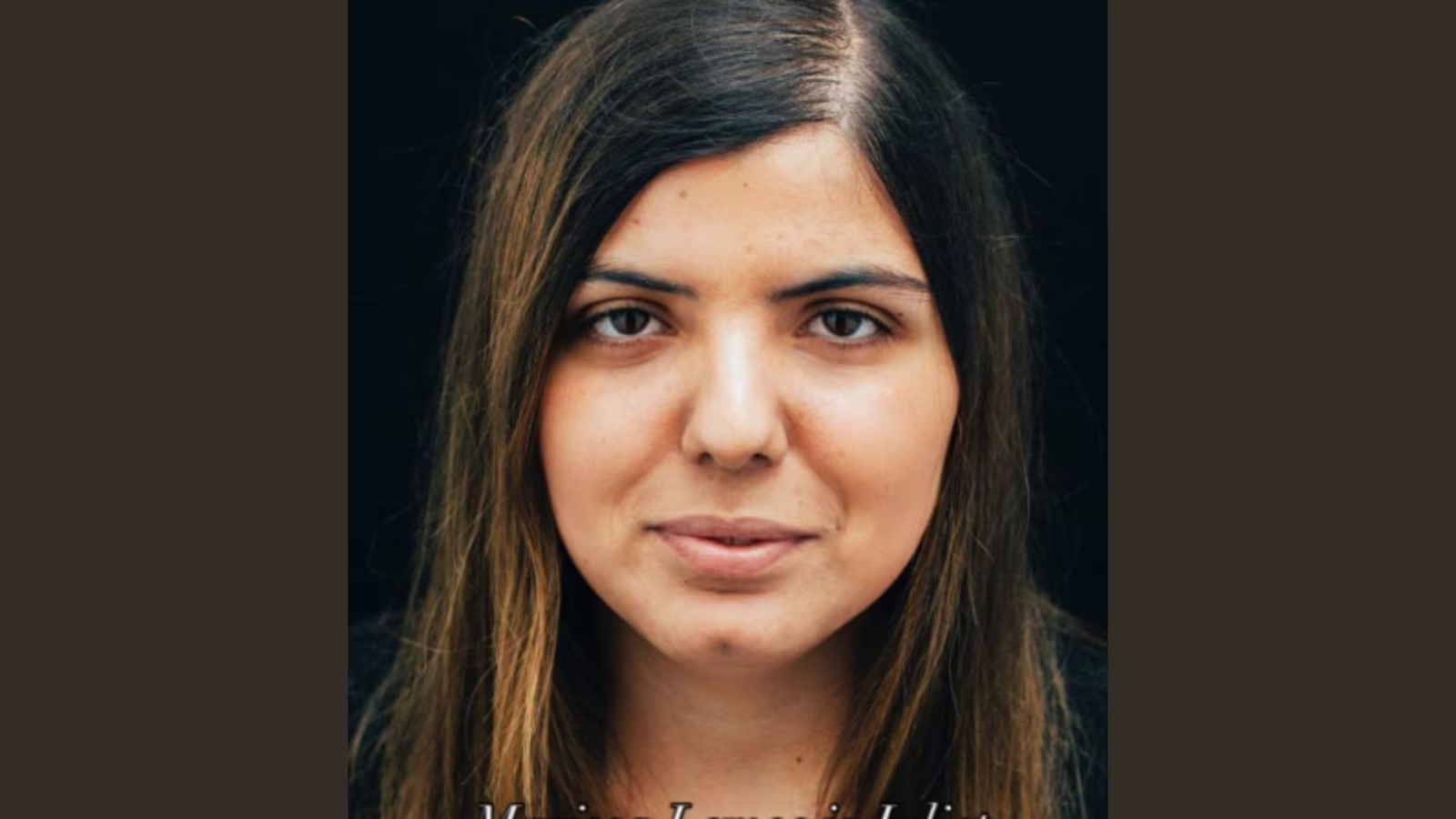
In a heartbreaking turn of events that has left the international community reeling, 28-year-old Marissa Laimou, a prominent figure from one of Greece’s most esteemed shipping dynasties, was discovered lifeless in her London apartment on September 12, 2025. The young heiress, who had recently triumphed over breast cancer, succumbed to what her family believes was a fatal insect bite, following a series of medical missteps that have sparked outrage and calls for accountability. Her sudden passing not only shatters her close-knit family but also raises profound questions about healthcare access and the vulnerabilities even the wealthiest face in the face of unforeseen health crises.
As details emerge from Greek and British media outlets, the story of Marissa Laimou’s final days paints a portrait of resilience cut tragically short. Born into the illustrious Laimou family, whose shipping empire traces its roots to the early 20th century, Marissa embodied the blend of privilege and purpose that defined her lineage. Her father, Diamantis Laimou, and mother, Bessie, built upon generations of maritime success, navigating the turbulent waters of global trade with shrewd acumen. Yet, Marissa carved her own path far from the decks of supertankers, channeling her inheritance into creative pursuits that lit up London’s vibrant arts scene.
Educated in the United States with a degree in musical theater, she returned to the city of her birth—London, where she was raised—to immerse herself in the worlds of theater and fashion. Friends and family remember her not as a distant socialite, but as a hands-on collaborator, directing a recent production of Romeo and Juliet that drew acclaim for its innovative staging and emotional depth. She was also deeply involved in the luxury fashion sector, heading marketing efforts for high-end brands that reflected her impeccable taste and forward-thinking vision.
Marissa Laimou’s battle with breast cancer, diagnosed just two years prior, had been a testament to her unyielding spirit. Undergoing rigorous treatments in London’s top facilities, she emerged victorious earlier this year, her recovery celebrated quietly among loved ones as a second chance at life. “She was a fighter,” her mother Bessie would later recount in a tearful interview with Greek media. “My girl beat something that takes so many, only to be taken by something so small.”
Read : Beyond Beauty: Ten Influential Princesses Who Shaped History
This victory lent an even sharper edge to the irony of her death, transforming what should have been a season of renewal into one of unimaginable grief. Tributes have poured in from across the Atlantic, with theater colleagues sharing anecdotes of her generosity—how she once funded costumes out of pocket for an under-resourced community play—and her quiet modesty, often seen slipping into back-row seats rather than commandeering the spotlight.
The Final Days: A Cascade of Symptoms and Desperate Pleas
The sequence of events leading to Marissa Laimou’s death unfolded with alarming rapidity, beginning innocuously enough in the days prior to September 11, 2025. According to family statements, the young woman first noticed a minor insect bite—possibly from a mosquito—on her arm while out for a walk in one of London’s leafy parks. What started as a fleeting itch soon escalated into a constellation of alarming symptoms: persistent dizziness that left her unsteady on her feet, an unrelenting fever that spiked erratically, and widespread itching that suggested a brewing infection. These signs, innocuous at first glance, rapidly compounded, turning her elegant apartment into a makeshift sickroom.
Read : Norwegian Royal Maud Angelica Behn, 22, Comes Out as Bisexual at Oslo Pride Parade
On September 8, concerned for her well-being, Marissa Laimou summoned a home-visit doctor, a common practice in upscale London circles for privacy and convenience. The physician, after a cursory examination, diagnosed a mild allergic reaction and prescribed a standard dose of paracetamol to manage the discomfort. “It seemed routine,” Bessie Laimou later reflected, her voice breaking as she pieced together the timeline for reporters. But the medication offered no relief; if anything, Marissa’s condition worsened overnight. By the next morning, her oncologist—familiar with her recent cancer history—advised an immediate hospital visit, wary of any infection that could exploit her still-recovering immune system.
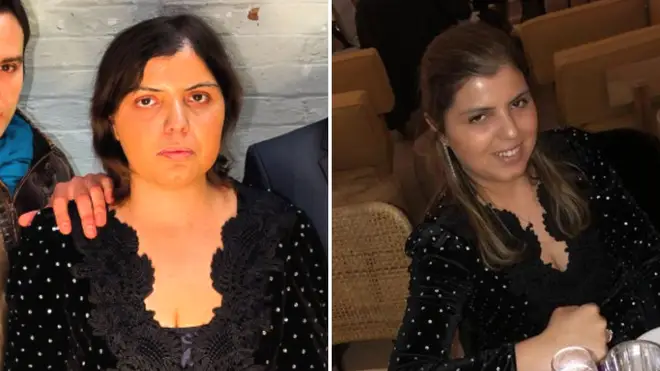
Rushed to a prominent London hospital’s oncology unit on September 9, Marissa Laimou was triaged amid a bustle of patients. Initial assessments noted the bite’s inflammation but classified her symptoms as non-urgent. Transferred to an adjacent emergency department for further evaluation, she encountered a different reality: seen only by nurses due to a backlog of critical cases, she was evaluated briefly before being discharged that evening. Handed a prescription for antibiotics and a note referencing the insect bite as the culprit, Marissa returned home, assured that rest and the medication would suffice. “They told us it was nothing serious,” her great-aunt Chrysanthi recounted to Parapolitika, a Greek news outlet. “She went back believing she was on the mend.”
The following day, September 10, brought no improvement. Marissa Laimou’s fever climbed higher, her dizziness now accompanied by nausea and disorientation. A second hospital visit yielded the same outcome: another quick assessment, more antibiotics, and a send-home order. Exhausted and increasingly frail, she retreated to her bed, confiding in a friend via text that she felt “like the world is spinning too fast.” It was in this vulnerable state that her housekeeper discovered her the next morning, September 12—motionless, her once-vibrant features pale and still. Paramedics pronounced her dead at the scene, the apartment’s silence broken only by the wail of sirens echoing through the upscale neighborhood.
Medical Lapses and a Family’s Quest for Justice
At the heart of this tragedy lies a damning narrative of potential medical oversights that has ignited fury among the Laimou family and beyond. Bessie Laimou has publicly alleged that toxic shock syndrome, triggered by the untreated insect bite, claimed her daughter’s life—a complication that, in rare cases, can escalate from bacterial infection to full-body sepsis within hours. “My daughter survived cancer and died from an insect,” Bessie lamented to reporters, her words a raw indictment of the system that failed her. “She left for nothing.” The family’s suspicions center on the two hospitals involved, both of which have faced mounting scrutiny in the wake of the incident.
The first facility, a renowned oncology center, has acknowledged a review of its protocols but maintains that Marissa Laimou’s presentation did not warrant admission at the time. The second, an emergency unit strained by London’s perpetual healthcare pressures, has launched a formal internal investigation, citing understaffing and triage delays as contributing factors. “We extend our deepest condolences and are committed to a thorough examination,” a spokesperson stated curtly, though details remain sealed pending the official post-mortem.
Scheduled for later this week, the autopsy is expected to provide forensic clarity: confirming the insect bite as the entry point for infection, detailing the progression to toxic shock, and potentially uncovering any lapses in care that could have altered the outcome. This case resonates deeply in the UK, where National Health Service (NHS) waiting times have long been a flashpoint for reform. Critics point to Marissa’s story as emblematic of broader systemic failures—how even a patient with private insurance and a high-profile background can slip through the cracks.
In Greece, where the Laimou name evokes both admiration and envy, the death has prompted national soul-searching. Prime Minister Kyriakos Mitsotakis offered condolences via social media, while shipping industry leaders have rallied to support the family, pledging funds for an independent inquiry. “Marissa was more than an heiress; she was a bridge between worlds,” one colleague noted. “Her loss demands we bridge the gaps in our own systems.”

As the investigation unfolds, the Laimou family clings to memories rather than blame. Chrysanthi, Marissa’s great-aunt, described her as “a very kind girl, quiet, educated, cultured, modest and simple. She loved art and theater.” Indeed, in the days following her discovery, London’s theater community paused for a moment of silence during a West End performance, the stage lights dimming in tribute to the woman who had infused their craft with such passion.
Remembering Marissa: A Legacy of Light Amid Shadows
Marissa Laimou’s life, though brief, burned with a quiet intensity that belied her youth. Born on the cusp of the digital age, she navigated the weight of legacy with grace, choosing spotlights of her own making over those cast by fortune. Her production of Romeo and Juliet—a modern retelling set against the backdrop of fractured families in a globalized world—mirrored her own ethos: finding beauty in division, healing through expression. Colleagues recall her late nights in rehearsal halls, not as a director barking orders, but as a collaborator sketching costume designs on napkins, her laughter cutting through the tension like a spotlight.
Her foray into fashion was equally inspired. As head of marketing for select luxury lines, Marissa championed sustainable practices, blending Greek textile traditions with contemporary silhouettes. “She saw clothes as stories,” a former associate shared. “Each piece a thread connecting past to future.” Her cancer journey only deepened this perspective; post-recovery, she volunteered with arts therapy programs for survivors, using theater workshops to rebuild shattered confidences. “Art saved me when medicine couldn’t,” she once confided in an interview, her words now hauntingly prescient.
In the shadow of her death, tributes have flooded social media and memorial pages, painting a mosaic of a woman who touched lives without fanfare. Friends from her U.S. college days remember road trips filled with impromptu sing-alongs; London acquaintances, quiet coffees where she’d listen more than speak. Her parents, Diamantis and Bessie, have vowed to honor her through a foundation supporting young artists and healthcare reform—perhaps the most fitting eulogy for a soul who danced between worlds.
Marissa’s story is one of contrasts: the unyielding strength that felled cancer, undone by the fragility of a single bite; the opulence of inheritance, humbled by the banality of bureaucracy. As her family awaits autopsy results and justice, the world watches, reminded that privilege offers no shield against fate’s whims. In London’s fog-shrouded streets, where she once chased dreams, her absence echoes—a call to cherish the quiet revolutionaries among us, before the curtain falls too soon.