
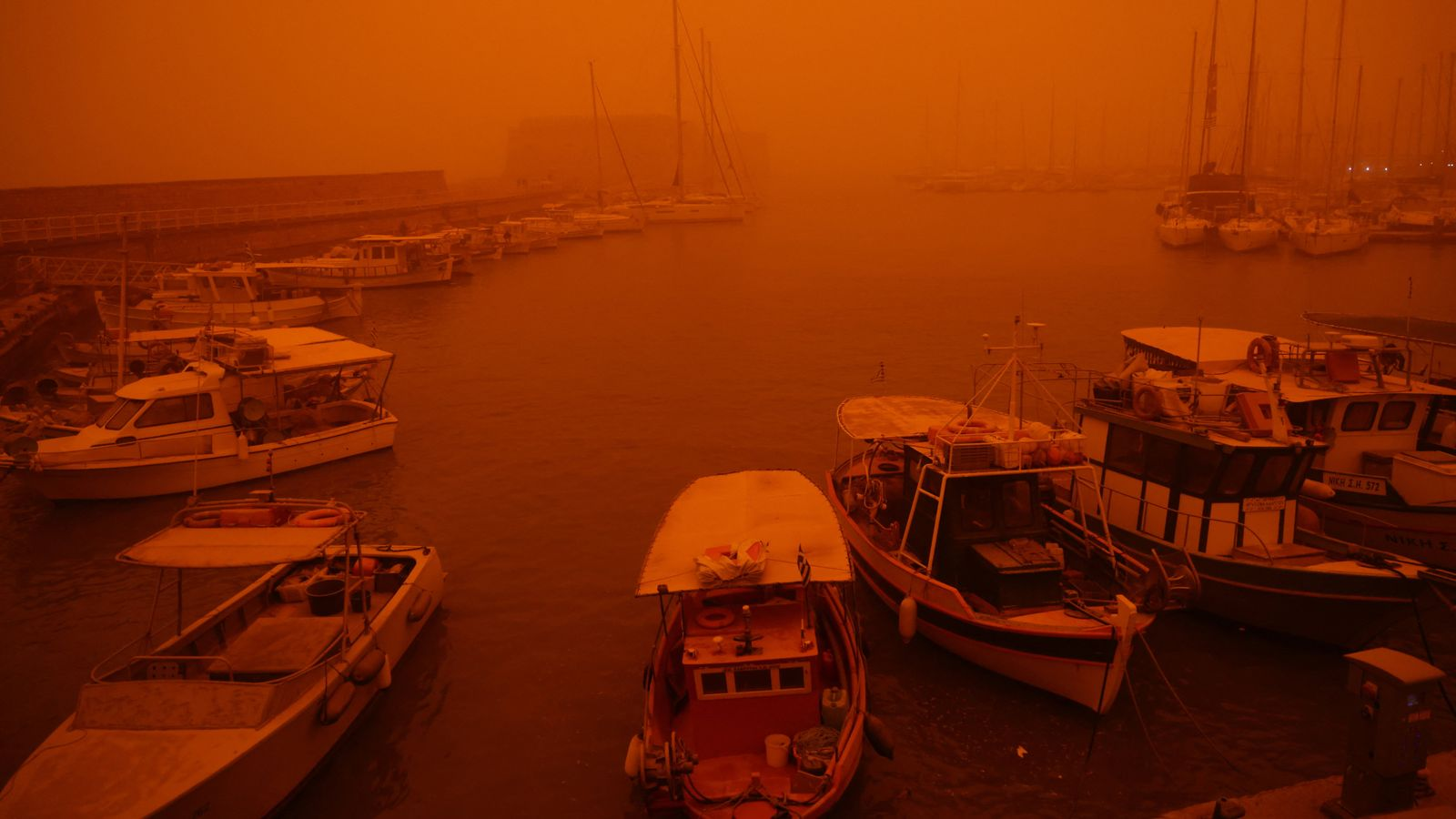
The Greek island of Crete witnessed an extraordinary and unsettling transformation in early April 2026, as skies turned deep orange and red under the impact of a massive Saharan dust cloud. The phenomenon, driven by strong southerly winds carrying fine desert particles from North Africa across the Mediterranean, dramatically altered the island’s usual clear blue atmosphere. Combined with a powerful weather system, the event created hazardous conditions, disrupted daily life, and drew global attention due to its intensity and visual impact.
The dust storm did not occur in isolation. It arrived alongside a broader severe weather system, identified as Storm Erminio, which brought gale-force winds, heavy rainfall, and flooding across Greece. The convergence of these elements intensified the phenomenon, turning what is typically a seasonal occurrence into a major environmental and public safety event.
Meteorological Causes Behind the Orange Haze
Saharan dust transport into southern Europe is a known meteorological process, but the scale and visibility of this event were particularly striking. Strong winds originating from North Africa lifted vast quantities of fine sand and dust particles high into the atmosphere, allowing them to travel hundreds of kilometers across the Mediterranean Sea. When these particles reached Crete, they created a dense atmospheric layer that filtered sunlight, producing the island’s surreal orange and red skies.
The situation was further intensified by Storm Erminio, which generated powerful wind currents capable of transporting even larger volumes of dust. Winds reached high intensities, and in some areas, dust concentrations exceeded safe levels, significantly reducing visibility. This combination of dust and storm activity led to what many observers described as “apocalyptic” conditions, with the sky taking on an unnatural hue rarely seen at such scale.
In addition to the visual impact, the interaction between dust and moisture in the atmosphere led to a phenomenon often referred to as “mud rain.” As rain fell through the dust-laden air, it carried particles to the ground, leaving surfaces coated in a thin layer of reddish-brown residue. This further illustrated the density of the dust cloud and its widespread reach across the island.
Impact on Daily Life, Travel, and Public Safety
The effects of the Saharan dust storm extended far beyond its dramatic appearance. Air quality across Crete deteriorated sharply as fine particulate matter filled the atmosphere, prompting health concerns, particularly for individuals with respiratory conditions. Authorities issued warnings advising residents to limit outdoor exposure and take precautions against inhaling dust particles.
Read : Who is Sachin Awasthi, Indian Travel Vlogger Denied Entry at Jeju Island After 38-Hour Detention?
Visibility across the island dropped significantly, disrupting transportation and daily routines. Flights to and from Crete were affected, with several aircraft unable to land due to poor visibility and hazardous conditions, leading to diversions and delays. Ferry services and road travel were also impacted as strong winds and reduced visibility created unsafe conditions.
A wave of orange dust swept over Greece's Crete island as strong winds carried sand and dust from the Saharan desert in Northern Africa across the Mediterranean pic.twitter.com/hz1nsD6cLD
— Reuters (@Reuters) April 2, 2026
The broader storm system compounded these disruptions. Heavy rainfall led to flooding in multiple regions, turning streets into rivers and causing damage to infrastructure. Emergency services responded to numerous calls, rescuing individuals trapped by floodwaters and clearing debris such as fallen trees. In some areas beyond Crete, the storm resulted in fatalities, highlighting the severity of the overall weather event.
Daily life on the island was significantly affected. Schools were closed in certain areas, businesses experienced interruptions, and outdoor activities were curtailed due to health and safety concerns. The tourism sector, particularly sensitive during the pre-Easter travel period, also faced challenges as travel disruptions and unusual weather conditions deterred visitors.
While Saharan dust events are not uncommon in the Mediterranean region, their increasing intensity and frequency have raised concerns among scientists and environmental observers. These events play a complex role in the global climate system. On one hand, Saharan dust contributes essential nutrients to ecosystems, particularly in marine and terrestrial environments. On the other hand, high concentrations of airborne particles can have adverse effects on air quality, human health, and visibility.
The 2026 Crete event highlighted how such natural phenomena can become more disruptive when combined with extreme weather systems. Storm Erminio’s strong winds acted as a powerful transport mechanism, amplifying the reach and density of the dust cloud. This interaction underscores the interconnected nature of atmospheric processes and the potential for compound weather events to create more severe impacts.
Events like this also serve as a reminder of how environmental conditions in one region can directly influence another across vast distances. The movement of Saharan dust into Europe demonstrates the scale at which atmospheric systems operate, linking continents through shared environmental dynamics.