

A former Waffle House grill cook in South Carolina has filed a federal lawsuit accusing the restaurant chain of allowing repeated sexual harassment by her direct supervisor and failing to intervene despite numerous complaints. Marilyn Smith alleges that during her brief tenure with the company, she was subjected to ongoing, unwanted physical contact by her unit manager, including repeated groping of her buttocks while she was on the job.
According to the complaint, Smith repeatedly asked the manager to stop and escalated the issue to higher management, only to be ignored, blamed, and ultimately forced to resign under what her attorneys describe as intolerable working conditions. The lawsuit presents a detailed account of alleged misconduct, managerial inaction, and the emotional, professional, and financial toll Smith says she suffered as a result.
Filed in federal court in December and formally served on Waffle House in January, the case adds to a history of legal actions involving workplace misconduct at the well-known restaurant chain. Smith’s complaint alleges violations of federal employment law and seeks compensatory, punitive, and economic damages. While Waffle House has not publicly responded to the allegations, the lawsuit raises broader questions about employer responsibility, internal reporting systems, and the protection of hourly workers in the service industry.
Allegations of Persistent Groping and Workplace Harassment
According to the lawsuit, Marilyn Smith was hired on July 10, 2024, as a Grill Operator at a Waffle House location in Colleton County, South Carolina. The Grill Operator role is considered an entry-level position within the company, with hourly wages typically ranging from $10 to $14 depending on experience, rank, and performance. Smith’s complaint describes her as an effective, efficient, and exemplary employee who met all essential job requirements and performed her duties satisfactorily.
The alleged harassment began on or around September 1, 2024, less than two months after Smith started working at the restaurant. Smith claims that her unit manager began repeatedly grabbing her buttocks while she was working on the grill. The lawsuit characterizes the conduct as constant and unwanted, stating that the manager engaged in this behavior despite Smith’s repeated verbal objections and requests for the conduct to stop.
Smith alleges that the physical nature of her job, which required her to work in close quarters around the grill, made it difficult to avoid the manager’s advances. The complaint asserts that the manager used her position of authority to continue the conduct, creating a hostile and intimidating work environment. Smith claims she made it clear that the touching was unwelcome and inappropriate, yet the behavior continued without consequence.
As the alleged harassment persisted, Smith reported the manager’s conduct to her district manager. According to the complaint, these reports were either ignored or dismissed. Rather than initiating an investigation or taking corrective action, Smith alleges that management blamed her for the situation. The lawsuit contends that this response emboldened the unit manager, allowing the harassment to continue unchecked.
Read : Dutch Delights: Must-Visit Destinations Across the Netherlands
Smith’s attorneys argue that the conduct described in the complaint meets the legal definition of severe and pervasive sexual harassment. The lawsuit details not only the physical acts themselves but also the cumulative psychological impact of enduring repeated unwanted contact in a workplace where Smith felt she had no meaningful avenue for relief.
Management’s Alleged Failure to Act and Constructive Discharge
Central to Smith’s lawsuit is the allegation that Waffle House management failed in its duty to prevent harassment and to respond appropriately once it was reported. The complaint asserts that after Smith notified her district manager of the ongoing groping, no effective action was taken to stop it. Instead, Smith claims that her concerns were minimized and that she was treated as the problem rather than the alleged perpetrator.
The lawsuit alleges that Smith continued to report the behavior multiple times over the following months. Despite these repeated complaints, the unit manager remained in her position and allegedly continued to engage in the same conduct. Smith claims that the lack of intervention from higher-ups sent a clear message that her safety and dignity were not priorities.
According to the complaint, the situation reached a breaking point in January 2025. Smith alleges that on January 22, her unit manager again grabbed her buttocks while she was at work. When Smith reported this final incident, she claims that management disciplined her rather than the manager accused of harassment. The lawsuit states that this response effectively left Smith with no reasonable option but to resign.
Smith’s legal filing characterizes her resignation as a constructive discharge. Under employment law, a constructive discharge occurs when working conditions become so intolerable that a reasonable person in the employee’s position would feel compelled to quit. Smith’s attorneys argue that the combination of ongoing sexual harassment and management’s failure to act created such conditions.
As a result of her departure, Smith claims she suffered lost wages, loss of future earning capacity, and loss of employment benefits. The complaint also details the emotional and psychological harm Smith says she experienced, including emotional distress, humiliation, embarrassment, fear, and anxiety. These alleged damages form the basis of Smith’s request for compensatory and punitive damages.
The lawsuit accuses Waffle House of recklessness, willfulness, and wanton disregard for Smith’s rights. It argues that the company had a legal obligation to maintain a workplace free from harassment and to take prompt corrective action when complaints were raised. By allegedly failing to do so, the complaint asserts, Waffle House directly contributed to Smith’s injuries.
Waffle House’s Legal History and Broader Implications
Smith’s lawsuit arrives against the backdrop of prior legal controversies involving Waffle House and allegations of workplace misconduct. In 2009, the company settled a lawsuit brought by the U.S. Equal Employment Opportunity Commission involving a Nashville, Tennessee location. In that case, the EEOC alleged that a night-shift cook sexually harassed multiple servers through unwelcome touching and repeated requests for sexual conduct. According to the commission, employees complained to management, but the company failed to take prompt and appropriate corrective action. The case was ultimately resolved through a settlement.
The chain has also faced high-profile allegations involving senior leadership. In 2012, former Waffle House CEO Joseph Rogers Jr. was sued by his longtime housekeeper, who alleged that he secretly recorded them engaging in sexual activity without her consent. Rogers denied the allegations and characterized the lawsuit as an extortion attempt. The case was settled in 2019, though the terms were not publicly disclosed.

While Smith’s case involves a unit-level manager rather than corporate leadership, her attorneys argue that it reflects a broader pattern within the company. Smith’s attorney, Matthew King of the Wigger Law Firm in North Charleston, has stated publicly that the case illustrates what he describes as a protect-the-company mindset among managers and human resources personnel, particularly in environments where hourly workers may not fully understand their rights or feel empowered to assert them.
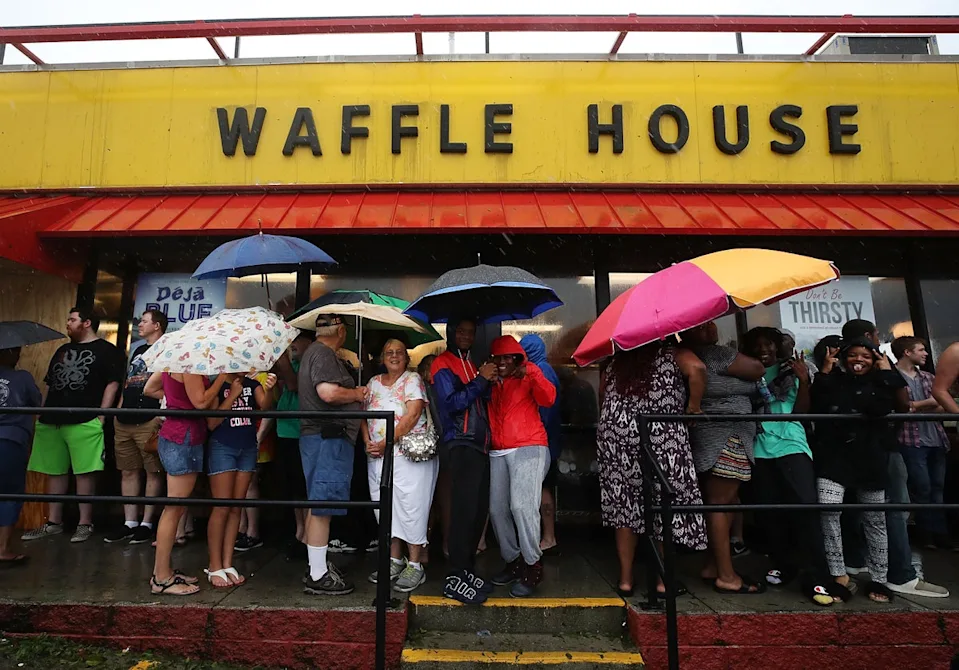
Waffle House operates more than 2,000 locations across 25 U.S. states and is widely known for remaining open 24 hours a day, even during severe weather events. Its reputation as a resilient and iconic Southern chain has made it a cultural fixture, but Smith’s lawsuit challenges the company’s internal culture and accountability mechanisms.
As of the most recent reporting, Waffle House has not responded publicly to requests for comment regarding Smith’s allegations. The outcome of the case may hinge on whether Smith can substantiate her claims of repeated harassment and management inaction, as well as whether the court finds that the company failed to meet its legal obligations under federal employment law.
Smith is seeking a range of remedies, including back pay, front pay, prejudgment interest, court costs, and attorneys’ fees. She is also requesting compensatory damages for emotional distress and punitive damages intended to punish and deter similar conduct in the future. The amount of damages, if any, will ultimately be determined by a jury if the case proceeds to trial.
Beyond the specific allegations, the lawsuit underscores ongoing concerns about sexual harassment in the service industry, where power imbalances, close working conditions, and fear of retaliation can discourage reporting. Smith’s case highlights the legal and human consequences that can arise when complaints are allegedly ignored and serves as a reminder of the responsibilities employers face once allegations of harassment are brought to their attention.