
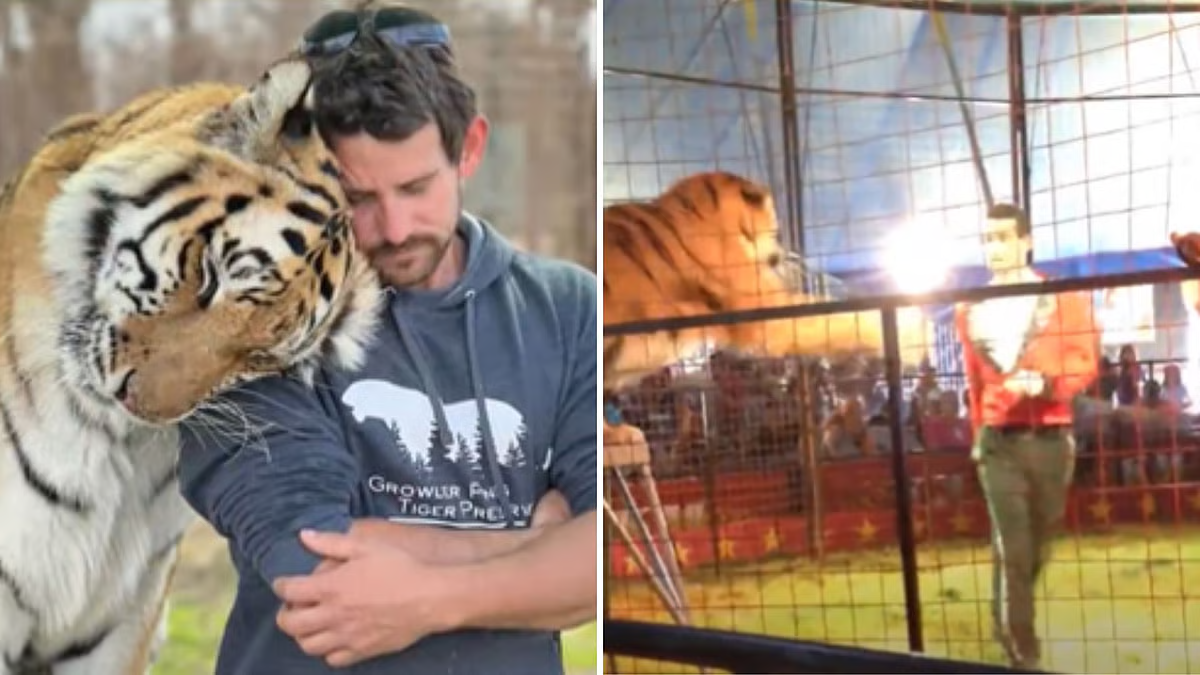
In a heartbreaking incident that has sent shockwaves through the wildlife conservation community, Ryan Easley, the dedicated owner of the Growler Pines Tiger Preserve in Hugo, Oklahoma, was fatally mauled by a tiger during a live performance on September 20, 2025. The 37-year-old animal handler, known for his lifelong passion for big cats, lost his life in an accident that unfolded before horrified onlookers, including his own family. This tragedy not only claims the life of a passionate advocate but also reignites critical discussions about the inherent risks of working with exotic animals and the blurred lines between conservation and entertainment.
Ryan Easley, who had poured his heart and soul into caring for retired circus tigers, was near the end of a routine demonstration when the unthinkable happened. According to Choctaw County Sheriff Terry Park, the tiger—a massive animal that Easley had raised from a cub—suddenly bit and shook him inside a large enclosure. Deputies arrived within minutes of the emergency call, but Easley was already unresponsive and not breathing. The swift and brutal nature of the attack left no time for intervention, turning a day of education and wonder into one of profound sorrow.
The Growler Pines Tiger Preserve, a family-run facility established in 2021, quickly issued a statement on its Facebook page mourning the loss. “Ryan lost his life in an accident involving a tiger under his care,” the preserve announced, describing him as “a passionate advocate for wildlife conservation” who had dedicated his life to protecting and caring for big cats. The statement emphasized the “beauty and unpredictability of the natural world,” framing the event as a painful reminder of the dangers inherent in such close human-animal interactions.
As news spread, tributes poured in from visitors, fellow handlers, and conservationists who remembered Easley as a kind-hearted individual whose love for tigers was evident in every interaction. This incident comes at a time when public fascination with big cats remains high, fueled in part by documentaries like Netflix’s “Tiger King.” Easley’s connections to that world add layers of complexity to the story, highlighting both the allure and the perils of exotic animal handling in America. As investigations continue, the focus shifts to supporting Easley’s grieving family and reflecting on how such preserves can balance education with safety.
The Tragic Incident: A Sudden Turn During a Family Show
The attack occurred on a seemingly ordinary Saturday afternoon at the Growler Pines Tiger Preserve, located in the rural town of Hugo, just a stone’s throw from the Texas border in southeastern Oklahoma. Ryan Easley, a seasoned handler with years of experience, was concluding a big cat show—a staple of the preserve’s offerings designed to educate visitors about tiger conservation. Inside a spacious enclosure, Easley and the tiger performed familiar routines, showcasing the bond that had developed over the animal’s lifetime. Spectators, including school groups and families, watched in awe as the pair moved in sync, a testament to Easley’s expertise.
But in an instant, the dynamic shifted. Sheriff Terry Park detailed to reporters that the tiger, described as “a big one,” unexpectedly lunged, biting Ryan Easley and shaking him violently. The handler, caught off guard, collapsed under the force of the assault. Eyewitness accounts, though limited due to the preserve’s policies on recording, paint a picture of chaos: screams echoed through the grounds as staff rushed to separate the animals and secure the area. Easley’s wife, Elaine, and their young daughter were among the audience, witnessing the horror unfold mere feet away. The emotional toll on them is unimaginable, as Park confirmed their presence during the final moments.
Emergency services were dispatched almost immediately, with dispatchers receiving the frantic call around 3 p.m. local time. Despite the rapid response, Ryan Easley was pronounced dead at the scene, his body showing the devastating injuries inflicted by the tiger’s powerful jaws and claws. The sheriff’s office has ruled the death accidental, with no criminal charges anticipated. An autopsy confirmed the cause as massive trauma from the mauling, underscoring the raw power of these apex predators.
Read : Lions Mauls Zookeeper Jian Rangkharasamee To Death In Front Of Visitors at Safari World zoo
Wildlife biologist Forrest Galante, a television host known for his work with large carnivores, offered poignant insights in a recent interview. He described the event not as malice on the tiger’s part but as a “mistake”—a poorly placed “love bite” that escalated fatally due to the animal’s immense strength. Galante compared it to a house cat scratching during play, but amplified exponentially: “When a tiger lashes out, it can be absolutely fatal.” Easley’s father echoed this sentiment, calling it a tragic “love bite” from an animal the handler had nurtured like a child. These perspectives humanize the tiger while emphasizing the profound risks handlers assume daily.
Tiger abuser Ryan Easley was fatally attacked by a tiger during a show in front of his family and onlookers. When wild animals are caged, beaten, and denied freedom, tragedy is inevitable. This cycle of suffering must end! pic.twitter.com/bVVZonm3wh
— PETA (@peta) September 24, 2025
The preserve’s layout, with its open-air enclosures and interactive shows, is typical of small-scale wildlife facilities in the U.S. Growler Pines prides itself on providing a sanctuary for tigers retired from circuses and roadside zoos, offering guided tours that blend education with up-close encounters. On this fateful day, however, the boundaries between observer and participant blurred catastrophically, leaving a community in mourning and prompting questions about protocol during performances.
Ryan Easley’s Legacy: From Traveling Shows to Conservation Champion
Ryan Easley’s journey with big cats began long before the gates of Growler Pines opened. Born and raised in Oklahoma, he developed an early fascination with wildlife, eventually launching ShowMe Tigers—a traveling exhibition that toured the country, performing educational acts with rescued tigers. These shows, which emphasized conservation over spectacle, allowed Easley to share his knowledge while funding rehabilitation efforts for the animals.
By 2021, seeking a permanent home, he and his wife Elaine transformed a plot of land in Hugo into the Growler Pines Tiger Preserve, a haven for over a dozen retired circus tigers. Ryan Easley’s hands-on approach defined his work. He was often seen bottle-feeding cubs, training adults with positive reinforcement, and leading tours where visitors learned about threats like habitat loss and poaching.
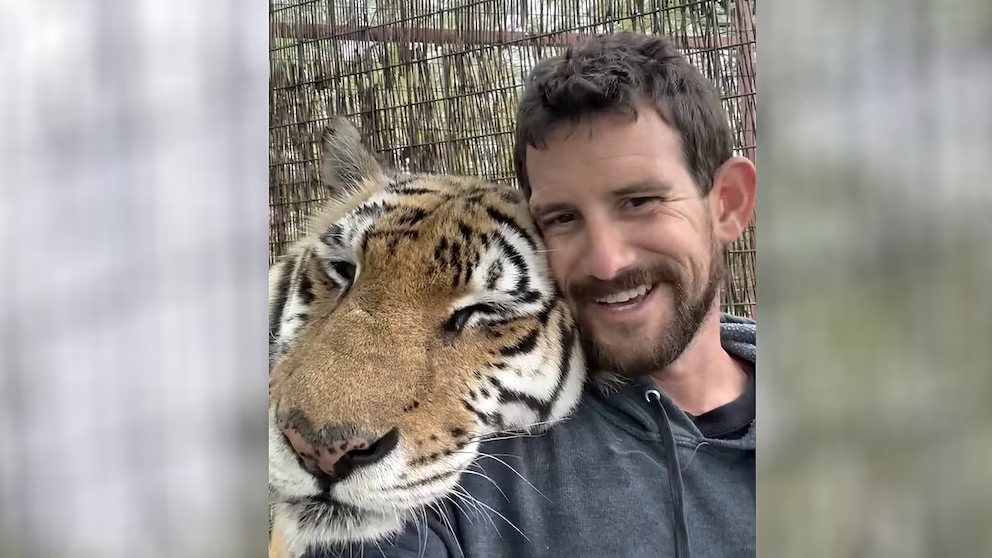
“Growler Pines was more than just a place of work for Ryan; it was his calling, his passion, and his life’s purpose,” the preserve’s website reads. Undated photos show him posing confidently with his charges, his face lit with the quiet joy of someone at peace in the presence of danger. Friends and colleagues recall a man whose empathy extended beyond the animals to the people he inspired—schoolchildren who left tours dreaming of protecting endangered species, and volunteers who found purpose under his guidance.
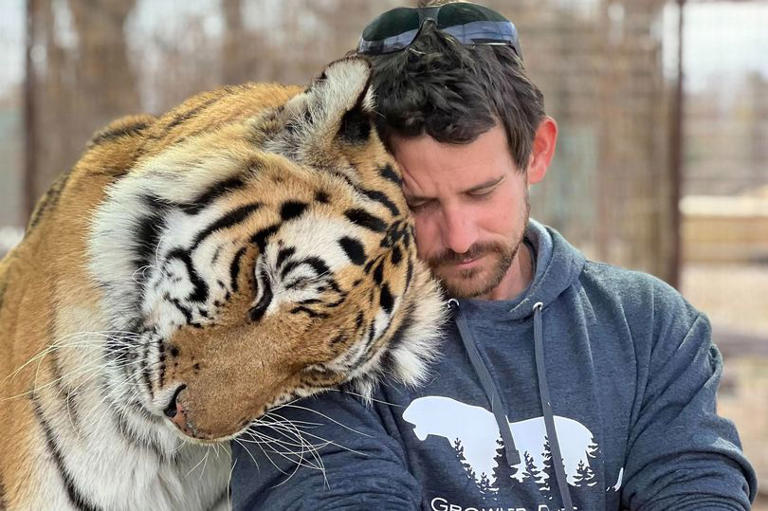
His ties to the “Tiger King” saga added an unexpected dimension to his story. Easley had acquired several tigers from Joseph Maldonado-Passage, better known as Joe Exotic, the flamboyant zoo owner at the center of the 2020 Netflix phenomenon. These animals, rescued from Exotic’s Greater Wynnewood Exotic Animal Park amid legal troubles and ethical controversies, found a second chance at Growler Pines.
Notably, the tiger involved in the mauling was not one from Exotic’s collection, but the connection drew media scrutiny, linking Easley’s grounded conservation efforts to the chaotic world of big cat exploitation depicted in the series. People for the Ethical Treatment of Animals (PETA) highlighted this in a statement, noting acquisitions from both Exotic and Bhagavan “Doc” Antle, urging greater oversight in the exotic pet trade.
Despite these associations, Easley’s focus remained on ethical stewardship. He advocated for stricter regulations on tiger breeding and opposed cub petting schemes that prioritize profit over welfare. In a 2022 profile in Oklahoma Living magazine, he spoke of his vision: “These tigers deserve dignity in retirement, not exploitation.” His death cuts short a career that, while risky, aimed to shift public perception from entertainment to preservation. Tributes from the wildlife community portray him as a bridge between worlds—a handler who respected the wildness in his companions while fostering human appreciation for their plight.
Broader Implications: Safety, Ethics, and the Future of Big Cat Sanctuaries
The mauling at Growler Pines has thrust the challenges facing U.S. tiger preserves into the national spotlight, echoing past incidents like the 2020 attack at a North Carolina facility or the fatal encounters chronicled in “Tiger King.” At its core, this tragedy exposes the tightrope walked by operators: providing educational access while mitigating the unpredictability of 400-pound predators. Sheriff Park noted the enclosure’s size and the tiger’s familiarity with Easley, yet stressed that “it was a big tiger,” reminding us that no amount of bonding erases instinctual drives.
Animal rights groups have seized the moment to call for reform. PETA’s statement condemned the use of animals in performances, arguing that such interactions inherently endanger both humans and wildlife. “Exotic animals belong in the wild or vast sanctuaries, not cages for human amusement,” they asserted, pointing to Easley’s Exotic-sourced tigers as symptomatic of a flawed system. Conversely, conservationists like Galante defend ethical handlers, insisting “it’s never the animal’s fault” and that risks are inherent to the profession. They advocate for enhanced training, backup protocols, and federal guidelines under the Endangered Species Act to support legitimate rescues without stifling education.
In Hugo, the ripple effects are immediate. A GoFundMe for Elaine and her daughter has raised over $18,000, funding essentials as the family navigates grief and uncertainty about the preserve’s future. Staff have suspended shows indefinitely, focusing on animal care amid heightened scrutiny from state wildlife officials. Oklahoma’s lax regulations on exotic animals—allowing private ownership with minimal oversight—face renewed criticism, with lawmakers potentially revisiting bills stalled since the “Tiger King” era.
Yet amid the debate, Easley’s story offers a beacon of hope. His work rescued tigers from grim fates, educating thousands on the urgent need to combat poaching and deforestation. As Galante put it, this “painful reminder” should spur safer practices, not abandonment of the cause. For the big cat community, Ryan Easley’s legacy endures—not in the spectacle, but in the quiet dedication that sought to honor these majestic creatures. As Growler Pines heals, it stands as a testament to one man’s unyielding commitment, even in the face of nature’s unforgiving wild.