
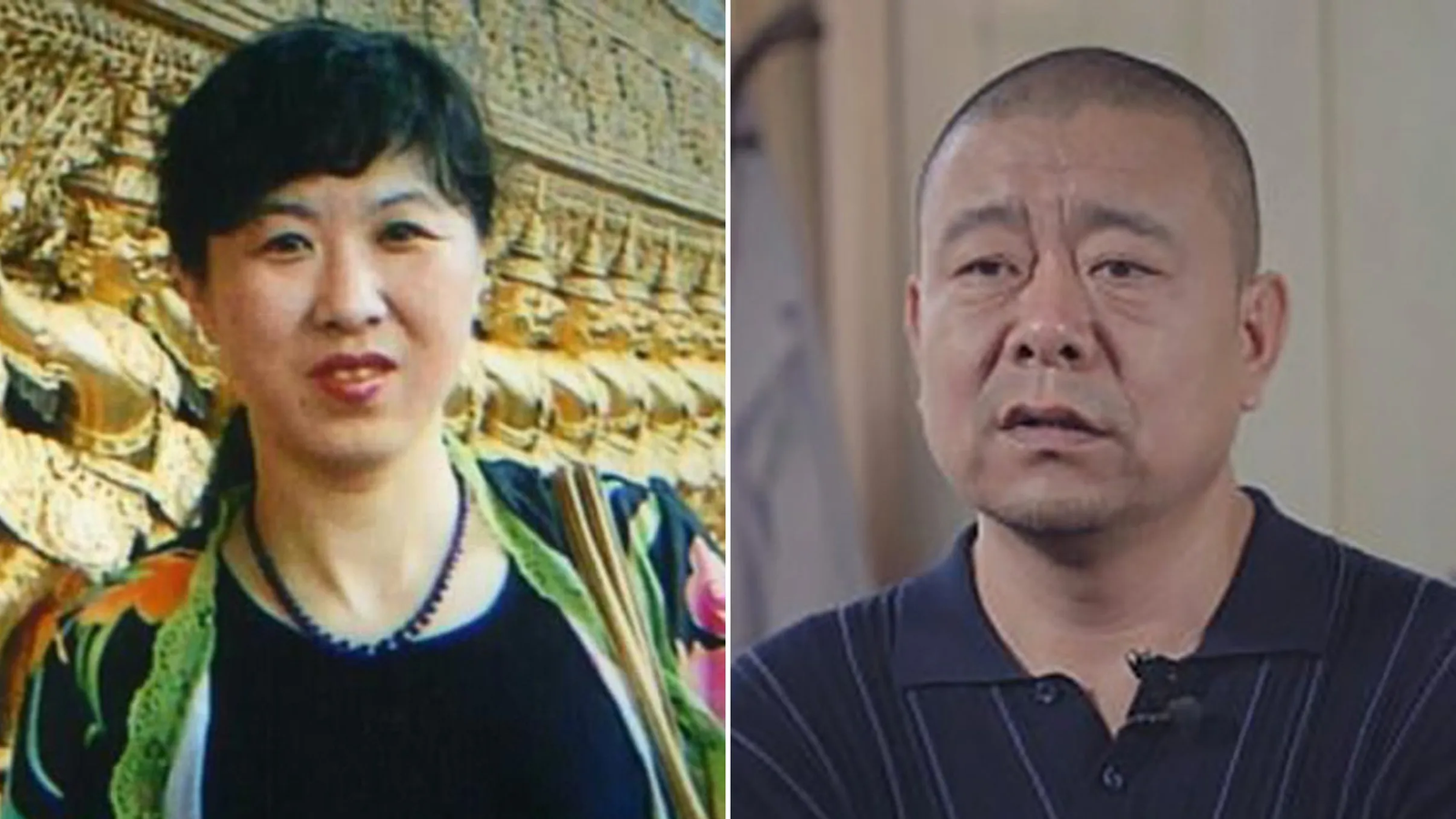
Gui Junmin’s personal life has drawn intense public scrutiny in China as he attempts to navigate an unusual and emotionally complex situation involving love, grief and unprecedented scientific hope. At the centre of the discussion is his wife, Zhan Wenlian, who was diagnosed with terminal lung cancer in 2017 and subsequently became the first person in China to undergo cryopreservation.
Gui’s decision to preserve her body was rooted in a belief that future medical advancements might one day allow her revival. More than seven years later, however, the challenge lies not just in scientific uncertainty but in the practical and emotional realities of continuing to live. Gui, now 57, has entered a new relationship, prompting fierce debate about loyalty, morality and the limits of devotion. His story, shaped by grief and human need, highlights the broader questions society faces when technological optimism intersects with intimate personal choices.
A Unique Case of Cryopreservation and Its Emotional Aftermath
When Zhan Wenlian became critically ill, Gui Junmin searched for any possibility that could extend their connection beyond her terminal diagnosis. This search led him to the Shandong Yinfeng Life Science Research Institute, which had partnered with Qilu Hospital of Shandong University to conduct experimental cryopreservation procedures. With limited precedents and no guaranteed outcomes, Gui signed a 30-year contract on Zhan’s behalf, making her the country’s first cryopreserved individual.
The institute provided the procedure free to early participants, framing the effort as an opportunity to explore the potential of future revival through advanced medical science. In the years immediately following the procedure, Gui Junmin embraced a life defined by grief and loyalty. He remained single and deeply attached to the memory of his wife, honouring what he viewed as the continuation of their marriage despite her cryogenic state.
His belief in a possible future reunion shaped his understanding of commitment, even as he grappled with the daily practical and emotional challenges left behind. His dedication remained steady until 2020, when a severe gout attack left him immobilised and alone for two days. The experience, which he later described as terrifying, forced him to confront the vulnerability that accompanies aging and solitude. Facing the prospect of medical emergencies without companionship, he began to reconsider the feasibility of living entirely alone.
Read : NATO Accuses China of Aiding Russia’s War on Ukraine
This shift in perspective formed the backdrop for his meeting with Wang Chunxia, an insurance sales professional introduced by a mutual friend. Initially, their interaction was strictly transactional. However, over time their relationship developed into companionship, gradually reshaping Gui Junmin’s understanding of what life might look like in the years ahead. Despite this emotional evolution, he openly acknowledges that he still sees Zhan as irreplaceable and struggles with the notion that his heart has fully accepted Wang.
A Controversial Relationship and a Clash of Morals
Gui Junmin’s relationship with Wang has since become the subject of heated online debate, largely fuelled by the perceived contradictions between his devotion to Zhan and his growing dependence on Wang. As the relationship deepened, many observers questioned whether his emotional position was fair to either woman. Some critics argue that his attempt to balance past and present reflects emotional detachment rather than fidelity. Others accuse him of preserving the image of the grieving husband while failing to fully commit to the woman who now supports him in daily life.
The unease surrounding the situation has been amplified by the stark socioeconomic contrast between Gui and Wang. While Gui Junmin is financially secure and well connected, Wang comes from a modest background, having left school in seventh grade and worked a variety of jobs including factory labour, waitressing and hairdressing. Online commentators have speculated about the power imbalance in the relationship, suggesting that Wang’s loyalty may be rooted in dependence and limited alternatives.
Read : Unimaginable! 18 Members of Hyderabad Family Killed in Saudi Arabia Bus Crash
At the same time, critics question Gui’s transparency about his feelings, particularly his admission that the relationship is partly utilitarian in nature. From Gui Junmin’s perspective, the emotional complexity is unavoidable. He has acknowledged that Wang does not hold the same place in his heart as Zhan and never will. Yet he also emphasises that he cannot manage day-to-day life without her, especially after undergoing coronary stent surgery, during which she provided critical care and support.

This mixture of reliance, affection and unresolved grief has become a focal point for public commentary, with some accusing him of maintaining two emotional realities at once. The idea that he is simultaneously preserving one woman’s memory while leaning heavily on another has led to accusations of “emotional polygamy”, a phrase widely circulated in online discussions. Despite the criticism, Gui Junmin insists that his situation cannot be understood through conventional moral frameworks.
He argues that loyalty to Zhan does not preclude his need for companionship in the present. His supporters echo this sentiment, pointing out that life expectancy, health concerns and loneliness are pressing realities for individuals in their fifties and beyond. For them, Gui Junmin’s attempts to build a new relationship are not a betrayal but a reflection of the human need for support and emotional connection. Conversely, detractors maintain that entering a relationship while hoping for a future reunion with his cryopreserved wife places Wang in an inherently unstable emotional position.
Future Uncertainties and Questions Society Cannot Yet Answer
Beyond the emotional difficulties lies a complex network of legal and ethical questions. Gui himself has expressed concern about issues such as marital rights, inheritance and asset distribution, particularly given the hypothetical scenario in which Zhan is revived. The Chinese legal system currently has no framework for addressing the status of cryogenically preserved individuals or the implications of their potential revival. This ambiguity complicates any decisions Gui might make regarding property, remarriage and long-term obligations to both women.
Another dimension of the debate concerns the broader implications of cryopreservation. The practice remains experimental and deeply uncertain, with no confirmed cases of human revival. Gui’s hope, while sincere, is based on speculative scientific progress that may not materialise within the time frame of the contract—or within any foreseeable future. Yet the act of preserving his wife’s body demonstrates the powerful human desire to transcend death, even when grounded in scientific possibility rather than certainty. This tension between hope and pragmatism lies at the centre of his dilemma.
Public reaction to Gui’s situation reflects broader cultural perspectives on loyalty, marriage and filial responsibility. In China, societal expectations surrounding devotion to one’s spouse remain particularly strong, especially in cases involving illness or death. These expectations, combined with the novelty of cryogenic preservation, have intensified scrutiny of Gui’s choices.
Some view his relationship with Wang as a necessary adaptation to life’s circumstances, while others see it as a failure to uphold the traditional values he once epitomised. The debate touches on larger philosophical questions: What does loyalty mean when death itself becomes ambiguous? How should individuals navigate love when technology alters the boundaries of life? And how should society respond when moral norms collide with unprecedented scientific developments?
For now, Gui continues to live in the space between his past and his present, supported by Wang while still tethered emotionally to Zhan. He remains aware of the contradictions and social judgments surrounding his choices but insists that his decisions reflect the realities of age, health and human need rather than a rejection of his late wife’s memory. His story offers an early glimpse into the kinds of challenges cryopreservation may pose for families and societies in the decades ahead, raising questions that current moral, legal and cultural frameworks are not yet prepared to resolve.