
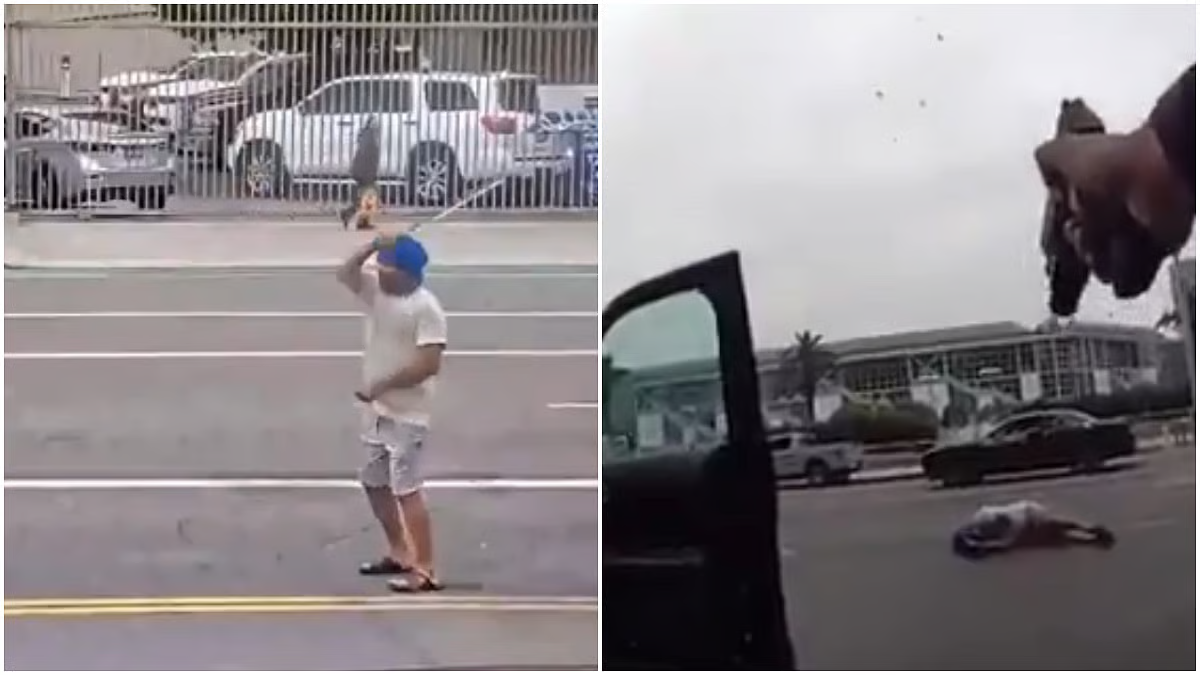
On July 13, 2025, a tragic incident unfolded in downtown Los Angeles that has sparked widespread debate and raised questions about police use of force, cultural misunderstandings, and mental health interventions. Gurpreet Singh, a 35-year-old Sikh man, was fatally shot by the Los Angeles Police Department (LAPD) while performing Gatka, a traditional Sikh martial art, in the middle of a busy intersection near Crypto.com Arena. The incident, captured on bodycam footage and released by the LAPD, has drawn significant attention due to its complex interplay of cultural practices, public safety concerns, and law enforcement protocols.
The Incident: A Fatal Confrontation
The events leading to Gurpreet Singh’s death began shortly after 9 a.m. on July 13, 2025, at the intersection of Figueroa Street and Olympic Boulevard in downtown Los Angeles. According to multiple 911 calls, a man, later identified as Gurpreet Singh, had stopped his black Dodge Challenger in the middle of the road, exited the vehicle, and began waving a two-foot-long blade, which police initially described as a machete but was later identified by some sources as a khanda, a double-edged sword used in Gatka. Callers reported Singh swinging the blade aggressively at passersby, causing panic and alarm in the crowded urban setting.
Bodycam footage released by the LAPD shows Singh, dressed in a vest, shorts, and a blue turban, performing what appeared to be Gatka, a traditional Sikh martial art that involves choreographed movements with weapons such as swords, sticks, or shields. The footage captures Singh moving in a controlled, martial-arts-like pattern initially, but his behavior soon became erratic. At one point, he appeared to cut his own tongue with the blade, an action that heightened the officers’ concerns about his state of mind and intentions.
Officers Michael Orozco and Nestor Espinoza Bojorquez arrived at the scene and repeatedly ordered Singh to drop the weapon. Instead of complying, Singh retrieved a water bottle from his vehicle and threw it at the officers before re-entering his car and driving away, still waving the blade out of the driver’s side window. A brief pursuit ensued, during which Singh drove erratically, colliding with a police vehicle and striking other cars.
Los Angeles police shot dead Gurpreet Singh, 35, after he stopped his car in the middle of an intersection and allegedly swung a machete at people.
— THE SKIN DOCTOR (@theskindoctor13) August 29, 2025
Now compare this with India. Here, mobs can assault police, humiliate them into folding hands, circulate those images as “victory,”… pic.twitter.com/N2Hsyuif9V
The chase ended near Figueroa and 12th Streets, where Singh exited his damaged vehicle, raised the blade, and charged toward the officers. At this moment, the officers discharged both a 40mm less-lethal foam projectile and live rounds. Singh was struck multiple times, dropped the weapon, and fell to the ground. Despite immediate efforts by officers to provide medical aid and the arrival of paramedics, Singh was rushed to a nearby hospital, where he succumbed to his injuries on July 17, 2025. The sword was recovered at the scene and logged as evidence. No officers or bystanders were harmed during the confrontation.
Gatka and Cultural Context
Gatka is a traditional Sikh martial art with deep historical and cultural significance, originating in the Punjab region of India. It is often performed at religious and cultural events, showcasing disciplined movements with weapons like the khanda, a double-edged sword, or lathi, a wooden stick.
Some historical accounts attribute its development to Guru Hargobind, the sixth Sikh Guru, who introduced the concept of the kirpan (a ceremonial dagger) for self-defense, while others credit Guru Gobind Singh, the tenth Sikh Guru, with popularizing it as a symbol of resistance against oppression. Over time, Gatka evolved into both a ceremonial practice and a competitive sport, performed in two styles: Virasat (traditional) and Khed (sport). It involves intricate footwork, weapon handling, and sometimes rhythmic accompaniment by drums.
In the context of this incident, Singh’s performance of Gatka in a busy urban intersection was highly unusual and alarming to onlookers unfamiliar with the practice. The LAPD’s initial description of the weapon as a machete, rather than a khanda, may reflect a lack of cultural awareness, as the khanda holds specific religious and cultural significance in Sikhism.
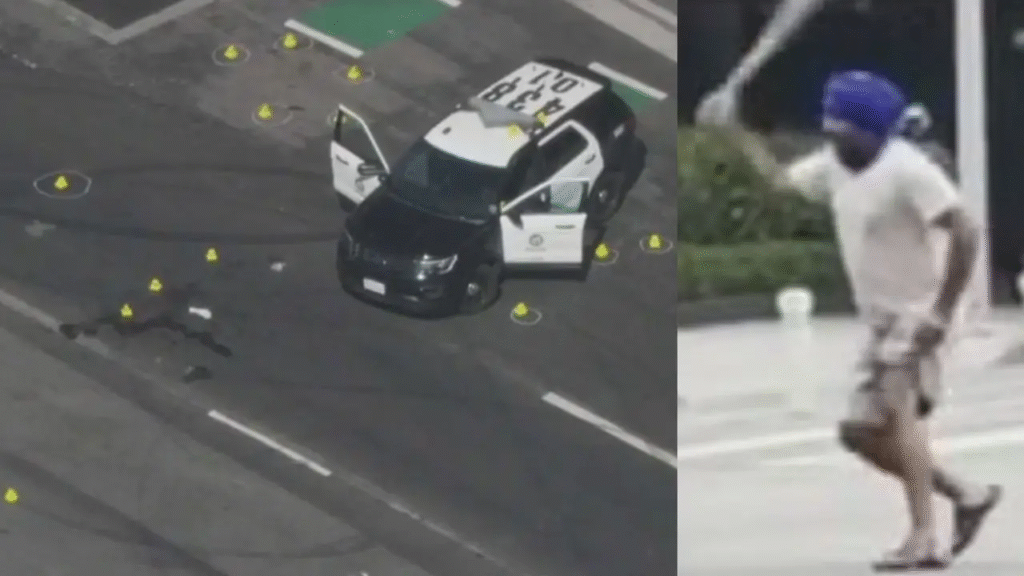
The bodycam footage shows Singh’s movements resembling Gatka’s choreographed patterns, but his erratic behavior, including self-injury and non-compliance with police commands, complicated the situation. This has led to questions about whether cultural misunderstandings contributed to the escalation. Some community members and social media users have speculated that Singh may have been performing a cultural or religious act, while others argue that his actions, such as charging at officers with a raised blade, posed an immediate threat to public safety.
The incident has reignited discussions about cultural sensitivity in policing. Gatka, while non-violent in its traditional context, can appear threatening in a public setting, especially when performed with a large blade in a crowded area. Critics have questioned whether officers could have recognized Singh’s actions as a cultural practice and de-escalated the situation differently, perhaps by engaging with community leaders or using non-lethal tactics more extensively. However, the LAPD maintains that Singh’s refusal to drop the weapon and his aggressive actions left officers with little choice but to use deadly force to protect themselves and the public.
Investigations and Community Response
The LAPD’s Force Investigation Division has launched a review of the shooting, as is standard procedure for officer-involved fatalities. The investigation will examine whether the use of force was justified, focusing on the officers’ actions, Singh’s behavior, and the sequence of events leading to the fatal shooting. The process could take up to a year, according to LAPD statements, and authorities have urged anyone with additional information to come forward.
The officers involved, Michael Orozco and Nestor Espinoza Bojorquez, have been identified, but no further details about their status have been released pending the investigation. The incident has sparked significant debate within the Sikh community and beyond. Some community members have expressed grief and outrage, arguing that Singh’s death reflects broader issues of police misunderstanding cultural practices.
Social media posts have questioned why non-lethal options, such as tasers or beanbag rounds, were not used more extensively, with one user asking, “Could he have been arrested alive?” Others have emphasized the need for better training on cultural awareness and mental health crisis intervention, noting that Singh’s erratic behavior, including self-harm, may have indicated a mental health crisis. However, no official information about Singh’s mental state has been released.
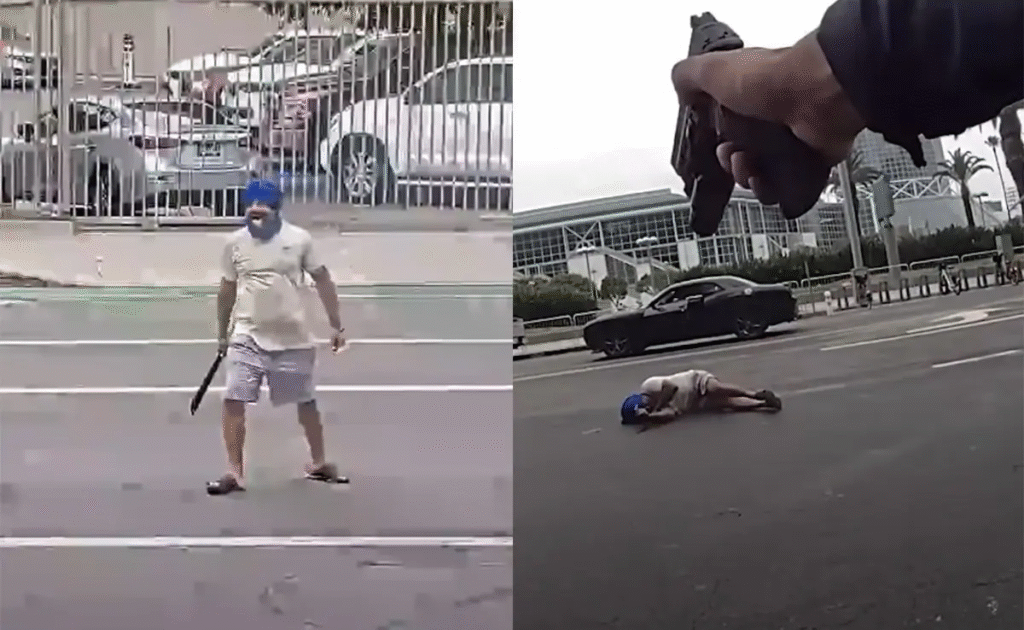
Conversely, others argue that the officers acted appropriately given the immediate threat posed by Singh’s actions. Posts on X have highlighted the danger of wielding a large blade in a public space, with one user stating, “35-year-old Gurpreet Singh was swinging a machete in the middle of the road in LA… LA Police had no choice but to act.”
The LAPD’s official statement emphasizes that officers attempted to de-escalate the situation through verbal commands and less-lethal measures before resorting to deadly force. The department’s critical incident community briefing, narrated by Lieutenant Bruce CS, underscores that the investigation is ongoing and aims to provide transparency.
This incident has also drawn comparisons to broader issues of police use of force and public safety. The Sikh community in Los Angeles and beyond has called for dialogue with law enforcement to prevent similar tragedies in the future. Advocates have stressed the importance of educating officers about Sikh cultural practices, such as Gatka and the carrying of the kirpan, to avoid misinterpretations. At the same time, the incident underscores the challenges police face in rapidly assessing threats in high-pressure situations, particularly when weapons are involved.
The death of Gurpreet Singh is a tragic reminder of the complex interplay between cultural practices, public safety, and law enforcement responses. As the investigation continues, it is likely to fuel ongoing discussions about how to balance cultural sensitivity with the need to protect communities.
The Sikh community, law enforcement, and policymakers will need to work together to address these challenges, ensuring that such incidents do not recur. For now, the focus remains on understanding the full context of Singh’s actions and the decisions made by the officers involved, with the hope of finding answers that can prevent future loss of life.