
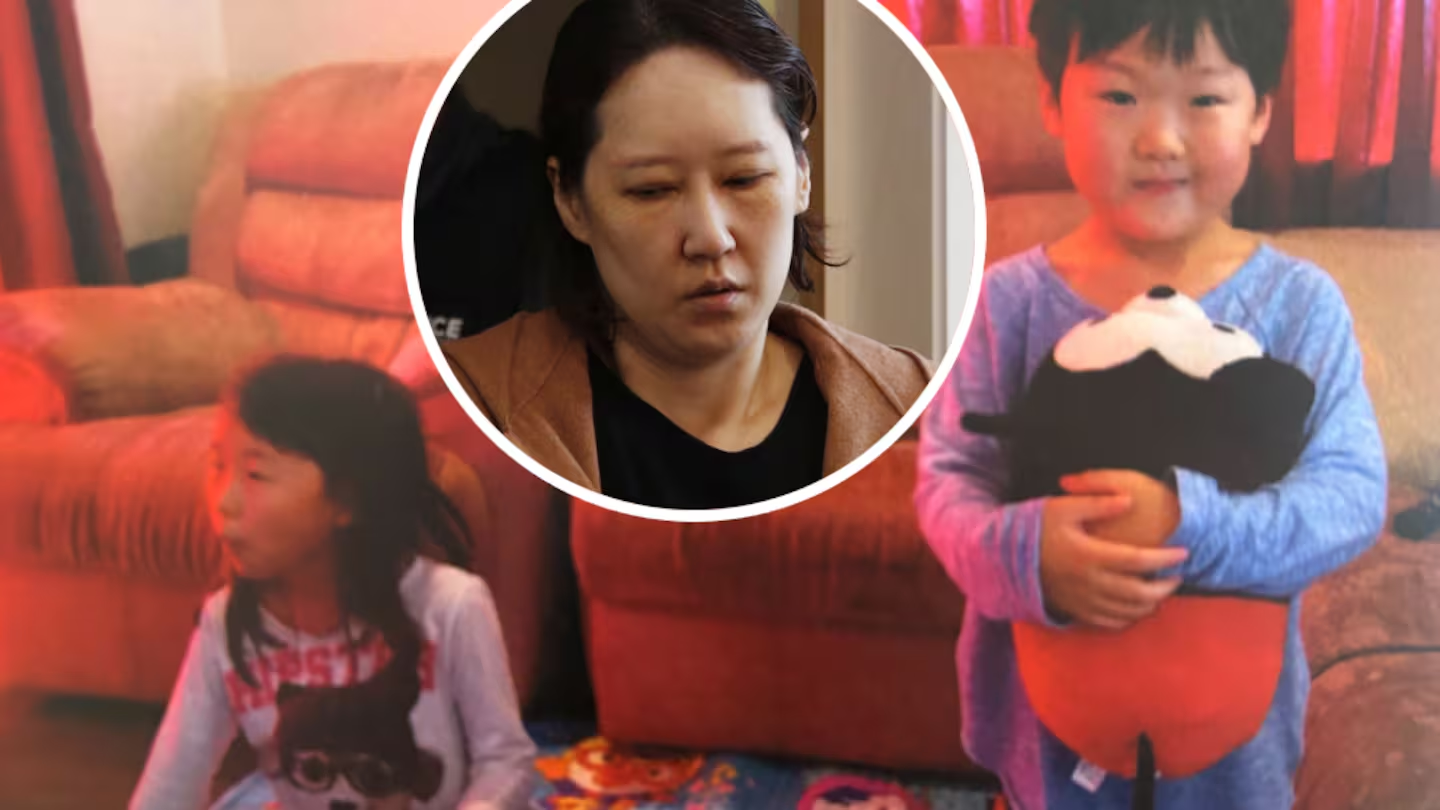
In a case that has gripped New Zealand and drawn international attention, Hakyung Lee, a 45-year-old South Korean-born New Zealand citizen, was convicted on September 23, 2025, of murdering her two young children and concealing their bodies in suitcases stored in an Auckland facility for over four years. The High Court in Auckland delivered the verdict after a two-week trial, rejecting Lee’s defense of not guilty by reason of insanity.
The jury’s decision marks the end of a harrowing saga that began with a tragic family loss and spiraled into one of the most disturbing crimes in recent New Zealand history. Lee’s actions, which involved administering a lethal dose of antidepressant medication to her children, wrapping their bodies in plastic, and abandoning them in luggage, shocked the nation and raised profound questions about mental health, grief, and the boundaries of human despair.
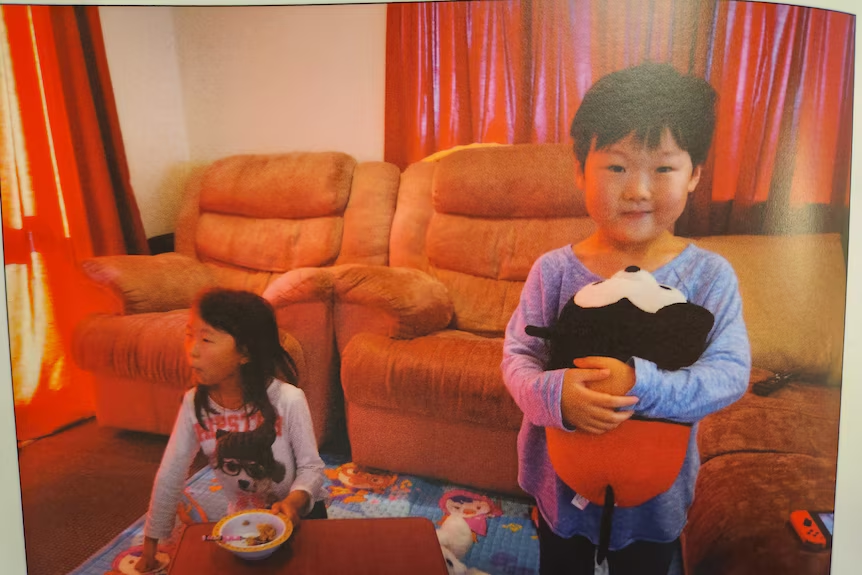
The story unfolded in the quiet suburbs of Auckland, where Lee, formerly known as Jasmine Lee, lived with her family. Originally from South Korea, Lee had immigrated to New Zealand and built a life with her husband, Ian Jo, and their two children, Yuna Jo, aged eight, and Minu Jo, aged six. The family appeared unremarkable to neighbors and acquaintances, but behind closed doors, profound tragedy was brewing.
In 2017, Ian Jo succumbed to cancer, leaving Lee to grapple with overwhelming grief as a single mother. Prosecutors later argued that this loss triggered a depressive episode, but not one severe enough to absolve her of criminal responsibility. Lee herself admitted during the trial to causing the deaths of her children in June 2018, but she maintained that her actions stemmed from a distorted belief that it was merciful for them to join their father in death, as part of a failed suicide pact.
The trial, which commenced on September 8, 2025, was marked by graphic testimony and emotional intensity. Lee watched much of the proceedings from a separate room in the courthouse, granted permission by Justice Geoffrey Venning due to the distressing nature of the evidence. Over the course of the hearings, the court heard from forensic experts, psychologists, and investigators who pieced together the timeline of events.
Read : Tom Phillips Who Vanished into New Zealand Wilderness with Three Children in 2021 Remains Missing
The case, often dubbed New Zealand’s “suitcase murders,” highlighted the eerie silence surrounding the disappearances of Yuna and Minu, who were never reported missing by their mother. Instead, Lee fled to South Korea shortly after the incident, severing ties with her New Zealand life, changing her name, and attempting to start anew. It was only the accidental discovery of the suitcases in 2022 that unraveled the long-buried secret, leading to her extradition and eventual arrest in Ulsan, South Korea.
Read : Woolly Wonders: 10 Fascinating Facts About New Zealand’s Sheep
As the nation processes this verdict, the focus now shifts to sentencing, scheduled for November 26, 2025. Lee faces a mandatory life sentence, with a minimum non-parole period of at least 10 years. The case serves as a stark reminder of the devastating impact of untreated mental health issues and the importance of community support systems for grieving families. In the sections below, we delve deeper into the grim discovery that exposed the crime, the legal battle that ensued, and the broader implications for society.
The Chilling Discovery: Unpacking a Family’s Hidden Horror
The macabre revelation began on a seemingly ordinary day in August 2022, when an unsuspecting family in Auckland purchased a trailer-load of items from an online auction of abandoned goods. The auction was organized by the SafeStore facility in Papatoetoe, a south Auckland suburb, after the rental fees for unit 456 went unpaid amid the original owner’s financial difficulties. Among the miscellaneous belongings were two peach-colored suitcases, innocuous at first glance but sealed tightly with duct tape and wrapped in layers of plastic.
Eager to unpack their bargain find, the buyers opened the luggage only to be confronted with a nightmare: the mummified remains of two young children, carefully wrapped in multiple plastic bags. Police were called immediately, and the scene quickly became a crime investigation of unprecedented scale. Forensic teams determined that the bodies belonged to Yuna and Minu Jo, who had been deceased for three to four years at the time of discovery—placing their deaths around mid-2018.
Autopsies revealed that the children had ingested a massive overdose of nortriptyline, a tricyclic antidepressant commonly prescribed for depression and other conditions. The drug, which Lee herself was taking, had been mixed into juice given to the children on the evening of June 29, 2018. Hakyung Lee confessed during police interviews to intending this as part of a “family suicide” attempt, believing it would reunite them with her late husband. However, she miscalculated the dosage; while she survived after lapsing into a coma-like state, her children did not wake up.

The storage unit itself became a focal point of the investigation. Records showed that Lee had rented the space under her name and made two trips there on June 30, 2018—the day after the fatal ingestion—to deposit the suitcases. She continued paying the fees sporadically for years, even after fleeing to South Korea in late 2018, until financial strain forced her to stop in mid-2022. Investigators noted the deliberate nature of the concealment: the bodies were double-bagged, the suitcases sealed to prevent odors, and the unit selected for its remoteness.
No CCTV footage from the deposit dates survived, a point of frustration for detectives, but phone records and medical prescriptions linked Lee irrefutably to the nortriptyline supply. The discovery sent ripples through the Auckland community, where Yuna and Minu had attended school without raising alarms. Teachers and friends recalled the children as bright and outgoing, with no signs of abuse.
Lee’s silence on their disappearance—claiming they were with relatives—allowed her to maintain a facade of normalcy for months. It was this calculated deception, prosecutors argued, that underscored her awareness of wrongdoing. The family’s purchase of the suitcases, unrelated to Lee, turned them into unwitting key witnesses, their shock testimony evoking tears in the courtroom. This accidental unearthing not only brought closure to a cold case but also exposed the vulnerabilities in storage facility oversight, prompting calls for stricter protocols on abandoned units.
The Courtroom Drama: Insanity Defense Rejected Amidst Heart-Wrenching Testimony
From the outset, the trial was a battle of narratives: the prosecution’s portrait of a cold, self-serving killer versus the defense’s plea for compassion rooted in mental collapse. Hakyung Lee, appearing composed but visibly strained in the dock, admitted to the physical acts—administering the drug, disposing of the bodies—but contested the murder charges on grounds of insanity. Her legal team, led by experienced counsel, argued that the 2017 death of Ian Jo plunged her into a severe depressive spiral, exacerbated by cultural isolation as an immigrant and the burdens of single parenthood.
Psychiatrists for the defense testified that Hakyung Lee suffered from major depressive disorder with psychotic features, leading her to a delusional belief that death was a merciful escape for her family. Central to the insanity plea was the concept under New Zealand law: that Lee did not know her actions were morally wrong or understand their nature due to mental disease. Witnesses recounted her post-loss behavior—social withdrawal, erratic medication use, and suicidal ideation—as evidence of deteriorating sanity.
One expert described the failed suicide pact as a “desperate act of love” in her fractured mind, where she awoke to horror and, in panic, hid the evidence rather than seek help. Lee’s own testimony, delivered softly through an interpreter, painted a picture of overwhelming guilt and confusion: “I wanted us to be together forever,” she said, her voice breaking. Prosecutors, however, dismantled this narrative with forensic precision. Crown lawyer Sarah Symon emphasized the “cold calculation” in Lee’s subsequent actions: fleeing to South Korea, adopting a new identity, forming relationships, and even pursuing employment, all while her children’s remains languished in storage.
“This was not the act of an insane woman, but a deliberate choice to erase her past and build a future without them,” Symon asserted in closing arguments. Medical experts for the Crown conceded depression but argued it fell short of legal insanity, pointing to Lee’s ability to manage finances, travel internationally, and evade detection. The jury, after just hours of deliberation, sided with the prosecution, convicting Lee on two counts of murder.
The trial’s emotional toll was palpable. Family photos of the Jo children—smiling in school uniforms or on family outings—were projected in court, drawing sobs from attendees. Lee’s brother, who flew from South Korea, testified about her pre-tragedy vibrancy, adding a layer of human tragedy. Justice Venning commended the jury’s fortitude, noting the “distressing” evidence. As the verdict was read, Lee showed little reaction, her head bowed, while media outside the courthouse captured the stunned silence of onlookers. This rejection of the insanity defense not only sealed her fate but also sparked debates on the thresholds of mental health defenses in filicide cases.
Aftermath and Reflections: Justice Served or a Call for Prevention?
With the gavel fallen, the conviction of Hakyung Lee prompts a national reckoning. Sentencing looms on November 26, where Justice Venning will determine the non-parole period, potentially life without release given the premeditated nature of the crime. Victim impact statements from extended family are expected, underscoring the ripple effects on a community that lost two innocent lives. Lee’s extradition from South Korea in late 2022, facilitated by bilateral treaties and DNA matches from medical records, closes one chapter but opens questions about international justice in family crimes.
Beyond the legal ramifications, this case illuminates systemic failures. Mental health advocates point to Lee’s untreated depression as a cautionary tale, urging expanded access to grief counseling for immigrants and cancer-bereaved families. In New Zealand, where suicide rates remain high, the “suitcase murders” amplify calls for proactive interventions, such as mandatory welfare checks for at-risk households. Storage facilities nationwide are reviewing auction policies, with some implementing pre-sale inspections to prevent similar oversights.
For the broader society, the verdict is bittersweet. It affirms accountability, rejecting the notion that grief excuses filicide, yet it evokes empathy for a woman shattered by loss. As one commentator noted, “Lee’s story is a mirror to our own vulnerabilities—how close we all are to breaking.” The children’s memory, preserved in memorials and school tributes, demands not just punishment but prevention. In honoring Yuna and Minu, New Zealand must confront the shadows of despair, ensuring no other family vanishes into silence.