
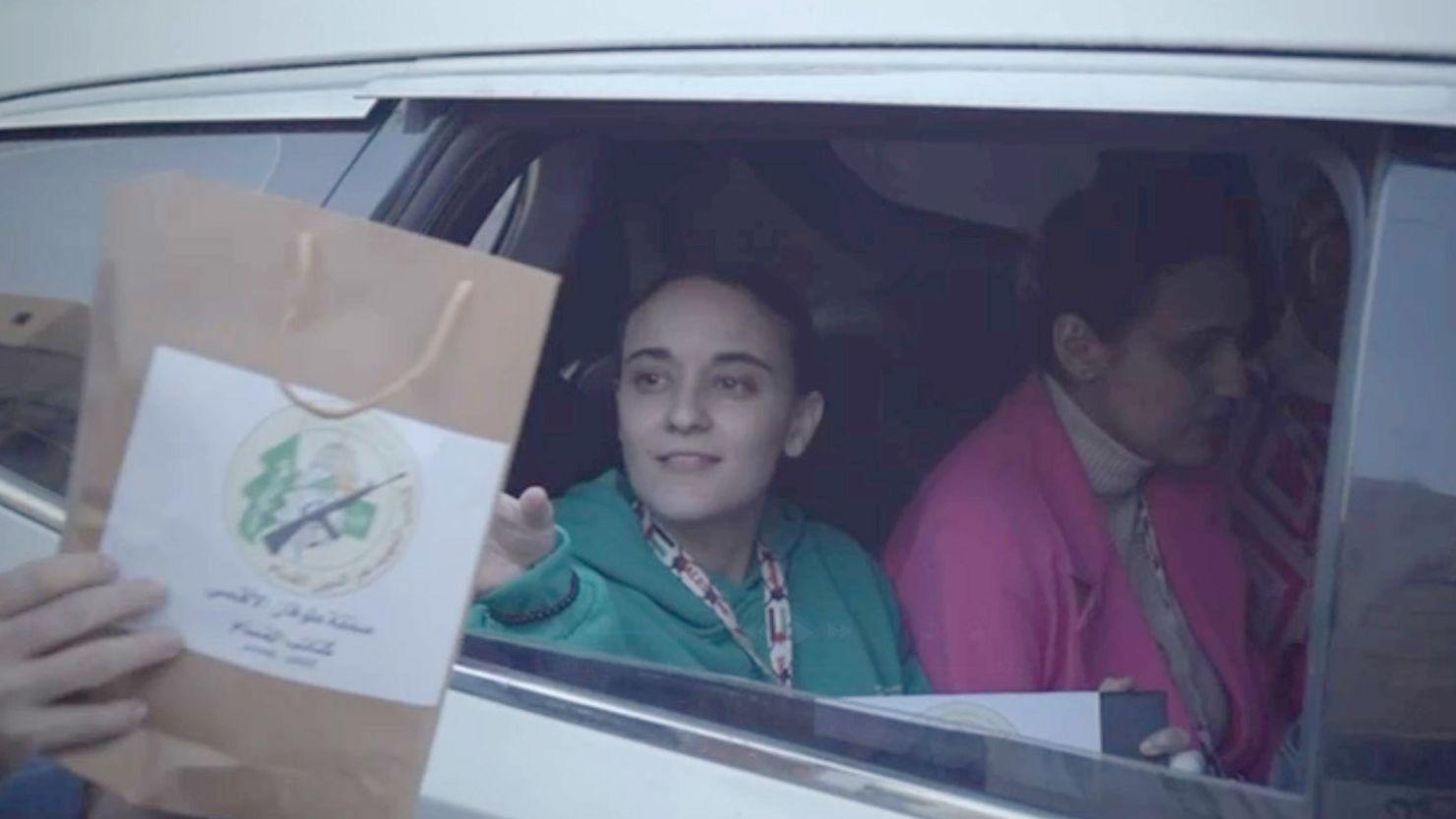
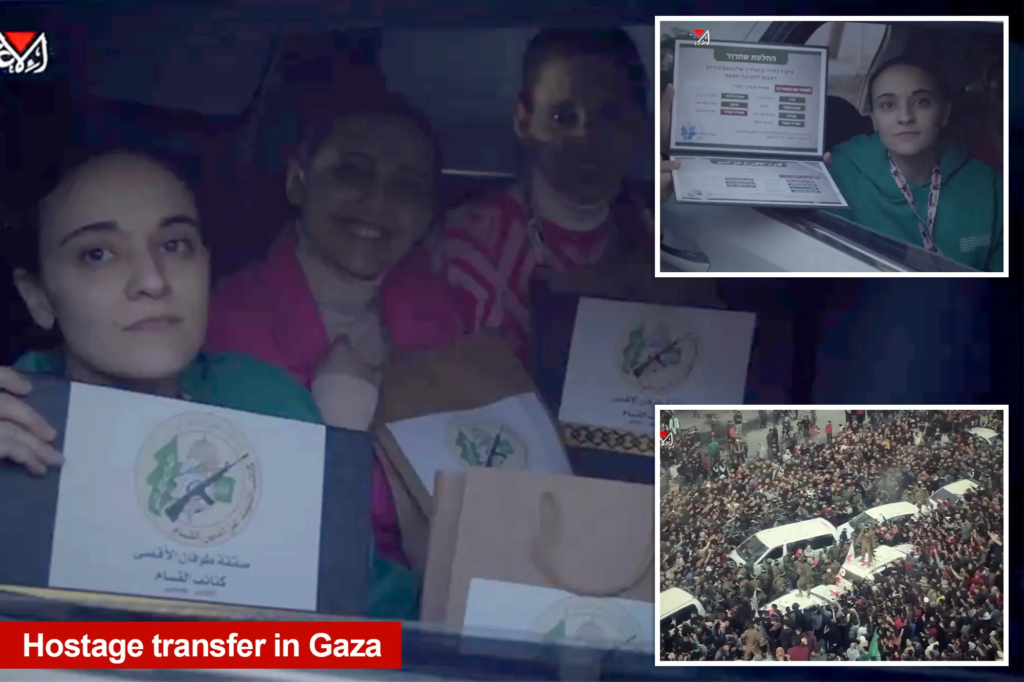
In an unsettling turn of events, Hamas militants have been reported to distribute what can only be described as “gift bags” to Israeli hostages upon their release. These bags, handed over during the tense moments of freedom, contained not just ordinary items but photos from the hostages’ time in captivity, a map of Gaza, and a so-called “certificate of release.”
This act, recorded in various media, has stirred a complex mix of emotions and reactions across the Israeli-Palestinian divide, with some viewing it as psychological warfare and others interpreting it with a degree of irony or cynicism.
The Content of the ‘Gift Bags’
The contents of these gift bags are nothing short of macabre. Reports from multiple sources, including CNN, The Times of Israel, and The Sun, have detailed that each bag included personalized photos of the hostages during their imprisonment, a commemorative photo of Gaza, and a document akin to a certificate, which some media outlets have sarcastically referred to as a “certificate of appreciation” or “release decision” (, , ).
These items were handed to the hostages, Romi Gonen, Emily Damari, and Doron Steinbrecher, before they were transferred to Red Cross officials, marking the end of their 471-day ordeal.
Read : Hamas Releases Heartbreaking Video of 19-Year-Old Liri Albag Held Captive Since October 7
The inclusion of such personal and haunting reminders in the form of photos from captivity represents a chilling form of psychological manipulation, aiming perhaps to leave a lasting imprint of their experience on the hostages.
The certificate and the map of Gaza might serve to underline Hamas’s control over the territory or to mock the concept of release itself.
Public Reaction and Interpretations
The act of giving these “gift bags” has provoked a spectrum of reactions. On social platforms like X, posts range from outrage to dark humor, with users like @HenMazzig labeling it as psychological terror, while others sarcastically point out the irony of a terrorist group giving “gifts” to hostages (, ).
From an Israeli perspective, this is seen as a further testament to Hamas’s cruelty and an extension of their tactics of terror that began with the violent incursion on October 7, 2023.

For some Palestinians and pro-Palestinian voices, the act might be interpreted differently, with a few seeing it as a twisted form of acknowledgment or even a propaganda tool to show a semblance of order or legitimacy in their governance over Gaza.
However, the overwhelming sentiment, especially from the hostages’ families and supporters of Israel, views this act not as a gesture of goodwill but as one of psychological warfare, an attempt to continue the torment even after physical captivity ends.
The Broader Implications
This bizarre practice has implications beyond the immediate emotional impact on the hostages. It reflects Hamas’s strategy in managing not only their military engagements but also the narrative around their actions.
By staging such a theatrical release, they might aim to project an image of strength, control, and even a perverse form of benevolence, which contrasts starkly with the reality of their actions.
For the international community, this incident underscores the need for a nuanced understanding of the psychological aspects of warfare and hostage situations. It also highlights the complexities of peace negotiations and ceasefire arrangements, where every action can be laden with symbolic meaning, intended to sway public opinion or demoralize the opposing side.
The incident also brings to light the ongoing human cost of the conflict, reminding observers that beyond the military strategies and political rhetoric, individuals are subjected to extreme psychological manipulation and trauma.
The “gift bags” given by Hamas to released hostages are a stark reminder of the multifaceted nature of conflict in the region, where physical violence is intertwined with psychological terror.
As these hostages return to their lives, they carry not only the physical scars but also the mental mementos of their ordeal. The implications of such acts on peace processes, public perception, and the mental health of survivors are profound, urging a more compassionate and critical examination of conflict dynamics in the Middle East.