
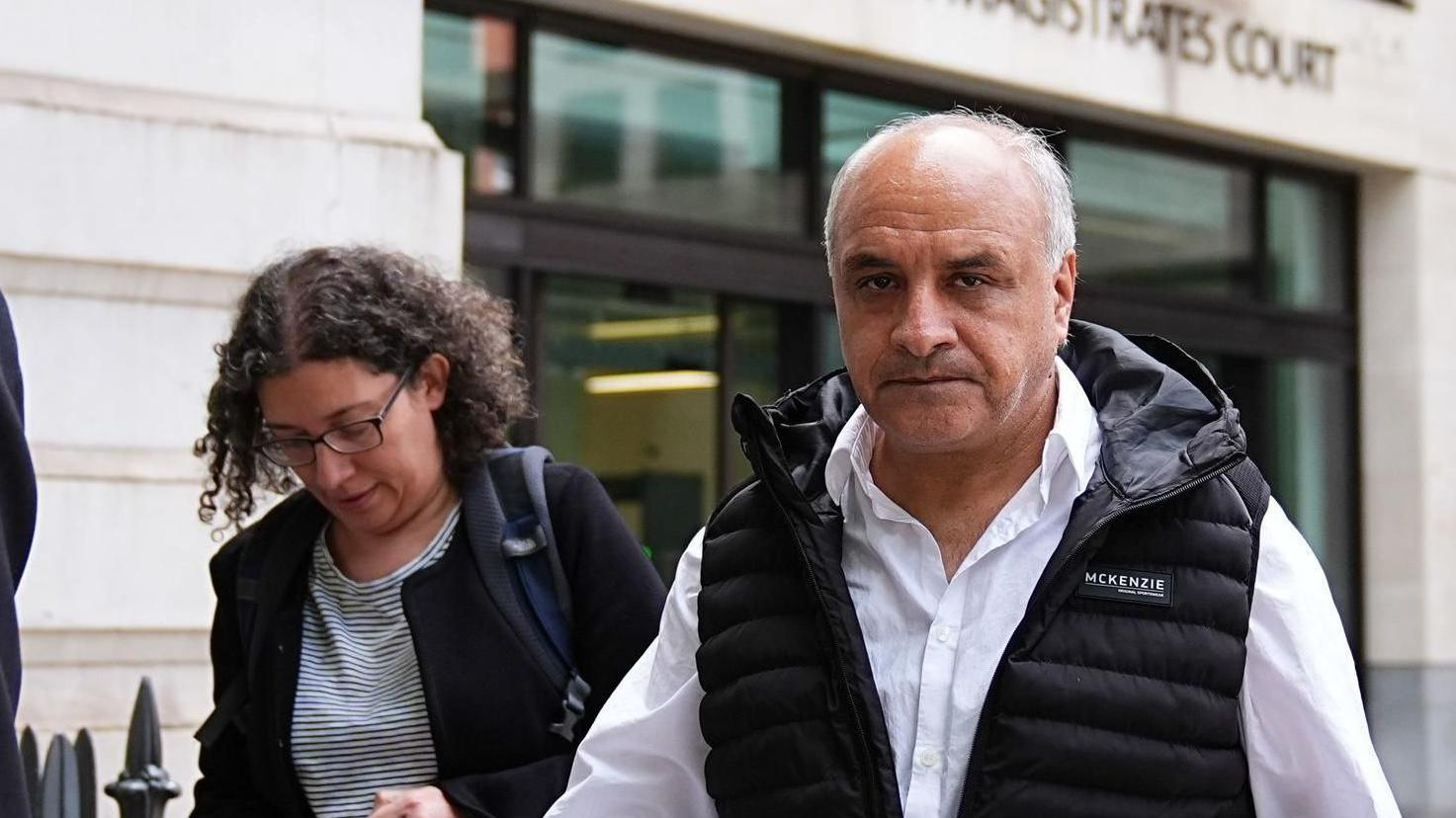
In a landmark ruling for freedom of expression in the UK, Hamit Coskun has successfully overturned his conviction for a religiously aggravated public order offence. The 51-year-old Turkish-born activist was cleared by Southwark Crown Court on October 10, 2025, after appealing a June decision that fined him £240 for burning a Quran and shouting insults about Islam outside the Turkish consulate in London’s Knightsbridge area.
The case, which drew significant attention from free speech advocates and critics alike, underscores ongoing tensions between public order laws and the right to protest. Coskun’s actions on February 13, 2025, in Rutland Gardens involved holding a flaming Quran aloft while yelling phrases such as “fuck Islam” and “Islam is religion of terrorism.” The appeal court’s decision emphasizes that offensive speech, even when deeply provocative, does not automatically constitute a criminal act under current legislation.
The original incident and subsequent trial highlighted Coskun’s personal grievances with Islam, rooted in his experiences in Turkey. As a half-Kurdish, half-Armenian individual, Hamit Coskun had fled persecution and sought refuge in the UK to voice his criticisms freely. Prosecutors argued that his behavior caused harassment, alarm, or distress to those within sight or hearing, particularly given the location near a diplomatic site. The conviction was seen by some as an unintended revival of blasphemy laws, abolished in England and Wales in 2008. This ruling not only exonerates Coskun but also sets a potential precedent for similar cases involving symbolic protests against religious ideologies.
The Incident and Initial Conviction: A Protest Turns to Legal Battle
The events unfolded on a chilly February afternoon in Rutland Gardens, a quiet residential street adjacent to the Turkish consulate in Knightsbridge. At around 2:30 PM on February 13, 2025, Hamit Coskun arrived with a copy of the Quran, doused it in lighter fluid, and set it ablaze. As the flames rose, he raised the burning book high and began shouting abusive remarks directed at Islam. Eyewitnesses reported hearing him repeatedly yell “fuck Islam” and declare “Islam is religion of terrorism.” The protest lasted approximately 10 minutes before escalating dramatically.
A nearby resident, Moussa Kadri, emerged from a building, confronted Hamit Coskun verbally, and then returned with a large kitchen knife. Kadri slashed at Coskun, inflicting minor injuries that required hospital treatment. Police arrived shortly after, arresting both men. Coskun’s actions were premeditated, as evidenced by his social media posts in the days leading up to the event. On platforms like X (formerly Twitter), he described the Quran as “a book that orders terror, permits plunder, rape, paedophilia, and does not recognise the right to life for anyone outside the Islamic faith.”
He further labeled Islam as a “terrorist ideology” and framed his protest as opposition to Turkish President Recep Tayyip Erdogan’s government, which he accused of turning Turkey into a “base for radical Islamists” and attempting to impose a “Sharia regime.” Hamit Coskun told investigators that his demonstrations were inspired by similar acts in Sweden and Denmark, where Quran burnings had sparked international debate. He carried out the act alone, without permits, in a public space frequented by diplomats and locals.
In June 2025, Westminster Magistrates’ Court found Hamit Coskun guilty of a religiously aggravated public order offence under Section 4A of the Public Order Act 1986. District Judge Adam Hiddleston presided over the trial, ruling that while burning a religious text and criticizing a faith were “not necessarily disorderly,” Coskun’s conduct crossed the line due to its timing, location, and accompanying abusive language.
Read : Who is Valentina Gomez Who Burnt The Quran with Flamethrower in Texas Campaign Video?
The judge noted Coskun’s “deep-seated hatred of Islam and its followers,” attributing it to his family’s experiences in Turkey, including alleged persecution under Islamist influences. Hiddleston emphasized that the offense was aggravated because it targeted a religious group, potentially causing distress to passersby, including those of Muslim faith. Coskun was fined £240, ordered to pay £620 in costs, and given a conditional discharge. No jail time was imposed, but the conviction carried significant personal and professional repercussions for Hamit Coskun, who works as a translator in London.
If you want to know how bad things are in Britain:
— Connor Tomlinson (@Con_Tomlinson) September 23, 2025
The man holding the Quran, Hamit Coskun was convicted and fined for causing Muslims "harassment, alarm, and distress, with the fact that he was almost stabbed used as the proof.
The man doing the attempted stabbing was just set… pic.twitter.com/ZdYh8sKSVz
The prosecution, led by James McGhee, presented evidence including video footage from security cameras and witness statements. One video captured the flames illuminating Coskun’s face as he shouted, with the acrid smoke drawing a small crowd. McGhee argued that the act was not mere expression but deliberate provocation in a sensitive diplomatic zone, where tensions over Turkey’s policies run high. Coskun, representing himself initially, defended his protest as a legitimate political statement against Erdogan’s regime, not an attack on individual Muslims.
However, the court rejected this, finding the language too inflammatory to qualify as protected speech. The conviction sparked immediate backlash from free speech groups, who viewed it as a chilling effect on dissent. Meanwhile, Kadri, the knife-wielding assailant, was later sentenced in September 2025 to a suspended 20-week prison term for assault and possession of a bladed article. Judge Hiddleston described Kadri as “clearly deeply offended” but noted the weapon was not as dangerous as a sharpened blade, a leniency that fueled further debate over uneven application of the law.
The Appeal Hearing: Defending Free Speech in Court
Hamit Coskun’s appeal, lodged immediately after the June verdict, was heard over two days at Southwark Crown Court, concluding on October 9, 2025. Represented by prominent barrister Tim Owen KC, Coskun argued that his conviction violated Article 10 of the European Convention on Human Rights, which safeguards freedom of expression. Owen described the protest as a “perfectly legitimate expression of his opinion on Islam,” comparable to peaceful demonstrations like those by Falun Gong outside the Chinese Embassy.
He stressed that Coskun’s actions were calm and intermittent before the confrontation, not targeted at individuals, and did not obstruct public access. “The right to free speech must include the right to offend,” Owen contended, echoing arguments from supporting organizations. Funding for the appeal came from the National Secular Society (NSS) and the Free Speech Union (FSU), both of which intervened as third parties. NSS chief executive Stephen Evans called the original conviction a “repurposing of the Public Order Act into a form of modern blasphemy law,” warning it could deter democratic expression.
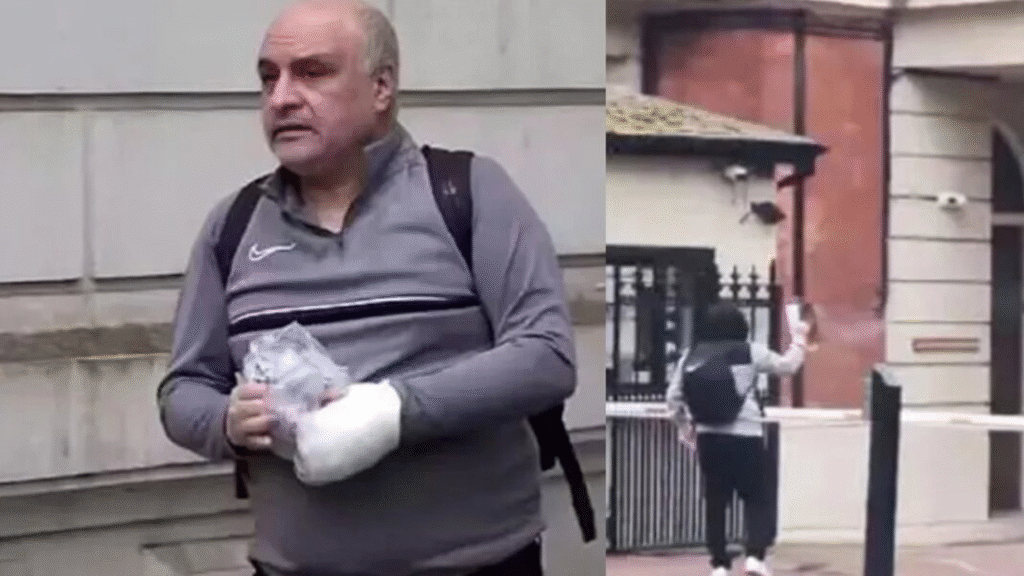
The FSU similarly positioned the case as a test of whether symbolic acts of dissent could be criminalized under the guise of preventing distress. Humanists UK submitted evidence highlighting that no bystanders fled in fear during the incident, and the stabbing by Kadri did not retroactively justify Hamit Coskun’s prosecution. The hearing drew notable attendees, including Shadow Justice Secretary Robert Jenrick, who later stated, “I didn’t like what Mr Coskun did; burning a religious text was not pleasant. But it was also never criminal.”
Prosecutors maintained that the context—outside a consulate in a diverse neighborhood—elevated the act to disorderly conduct. They replayed footage showing the burning book and shouted expletives, arguing it foreseeably caused alarm.
However, the three-judge panel, led by Mr Justice Jeremy Johnson, focused on proportionality. Owen submitted that blasphemy’s abolition in 2008 signaled Parliament’s intent to protect even hurtful speech, absent direct threats or incitement. The court also considered international precedents, such as European Court of Human Rights rulings upholding offensive protests as free expression. After deliberating overnight, the judges reserved judgment, signaling the case’s gravity. The packed courtroom, including journalists and activists, awaited a decision that could influence future hate speech prosecutions.
Court Ruling and Reactions: A Victory for Expression or Cause for Concern?
On October 10, 2025, Southwark Crown Court delivered its verdict: Coskun’s conviction was quashed unanimously. Mr Justice Johnson ruled that “freedom of expression includes the right to express views that offend, shock, or disturb.” The judges clarified that burning a religious book is not unlawful per se, even if offensive, and Coskun’s protest constituted political dissent against a foreign government’s Islamist leanings. They found no evidence of targeted harassment or intent to provoke violence, noting the stabbing occurred post-act and did not implicate Hamit Coskun.
The fine and costs were refunded, closing the legal chapter for the appellant. Coskun, speaking outside the court, expressed relief: “I came to England, having been persecuted in Turkey, to be able to speak freely about the dangers of radical Islam. I am reassured that—despite many troubling developments—I will now be free to educate the British public about my beliefs.” The NSS hailed it as “an important victory for freedom of expression,” with Evans adding that it defended the principle of offending without endorsing the act.
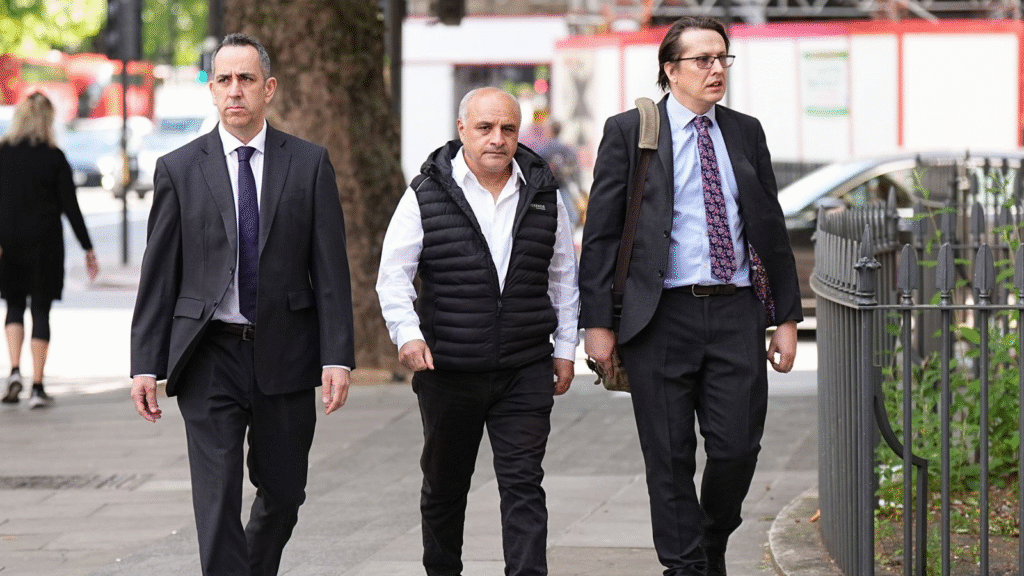
Humanists UK echoed this, stating, “We are delighted and relieved to see Hamit’s conviction overturned,” viewing it as a blow against blasphemy’s resurgence. Jenrick posted on X: “Hamit Coskun has been cleared. Good. This is an important victory for free speech. Parliament voted to abolish blasphemy laws 20 years ago.” Critics, however, raised alarms. Muslim advocacy groups like 5Pillars condemned the ruling as emboldening Islamophobia, pointing to Coskun’s inflammatory social media history.
One spokesperson noted, “While free speech is vital, this decision risks normalizing hate speech in public spaces.” Legal experts predict appeals could test the boundaries further, especially amid rising protests over global religious tensions. The case’s overlap with Kadri’s lenient sentence—suspended despite threats of killing—has prompted calls for sentencing consistency. Broader implications include potential reforms to the Public Order Act to better balance expression and community harmony.
This outcome reinforces the UK’s commitment to robust free speech protections, even for unpopular views. As debates on religious critique intensify, Hamit Coskun’s exoneration serves as a reminder that courts must navigate offense without stifling dissent. For activists like him, it’s validation; for communities feeling targeted, it’s a call for dialogue. The ruling arrives at a pivotal moment, with similar incidents reported across Europe, ensuring this London protest resonates far beyond Rutland Gardens.
**mind vault**
mind vault is a premium cognitive support formula created for adults 45+. It’s thoughtfully designed to help maintain clear thinking