
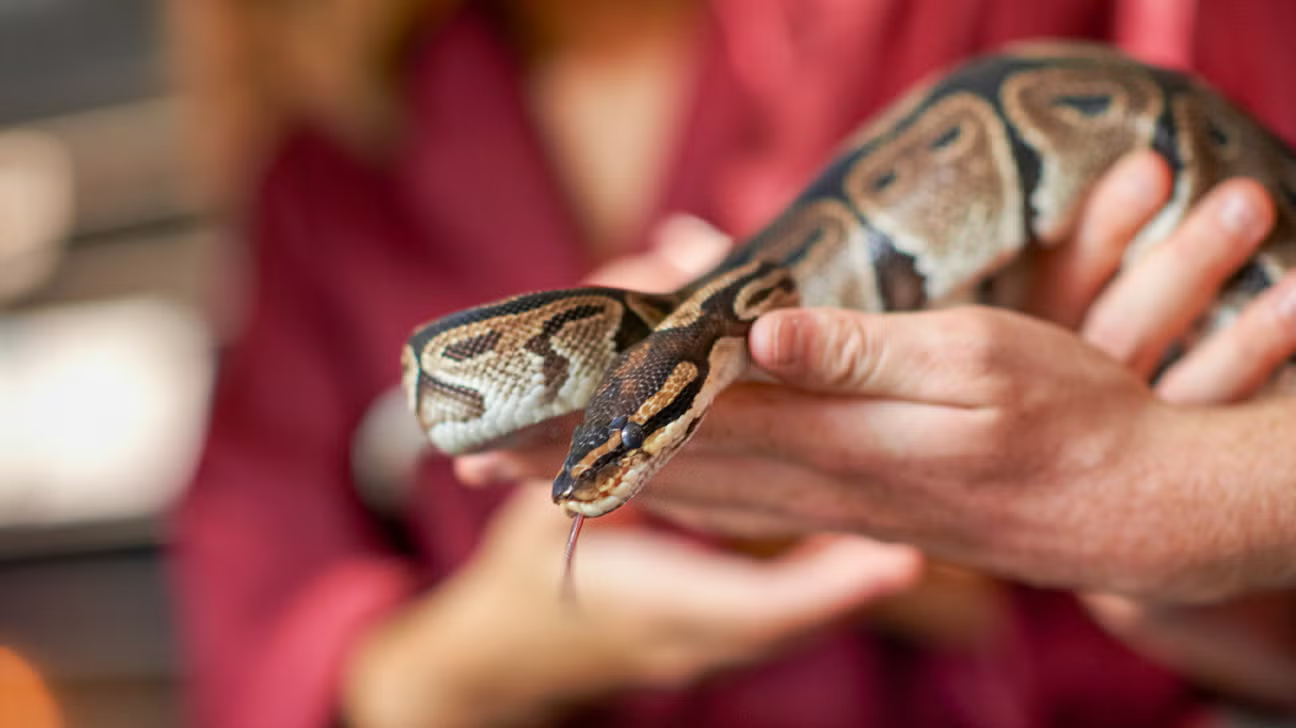
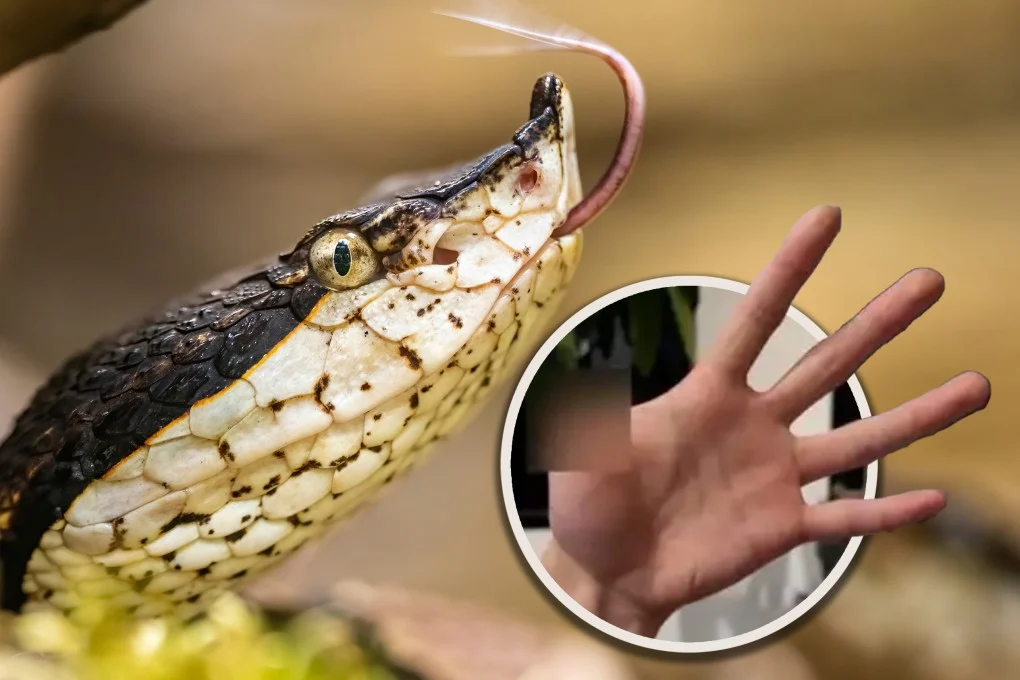
A serious injury sustained by a Beijing resident after Hand-Feeding Ill Pet Snake has drawn renewed attention to the risks associated with keeping venomous animals in domestic settings. The man, identified by Chinese media as Huang, lost his thumb following a severe envenomation from a long-nosed viper, a species widely regarded as one of the most dangerous snakes native to East Asia.
The incident occurred while Huang was attempting to hand-feed the animal, which he believed was too ill to eat on its own. What began as a well-intentioned effort to nurse the snake back to health quickly escalated into a medical emergency with permanent consequences. The case has since been cited by medical professionals and public health officials as an illustration of the dangers posed by exotic pets, particularly those capable of delivering potent venom.
A Bite From One of China’s Most Venomous Snakes
According to reports published by the South China Morning Post, Huang had kept a long-nosed viper as a pet, a decision rooted in a lifelong fascination with snakes. The long-nosed viper, sometimes referred to in Chinese folklore as the “five-step snake,” carries a reputation for extreme toxicity. Traditional belief holds that a person bitten by the snake would collapse and die within five steps, a dramatic expression that underscores the fear historically associated with the species. While modern medicine has reduced the fatality rate of such bites, the venom remains capable of causing extensive tissue damage and life-threatening complications.
Huang was attempting to feed the snake by hand after it reportedly fell ill and was unable to consume food independently. During this process, the snake bit his finger. The venom rapidly entered his bloodstream, triggering a cascade of physiological effects. Huang later described how the poison severely compromised his blood clotting function, a common and dangerous effect of viper venom. Such venom often contains hemotoxins that disrupt coagulation, damage blood vessels, and destroy surrounding tissue.
Despite receiving medical treatment, the damage to Huang’s thumb progressed. The affected tissue began to undergo necrosis, a condition in which cells die due to lack of blood flow and oxygen. Once necrosis sets in, the risk of infection and systemic complications increases sharply. In Huang’s case, doctors determined that the extent of the tissue death made it impossible to save the thumb. A medical amputation was performed to prevent further spread of damage and to stabilise his condition.
Read : Crossing Beauty: The Top Ten Most Beautiful Bridges Around the World
Huang later explained that the decision to amputate was unavoidable given the severity of the envenomation. His account has circulated widely on Chinese social media and news platforms, prompting public discussion about the wisdom of keeping venomous reptiles in private homes. Medical experts have noted that even experienced handlers are vulnerable to sudden, unpredictable movements by snakes, particularly when the animals are stressed or unwell.
Medical Consequences and the Limits of Treatment
The loss of Huang’s thumb highlights the medical challenges associated with venomous snakebites, even in urban areas with access to advanced healthcare. Viper venom is complex and can affect multiple systems in the body. In addition to impairing blood clotting, it can cause swelling, intense pain, blistering, and rapid tissue destruction at the site of the bite. Antivenom, when administered promptly, can neutralise circulating toxins, but it cannot always reverse local tissue damage that has already occurred.
Doctors involved in similar cases have explained that the success of treatment depends on several factors, including the amount of venom injected, the location of the bite, the speed of medical intervention, and the overall health of the patient. Bites to fingers and toes are particularly dangerous because the confined anatomical space allows pressure and tissue damage to escalate quickly. Once blood supply is compromised, necrosis can develop within hours or days, leaving amputation as the only viable option.
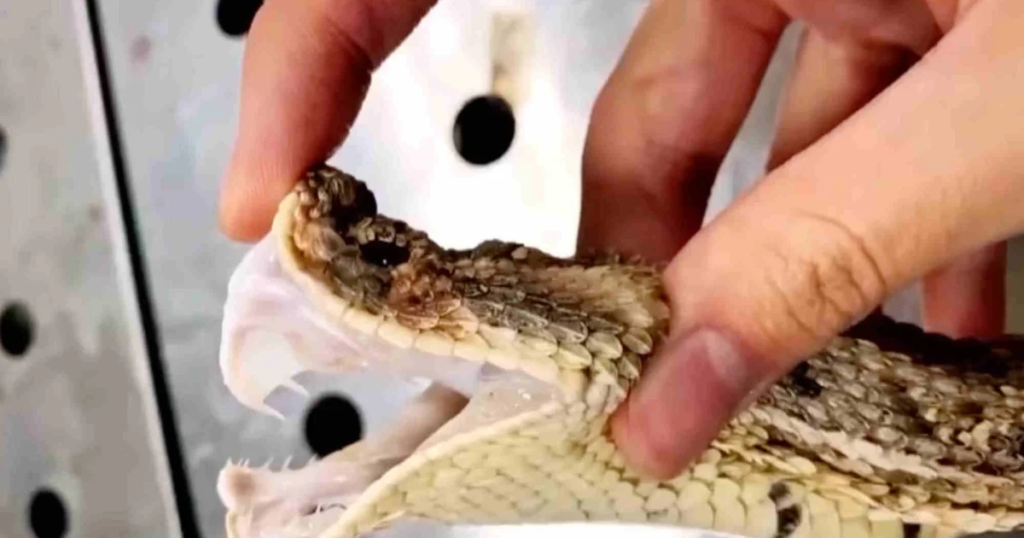
Huang’s case also underscores the difficulty of treating bites from privately kept snakes. Hospitals may not always have immediate access to species-specific antivenom, especially for less common or illegally kept animals. While China maintains stocks of antivenom for native species, delays in identification or treatment can still occur. Public health officials have repeatedly warned that keeping venomous animals at home increases the risk not only to owners but also to family members, neighbours, and emergency responders.
In the aftermath of the incident, medical professionals reiterated that hand-feeding venomous snakes significantly increases the risk of bites. Even trained herpetologists typically use specialised tools such as feeding tongs and protective equipment when handling dangerous reptiles. Illness in snakes can further heighten unpredictability, as pain or weakness may cause defensive reactions. The assumption that familiarity reduces danger is one that doctors and wildlife experts consistently challenge.
Exotic Pets, Public Health Risks, and Regulatory Concerns
Huang’s injury has emerged amid a broader trend in China involving the ownership of exotic and sometimes dangerous animals as pets. In recent years, social media platforms have showcased individuals keeping reptiles, amphibians, and mammals that were once rarely seen outside zoos or research facilities. This trend has raised concerns among public health authorities, who warn that such animals often carry pathogens that pose risks to humans.
Read : 69-Year-Old Phillip Hoover Dies After Falling Through Ice on Pond While Trying to Save Pet Dog
Liu Wei, a senior doctor at the Shenzhen Centre for Disease Control and Prevention, has spoken publicly about the health hazards linked to exotic pets. According to Liu, many of these animals are carriers of bacteria, parasites, and viruses that can be transmitted to humans through contact, bites, scratches, or exposure to waste. He has cited lizards as a common example, noting that their faeces frequently contain salmonella, which can cause fever, diarrhoea, and severe complications in vulnerable individuals.
Other animals present even greater risks. Marmots, sometimes kept as novelty pets, can carry the rabies virus. Rabies remains one of the deadliest infectious diseases once symptoms appear, with a fatality rate estimated at around 60 percent in some cases. These risks are not always well understood by pet owners, particularly when animals are acquired through informal markets or online platforms.
Public health officials have advised specific groups to avoid keeping exotic pets altogether. Pregnant women, children under the age of five, elderly individuals, and people with weakened immune systems are considered especially vulnerable to infections transmitted from animals. In households with such individuals, the presence of exotic pets can elevate the risk of severe illness.
Regulatory enforcement has also come under scrutiny. While China has laws governing the importation and ownership of protected wildlife, enforcement varies, and loopholes persist. In February, Shanghai Customs intercepted a man at Pudong International Airport attempting to smuggle a poison dart frog from Latin America into the country. The frog, widely regarded as the most poisonous in the world, was reportedly intended as a personalised pet. Authorities euthanised the animal, citing biosecurity and safety concerns, though details of any punishment imposed on the individual were not disclosed.
Cases like this have fuelled debate over whether existing regulations are sufficient to address the growing market for exotic pets. Wildlife experts argue that stricter controls and clearer public education are needed to reduce both health risks and harm to animals. Many exotic species require specialised care and environments that are difficult to replicate in private homes, leading to stress, illness, and increased danger.
The incident involving Huang and his pet snake has therefore been interpreted as more than an isolated accident. It reflects a convergence of personal fascination, gaps in risk awareness, and broader societal trends. Medical authorities and wildlife specialists continue to emphasise that the dangers associated with venomous and exotic pets are often underestimated, with consequences that can be severe and irreversible.
Logging into 39jilogin.com for another session. Hope my luck holds out! Been having a pretty good run lately! Worth checking out: 39jilogin
**mitolyn official**
Mitolyn is a carefully developed, plant-based formula created to help support metabolic efficiency and encourage healthy, lasting weight management.