

The arrest of Carlos Portugal Gouvea, a Brazilian scholar who taught at Harvard Law School during the fall semester, has drawn widespread attention due to its intersection of immigration enforcement, campus politics, and concerns about antisemitism. The sequence of events began with an incident outside Temple Beth Zion in Brookline, Massachusetts, on the eve of Yom Kippur, during which Gouvea discharged a pellet gun.
Although local authorities and the synagogue itself later stated that the episode did not appear to be motivated by antisemitism, the Trump administration characterized it as an “anti-semitic shooting incident,” prompting swift federal action. Immigration and Customs Enforcement ultimately arrested Gouvea after the revocation of his nonimmigrant visa, and he agreed to return to Brazil. The case has unfolded against a backdrop of ongoing disputes between the federal government and Harvard University, amplifying its public significance.
Background on the Incident and Initial Arrest
On 1 October, Brookline police responded to a report of a person with a firearm near Temple Beth Zion, a synagogue situated in a residential neighborhood. The timing was particularly sensitive, as the Jewish community was preparing for Yom Kippur, one of the most solemn and sacred days on the religious calendar.
When officers arrived, they encountered Gouvea, who stated that he had been using a pellet gun to hunt rats in the vicinity. Police records indicate that he claimed to be unaware both of the presence of the synagogue and the fact that the holiday was approaching. His use of the pellet gun led officers to arrest him on charges related to illegal discharge of a firearm and several minor offenses, including disorderly conduct and disturbing the peace.
Following the incident, Temple Beth Zion communicated with its community members to clarify the circumstances based on information provided by investigators. The synagogue emphasized that authorities had found no indication that the episode was driven by antisemitism.
Brookline police echoed this assessment, concluding that there was no evidence to suggest targeted hostility toward the Jewish community. Instead, they treated the case as a violation involving improper use of a pellet gun in a residential neighborhood. While the initial arrest generated understandable concern due to the sensitive timing and proximity to the synagogue, local officials worked to calm public fears by affirming that the evidence did not support an antisemitic motive.
Read : Why Everyone in Japan Will Be Called Sato by 2531: Debate Over Married Surnames
Prosecutors and Gouvea later reached an agreement under which he would serve six months of pre-trial probation and pay $386.59 in restitution for the damage caused by the pellet gun. As part of this arrangement, additional charges including vandalism and disturbing the peace were dismissed. Under ordinary circumstances, such an agreement might have concluded the matter. However, broader political dynamics soon intensified the situation and pushed it into the national spotlight.
Federal Response, Immigration Actions, and Political Context
Shortly after the local court settlement became public, the Trump administration intervened by framing the incident as an act of antisemitism and pressing for federal action. The State Department revoked Carlos Portugal Gouvea’s temporary nonimmigrant visa, citing what federal officials described as an “anti-semitic shooting incident.” This characterization diverged sharply from the conclusions reached by Brookline police and Temple Beth Zion, both of which had publicly stated that the incident appeared accidental and unrelated to antisemitic intent. Despite these statements, the administration’s portrayal influenced federal agencies’ decisions.
On 4 December, ICE agents arrested Gouvea, detaining him on the basis of his now-revoked visa status. According to the Department of Homeland Security, Gouvea agreed to leave the country voluntarily. His representatives in Brazil later issued a statement noting that ICE had presented him with the option of departing the United States immediately, enabling him to return to Brazil the following day. Harvard University declined to comment on the matter, consistent with its usual practice regarding personnel and immigration issues.
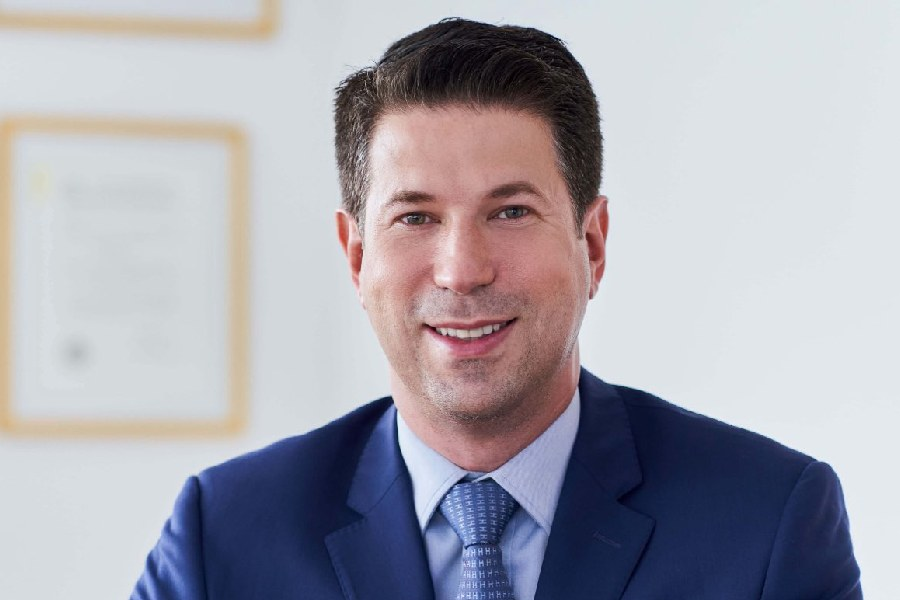
The federal government’s position on the incident is best understood within the broader political context. The Trump administration has been engaged in a prolonged conflict with Harvard over several issues, including allegations that the university has not done enough to combat antisemitism on campus. Federal officials have also challenged Harvard’s handling of various administrative matters, resulting in multiple investigations and policy disputes.
Notably, the administration terminated more than $2 billion in federal research grants awarded to the university, a decision a federal judge later ruled unlawful. Tensions between the White House and Harvard have therefore been high, and this case emerged at a moment when the administration was attempting to leverage pressure on the university. Against this backdrop, the reclassification of a local pellet gun incident as a federal matter involving alleged antisemitic intent reflects the broader struggle between federal authorities and the university.
Critics of the administration’s approach have argued that the government used the Gouvea incident to strengthen its narrative concerning antisemitism at Harvard, despite contradictory findings from local investigators. Supporters, on the other hand, have pointed to the need for vigilance in protecting religious communities and enforcing immigration regulations. The result has been a policy debate shaped as much by political tensions as by the underlying facts of the case.
Harvard, the Legal Resolution, and the Aftermath
Gouvea, an associate professor at the University of São Paulo, had come to Harvard Law School as a visiting scholar for the fall semester. His academic work had not been a matter of public controversy prior to the incident. The university has not issued further statements regarding his affiliation, departure, or the future of any academic relationship. Under typical academic procedures, visiting scholars complete their semester-long residency and return to their home institutions; however, immigration actions can accelerate or alter these timelines, as occurred here.
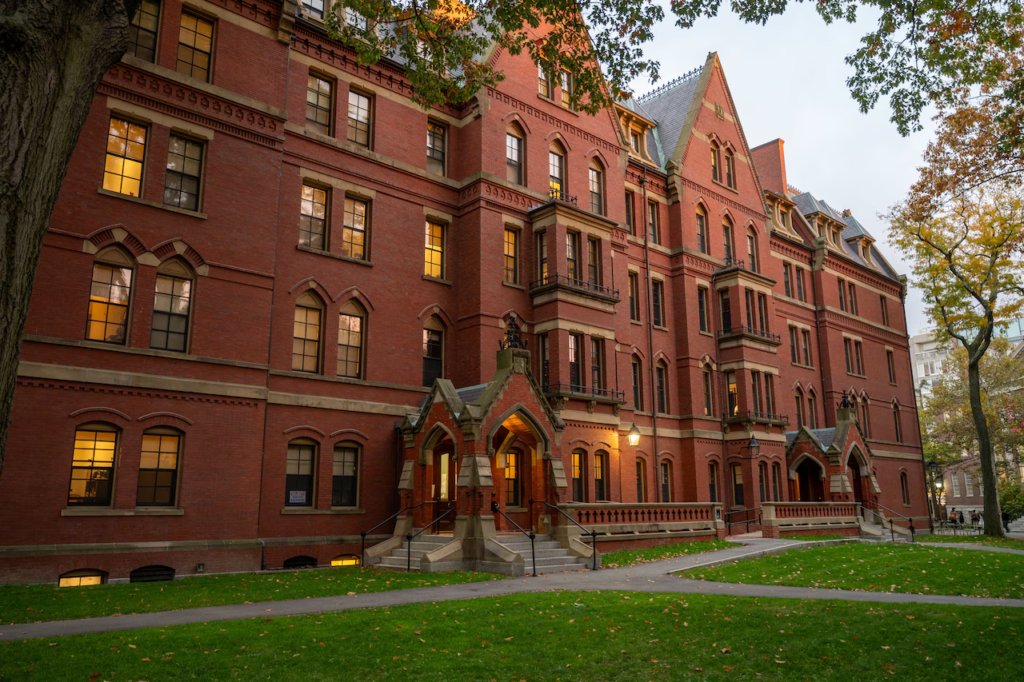
The legal resolution of the underlying charges remains straightforward. Gouvea’s probationary agreement and restitution payment address the local concerns related to the use of the pellet gun. The dismissal of other charges indicates that prosecutors regarded the matter as relatively minor once the circumstances were fully understood. Local authorities have maintained their position that the event was not an act of targeted religious hostility.
Temple Beth Zion, in particular, reassured congregants that police had informed them of Gouvea’s lack of awareness regarding the synagogue’s location and the timing of the holiday. The immigration dimension has produced a different outcome. Because the State Department exercised its authority to revoke Gouvea’s visa, ICE was obligated to take action, culminating in his departure from the country. While voluntary departure avoids the more serious consequences associated with formal removal proceedings, it nonetheless interrupts his ability to continue any activity in the United States unless he obtains future authorization to reenter.
The circumstances under which he might return remain uncertain, particularly given the political sensitivities surrounding the case. The conclusion of the case illustrates the complex intersection of local law enforcement, federal immigration power, and national political narratives. A relatively small-scale incident involving a pellet gun near a place of worship escalated dramatically once federal authorities characterized it in terms that diverged from the findings of local investigators.
The broader dispute between Harvard University and the federal government added further intensity and public scrutiny, leading to an outcome shaped as much by political context as by legal procedure. Gouvea’s return to Brazil brings an end to the immediate controversy, though questions about the use of federal authority in such circumstances remain part of an ongoing national discussion.
Where to download Jili7 app is key. Found a safe source at jili7download. Always double-check the source before downloading!