
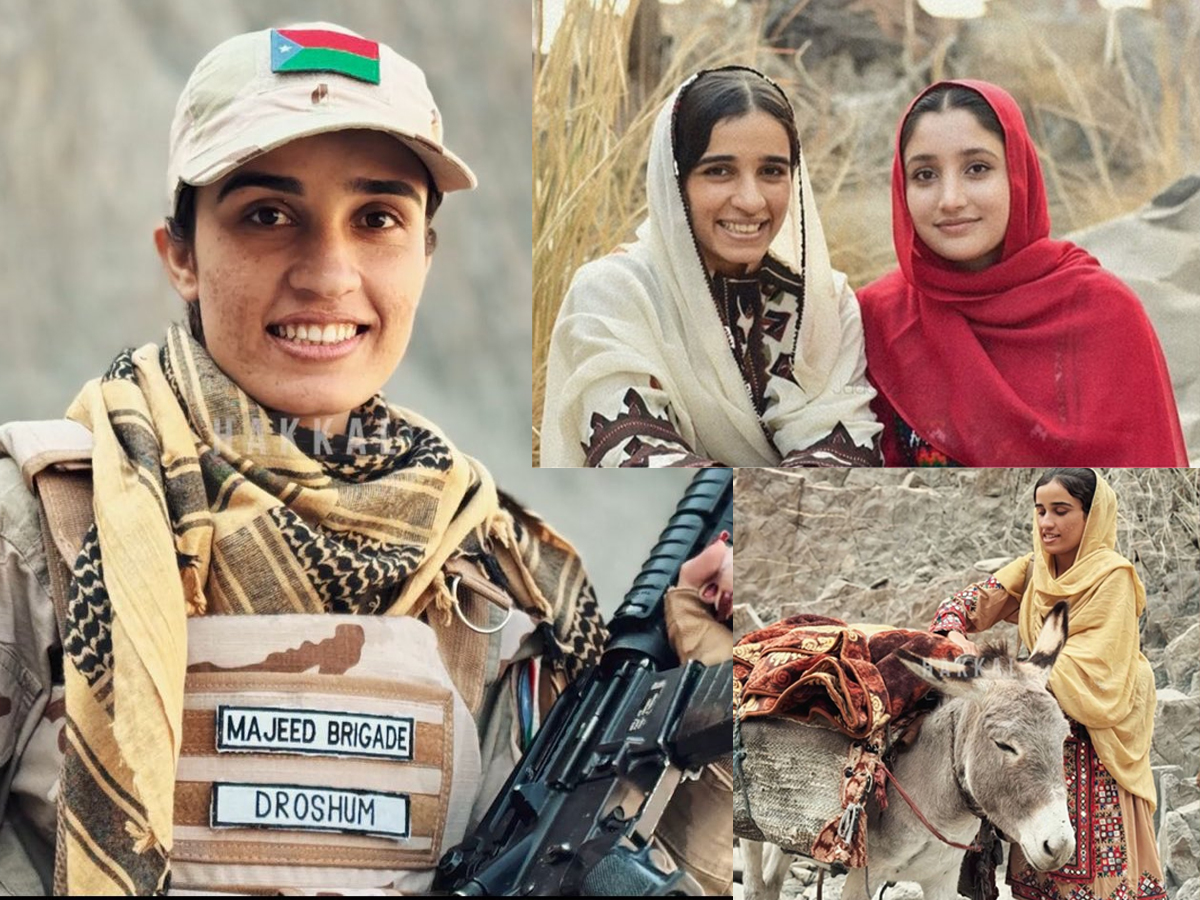
The release of a video by the Balochistan Liberation Army following a coordinated assault in Pakistan’s Balochistan province has drawn renewed attention to the role of women within the region’s long-running separatist insurgency. The footage, circulated on social media platforms and attributed to the BLA, shows a young woman identified as Hawa Baloch during what the group described as the final hours before her death.
According to the organisation, she was a “fidayeen” fighter who took part in the second phase of an operation known as Operation Herof at the Gwadar Front, one of several locations targeted during a weekend of intense violence. The video depicts Hawa Baloch armed with a rifle, speaking directly to the camera, issuing defiant statements against Pakistani security forces, and interacting with other fighters. It later cuts to scenes showing her body after the clash, reinforcing the BLA’s claim that the footage constituted a final message recorded hours before her death.
Pakistani authorities, meanwhile, reported large-scale counter-operations in which dozens of separatist fighters were killed, describing the assaults as among the deadliest in recent years in the province. The episode has reignited debate about the evolving nature of the Baloch insurgency, the increasing visibility of women within militant ranks, and the broader political and social context that continues to fuel conflict in Pakistan’s largest yet least populated province.
The Video and the Gwadar Operation
The video released by the BLA appears to have been recorded on a mobile phone, likely during nighttime or the early hours of the morning. In it, Hawa Baloch is seen wearing a red and blue kurta and a baseball cap bearing the BLA emblem. She addresses the camera repeatedly, framing her participation as a direct confrontation with what she calls the “Punjabi army,” a phrase commonly used by Baloch separatists to refer to Pakistan’s military establishment.
Throughout the footage, she speaks of waiting for Pakistani security personnel to advance, accusing them of firing from a distance and avoiding close combat. At one point, she is asked by another fighter about the state of the fighting and responds with a smile, describing the war in casual terms. The interaction is followed by further statements urging the Baloch population to rise up and support the armed struggle, asserting that compromise with the state is impossible.
The BLA stated that the footage was recorded approximately twelve hours before her death and that she fought alongside other fidayeen during the second phase of Operation Herof. Gwadar, the focal point of the operation, holds strategic significance due to its port, which is a key component of the China–Pakistan Economic Corridor. The city and its surrounding areas have frequently been targeted by separatist groups seeking to draw attention to their opposition to what they describe as exploitation of local resources without adequate benefit to the indigenous population.
According to Pakistan’s military, counter-operations conducted over two days resulted in the deaths of more than 130 separatist fighters across multiple locations. The BLA acknowledged casualties within its ranks as well, including members of its Majeed Brigade, Fateh Squad, and STOS unit.
She is Hawa Baloch, part of the ongoing Baloch rebel operation against Pakistani Islamist forces. After her two younger sisters were abducted, raped, and murdered by the Pakistani radical Islamist Army, she joined the resistance to free Balochistan and protect her people. pic.twitter.com/WlRmFWHHmx
— Baba Banaras™ (@RealBababanaras) February 1, 2026
Independent verification of casualty figures from either side remains difficult due to restrictions on access and reporting in conflict-affected areas. The release of the video was clearly intended to serve both as propaganda and as a symbolic statement, highlighting the participation of a young woman in a high-profile attack and framing her death as an act of sacrifice for the Baloch cause.
Who Was Hawa Baloch
Media reports and information circulated by analysts suggest that Hawa Baloch belonged to Pakistan’s Generation Z and had a background that differed from stereotypical portrayals of militant recruits. She was reportedly educated and came from a family already touched by the insurgency. Her father, according to these accounts, was a BLA fighter who was killed by Pakistani security forces in 2021, an event that appears to have had a significant influence on her trajectory.
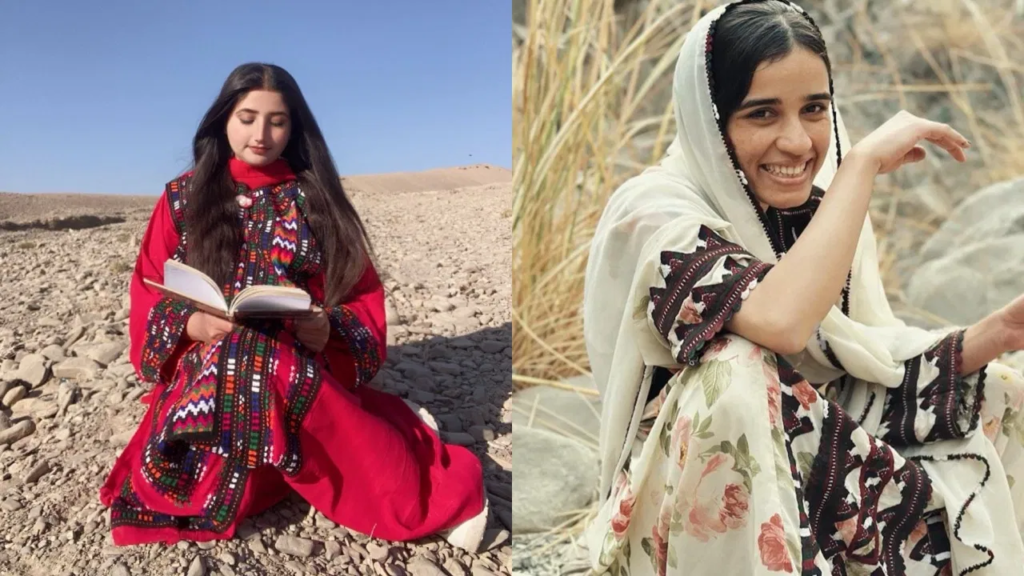
The BLA and affiliated commentators have portrayed her decision to join the insurgency as rooted in personal loss and political conviction. Within the narrative promoted by the group, her participation is framed as an extension of a family legacy of resistance rather than an isolated act. Images circulated online have shown her alongside Asifa Mengal, another woman identified as a suicide attacker who was previously killed in clashes with Pakistani forces, reinforcing the idea of a small but visible cohort of female fighters within the organisation.
Read : 25-Year-Old Kashish Chaudhary Becomes First Hindu Woman Assistant Commissioner in Balochistan
While detailed biographical information remains limited, the emphasis on her education has been notable. Analysts have observed that an increasing number of young, educated Baloch men and women have been drawn into the separatist movement over the past decade, challenging earlier assumptions that militancy in the region was driven primarily by poverty or lack of schooling. Instead, grievances related to political marginalisation, enforced disappearances, and disputes over land and resources are often cited as motivating factors.
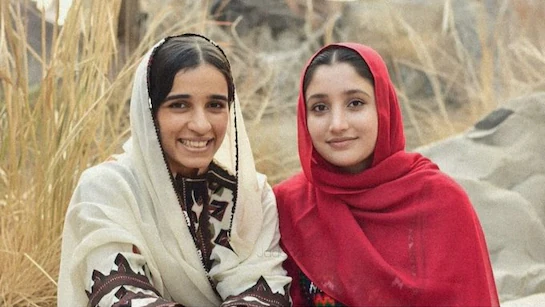
The BLA has historically been dominated by male fighters, but women have increasingly appeared in its messaging and operations, particularly within units such as the Majeed Brigade, which the group describes as an elite formation tasked with high-impact attacks. The use of female fidayeen serves multiple purposes: it attracts international attention, challenges social norms, and is intended to signal the depth of commitment within the movement.
At the same time, critics and human rights advocates have raised concerns about the instrumentalisation of women in militant propaganda and the broader human cost of the conflict, particularly in a province where civilians have borne the brunt of decades of instability.
Balochistan, the BLA, and the Wider Conflict
Balochistan has been the site of intermittent insurgency since Pakistan’s early years, with waves of rebellion driven by demands for greater autonomy, control over natural resources, and political recognition. Despite being rich in minerals, gas, and strategic coastline, the province remains underdeveloped by many socio-economic indicators, a disparity that separatist groups frequently highlight.
Read : Nearly half of the children in Balochistan Affected by Malnutrition
The Balochistan Liberation Army is one of the most prominent armed organisations operating in the region. It has been designated a terrorist organisation by Pakistan and several other countries, a designation that reflects its use of suicide attacks and assaults on military and civilian targets. The group, however, portrays itself as a national liberation movement fighting against what it characterises as occupation and exploitation.
Pakistan’s state response has largely been security-driven, involving military operations, intelligence-led raids, and crackdowns on suspected militants and their supporters. Authorities argue that such measures are necessary to maintain territorial integrity and protect strategic projects, particularly those linked to regional connectivity and investment. Separatist groups counter that these operations have resulted in widespread human rights abuses, including enforced disappearances and extrajudicial killings, claims that the state denies.
Public sentiment within Balochistan is complex and varied. While some civilians openly oppose militant violence, others express sympathy for separatist grievances, even if they do not endorse armed struggle. This ambivalence complicates efforts to assess claims of widespread civilian support for the BLA, which are frequently asserted by the group but disputed by the government.
The case of Hawa Baloch sits at the intersection of these dynamics. Her portrayal by the BLA as a symbol of resistance and sacrifice contrasts sharply with the Pakistani state’s framing of her as a member of a terrorist organisation involved in violence against security forces. International observers tend to view such episodes through the lens of regional security and counterterrorism, often with limited attention to the local social factors that sustain the conflict.
The emergence of women like Hawa Baloch in militant roles underscores an evolution within the insurgency, but it also highlights the enduring failure to resolve the underlying political disputes that have fuelled unrest for decades. As long as those issues remain unaddressed, incidents such as the Gwadar clash are likely to continue shaping narratives on all sides of the conflict, with each death becoming both a personal tragedy and a political symbol within a protracted struggle.