
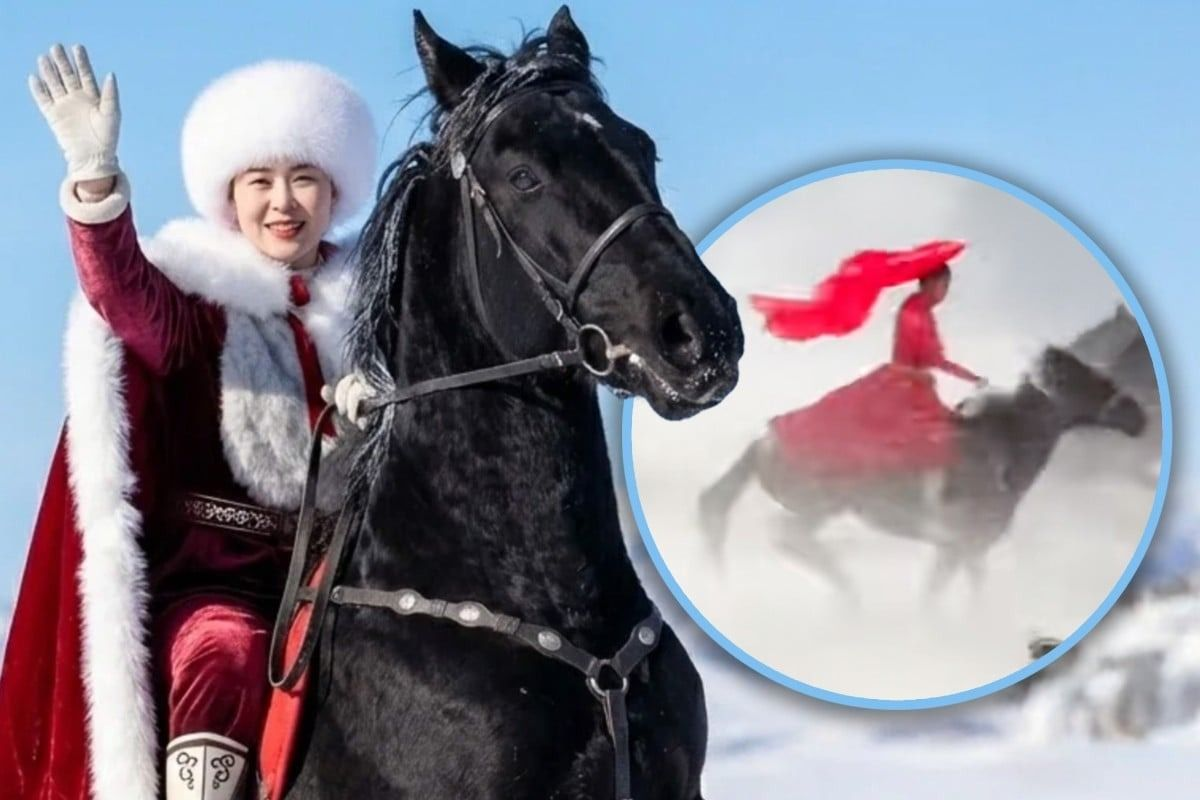
The death of He Jiaolong, a prominent government official and widely followed social media personality from China’s Xinjiang Uyghur Autonomous Region, has drawn national attention and renewed debate about the evolving role of public officials in the digital age. Known for blending governance with online promotion, He represented a new generation of administrators who embraced social media not merely as a communication tool but as a platform for economic development and public engagement.
Her sudden death on January 14, following a horseback riding accident three days earlier, shocked millions of followers who had come to associate her image with both regional pride and modern state-led marketing. The accident occurred in Bole City on January 11 while He was filming a promotional video connected to a local agricultural e-commerce program.
According to reports, she fell from her horse and suffered a severe head injury. She was transported to Urumqi for intensive medical treatment but died three days later at the age of 47. Her passing marked the abrupt end of a highly visible public career that had blended official responsibilities with digital storytelling, commerce, and regional promotion.
He Jiaolong’s life and career reflected the transformation of local governance in parts of China, where officials increasingly act as ambassadors for their regions, using online platforms to drive tourism, agricultural sales, and public interest. Her rise to prominence, her influence across social media, and the reaction to her death reveal much about changing expectations placed on public servants and the pressures associated with maintaining a digital public presence while fulfilling administrative duties.
Rise of a Digital Public Servant
He Jiaolong first came to national prominence in 2020, when she served as deputy head of Zhaosu County. At the time, a video of her riding a horse through snow-covered landscapes while dressed in a flowing red outfit spread rapidly across Chinese social media. The imagery was striking: an official figure embodying both tradition and modernity, presenting her region’s natural beauty in cinematic fashion.
The video captured widespread attention and became emblematic of a new promotional strategy in which local officials used personal charisma and visual storytelling to attract attention to their jurisdictions. Her popularity quickly expanded beyond tourism promotion. Recognizing the economic potential of digital engagement, He began using livestreaming platforms—particularly Douyin, China’s version of TikTok—to market local agricultural products.
She hosted hundreds of livestream sessions, directly connecting producers with consumers and presenting regional goods in real time. Over the course of her digital career, she conducted more than 500 livestreams and helped generate over 600 million yuan in sales for local farmers. These efforts reportedly benefited more than 10,000 households, strengthening rural incomes and expanding market access for producers who might otherwise have remained limited to regional distribution.
In 2023, He was appointed director of the Agricultural Product Brand Development and Marketing Service Center of Xinjiang. The role formalized her work in branding, marketing, and economic outreach. By that time, she had accumulated approximately 6.7 million followers on Douyin, giving her a digital reach far beyond that of most local officials. Her content combined product promotion, scenic imagery, and messaging about rural development, positioning her as both administrator and public advocate.
He Jiaolong, director of the agricultural products brand development and production-sales service center of the Xinjiang Uygur Autonomous Region, passed away late Wednesday at the age of 47 after succumbing to injuries sustained in a work-related accident, according to an… pic.twitter.com/7YP5ER9F7n
— Global Times (@globaltimesnews) January 15, 2026
He frequently described her online activity as an extension of her public service responsibilities. She emphasized that her influence existed to support local communities rather than personal fame. Her messaging consistently framed digital engagement as a tool for economic revitalization, particularly in rural areas where traditional marketing channels were limited. In this sense, she became a model for a broader movement within China sometimes described as the rise of “official influencers,” in which government representatives actively cultivate online audiences to promote policy initiatives and regional economies.
Her approach reflected a shift in administrative communication. Instead of relying solely on institutional announcements, officials like He presented themselves as relatable personalities who interacted directly with viewers, responded to comments, and demonstrated products in real time. This style blurred the boundary between governance and entertainment, creating a new public persona that combined authority with accessibility.
The Accident and National Mourning
He Jiaolong’s death occurred while she was engaged in the same kind of promotional activity that had helped define her public identity. The horseback riding video being filmed in Bole City was intended to support agricultural e-commerce promotion, continuing her established practice of visually dramatic storytelling to draw attention to regional products and landscapes. The accident, sudden and severe, transformed a routine promotional shoot into a national tragedy.
After her fall, medical teams transported her to Urumqi, where doctors attempted intensive treatment for her head injury. Despite these efforts, she died on January 14. News of her death spread rapidly across Chinese media and social platforms, prompting an outpouring of grief from followers, colleagues, and residents of the region she had worked to promote.
Read : Influencer and OnlyFans Star Nicole Pardo Molina Kidnapped at Gunpoint from Lilac Cybertruck
Her funeral in Zhaosu County became a major local event. Residents gathered to pay their respects, and floral tributes arrived from across the country. Reports indicated that the volume of flowers sent by supporters overwhelmed local shops, reflecting the scale of public reaction. For many followers, her online presence had created a sense of personal connection, and her death felt not only like the loss of an official but also of a familiar public figure.

On social media, some users expressed hope that her online accounts would remain active as a memorial to her work. Others shared memories of her livestreams and promotional videos, highlighting the ways her efforts had helped introduce regional products to national audiences. The emotional response underscored how deeply her digital persona had become integrated into public perception of local governance.
Following her death, she was posthumously awarded the title of “Outstanding Member of the Communist Party of China” in Xinjiang. The recognition acknowledged her contributions to rural development, agricultural promotion, and public service. It also affirmed the official view that her digital engagement had been a meaningful extension of state development goals.
Her passing marked the loss of a figure who had embodied a specific model of contemporary governance—one that fused economic advocacy, digital communication, and symbolic representation of regional identity. The circumstances of her death, occurring in the course of promotional work, intensified public reflection on the risks associated with this model.
Debate Over China’s Official Influencer Model
He Jiaolong’s death has triggered broader discussion across Chinese social media about the expectations placed on local officials who function as public influencers. While many observers praised her dedication and effectiveness, others questioned whether the growing emphasis on performance-driven promotion exposes officials to unnecessary risk and distracts from traditional administrative responsibilities.
The concept of the “official influencer” reflects changing strategies for regional development. Local governments increasingly rely on online visibility to attract tourism, expand product markets, and shape public perception. Officials who are able to command large digital audiences can become powerful economic catalysts. However, this role often involves activities that go beyond conventional administrative work, including physically demanding or visually dramatic promotional content designed to capture attention in competitive online environments.
In He Jiaolong’s case, horseback riding through scenic terrain had become a signature element of her promotional style. The imagery conveyed authenticity, cultural heritage, and natural beauty, but it also involved physical risk. Her fatal accident has led some commentators to question whether such activities should be expected—or even encouraged—as part of official duties.
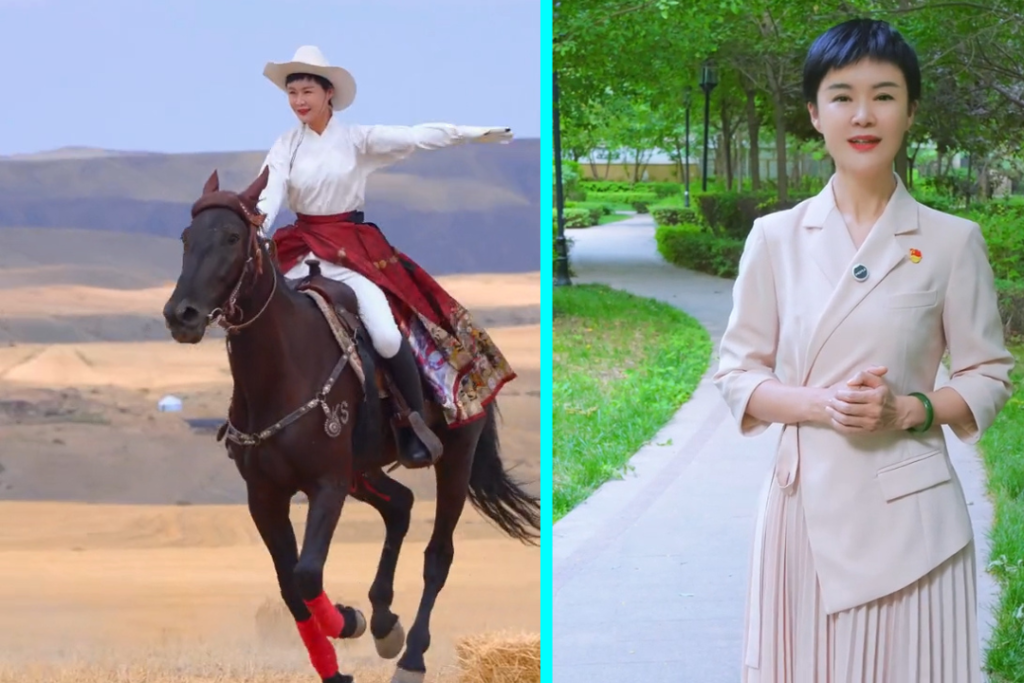
Online discussions have also examined the broader pressures associated with maintaining a large digital following. Successful influencers must produce regular content, respond to audience expectations, and continually innovate to sustain engagement. When public officials assume this role, they may face competing demands: administrative responsibilities on one hand and the need to maintain online visibility on the other.
Some critics have argued that the emphasis on charismatic presentation may overshadow structural improvements that could enhance tourism and local economies in more conventional ways. One widely shared online comment suggested that officials might focus more on regulating hotel pricing or addressing illegal business practices rather than performing promotional spectacles. Such perspectives reflect concern that digital visibility may sometimes substitute for deeper institutional reforms.
At the same time, supporters of the model point to measurable economic benefits. He Jiaolong’s livestreams generated substantial revenue for local farmers and expanded awareness of regional products across China. For many rural communities, such exposure can significantly improve income and market access. Advocates argue that digital engagement represents an innovative and effective tool for regional development, particularly in areas with limited traditional marketing infrastructure.
Her career therefore sits at the intersection of innovation and controversy. She demonstrated how social media can function as a mechanism of economic policy implementation, yet her death highlights the potential human costs associated with performance-oriented governance. The debate sparked by her passing is likely to influence how local administrations evaluate the balance between promotional visibility and occupational safety.
The discussion also reflects broader questions about the evolving nature of public service in an era defined by digital communication. As online platforms continue to shape economic and social interactions, the role of public officials may increasingly involve direct engagement with mass audiences. Determining the boundaries of that engagement—what is appropriate, necessary, or excessive—remains an open question.
He Jiaolong’s life and death have thus become part of a larger conversation about governance, technology, and public expectation. Her achievements illustrate the transformative potential of digital outreach, while the circumstances of her death underscore the physical realities behind highly visible promotional work. Her career stands as a prominent example of how administrative authority, personal branding, and economic strategy have become intertwined in contemporary regional development efforts.
References:
Casino chicago
References:
https://ccsakura.jp:443/index.php?pumaash6
References:
Steroids to build muscle
References:
http://43.143.175.54:3000/siobhancastell/3445480/wiki/Buy-Online-LA-Pharma
References:
Mental side effects of steroids
References:
https://schoolido.lu/user/femalecrab7/