
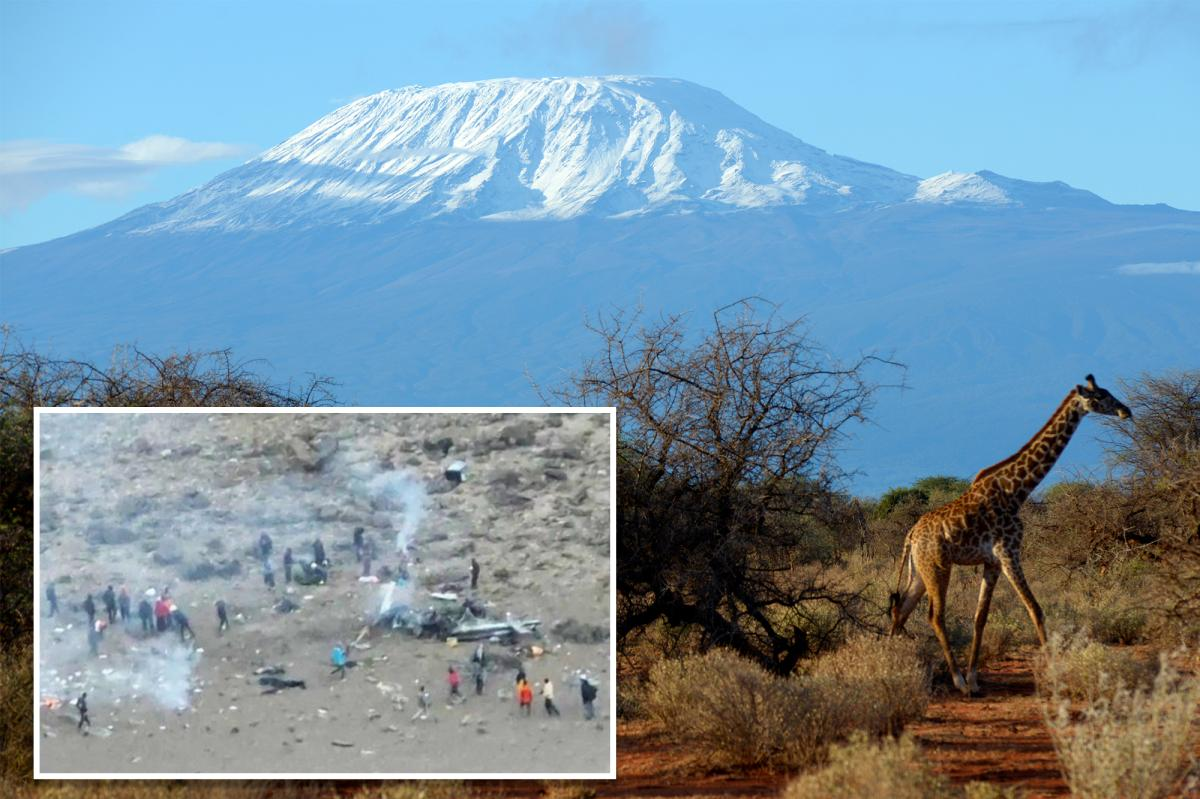
Helicopter Crashes on Mount Kilimanjaro- A fatal Incident has drawn international attention to the risks associated with high-altitude rescue operations on Africa’s tallest mountain. Late Wednesday night, a helicopter conducting a medical evacuation mission crashed on one of Kilimanjaro’s most frequented climbing routes, killing all five people on board. Authorities in Tanzania confirmed that the aircraft was attempting to rescue climbers suffering from medical distress when the accident occurred at an altitude exceeding 13,100 feet.
The tragedy has left families grieving, raised concerns within the mountaineering and aviation communities, and prompted a formal investigation into the cause of the crash. Mount Kilimanjaro, standing nearly 20,000 feet above sea level, attracts tens of thousands of climbers every year. Although it is widely regarded as a non-technical ascent compared to other major peaks, the mountain poses significant dangers due to altitude-related illnesses, rapidly changing weather, and the logistical challenges of operating in extreme conditions.
Rescue helicopters play a critical role in responding to emergencies, particularly when climbers develop severe altitude sickness or other medical complications. The loss of a helicopter and its crew during such a mission underscores the inherent risks faced by rescue personnel and those they seek to help.
According to police, the helicopter was flying between Barafu Camp and Kibo Summit, a stretch known both for its popularity and its physical demands on climbers. Two foreign nationals, reported by Tanzanian media to be Czech citizens, had already been picked up during the evacuation and were on board when the crash occurred. Alongside them were a local doctor, a tour guide, and the pilot, all of whom lost their lives. The aircraft was operated by Kilimanjaro Aviation, a company known for providing medical evacuation and other aviation services in the region.
Helicopter Crashes on Mount Kilimanjaro
The crash occurred during nighttime operations, a factor that can significantly complicate aviation activities in mountainous terrain. Police confirmed that the helicopter went down on one of the most popular climbing routes on Mount Kilimanjaro, though specific details regarding weather conditions, visibility, or mechanical status at the time have not yet been released. The altitude of more than 13,100 feet adds another layer of complexity, as reduced air density affects aircraft performance and increases the difficulty of maneuvering and landing.
Kilimanjaro regional police commander Simon Maigwa told journalists that the helicopter belonged to Kilimanjaro Aviation, a company regularly involved in medical evacuations from the mountain. While the company has not yet issued a public statement, its aircraft are commonly used to transport injured or ill climbers who cannot safely descend on foot. Rescue flights are often time-sensitive, aiming to prevent life-threatening complications such as cerebral or pulmonary edema caused by altitude sickness.
The Kilimanjaro Regional Police Force has confirmed the deaths of five people who died in a helicopter crash that followed tourists to Mount Kilimanjaro.https://t.co/3aZwOJKu9B
— Tranquil Kilimanjaro Treks (@TripKilimanjaro) December 25, 2025
The Tanzania National Parks Agency (TANAPA) said the helicopter crashed into a glacier on Mount… pic.twitter.com/CnCAEdxH2Y
Emergency responders were alerted shortly after the crash, but the remote and rugged location made access challenging. Recovery efforts in such terrain typically involve coordination between park authorities, rescue teams, and aviation officials. The identities of the victims were confirmed by police, and next of kin were informed as authorities began the process of securing the crash site and collecting preliminary evidence.
The Tanzania Civil Aviation Authority announced on Thursday that a formal investigation had begun in accordance with international aviation safety regulations. Investigators will seek to determine the circumstances and probable cause of the accident, examining factors such as aircraft maintenance records, pilot experience, flight planning, weather conditions, and communication logs. Until the investigation is complete, officials have refrained from speculating about the cause of the crash.
Rescue Operations and Risks on Africa’s Highest Mountain
Mount Kilimanjaro presents unique challenges for rescue operations, even though it is often marketed as an accessible climb for non-professional mountaineers. The mountain’s height means that altitude sickness is a persistent risk, affecting climbers regardless of physical fitness. Symptoms can range from headaches and nausea to life-threatening conditions requiring immediate evacuation. With around 50,000 tourists attempting the climb each year, medical emergencies are not uncommon.
Read : Top Ten Must-Visit Destinations in Africa
Helicopter rescues are considered a vital component of emergency response on Kilimanjaro, particularly when rapid descent is necessary. However, flying at high altitude comes with significant technical and environmental risks. Thin air reduces engine efficiency and lift, making helicopters more vulnerable during takeoff, landing, and maneuvering. Sudden weather changes, including strong winds, low visibility, and cold temperatures, further complicate operations.

Nighttime rescues, such as the one underway during this incident, are especially hazardous. Limited visibility increases reliance on instruments, and landing zones on the mountain are often improvised rather than purpose-built. Even experienced pilots face elevated risks when operating under these conditions. The presence of steep slopes, rocky terrain, and unpredictable weather patterns means that even routine missions can become dangerous.
Despite these challenges, aircraft accidents on Mount Kilimanjaro are rare. The last recorded helicopter incident on the mountain occurred in November 2008, when four people were killed. This relative rarity highlights the seriousness of the current crash and explains why it has drawn widespread attention. Each incident prompts renewed scrutiny of safety protocols, pilot training, and the balance between rapid response and operational risk.
Impact on Tourism, Aviation Safety, and Ongoing Investigations
The deaths of five people during a rescue mission are likely to have lasting implications for tourism and aviation practices around Mount Kilimanjaro. The mountain is a cornerstone of Tanzania’s tourism industry, attracting climbers from around the world and supporting local economies through guiding services, porters, medical staff, and aviation operators. While such tragedies are uncommon, they can influence public perception of safety and risk associated with climbing Kilimanjaro.
Authorities and tour operators may review existing safety measures, including evacuation procedures, communication systems, and criteria for deploying helicopters under certain conditions. Medical screening and acclimatization schedules for climbers are also likely to come under renewed focus, as preventing severe altitude illness reduces the need for high-risk rescue operations.
From an aviation safety perspective, the investigation led by the Tanzania Civil Aviation Authority will be critical in identifying any systemic issues. International safety regulations require thorough analysis of all contributing factors, not only to establish accountability but also to prevent similar accidents in the future. Findings from the investigation may lead to updated guidelines for high-altitude helicopter operations, particularly in mountainous and tourist-heavy regions.
The loss of a pilot, a doctor, and a tour guide alongside the evacuated climbers underscores the shared risks faced by professionals working to ensure the safety of others. Rescue personnel operate in demanding environments, often under time pressure and adverse conditions, to save lives. Their work is essential, yet inherently dangerous, as demonstrated by this incident.
As investigations continue, authorities have indicated that more information will be released once preliminary findings are available. For now, the focus remains on understanding what went wrong during the mission and honoring the lives lost. The crash serves as a stark reminder that even on well-trodden routes and during routine operations, the natural and technical challenges of Mount Kilimanjaro can have devastating consequences.
Easy to find what I was lookin’ for! The best resource when you need to give lucky92gamedownload a shot! Get it all at: lucky92gamedownload