
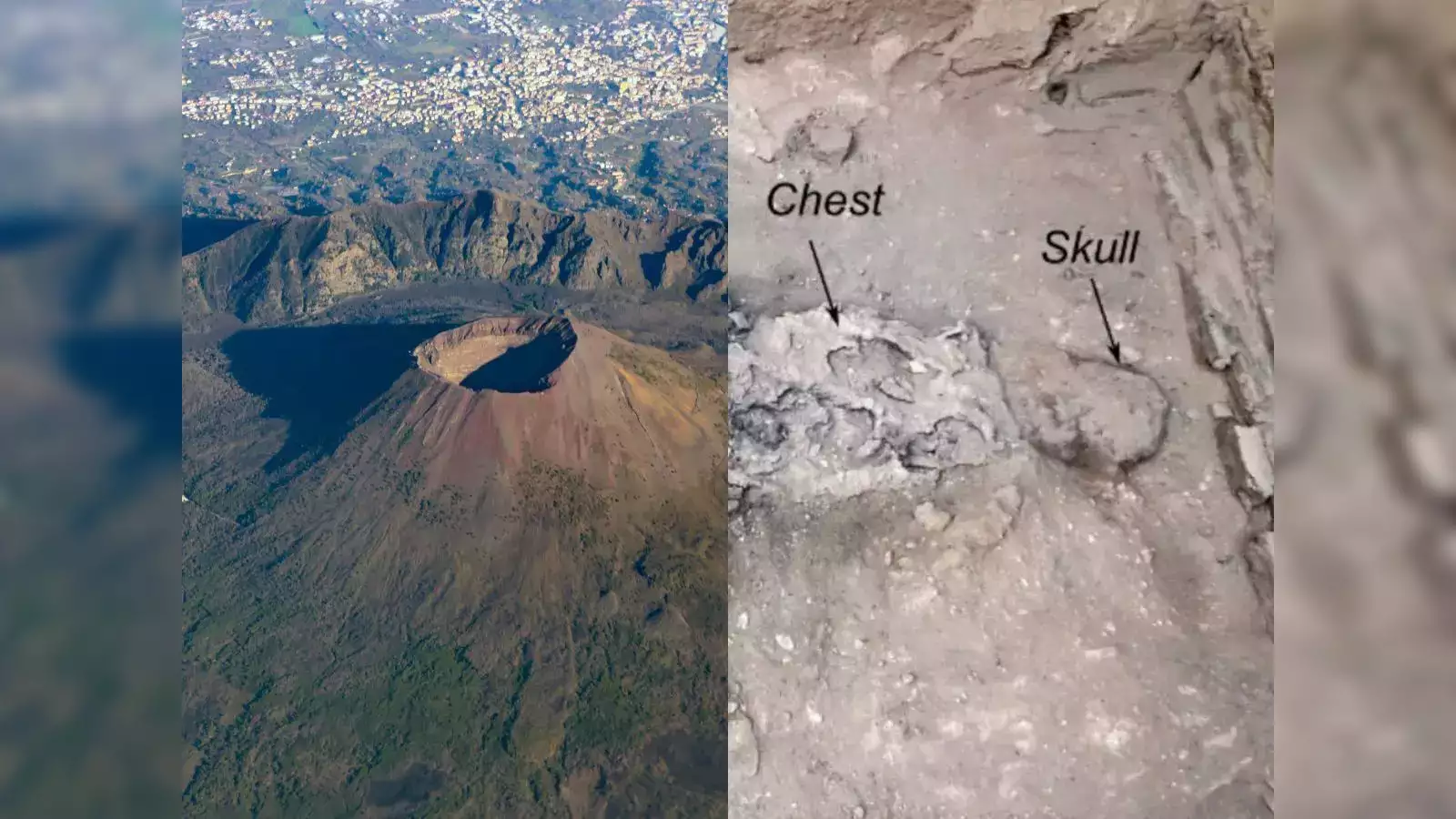
Mount Vesuvius, one of history’s most infamous volcanoes, erupted catastrophically in 79 AD, unleashing a deadly force that obliterated entire Roman cities. Among the most affected were Pompeii and Herculaneum, two towns buried under thick layers of ash and pyroclastic material.
While Pompeii’s tragic fate is well-documented, Herculaneum presents a unique case of preservation, revealing extraordinary insights into the final moments of its inhabitants.
One particular discovery stands out—a young man whose Brain Turned to Glass due to the extreme heat and rapid cooling effect of the eruption. This scientific anomaly sheds new light on the devastating power of volcanic activity and provides a glimpse into the horrifying final moments of those caught in nature’s fury.
The Unique Phenomenon – Brain Turned to Glass
The remains of the victim, believed to be a 20-year-old male, were found in the Collegium Augustalium, a place of worship dedicated to Emperor Augustus. Unlike many others who perished under the weight of volcanic debris or suffocated from toxic gases, this individual met a rare and chilling fate.
When Mount Vesuvius erupted, a fast-moving pyroclastic surge—a cloud of superheated gas, ash, and volcanic material—swept over Herculaneum. These clouds travel at immense speeds, reaching temperatures well above 500 degrees Celsius.
As the heat enveloped the man’s body, his brain underwent a rapid transformation. The extreme temperatures would have caused the soft tissue to liquefy almost instantly. However, an equally rapid cooling process followed, triggering a vitrification effect.
Read : Sian Ashcroft Dies Within Three Weeks After Discovering Food Poisoning Was Bile Duct Cancer
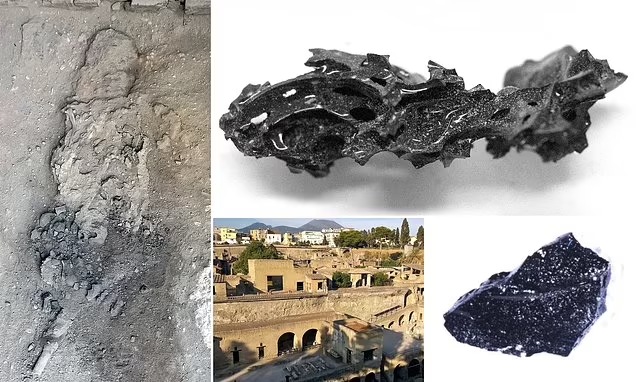
This means the brain tissue hardened into a glass-like state instead of decomposing or turning to ash. The process is similar to how molten lava cools and solidifies into volcanic glass. This discovery, first reported in 2020, remains the only known case of a human brain undergoing vitrification due to a volcanic eruption.
Read : Pompeii: A Beautiful City Ruined By the Volcanic Eruption of Mount Vesuvius
Archaeologists and forensic experts were astonished when they examined the remains. The brain had turned into a glossy, black substance, unlike anything they had encountered in similar contexts. This discovery provided crucial insights into the conditions during the eruption and how rapidly the volcanic event unfolded.
Researchers concluded that the glass brain formed because the victim’s body was subjected to extreme heat before being buried under layers of volcanic debris. If the body had been exposed to prolonged heat, the organic tissue would have burned away entirely, leaving no trace of the brain.
The Devastation of Herculaneum
Unlike Pompeii, where bodies were preserved in hauntingly detailed plaster casts, Herculaneum offered a different level of preservation. When the eruption began, the first waves of volcanic activity primarily affected Pompeii, raining down pumice and ash.
Herculaneum, located closer to the volcano, was hit later by powerful pyroclastic surges. These flows consisted of superheated gas and fine volcanic particles moving at hundreds of kilometers per hour. The first wave of pyroclastic material did not bury the town immediately, allowing for unique preservation conditions.
Most of the people in Herculaneum died instantly from extreme heat exposure. Studies suggest temperatures reached up to 510 degrees Celsius—hot enough to vaporize flesh and internal organs.
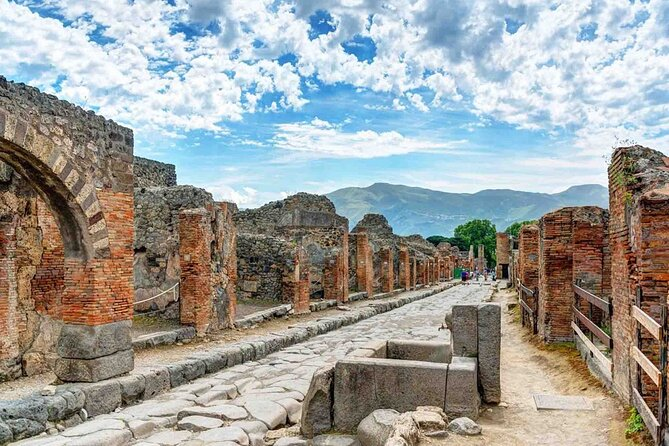
Unlike Pompeii, where victims’ bodies decomposed within hardened ash, many in Herculaneum left behind skeletal remains encased in layers of volcanic material. Buildings, wooden structures, and even food items were remarkably preserved, offering an unparalleled snapshot of daily life in an ancient Roman town.
The glass brain discovery highlights the speed and intensity of the eruption. Scientists believe that the first surge of hot gas and ash killed inhabitants almost instantly, with a second wave following shortly after to bury the town under thick layers of volcanic material.
The rapid cooling of these layers helped preserve organic materials such as wooden beams, textiles, and even foodstuffs. However, the discovery of a vitrified brain suggests that some areas of the town were exposed to higher temperatures before burial, leading to rare preservation effects.
Scientific and Historical Significance
The vitrification of the brain in Herculaneum is a landmark discovery in the study of volcanic disasters and human preservation. It challenges existing understandings of how extreme heat interacts with organic tissue and provides valuable data for forensic science.
Scientists now have a clearer picture of how pyroclastic surges behave and their impact on human remains. This research has broader implications for disaster preparedness, especially in regions prone to volcanic activity.
One major takeaway from the study is the importance of heat-proof shelters in active volcanic zones. Researchers argue that similar to how buildings in wildfire-prone areas are designed to withstand extreme heat, structures in volcanic regions should be designed to minimize exposure to pyroclastic surges.
If shelters can delay exposure to extreme heat, they could potentially save lives by allowing people to survive the initial phases of an eruption before rescue teams arrive.
From a historical perspective, the discovery deepens our understanding of daily life in ancient Rome and the catastrophic impact of Vesuvius. It also underscores the significance of Herculaneum as an archaeological site.
Unlike Pompeii, which was primarily covered in falling ash, Herculaneum was entombed in a thick layer of hardened volcanic material, effectively sealing and preserving structures, artifacts, and human remains. This makes Herculaneum an invaluable time capsule of Roman civilization.
In conclusion, the tragic fate of the young man whose brain turned to glass is a stark reminder of the destructive power of nature. While his death was likely instantaneous, the preservation of his remains has allowed modern science to uncover new details about one of history’s most infamous eruptions.
The discovery not only enriches our knowledge of ancient Rome but also provides crucial lessons for modern volcanic hazard mitigation. As scientists continue to study Herculaneum and its victims, we may yet learn more about the extraordinary and terrifying events that unfolded on that fateful day in 79 AD.