
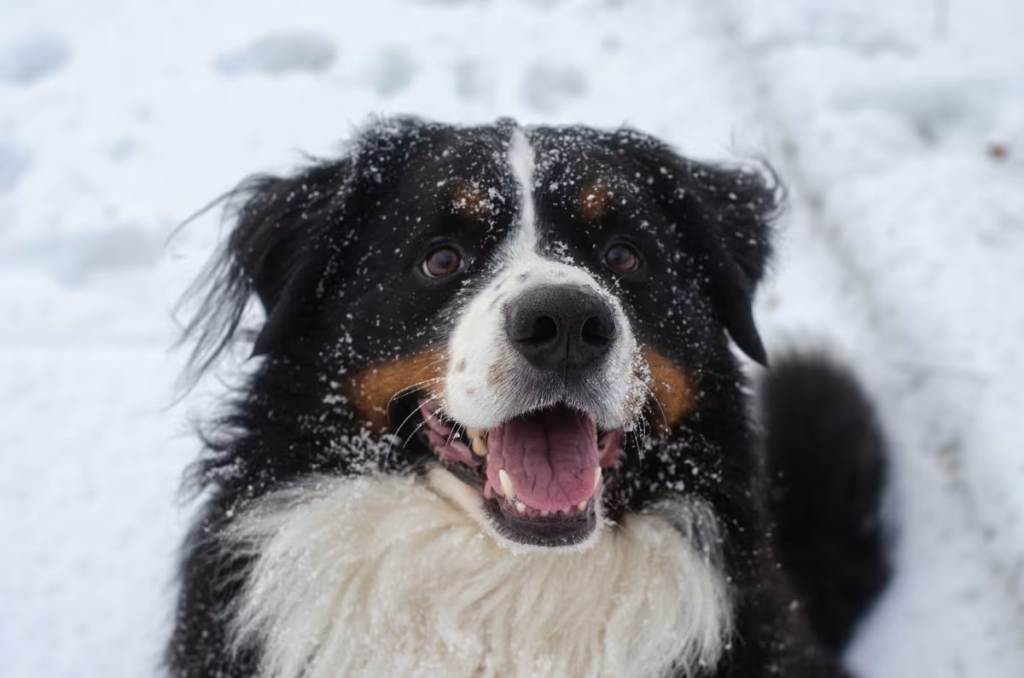
Search and rescue work is often associated with highly trained working breeds operating under formal emergency services, yet real-life rescues sometimes unfold far from organized operations and without any prior training. Such was the case in a snowy rural landscape where instinct, determination, and quiet intelligence converged in a remarkable canine-led rescue. Bunsen, a Bernese Mountain Dog known primarily for his gentle temperament and family companionship, demonstrated an extraordinary capacity for scent awareness and decision-making when it mattered most.
During what began as an ordinary winter walk, Bunsen’s actions would ultimately save the life of a vulnerable senior dog who had been missing for days and was facing life-threatening exposure to freezing conditions. The rescue stands as a compelling reminder that heroism in animals is not limited to professional roles but can emerge naturally through instinct and persistence.
A Sudden Change During a Routine Winter Walk
The rescue occurred during a family walk across frozen farmland blanketed by deep, drifting snow. Conditions were harsh, with snowbanks reaching waist height in places and temperatures well below freezing. Bunsen, accustomed to these outings, was walking alongside his family when his behavior abruptly changed. Without warning, he surged ahead, pushing through snowdrifts with urgency and ignoring repeated recall commands from his owners. For a breed typically known for calm attentiveness rather than impulsive behavior, this sudden defiance immediately stood out.
As Bunsen continued forward, his family struggled to keep pace through the dense snow. Despite their calls, he refused to return, instead forging a determined path across the field. His owners later recalled that while they could not initially understand his motivation, it was clear his behavior was purposeful rather than erratic. Experienced dog owners often recognize subtle shifts in behavior that signal heightened focus, and Bunsen’s refusal to stop suggested he was following something specific rather than acting out of excitement or distraction.
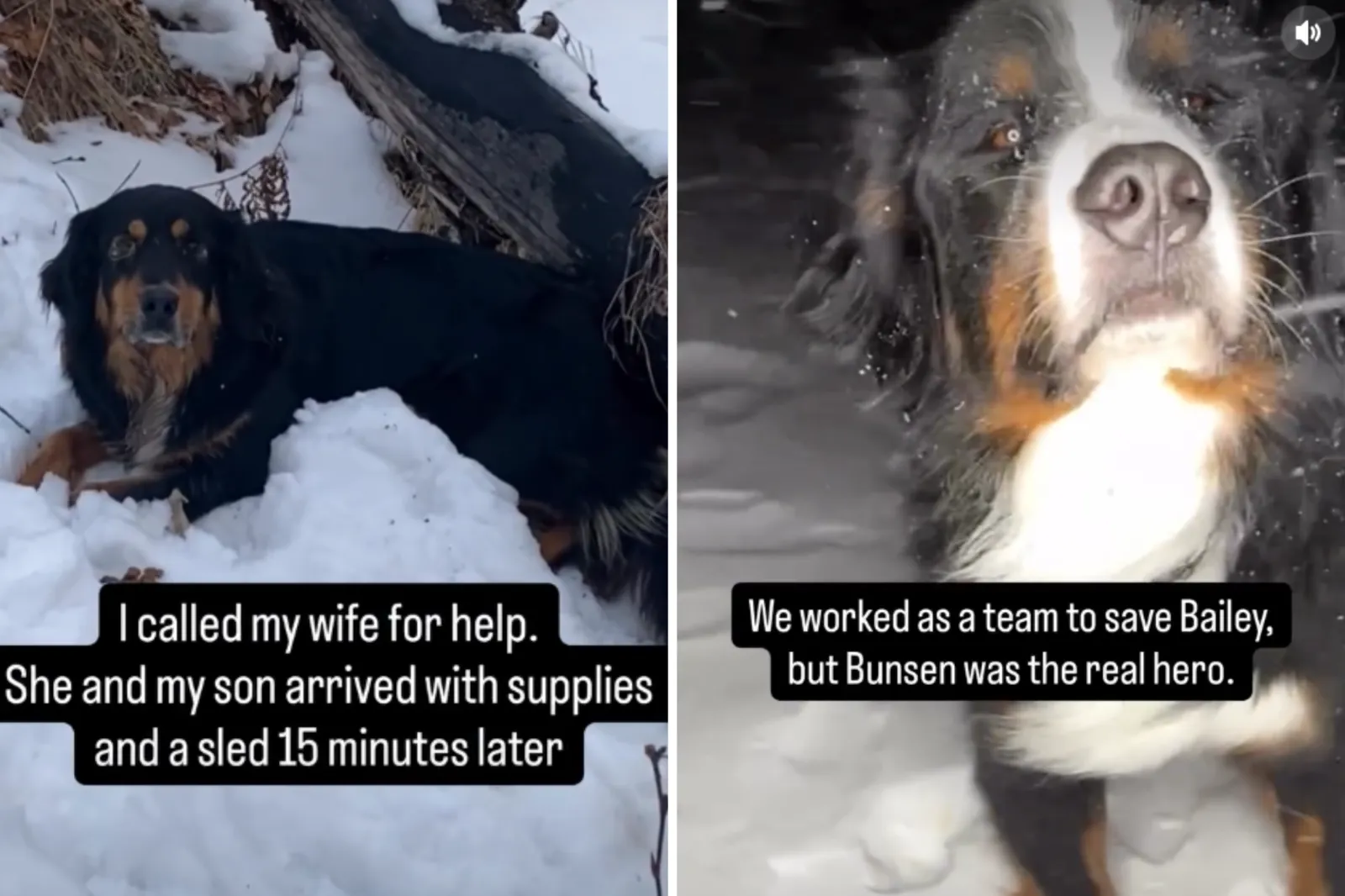
Eventually, Bunsen slowed and stopped near a partially buried log. As his owner approached, the reason for Bunsen’s persistence became immediately clear. Lying against the log was a senior dog, trembling and visibly weakened by prolonged exposure to the cold. The dog was unable to stand and showed clear signs of exhaustion and hypothermia. Without Bunsen’s insistence on leading the way, the family would never have ventured so far off their usual route, nor would they have discovered the stranded animal in time.
Read : The Hilarious Fight Between Stray Dog and Robot Dog At IIT Kanpur
Realizing the gravity of the situation, Bunsen’s owner quickly assessed the scene and called his wife for assistance. Given the dog’s condition and the distance from their farm, walking her back was not possible. Time was also a critical factor, as daylight was fading and temperatures were expected to drop further. Within approximately fifteen minutes, Bunsen’s wife and son arrived with a sled and emergency supplies, allowing the family to transport the senior dog back to safety.
A Delicate Rescue Under Extreme Conditions
Handling the rescued dog required patience and care. The senior canine was frightened, disoriented, and physically compromised. Sudden movements or rough handling could have caused further stress or injury. The family approached slowly, speaking softly and allowing the dog time to recognize that help had arrived. Once secured on the sled, she was carefully wrapped and stabilized for the journey back to the farm.
Read : Strangers Save 71-Year-Old Jeff Zimmerman Brutally Attacked While Walking Dog in Cave Creek
The trip was physically demanding, as the snow-covered terrain made movement slow and exhausting. Nevertheless, the family worked methodically, maintaining the dog’s warmth and monitoring her condition throughout the return journey. Bunsen remained close during the rescue, his earlier urgency replaced by a calm presence that seemed to reassure both the rescued dog and his family.
Upon reaching the farm, the senior dog was brought indoors immediately to warm up. She was given water, blankets, and a quiet space to rest. While her condition was serious, the timely rescue had prevented the worst possible outcome. As the dog gradually stabilized, the family began searching for information about missing pets in their area, hoping to reunite her with her owners.
It was during this search that Bunsen’s owner discovered a social media post describing a missing senior dog named Bailey. The details matched perfectly. Bailey had been missing for approximately forty-eight hours after bolting from her family, and she suffered from existing health issues that made prolonged exposure particularly dangerous. The realization underscored just how close Bailey had come to freezing to death and how critical Bunsen’s intervention had been.
Bailey’s Safe Return and the Quiet Hero Behind It
Once Bailey’s identity was confirmed, arrangements were made to reunite her with her family. The reunion was marked by relief and gratitude, as Bailey’s owners had feared the worst after two days without any sign of her. Her survival was directly attributed to the precise timing of the rescue and the determination of a dog who refused to abandon an unexplained instinct.
Bailey’s family later learned that she had wandered far from home and become disoriented, ultimately collapsing in the snow when she could no longer continue. Given her age and medical condition, survival without intervention was highly unlikely. The fact that Bunsen located her in a remote, snow-covered area speaks to an innate ability to detect distress, whether through scent, sound, or subtle environmental cues.
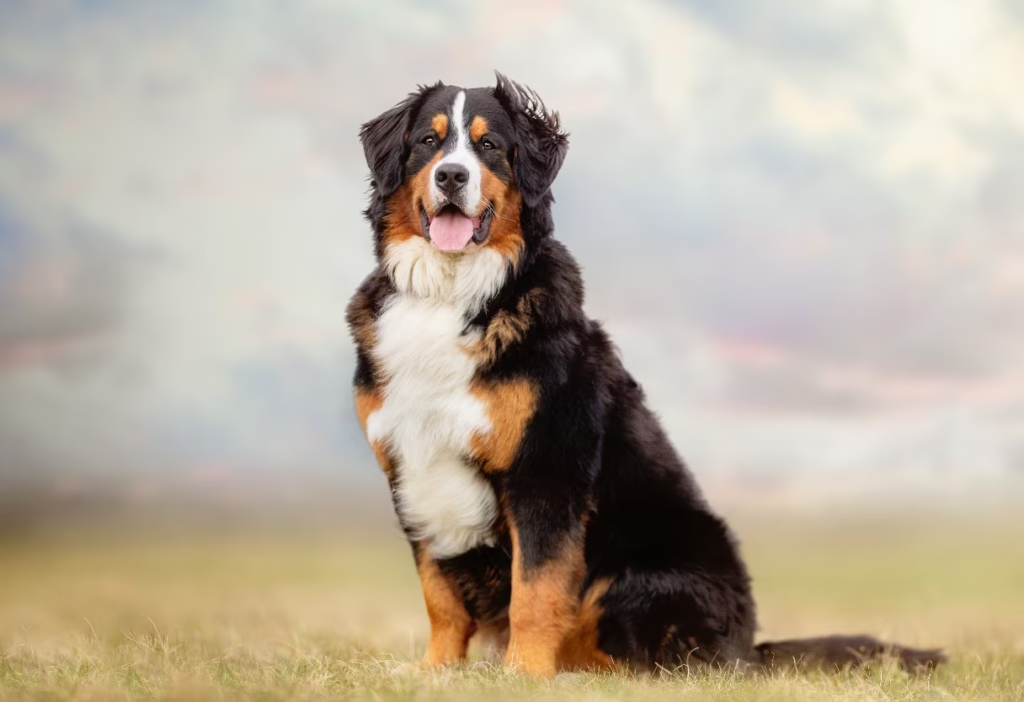
Although Bernese Mountain Dogs are not commonly associated with formal search and rescue roles, they are historically working dogs bred for strength, endurance, and awareness in alpine environments. Bunsen’s actions aligned closely with these traits, even without specialized training. His ability to push through deep snow, maintain focus over distance, and alert his family through persistent behavior reflects the breed’s underlying capabilities.
In reflecting on the rescue, Bunsen’s family emphasized that while the effort involved teamwork, Bunsen himself was the catalyst. Without his refusal to turn back, the rescue would never have occurred. His instincts transformed an ordinary walk into a life-saving mission, demonstrating that heroism does not always announce itself with dramatic gestures but can emerge through quiet determination and trust in instinct.
Today, the story of Bunsen and Bailey continues to resonate with dog lovers and rescue advocates alike. It illustrates the profound impact companion animals can have beyond their expected roles and highlights the importance of attentiveness to animal behavior, especially when it deviates from the norm. Most importantly, it serves as a documented example of how instinct, when followed rather than dismissed, can alter outcomes in moments where every minute counts.
Started with phdrean1 today, and so far I am not dissapointed and have had some small fun. Not making any promises but it shows potential for good gaming experiences, or something. Go check it, here phdrean1.