
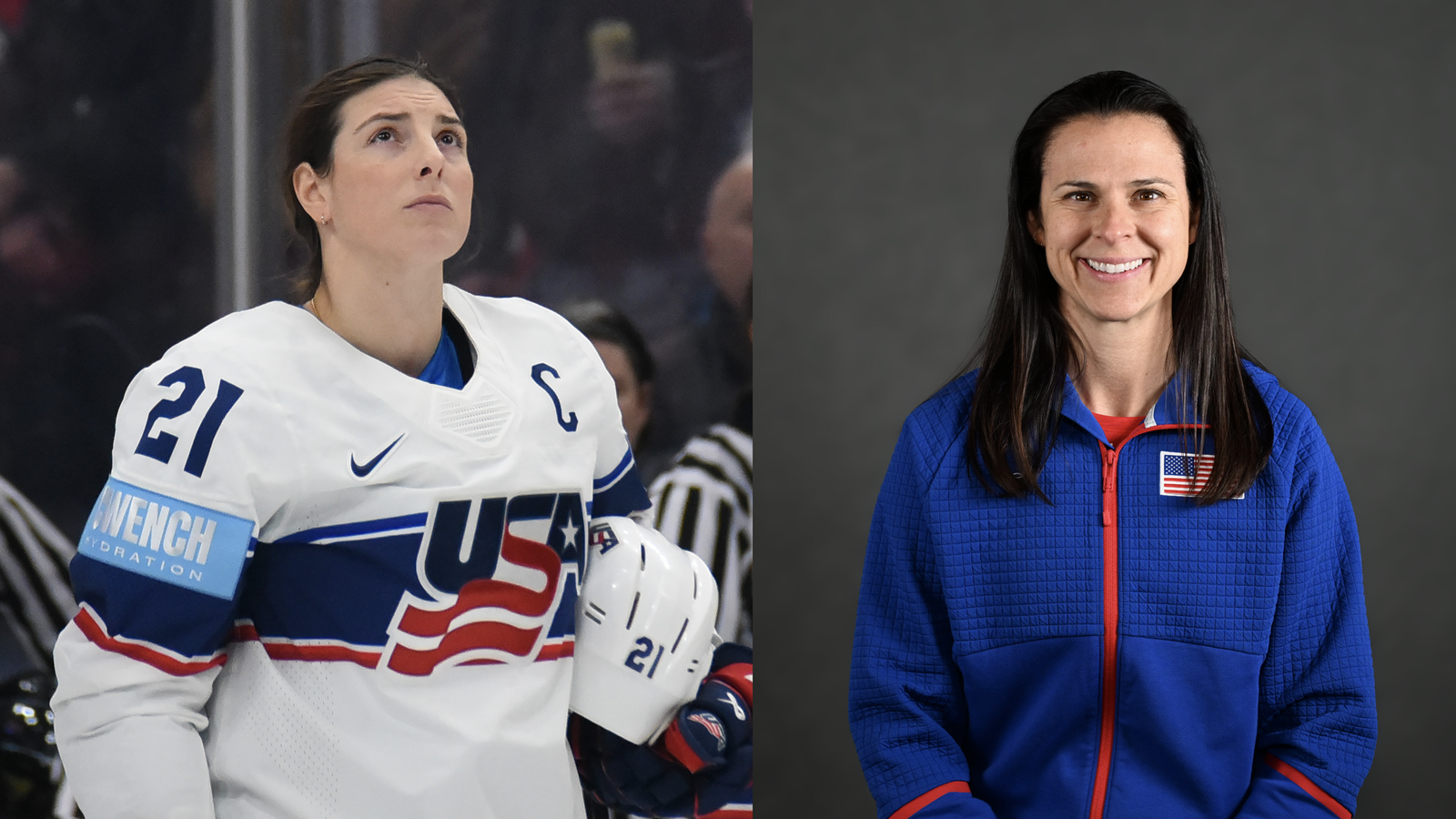
The Winter Olympics have long been defined by moments of triumph, heartbreak, and athletic excellence, but occasionally the global stage also becomes a backdrop for deeply personal milestones that resonate far beyond the competition arena. At the Milan Cortina Games, one of the most compelling stories to capture public attention has unfolded away from the scoreboard, involving two of the United States’ most accomplished winter athletes.
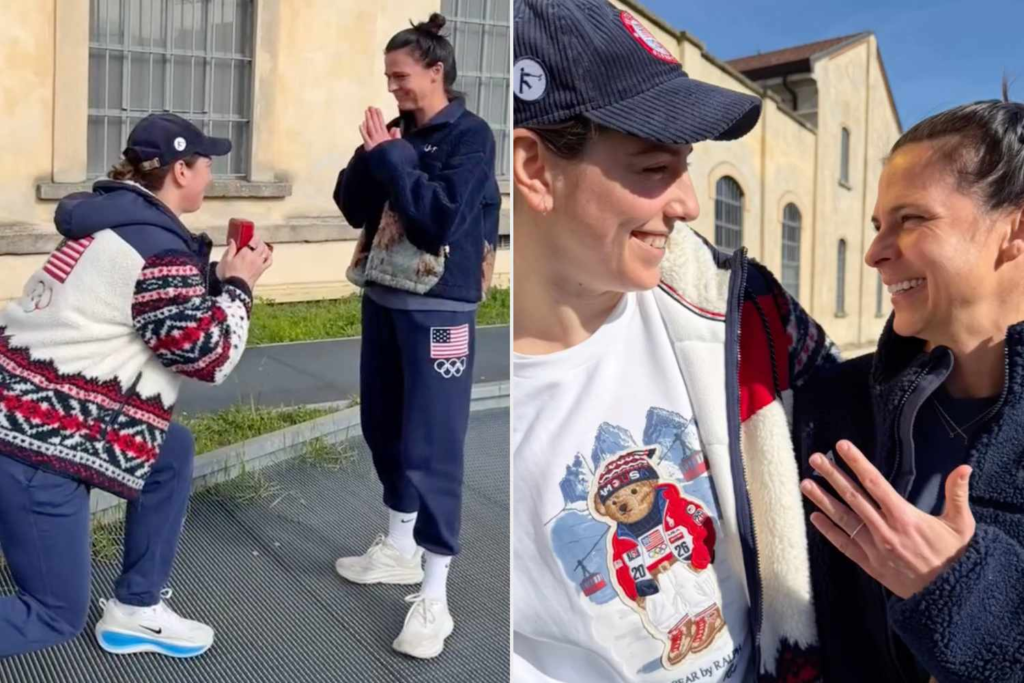
US women’s ice hockey captain Hilary Knight and decorated speed skater Brittany Bowe announced their engagement during the Games, marking a rare and touching intersection of elite sport and personal celebration. The announcement, delivered through a heartfelt video showing Knight proposing on one knee, quickly became one of the defining emotional moments of the Olympics, drawing attention not only because of the couple’s prominence but also because of the remarkable timing.
The engagement came just a day before Knight prepared to lead the US team into the gold-medal game, while Bowe herself remained in the midst of intense competition. Both athletes have indicated that these Olympics will likely be their final appearance on the world’s biggest winter sports stage, lending the moment an additional sense of closure and significance that extends beyond medals and records.
An Olympic Love Story Years in the Making
The engagement of Hilary Knight and Bowe represents the culmination of a relationship that began years earlier within the unique environment of Olympic competition. The two athletes first met at the Pyeongchang Games, where competitors from different disciplines lived, trained, and competed in close proximity under the shared pressures of representing their countries on the world stage. Encounters that might otherwise have been fleeting often evolve into lasting friendships or partnerships in this environment, shaped by mutual understanding of the demands and sacrifices required of elite athletes.
For Knight and Bowe, that initial meeting grew into a deep personal connection sustained through multiple seasons of competition, training schedules, and international travel. The engagement announcement carried emotional symbolism that resonated with fans and fellow athletes alike. Knight’s caption, “Olympics brought us together,” reflected not just the physical setting of their meeting but the role that high-performance sport played in shaping their shared experiences and personal growth.
Their relationship developed in tandem with their athletic journeys, both marked by intense preparation cycles, world championship appearances, and Olympic pursuits. This shared understanding of ambition, pressure, and resilience formed the foundation of a partnership uniquely shaped by elite sport. The timing of the proposal further amplified its impact. Hilary Knight was on the brink of one of the most significant games of her career, preparing to lead the United States women’s ice hockey team into a gold-medal showdown against Canada, the program’s long-standing rival and the dominant force in international women’s hockey.
Read : Roshin Ali Engaged to Officer Who Searched for Her After She Ran Away from Home at 13
Meanwhile, Bowe remained focused on her own Olympic campaign, still pursuing a podium finish after narrowly missing medals earlier in the Games. The emotional intensity of competition combined with the intimacy of a life-changing personal moment created a striking contrast that captured the imagination of audiences worldwide.
Read : Family Sues NASA for $80,000 After Space Debris Falls On Their Home in Florida
The engagement also reflects a broader trend within modern Olympic culture, where athletes increasingly share personal milestones openly with global audiences. Social media platforms allow competitors to document not only their performances but also their lives beyond competition, providing insight into the human dimensions behind elite sport. Knight and Bowe’s announcement exemplified this shift, blending private emotion with public celebration in a way that resonated far beyond their respective disciplines.
Final Olympic Chapters for Two American Greats
Beyond the romance and symbolism, the engagement carries profound professional context, as both athletes are approaching the closing chapters of extraordinary Olympic careers. Hilary Knight entered the Milan Cortina Games making her fifth Olympic appearance, a milestone that places her among the most experienced players in the history of US women’s hockey. Over more than a decade at the highest level, she has been a central figure in the growth and global visibility of the sport, serving not only as a consistent scoring threat but also as a leader within the national team structure.
Her tenure has spanned multiple Olympic cycles marked by fierce competition between the United States and Canada, one of the most intense rivalries in international sport. Knight’s leadership role during this period reflects both her longevity and her influence on a generation of players who have competed alongside and under her guidance. By the time she stepped onto the ice in Milan Cortina, she had already established herself as one of the defining figures in women’s hockey, with a career that extends beyond statistics into the broader development of the sport’s professional and international landscape.
For Bowe, the Games represent a similarly significant turning point. A two-time Olympic bronze medallist in speed skating, she arrived in Milan Cortina seeking to add further distinction to a career built on consistency and technical excellence. Her performances earlier in the competition illustrated both the razor-thin margins that define Olympic success and the resilience required to compete at the highest level. Finishing fourth in the 1,000 metres and contributing to the women’s team pursuit, she came close to the podium but narrowly missed adding another medal to her collection.
Her final scheduled event, the 1,500 metres race, represents both a competitive challenge and a symbolic conclusion to years of international competition. For an athlete whose career has spanned multiple Olympic cycles and world championship campaigns, the race marks not just another start line but the culmination of a lifetime dedicated to speed skating. The emotional weight of competing in what may be her final Olympic event while celebrating a major personal milestone underscores the unique duality of the moment.
The simultaneous closing of their Olympic careers adds depth to the significance of their engagement. Rather than representing a pause in athletic focus, the proposal exists alongside their final performances, intertwining personal transition with professional culmination. It is a reminder that even at the pinnacle of sport, athletes navigate the same life milestones and emotional journeys experienced beyond the competitive arena.
Olympic Engagements and the Human Side of Elite Sport
Hilary Knight and Bowe’s engagement is not the only romantic milestone to emerge from the Milan Cortina Games, reflecting a broader pattern of athletes marking personal commitments amid the intensity of Olympic competition. American alpine skier Breezy Johnson also announced her engagement during the Games after her boyfriend, Connor Watkins, proposed shortly after one of her final races.
Read : Moroccan-American Rapper French Montana Officially Engaged to Dubai Princess Sheikha Mahra
The proposal followed Johnson’s participation in the super-G event, where she narrowly missed the chance to secure a second Olympic medal after previously capturing the women’s downhill title earlier in the competition. Johnson’s emotional response illustrated the complex blend of disappointment and joy that often defines Olympic experiences. The immediate aftermath of competition can be emotionally intense, shaped by months or years of preparation culminating in a single performance.
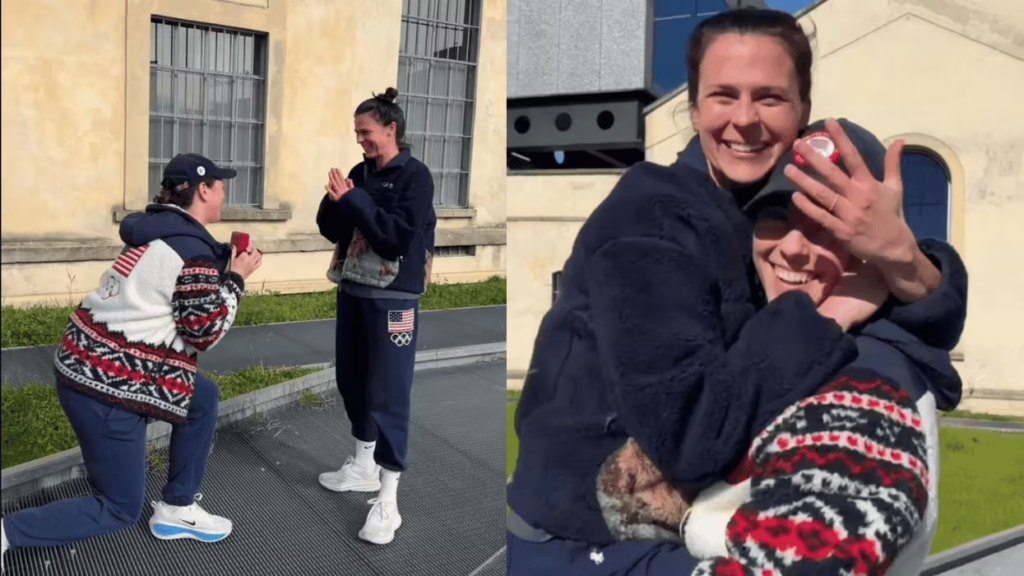
Watkins’ proposal, delivered at a moment when Johnson was processing the outcome of her race, transformed a period of reflection into one of celebration. The engagement ring, featuring a blue stone set in a silver band and presented in a box engraved with a lyric from a Taylor Swift song, added a personal touch that resonated with fans following the story. These engagements highlight an important dimension of the Olympic Games that often receives less attention than medal counts and national rankings.
Athletes arrive at the Olympics as individuals with lives, relationships, and personal aspirations that extend beyond their performance results. The compressed timeframe of the Games intensifies emotions, making moments of connection and commitment particularly meaningful. Proposals and celebrations occur within an environment defined by shared experience, mutual support, and the recognition that Olympic participation represents a rare and transformative chapter in an athlete’s life.
For spectators, these stories provide a window into the human side of elite sport. While the Olympics are often framed through narratives of victory and defeat, personal milestones reveal the broader emotional landscape experienced by competitors. Engagements, friendships, and shared celebrations remind audiences that behind every performance lies a complex individual navigating both professional ambition and personal growth.
In the case of Hilary Knight and Bowe, their engagement encapsulates the essence of what the Olympic movement represents at its most personal level. The Games serve not only as a platform for competition but also as a gathering place where lives intersect, relationships form, and life-changing moments unfold. Their story reflects the enduring capacity of the Olympic experience to shape not just athletic careers but personal destinies, intertwining sport and life in ways that continue long after the final race or match concludes.