
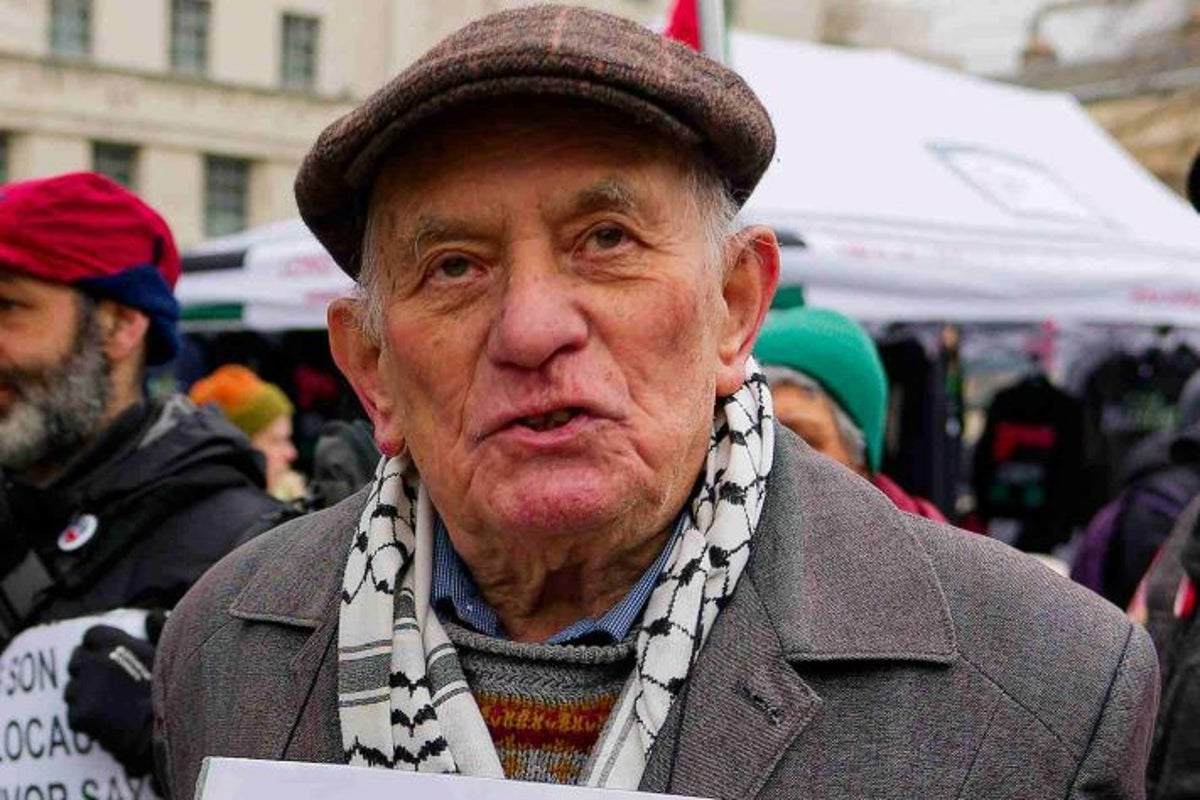
Stephen Kapos, an 87-year-old Holocaust survivor, has been questioned by the Metropolitan Police after he laid flowers in Trafalgar Square during a pro-Palestine protest. Kapos, who survived Nazi persecution as a child in Budapest, was among nine individuals called in for questioning by authorities following the demonstration on 18 January in central London.
The event was marked by accusations of “repressive and heavy-handed policing” by the Met. His interrogation has sparked widespread condemnation, with many viewing it as an infringement on the right to peaceful protest.
Stephen Kapos: A Holocaust Survivor Speaking Out for Gaza
Born during the horrors of World War II, Stephen Kapos lived through one of history’s darkest chapters. His father was taken to Bergen-Belsen concentration camp, while he survived in hiding in Budapest.
His experiences instilled in him a deep sense of justice and the moral imperative to speak out against oppression. Stephen Kapos has been an outspoken advocate for Palestinian rights, participating in numerous demonstrations and urging others to recognize the humanitarian crisis unfolding in Gaza.
On 18 January, Kapos joined thousands of demonstrators in central London to protest against the ongoing conflict in Gaza. The protest was aimed at drawing attention to the thousands of Palestinian lives lost due to Israeli military action. Kapos, along with others, laid flowers at Trafalgar Square in a symbolic gesture of mourning for the tens of thousands of Palestinian victims.
However, the police deemed the protest unlawful, citing breaches of Public Order Act conditions, which restricted movement beyond Whitehall. As a result, Kapos and several other demonstrators were called in for questioning, despite the peaceful nature of their actions.
Read : Baloch Parties Held Anti-Pakistan Protest at 10 Downing Street in London
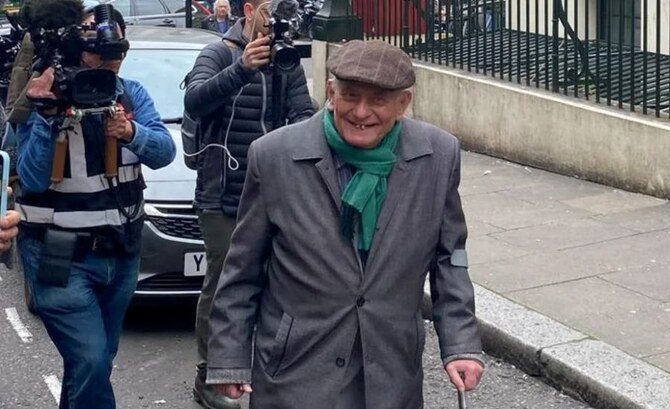
Following his police interview at Charing Cross Police Station, Kapos addressed a crowd of about 100 supporters, many of whom were Holocaust survivors or their descendants. He reaffirmed his commitment to marching for peace and expressed pride that his family, including his son and grandchildren, also participated in such demonstrations.
Holocaust survivor Stephen Kapos says “We need to put pressure on our government and on the official opposition so they speak up, act, stop arming Israel and stop supporting genocide” pic.twitter.com/YDlWJFiHWG
— Palestine Solidarity Campaign (@PSCupdates) March 30, 2024
Holding a banner that read “Holocaust survivor descendants against Gaza genocide!”, the protesters chanted “We are all Palestinians” in solidarity with the people of Gaza.
Condemnation of Israel’s Actions and the UK Government’s Response
Stephen Kapos has been a strong critic of Israel’s military operations in Gaza, describing them as “horrifying” and “unbearable.” He highlighted the disproportionate impact on Palestinian civilians, many of whom are defenseless, living in makeshift tents after their homes were destroyed by bombings.
Expressing his frustration, he stated: “The sort of killing that’s going on, it’s unbearable to watch, and one wonders where it’s leading to because there is no defense to speak of. They are defenseless people out in the open.”
He also voiced his deep disappointment in the UK government, condemning its failure to take meaningful action against Israel’s military offensive. “I’m ashamed of our government and everybody else who facilitates it and enables it,” he declared.
Stephen Kapos called for an immediate end to the supply of arms and logistical support to Israel, urging British leaders to condemn Israeli actions unequivocally. “There’s no doubt about this being an atrocity and international crime, so how can you hesitate in the face of that?” he questioned.
His statements come at a time when the UK government, under Prime Minister Keir Starmer, has faced mounting pressure to take a stronger stance against Israeli aggression. While Starmer has expressed “deep concern” about the renewed military action in Gaza, activists argue that mere words are insufficient.
The UK government has maintained that Israel has the right to defend itself but insists that all parties must adhere to international humanitarian law. However, critics argue that the lack of concrete action against Israel’s military operations amounts to complicity in the violence.
The Right to Protest and the Met’s Over-Policing
The Metropolitan Police’s decision to question Stephen Kapos and other activists has raised serious concerns about the repression of peaceful protest in the UK. More than 50 MPs, trade union leaders, and legal experts have written to Home Secretary Yvette Cooper demanding an independent inquiry into the Met’s handling of the 18 January demonstration.
They argue that the heavy-handed policing tactics employed against protesters, particularly those advocating for Palestinian rights, represent an alarming suppression of civil liberties.
Mark Etkind, co-organizer of Holocaust Survivors and Descendants Against the Gaza Genocide, described the Met’s response as “terrifying, not just for the Palestine movement, but for anyone who wants to protest and believes in British democracy.”
He warned that such aggressive policing could set a dangerous precedent, discouraging people from exercising their fundamental right to protest.
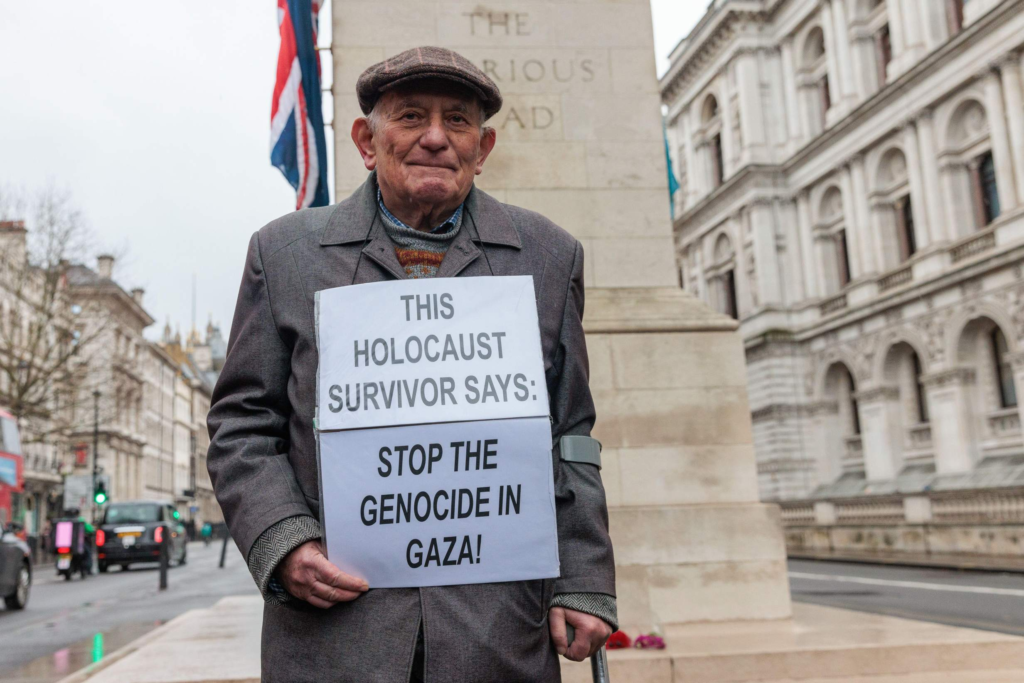
In an open letter condemning the Met’s actions, 40 Holocaust survivors and descendants expressed their shock at the questioning of Stephen Kapos. The letter stated: “Any repression of the right to protest is bad enough – but to persecute a Jewish 87-year-old whose Holocaust experiences compel him to speak out against the Gaza genocide is quite appalling.”
Holocaust survivor Dr. Agnes Kory, who was also present outside Charing Cross Police Station in support of Kapos, echoed these sentiments. She emphasized that her own experiences of persecution had strengthened her resolve to stand against injustice.
“In the name of a Holocaust survivor, which is me, and a Holocaust researcher, which is also me, I say no, not in our names, and I have to be at the forefront of peace for Palestine movements.”
Meanwhile, the Metropolitan Police defended their actions, stating that the individuals called in for questioning had allegedly breached Public Order Act conditions. They claimed that protesters were informed in advance to remain in Whitehall, but a large group moved into Trafalgar Square and attempted to go further.
A police spokesperson said, “While we are aware of names being attributed to those who have been invited for interview, we do not confirm the identity of anyone under investigation.”
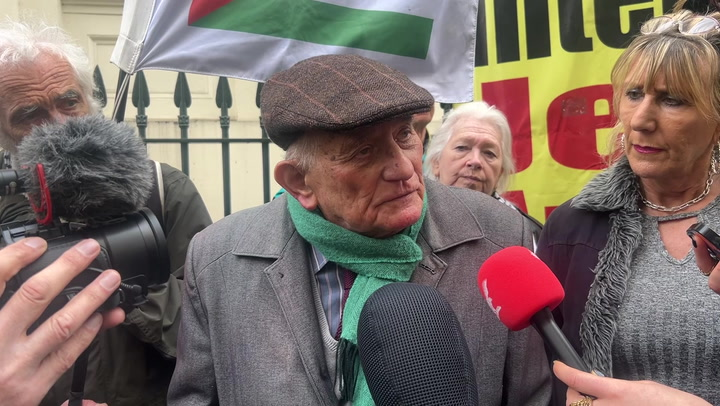
Despite the police’s justifications, many believe the targeting of an elderly Holocaust survivor for peacefully laying flowers is both disproportionate and unjustified. The outpouring of public support for Kapos and his fellow activists demonstrates a growing concern over the UK government’s stance on free speech and the right to peaceful protest.
As the conflict in Gaza continues, with over 48,000 Palestinian lives lost according to Gaza’s health officials, international pressure on Israel and its allies is intensifying. Reports from United Nations experts have accused Israel of carrying out “genocidal acts” by systematically destroying women’s healthcare facilities and using sexual violence as a weapon of war.
While Israel has vehemently rejected these claims, dismissing them as unfounded and biased, the mounting evidence of civilian suffering has fueled calls for urgent international intervention.
For Stephen Kapos and many others, the fight for Palestinian rights is a moral duty that transcends nationality, religion, and history. “Protesting is about exerting pressure through numbers to make it clear that all this will have electoral consequences,” Kapos stated. His commitment to standing against oppression remains unwavering, despite the intimidation he has faced.
His powerful message is clear: Never again means standing up for all people facing injustice, no matter who they are. The legacy of Holocaust survivors like Kapos is not just one of remembrance but of action—ensuring that the atrocities of the past are not repeated in the present.