
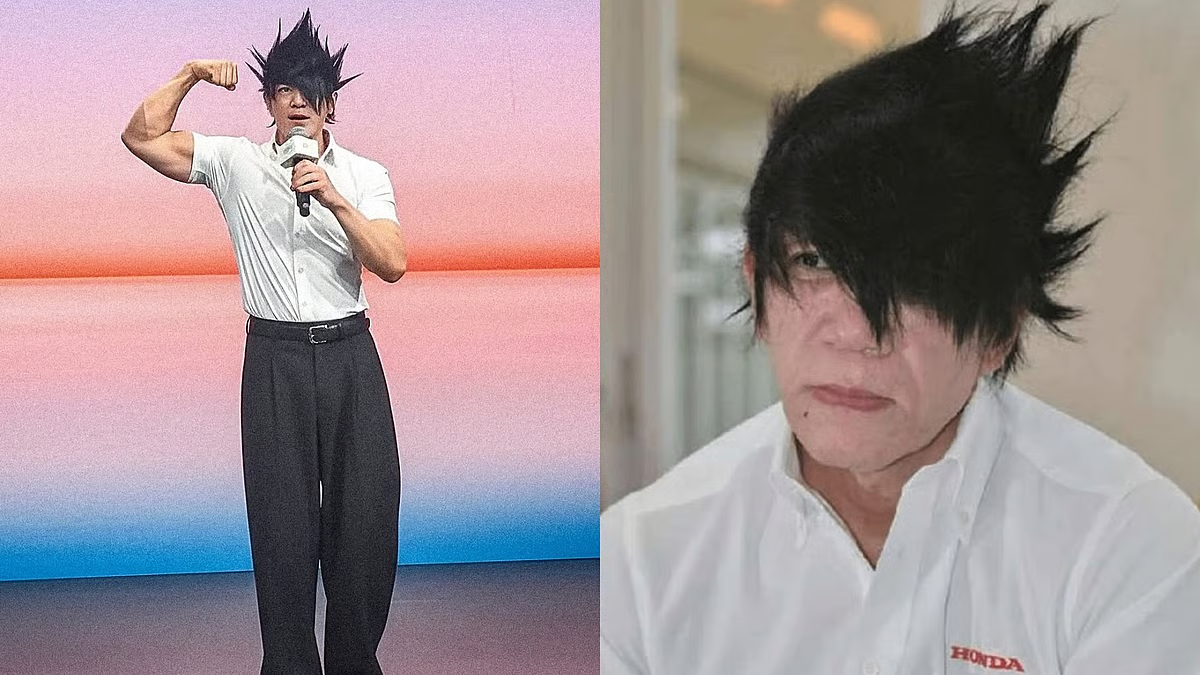
In an era where automotive engineering often takes center stage for its technical prowess, an unexpected element has propelled Honda’s veteran chief engineer, Shotaro Odate, into the global spotlight. At 84 years old, Odate’s distinctive spiky hairstyle—reminiscent of iconic anime characters—has sparked a viral sensation across social media platforms.
What began as casual shares of his professional photos has evolved into a broader conversation about innovation, personal style, and the intersection of pop culture with high-stakes engineering. Odate, a long-time fixture at Honda, embodies a rare blend of technical mastery and unapologetic individuality, drawing admiration from car enthusiasts, anime fans, and the general public alike. This phenomenon underscores how a single visual trait can humanize a figure deeply embedded in the often-dry world of automotive R&D.
The Man Behind the Spikes: Odate’s Enduring Legacy at Honda
Shotaro Odate joined Honda over four decades ago, rising through the ranks to become one of its most respected chief engineers. Born in Japan, Odate’s career trajectory reflects the post-war automotive boom that defined Honda’s ascent as a global powerhouse. He specializes in vehicle safety systems and advanced driver-assistance technologies (ADAS), areas where his meticulous approach has yielded tangible results in reducing road fatalities. Colleagues describe him as a relentless innovator, often spotted in Honda’s testing facilities late into the night, refining prototypes with a precision that borders on artistry.
Odate’s signature hairstyle, a sharp, upward-spiked coif that defies conventional grooming norms for someone of his seniority, has been a constant since his early days at the company. Far from a recent affectation for viral fame, it predates the social media age by decades. Sources within Honda confirm that Odate maintains this look daily, viewing it as an extension of his personality rather than a stylistic gimmick. The hairstyle’s resemblance to anime protagonists—frequently compared to Sasuke Uchiha from Naruto or Jin Kazama from Tekken—has only amplified its appeal in today’s digitally connected world.
Physically, Odate defies his age with remarkable vitality. Reports highlight his ability to bench press 170 kilograms, a feat that rivals athletes half his age. This fitness regimen, combined with his disciplined work ethic, allows him to remain hands-on in engineering roles that demand both mental acuity and physical endurance. At 84, Odate continues to lead teams on cutting-edge projects, serving as a mentor to younger engineers while contributing directly to Honda’s safety suite developments. His presence at industry events, such as auto shows and technical conferences, often draws double-takes not just for his expertise but for the visual flair that sets him apart from the sea of suits and ties.
This is 84-year-old Shotaro Odate, legendary Chief Engineer at Hondapic.twitter.com/eIxwQSrNYw
— Massimo (@Rainmaker1973) September 22, 2025
Odate’s personal philosophy, gleaned from rare interviews, emphasizes harmony between tradition and modernity—a theme echoed in his hairstyle and his engineering ethos. He has authored nine scientific papers on automotive safety, published in peer-reviewed journals, covering topics from collision dynamics to sensor integration. These works have influenced global standards, positioning Odate as a quiet authority in a field dominated by rapid technological shifts. His unyielding commitment to Honda’s “Man Maximum, Machine Minimum” principle—prioritizing human-centric design—has shaped vehicles that feel intuitive and protective, even as electric and autonomous features proliferate.
Engineering Excellence: Odate’s Pivotal Role in Honda’s Safety Innovations
Odate’s professional imprint on Honda is indelible, particularly in the realm of active safety systems. As the lead engineer behind Honda Sensing 360+, a Level 2 ADAS package, he orchestrated the integration of cameras, radars, and LiDAR to create a 360-degree collision avoidance network. Rolled out in models like the Honda CR-V and Civic hybrids, this system detects pedestrians, cyclists, and vehicles in blind spots, automatically braking or steering to avert accidents. Independent crash tests by organizations like the Insurance Institute for Highway Safety (IIHS) have praised its efficacy, crediting Odate’s team for a 40% reduction in rear-end collisions in equipped vehicles.
Beyond ADAS, Odate pioneered advancements in passive safety, including a revolutionary seatbelt pretensioner system powered by electric motors. Traditional mechanisms rely on pyrotechnic charges, but Odate’s design uses sensors to detect impending crashes and gradually tighten belts, minimizing whiplash while allowing controlled movement. This innovation, patented under his name, adjusts tension in real-time based on impact severity, enhancing occupant protection without compromising comfort. Honda has incorporated it across its lineup, from sedans to SUVs, contributing to the company’s top rankings in global safety assessments.
Odate’s portfolio boasts over 250 patents, spanning electric vehicle (EV) dynamics to structural integrity testing. In the EV domain, he led the dynamic tuning for Honda’s e:HEV powertrains, optimizing torque distribution for smoother acceleration and regenerative braking. This work underpinned the success of models like the Honda Prologue, Honda’s first dedicated EV in North America, which earned accolades for its responsive handling. His contributions extend to hybrid systems, where he refined battery management algorithms to extend range by up to 15% under real-world conditions.
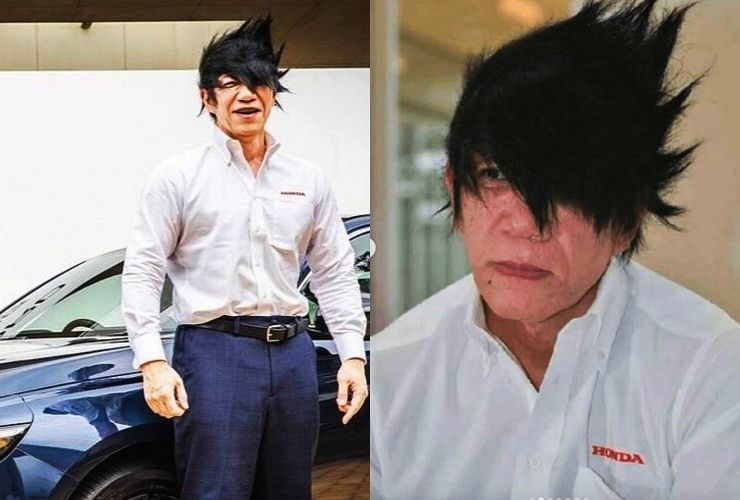
Critically, Odate’s innovations address the human element in engineering. His papers delve into biomechanical responses during crashes, advocating for adaptive restraints that account for diverse body types and seating positions. This forward-thinking approach has influenced regulatory bodies, including Japan’s Ministry of Land, Infrastructure, Transport and Tourism, which cited Honda’s systems in updated crash standards. At a time when competitors like Toyota and Tesla dominate headlines with flashy autonomy demos, Odate’s focus on incremental, life-saving refinements underscores Honda’s reputation for reliability.
His work has directly saved countless lives, with Honda estimating that Sensing technologies have prevented over 1 million collisions since inception. Odate’s influence permeates Honda’s corporate culture, fostering a collaborative environment where creativity thrives. Younger engineers credit him with breaking silos between departments, encouraging cross-pollination of ideas from aerodynamics to software. Even in retirement whispers—unlikely given his vigor—Odate remains a fixture, consulting on next-gen projects like solid-state battery integration for future EVs.
From Boardrooms to Memes: The Viral Surge and Cultural Impact
The spark for Odate’s virality ignited in mid-2025, when a photo from a Honda press event surfaced on Instagram, capturing his intense gaze and gravity-defying hair amid a backdrop of concept cars. Shared initially by automotive influencers, it quickly amassed millions of views, with users dubbing him “Honda’s Anime Boss.” By July, TikTok edits juxtaposed his image with Naruto fight scenes, while Reddit threads dissected his physique alongside engineering breakdowns. On X (formerly Twitter), posts tagged with #ShotaroOdate trended regionally in Japan and the U.S., blending memes with genuine praise for his patents.
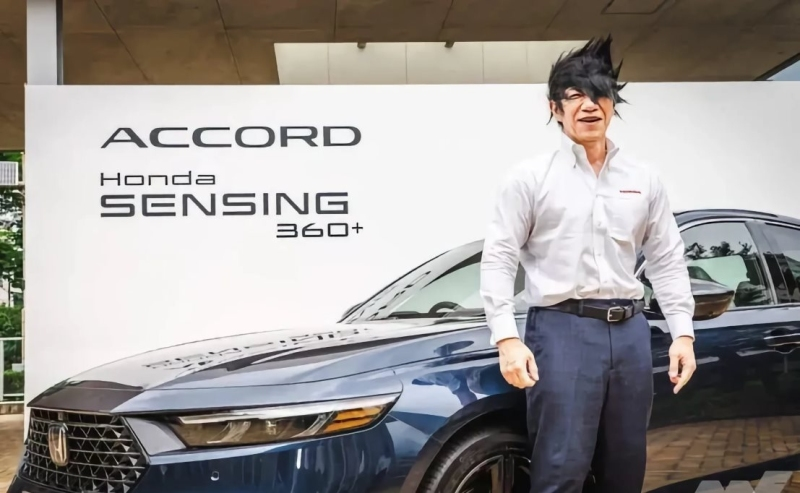
This digital whirlwind peaked in September 2025, coinciding with Honda’s announcements on updated Sensing features. A short video clip of Odate demonstrating a crash simulation—hair unmoved by the chaos—garnered over 10 million views on YouTube Shorts. Anime communities embraced him as a real-life senpai, spawning fan art and cosplay tributes at conventions like Comic-Con. Car forums, typically stoic, lit up with discussions on how his style humanizes the grind of R&D, inspiring threads on work-life balance in tech.
The phenomenon’s reach extended beyond entertainment. Mainstream outlets like automotive journals profiled Odate, highlighting how his eccentricity challenges ageist stereotypes in STEM fields. In Japan, where corporate conformity reigns, his story resonated as a subtle rebellion, prompting op-eds on fostering diverse talents. Globally, it amplified Honda’s brand, with sales inquiries spiking for Sensing-equipped models post-viral waves.
Critics note the superficiality of meme culture, but Odate’s case proves its upside: elevating overlooked heroes. No scandals or controversies mar his ascent; instead, it spotlights substantive achievements. As of October 2025, Odate shows no signs of slowing, recently spotted at a Tokyo tech summit, spikes intact. His viral moment serves as a reminder that true icons endure through deeds, with flair as the cherry on top.
Hello. excellent job. I did not anticipate this. This is a excellent story. Thanks!