

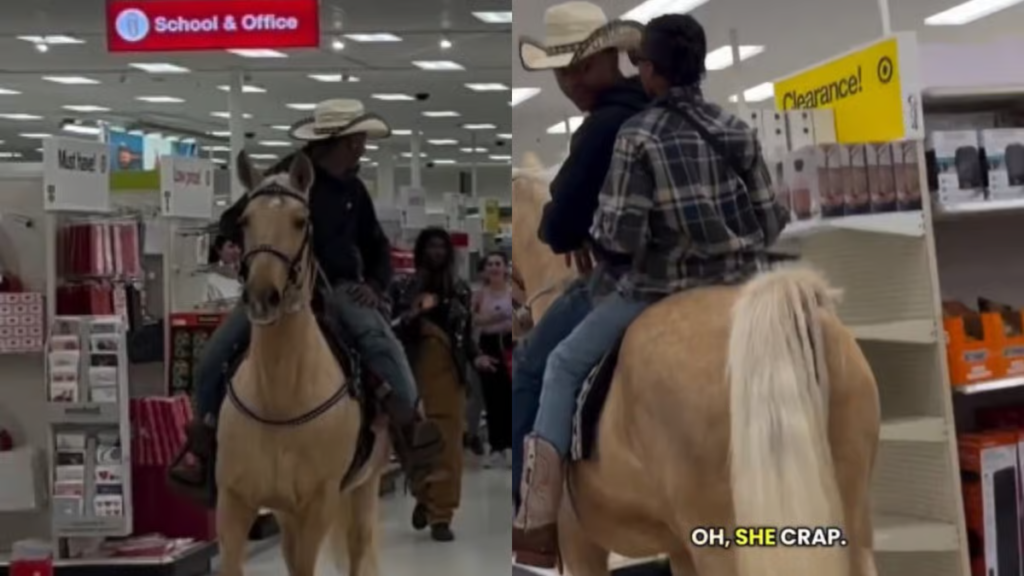
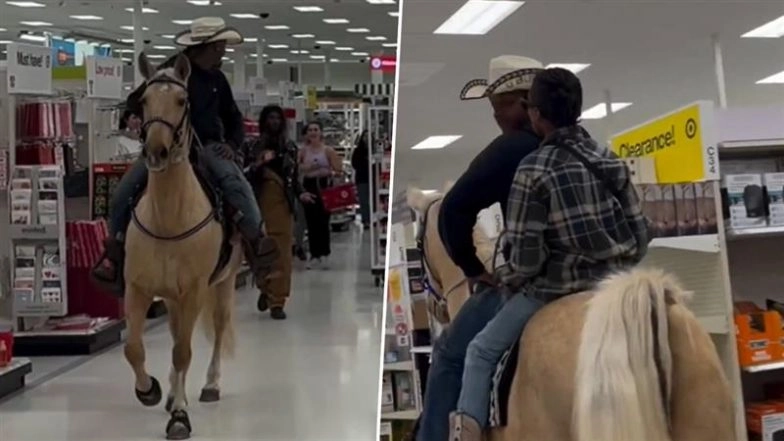
A bizarre scene inside a crowded Target store has sent shockwaves across social media, leaving shoppers stunned, security scrambling, and millions of viewers divided between disbelief and disgust. The incident involved Stephen Harmon, a TikTok creator better known online as cowboyatheart82, who filmed himself riding a full-sized horse through the aisles of a Target location while customers looked on in confusion.
What might have already been considered an outrageous public stunt quickly crossed another line when the horse defecated on the store floor, intensifying backlash and raising fresh questions about viral content, public safety, and boundaries in shared spaces. Harmon is not a stranger to controversy. With a large online following built around horse-related content, he has previously drawn attention for riding horses into retail establishments, including Tractor Supply and Walmart.
His latest video, however, struck a nerve far beyond his usual audience. The setting of a mainstream big-box retailer, combined with the presence of families, children, and everyday shoppers, amplified concerns about hygiene, legality, and the responsibility of social media influencers. As clips spread rapidly across TikTok, Instagram, and X, the incident evolved from a shocking visual into a broader cultural debate about attention-seeking behavior in the age of viral fame.
The Viral Target Incident That Left Shoppers Stunned
The now-viral video, posted on January 6, shows Harmon entering a Target store on horseback, casually riding past shelves as stunned customers pause mid-shopping to stare. Some shoppers appear to pull out their phones, while others step aside, visibly uncomfortable. Within moments, the horse begins galloping lightly through the aisles, drawing immediate attention from store employees and security personnel attempting to intercept Harmon before the situation escalates further.
What transformed the incident from bizarre to outright revolting was the moment the horse relieved itself on the store floor. The video captures visible piles of manure left behind as Harmon continues riding, seemingly unfazed. For many viewers, this was the tipping point. While unusual public stunts have become commonplace on social media, the presence of animal waste in a food-and-retail environment struck many as unsanitary and disrespectful. Shoppers online expressed concern about potential health risks, especially given that Target stores sell groceries, clothing, and household essentials.
Security personnel eventually confronted Harmon, demanding that he leave the premises immediately. Audio captured in the video includes a worker exclaiming, “What are you doing? Get out of the store with a horse!” Harmon is heard questioning why he must leave, but the response from staff is firm. “You don’t bring a horse into a store,” a security employee states, making it clear that the stunt would not be tolerated. Harmon ultimately exits the store before police are called, bringing the chaotic scene to an end but igniting an online firestorm that continued to grow long after.
A ma and his son thought it would be a good idea to ride a horse to shop at his local Target store, not only is it a huge disruption, it actually relieve itself in the store as well. I’ve heard of emotional support animals, should this man had been allowed to bring his horse into… pic.twitter.com/y6y3p8O00e
— SonnyBoy🇺🇸 (@gotrice2024) January 9, 2026
The video rapidly gained traction, racking up millions of views within days. Many commenters expressed sympathy for store employees forced to deal with the aftermath, while others criticized Harmon for putting entertainment above basic public decency. A smaller segment of viewers, however, defended the act as harmless fun or dismissed it as just another example of internet antics blown out of proportion. The divide highlighted how desensitized audiences have become to extreme stunts, even as public frustration with influencer behavior continues to rise.
Who Is Stephen Harmon and Why He Keeps Riding Horses Into Stores
Stephen Harmon has cultivated an online persona centered on cowboy culture, horses, and rural identity, despite filming many of his most controversial videos in urban retail environments. Operating under the username cowboyatheart82, he initially gained followers by sharing instructional and lifestyle content, including how to mount and ride horses. These videos appealed to equestrian enthusiasts and casual viewers alike, helping him build a sizable platform.
Over time, however, Harmon’s content began to shift. Alongside traditional horse-themed posts, he started uploading videos designed to provoke reactions, blurring the line between humor and provocation. One of his most-viewed clips, amassing roughly 10 million views, shows him riding a horse into a Tractor Supply store in New York City. In that video, he engages in a tense confrontation with a store manager over whether animals are allowed inside the building. The exchange, filmed and posted online, fueled debate about private property rights and the responsibilities of content creators.
The Target incident appears to follow a similar pattern. By choosing well-known retail chains with strict policies and high foot traffic, Harmon ensures maximum visibility and reaction. Days before the Target video surfaced, he posted another clip showing himself attempting to ride a horse into a Walmart, though he was reportedly removed almost immediately. These repeated attempts suggest a deliberate strategy aimed at generating outrage-driven engagement, a tactic increasingly common among influencers seeking to stand out in an oversaturated digital landscape.
Critics argue that Harmon’s actions exploit workers who have no choice but to intervene, often becoming unwilling participants in viral content. Retail employees are trained to maintain safety and order, not to manage unpredictable animals in enclosed spaces. Supporters of Harmon, on the other hand, frame his behavior as performance art or harmless trolling, insisting that no one was physically harmed. The growing criticism, however, indicates that public tolerance for such stunts may be wearing thin, especially when they disrupt everyday environments and impose additional burdens on workers.
Target’s Reaction and the Broader Debate Over Viral Stunts
The incident took on another layer when Target’s official social media account acknowledged the viral video. In a lighthearted comment posted online, the brand quipped, “Target run. Target ride,” accompanied by a cowboy emoji. While some users interpreted the response as playful corporate humor, others criticized the company for appearing to trivialize a situation that involved sanitation issues and employee distress. The comment quickly became part of the wider conversation, with debates erupting over whether brands should engage with viral stunts or maintain a firmer stance against disruptive behavior.
From a policy standpoint, most large retailers prohibit animals inside stores unless they are certified service animals. Horses, particularly full-sized ones, do not fall under standard service animal categories in retail environments, especially when brought in for entertainment rather than necessity. Legal experts and commentators pointed out that private businesses have the right to refuse entry and remove individuals who violate store policies or pose potential risks to customers.
The Target incident underscored how easily such policies can be tested in the age of social media, where filming and virality often take precedence over compliance. Beyond the immediate controversy, the video reignited broader concerns about influencer culture and the lengths individuals will go to for attention. As platforms reward engagement regardless of whether it is positive or negative, stunts that shock or disgust often perform well algorithmically. This dynamic creates incentives for increasingly extreme behavior, pushing creators to escalate their antics to remain relevant.
The backlash against Harmon reflects a growing public discomfort with this trend, particularly when it intrudes into shared public spaces. The Target horse incident is unlikely to be the last of its kind. As long as viral fame remains lucrative and platforms continue to amplify sensational content, similar stunts will likely follow.
What remains uncertain is whether public pressure, brand accountability, or platform enforcement will meaningfully curb such behavior. For many viewers, the image of a horse galloping through a Target aisle and leaving excrement behind has become a symbol of how far internet culture has strayed from basic social norms, prompting renewed calls for clearer boundaries between online entertainment and real-world responsibility.