
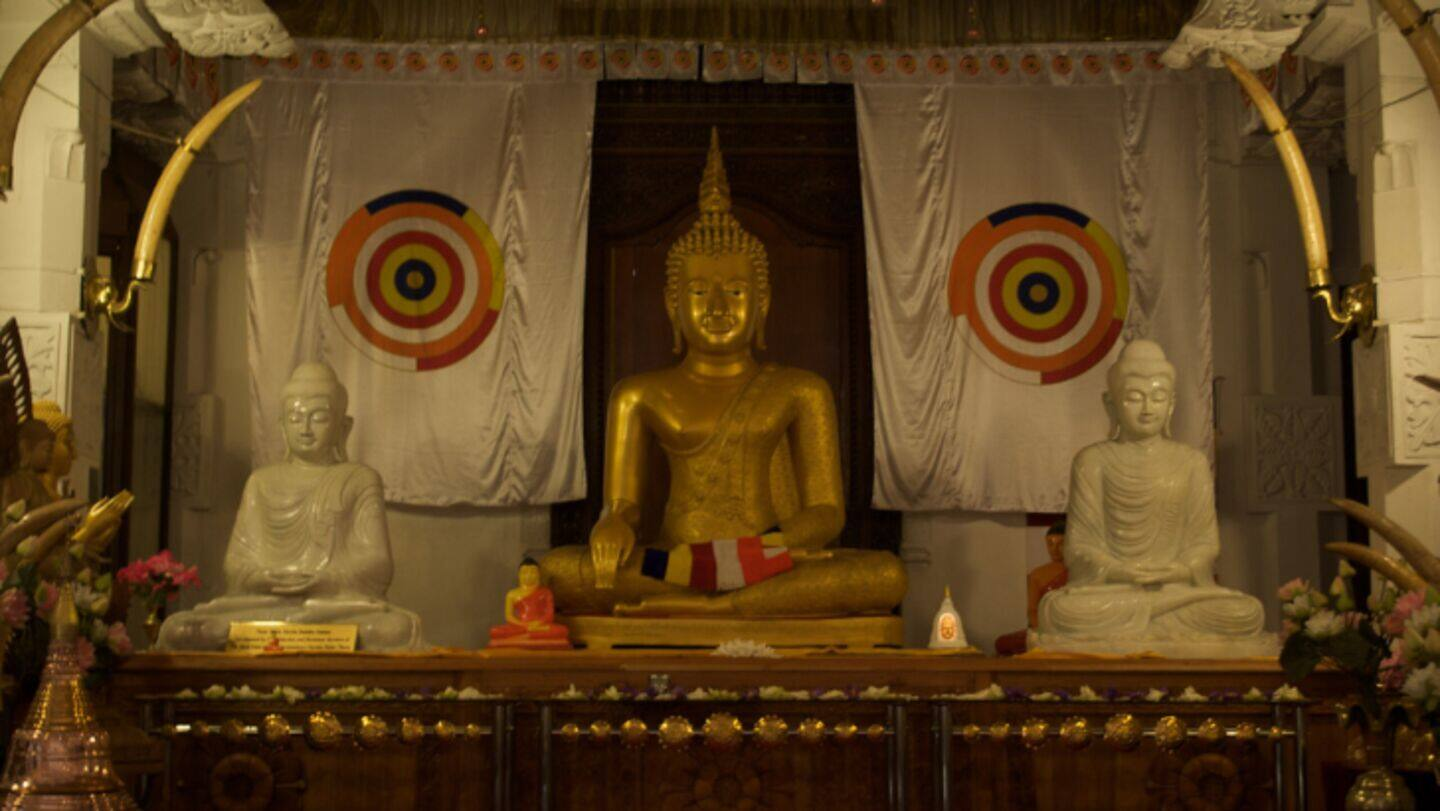
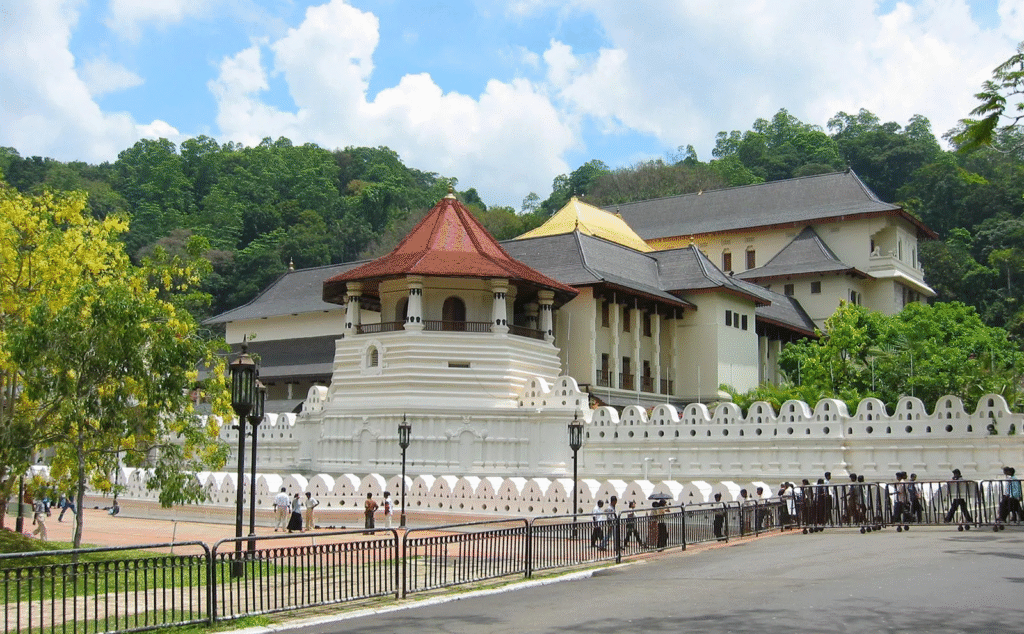
The Temple of the Sacred Tooth Relic in Kandy, Sri Lanka, stands as one of the most revered Buddhist sites in the world. Nestled in the cultural heartland of the island nation, it is home to what is believed to be the left canine of Lord Buddha—a relic that holds profound spiritual, cultural, and political significance for the majority-Buddhist population of Sri Lanka.
For centuries, this sacred artifact has drawn pilgrims and devotees from around the globe, many of whom travel hundreds of miles just to catch a fleeting glimpse during rare public displays. However, in an era dominated by smartphones and social media, the temple’s strict policy prohibiting photography was recently put to the test in a dramatic and controversial way.
A photograph allegedly showing the sacred tooth relic began circulating widely on social media platforms in mid-April 2025, despite stringent regulations that ban all forms of photography within the temple premises.
This surprising development has not only sparked a police investigation but also reignited public debate about the sanctity of sacred spaces, the power of modern technology, and the challenges of safeguarding cultural heritage in the digital age.
The Sacred Relic: A Symbol of Faith and Sovereignty
The Temple of the Sacred Tooth Relic, or “Sri Dalada Maligawa,” is no ordinary place of worship. Built in the 16th century within the royal palace complex of the ancient Kandyan kingdom, the temple is a place of pilgrimage and prayer, where reverence and ritual take precedence over all else.
The Buddha’s tooth relic, believed to have been smuggled into Sri Lanka from India in the 4th century AD, has long been viewed as more than a religious symbol. In the eyes of many, it is a physical embodiment of both spiritual wisdom and rightful governance.
According to historical belief, the possession of the tooth relic conferred legitimacy upon Sri Lankan rulers. Successive Sinhalese kings safeguarded the relic as a divine endorsement of their authority to rule the island.
Even today, during the annual Esala Perahera—one of Asia’s grandest religious festivals—the relic is paraded through the streets in an ornate casket, watched by thousands of devotees who gather to pay homage.
Read : Chinese Artist Hong Jinshi Designed Buddha-Like Statues of Donald Trump
Given its cultural and spiritual gravity, security around the relic is exceptionally tight. Visitors are subjected to rigorous checks before being allowed entry into the inner sanctum of the temple.
#SriLanka: Buddha's tooth picture goes viral despite photography of the sacred relic being strictly prohibited
— WION (@WIONews) April 21, 2025
Authorities are now probing the authenticity of the picture@ShivanChanana brings you this report pic.twitter.com/IH64DwkpX3
Mobile phones are banned, photography is strictly forbidden, and plain-clothed security personnel are stationed throughout the site. These measures are designed not only to protect the relic but also to maintain the sanctity of the sacred space.
In this context, the emergence of a photo purporting to show the Buddha’s tooth relic has sent shockwaves through both religious and law enforcement communities in Sri Lanka.
An Image Sparks a National Investigation
The controversy erupted when a photograph claiming to depict the Buddha’s tooth relic began circulating online, drawing millions of views and shares across platforms like Facebook, Instagram, and X (formerly Twitter).
The image appeared during the relic’s first public exhibition since March 2009, an event that drew an astounding 125,000 people on the opening day alone. Held for just two and a half hours each day over a ten-day period ending April 27, the exhibition offered an exceedingly rare opportunity for the public to view the sacred object.
Despite the clear prohibitions against photography, someone had managed to capture an image—or so it seemed. The authenticity of the photo is now at the heart of a police probe, led by Sri Lanka’s Criminal Investigation Department (CID).
Officers are trying to determine whether the image was genuinely taken inside the temple during the current exhibition or whether it was digitally manipulated using older, possibly unauthorized footage or artificial intelligence.
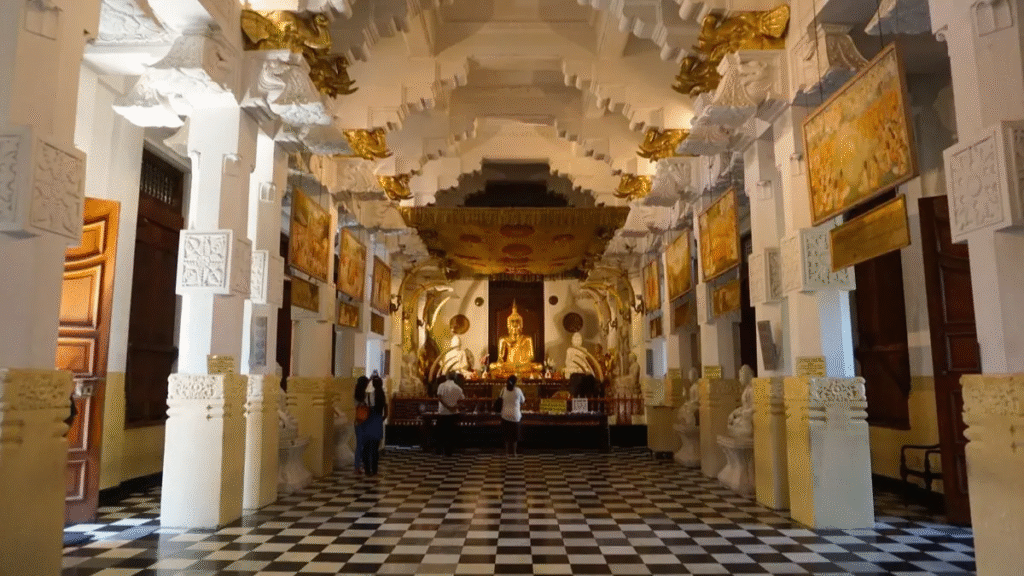
“If someone took a photo inside the temple, it is a serious security lapse,” a police official told Agence France-Presse (AFP), speaking on condition of anonymity due to the sensitivity of the matter. The official noted that undercover officers are stationed throughout the temple to enforce the no-photography rule, underscoring how unexpected and troubling this breach appears to be.
Officials are currently reviewing surveillance footage, interviewing temple staff, and tracking the origin of the photo through metadata and social media analytics. They are also working closely with cybersecurity experts to assess whether the image may have been digitally altered to resemble the sacred relic.
The investigation is ongoing, but the incident has already stirred intense debate in Sri Lanka. Religious leaders have expressed outrage at what they see as a flagrant violation of the temple’s sanctity, while some members of the public have raised concerns about the effectiveness of security measures and the need for stricter enforcement.
Tradition Meets Technology: The Challenge of Sacred Spaces in a Digital World
The Buddha tooth relic controversy is emblematic of a larger global challenge: the collision between deeply held religious traditions and the ever-evolving world of digital technology.
As smartphones become omnipresent and social media platforms provide instant access to global audiences, sacred spaces are increasingly vulnerable to unintended—or intentional—violations of their sanctity.
This incident in Kandy is not the first of its kind. Across the world, religious sites such as the Sistine Chapel in Vatican City and the inner sanctums of Indian temples have grappled with unauthorized photography and the rapid dissemination of sacred imagery. In many cases, rules are strictly enforced, yet breaches still occur—often with significant cultural and spiritual repercussions.
In the case of the Temple of the Sacred Tooth Relic, the issue goes beyond mere rule-breaking. For millions of Buddhists, the relic is not a museum artifact but a living embodiment of the Buddha’s teachings and a spiritual beacon.
To reduce it to a viral image circulating online is, for many, a form of desecration—a betrayal of reverence that undermines centuries of ritual and devotion. Furthermore, the incident has exposed the limitations of physical security in an age where images can be captured discreetly, edited skillfully, and distributed instantly.
It has also raised ethical questions about digital manipulation and the spread of potentially false religious imagery. Could the viral photo be an AI-generated fake? If so, what responsibilities do platforms and users have in verifying and curbing such content?
On a practical level, the controversy has prompted calls for enhanced technological solutions to complement existing security measures. Ideas being floated include mobile signal jammers within temple grounds, advanced facial recognition for monitoring behavior, and AI-based tools to scan online content for violations. However, such measures come with their own set of ethical dilemmas, particularly in balancing surveillance with the sacredness and serenity of spiritual spaces.
For now, the photo continues to circulate, its origins still unclear, and its implications deeply unsettling for those who revere the relic. The Sri Lankan authorities are under pressure to resolve the matter swiftly—not only to preserve the dignity of a holy site but also to reaffirm the nation’s commitment to safeguarding its cultural heritage in the digital age.
As the display period comes to an end on April 27, temple authorities are expected to review and possibly revise their protocols. Meanwhile, religious leaders, security experts, and digital watchdogs are engaging in broader conversations about how to protect what is sacred in a world that increasingly defies boundaries—both physical and spiritual.
While technology has made the world more interconnected, it has also made sacred spaces more vulnerable. The viral image of the Buddha’s tooth relic—whether real or fabricated—serves as a powerful reminder that in this age of instant sharing, reverence, respect, and responsibility must go hand in hand.