

In a journey that has captivated researchers and marine enthusiasts alike, a male humpback whale has set a new record for the longest migration ever documented. Covering an astonishing 13,046 kilometers (8,106 miles) from South America to Africa, this epic quest for a mate highlights the resilience and adaptability of these majestic creatures.
This unprecedented journey has not only pushed the boundaries of what is known about whale migration but also raised intriguing questions about the interconnectedness of the world’s oceans.
Unveiling the Whale’s Epic Journey
The record-breaking migration was first revealed through a study published in Royal Society Open Science. This remarkable event marked the first time an adult male humpback whale was observed crossing between the Pacific and Indian Oceans. Researchers were able to track the journey using the Happy Whale platform, co-founded by marine biologist Ted Cheeseman.
The journey began near Colombia in 2013, where the whale was initially sighted. After being spotted in the same region years later, it unexpectedly reappeared in the Indian Ocean near Zanzibar, off Africa’s east coast, in 2022. This extraordinary movement has amazed researchers, shedding light on the incredible adaptability of humpback whales.
Read : Spade-Toothed Whale: World’s Rarest Whale May Have Washed Up on New Zealand Beach
Such long migrations are rare, with typical humpback whale journeys spanning approximately 8,000 kilometers (4,971 miles) one way. By traveling nearly double this usual distance, the whale defied existing knowledge about their migratory patterns.
Read : Russian Spy Whale Hvaldimir Died from Infection, Not Gunshot: Norway Police
It showcased the species’ capacity to navigate vast and unfamiliar waters, pushing the limits of what was previously believed possible.
A Leap Between Breeding Grounds
Humpback whales are known for their loyalty to specific breeding and feeding areas, often returning to the same locations year after year. This particular whale, however, ventured beyond its usual breeding grounds, connecting two entirely separate populations in the Pacific and Indian Oceans.
This unprecedented migration raises questions about what prompted such a journey. Cheeseman speculated that competition for mates in Colombian waters or potential food shortages could have driven the whale to explore new territories in Africa.
The whale’s journey challenges the traditional understanding of humpback migration, suggesting that individual whales can act as explorers, seeking out new paths for survival and reproduction.
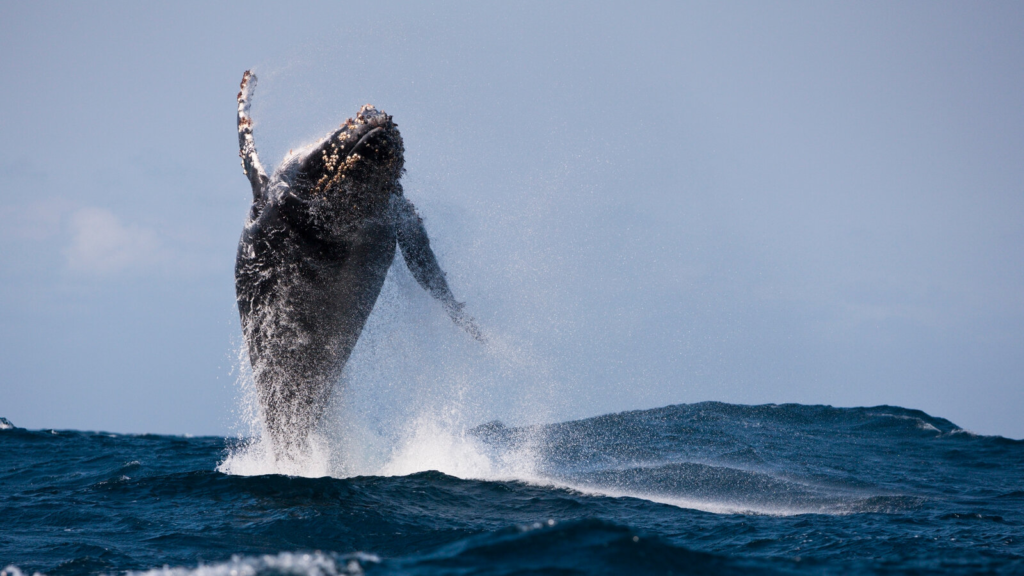
The move between breeding populations also has significant implications for the genetic diversity and behavior of humpback whales. If whales from different populations begin interacting more frequently, it could lead to the exchange of behaviors and traits, potentially fostering a more connected global community of humpback whales.
However, this shift also raises concerns. The Indian Ocean population of humpback whales has already faced severe declines due to 20th-century whaling. Researchers are now keenly interested in understanding how this particular whale will integrate into the new population and what its journey means for the future of humpback whale migrations.
Implications for the Future of Whale Migrations
The journey of this record-breaking whale has opened new avenues for studying whale behavior and migration. The Happy Whale platform, which now holds data on approximately 109,000 individual whales, plays a crucial role in tracking these movements and understanding their implications.
Ari Friedlaender, a professor of ocean sciences at the University of California, Santa Cruz, emphasized the importance of individual “explorers” in shaping the future of humpback migrations. He noted, “There has to be some movement where you get some (animal) explorers that decide, for whatever reason, to follow a different path.”
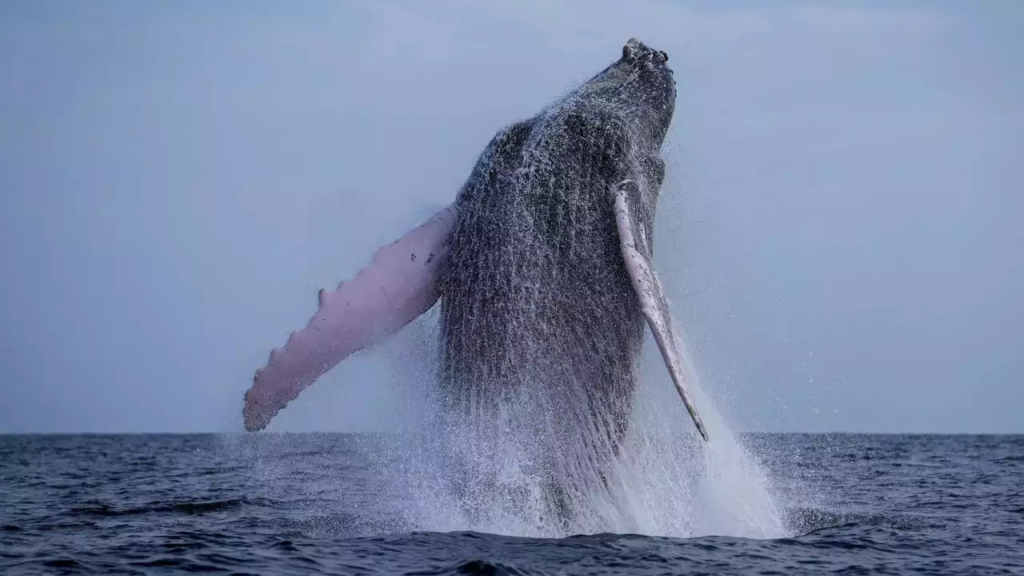
The study also highlights the interconnected nature of the world’s oceans. While humpback whales are often seen as creatures of specific regions, this journey underscores their ability to transcend borders and navigate vast, open waters.
It serves as a reminder of the shared responsibility to protect marine habitats globally, ensuring the survival of these magnificent animals.
As researchers continue to monitor the Happy Whale platform for sightings of this extraordinary whale, its journey serves as a testament to the wonders of the natural world and the mysteries that remain to be uncovered.
From its starting point in South America to its unexpected destination in Africa, the whale’s incredible migration is a story of resilience, adaptability, and the boundless spirit of exploration.