
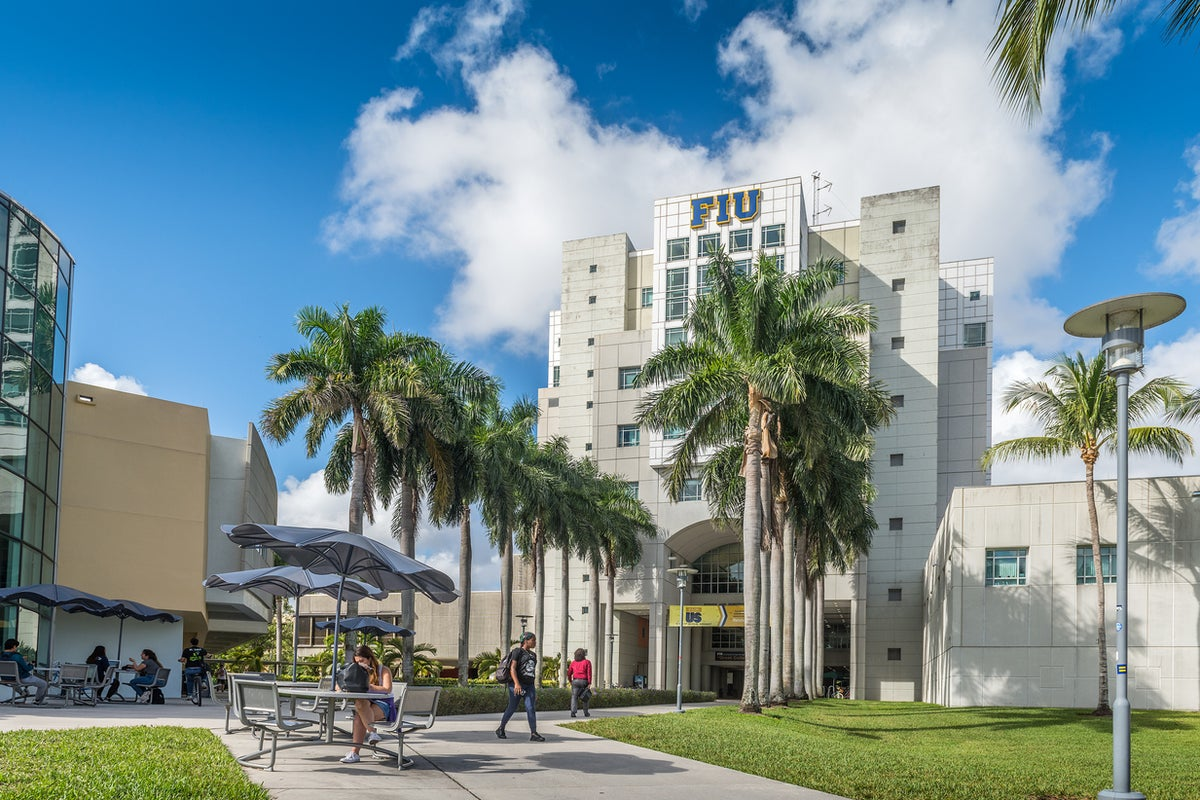
The resignation of the president of a university political organization has drawn national attention after the exposure of disturbing messages shared within a private group chat. Ian Valdes, who served as the president of the Turning Point USA chapter at Florida International University, stepped down from his leadership role after a series of racist, antisemitic, and homophobic messages were leaked from a WhatsApp group used by members of the organization.
The messages, which reportedly spanned more than two weeks during September and October 2025, contained repeated racial slurs, derogatory comments targeting minorities, and references associated with extremist ideology. The controversy has sparked debate about campus political culture, accountability within student organizations, and the broader issue of hateful speech in private digital spaces. As details of the messages emerged, both university and political figures reacted strongly, while the student chapter attempted to distance itself from the scandal by restructuring its leadership.
Leaked Messages Expose Racist and Offensive Language
The controversy began when logs from a private WhatsApp group connected to the Turning Point USA chapter at Florida International University were obtained and made public. The leaked messages covered approximately two and a half weeks of conversations among individuals participating in the chat, revealing repeated use of racist language and offensive remarks directed toward several groups.
Reports indicated that the N-word appeared more than four hundred times within the messages, alongside slurs aimed at Jewish people, gay individuals, and people with disabilities. Women were also referred to in derogatory terms, and certain comments invoked references linked to Nazi ideology.
The tone of the conversations suggested a culture within the chat that normalized or encouraged offensive humor and inflammatory language. Participants appeared to exchange messages in a casual manner, sometimes attempting to frame the statements as jokes or edgy commentary. However, the scale and frequency of the language used raised serious concerns about the attitudes being expressed and the environment within the group.
The release of the messages triggered swift backlash from both students and members of the broader community. Many critics argued that the content went beyond mere inappropriate humor and reflected deeply troubling views about race, religion, gender, and sexuality. Student activists and observers emphasized that the repeated use of slurs, particularly in such high numbers, suggested a pattern rather than isolated incidents of poor judgment.
The messages also reignited longstanding debates about whether private group chats among student organizations should be considered personal communication or part of the public conduct expected from campus leaders. Critics maintained that individuals holding leadership roles within political groups carry a responsibility to uphold certain standards of conduct, even in informal settings. Supporters of that view argued that the nature of the remarks demonstrated attitudes that were incompatible with the inclusive values many universities promote.
🚨 SHOCKING RESIGNATION: Turning Point USA college chapter president quits after leaked racist text messages expose vile slurs & Nazi references! 🚨
— The scoop stateside (@ScoopStateside) March 11, 2026
Ian Valdes, president of Florida International University's (FIU) Turning Point USA chapter, stepped down March 9-10, 2026, after… pic.twitter.com/DCMPpGAcy3
At the same time, some commentators cautioned against assuming that every participant in the chat shared identical views, noting that group conversations can sometimes escalate when individuals attempt to outdo one another with increasingly offensive jokes. Nevertheless, the sheer volume of the language used in the chat made it difficult for defenders to dismiss the issue as a single lapse in judgment. As the messages circulated online and in news reports, pressure mounted on the chapter’s leadership to respond.
Resignation of Ian Valdes and Chapter Response
In the wake of the revelations, Ian Valdes resigned from his position as president of the Turning Point USA chapter at Florida International University. The chapter publicly acknowledged the controversy and confirmed that the leadership change had taken place. According to statements released by the organization, Valdes stepped down from his role and transferred control of the chapter’s social media accounts while the group began reorganizing its leadership structure.
The statement issued by the chapter emphasized that it was aware of the incident and was taking steps to address the situation internally. The organization explained that it was in the process of reconstituting its leadership team and reaffirmed its stated mission of encouraging constructive conversations among students. The message suggested that the group intended to move forward while attempting to repair the reputational damage caused by the leaked messages.
The resignation represented a significant development because the chapter president typically serves as the primary organizer and public representative for the campus group. Leadership positions in student political organizations often involve coordinating events, managing communications, and acting as the face of the organization within the university community. As a result, the departure of the president signaled an acknowledgment that the controversy had undermined the chapter’s credibility and required immediate action.
Read : The Zoo Club Bar Goes Viral After Refusing To Switch Turning Point USA’s Halftime Show For Bad Bunny
While the chapter attempted to portray the resignation as a step toward rebuilding, the broader response from students and observers remained divided. Some argued that removing the president was a necessary first step but insufficient on its own to address the culture reflected in the messages. Others questioned whether additional participants in the group chat would face consequences or whether the focus would remain solely on the most visible figure associated with the organization.

The controversy also raised questions about the oversight and governance of student chapters affiliated with national political organizations. Campus chapters often operate with considerable autonomy while still maintaining ties to larger networks and ideological movements. In this case, the incident placed renewed scrutiny on how such organizations monitor the conduct of their members and respond when controversies arise.
University communities frequently struggle with balancing freedom of expression against the expectation that student organizations maintain respectful environments. Although the WhatsApp group was not an official public platform, the fact that it was used by individuals connected to a campus organization blurred the line between private communication and organizational behavior. For many students, the situation highlighted the challenges universities face when dealing with speech that occurs off official channels but still affects the campus climate.
Political Reactions and Wider Context
The scandal extended beyond the university campus into local political circles because some individuals involved in the chat reportedly held positions within regional party organizations. One participant who played a role in initiating the chat was a secretary within a county-level political committee. The exposure of the messages prompted condemnation from several figures within the party, some of whom publicly called for his resignation from his political position.
Party officials described the language used in the chat as reprehensible and incompatible with the values they claimed to represent. Statements from leadership emphasized that racist rhetoric and hateful speech would not be tolerated, reflecting an effort to distance the party organization from the controversy. Calls for accountability grew louder as additional details about the chat became known.
Despite these demands, the official at the center of the political dispute initially resisted stepping down. He argued that no formal action had been taken to remove him from his role and claimed that many members of the organization continued to support him. The disagreement set the stage for a potential internal vote that would determine whether he would remain in his position.
The incident also unfolded against a broader backdrop of controversies involving private messaging groups associated with youth political organizations. Similar scandals had emerged in previous years when chats among politically active students were leaked and revealed offensive jokes, praise for extremist figures, or comments trivializing serious historical events. These cases have repeatedly sparked discussions about the boundaries between private conversation and public accountability.
Observers noted that digital messaging platforms often encourage informal communication that participants assume will remain private. However, once such conversations are leaked, the content can quickly circulate beyond its original context, leading to significant reputational consequences. In the era of screenshots and instant sharing, private chats among politically active students have become a recurring source of public controversy.
The situation was further complicated by comments from national political figures addressing similar incidents. Some leaders argued that young people frequently engage in offensive humor without fully considering its implications, suggesting that harsh punishment could be disproportionate. Others countered that normalizing hateful language, even in private jokes, contributes to a broader climate in which discrimination becomes more acceptable.
At Florida International University, the scandal revived memories of earlier controversies involving the same student chapter. In a previous incident several years earlier, leaked messages from another chat group had sparked outrage after members were found joking about sexual assault. The recurrence of such scandals raised questions among critics about whether deeper cultural problems existed within certain campus political spaces.
For many students and faculty observers, the episode underscored the challenges universities face in addressing offensive speech linked to student organizations. Institutions must balance commitments to free expression with the need to maintain an inclusive environment where all students feel respected and safe. When incidents occur within private digital spaces, determining the appropriate response can become especially complicated.
The resignation of Ian Valdes represents one immediate outcome of the controversy, but the broader impact on campus politics and student organizations may unfold over time. The leaked messages have already triggered discussions about leadership standards, digital communication, and the responsibilities that accompany positions of influence within student groups. As universities and political organizations continue to grapple with similar incidents, the case highlights the complex intersection of youth culture, online communication, and public accountability.