
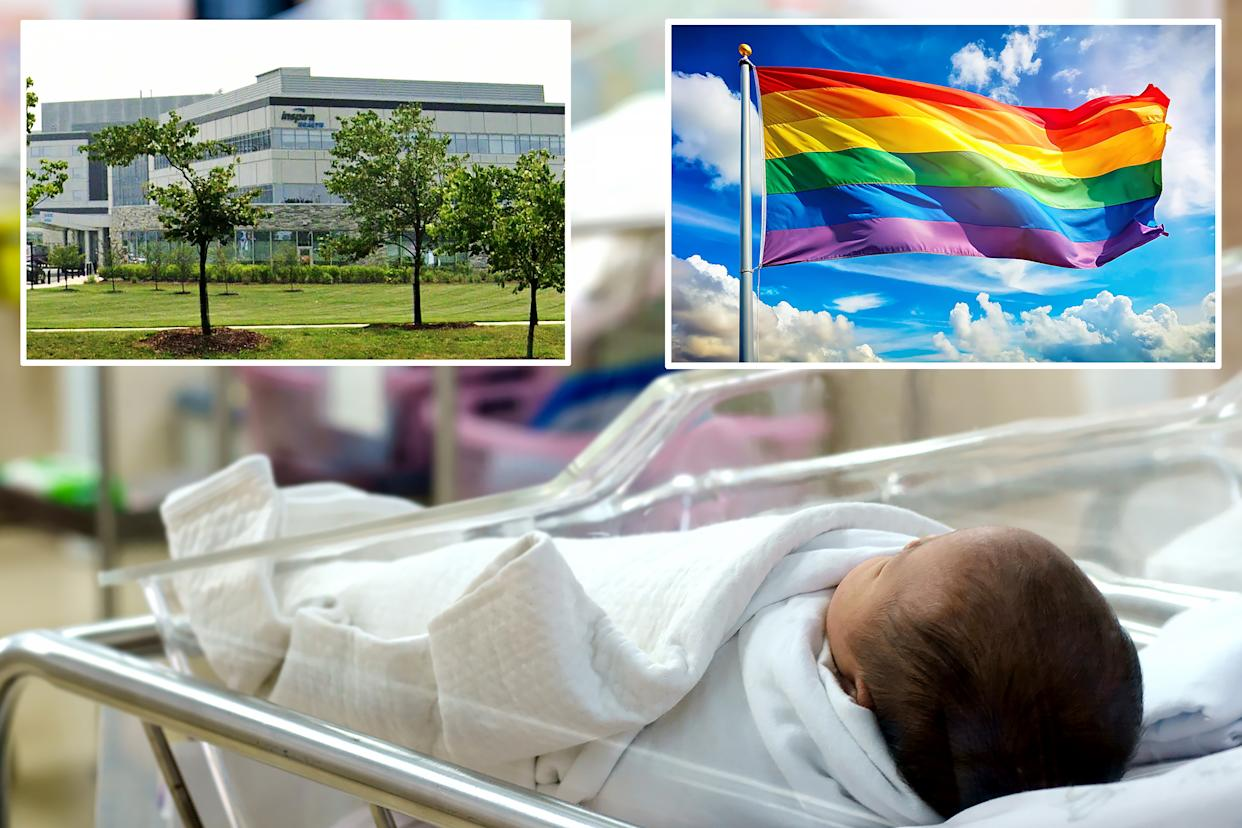
A new policy in New Jersey hospitals has sparked outrage among parents and lawmakers as it requires them to identify the Identify Sexual Orientations of Newborn Babies. The controversial practice, implemented by Inspira Health, asks parents to classify their infants as “Male, Female, Transgender, Gender Queer,” or other gender categories.
It further prompts them to describe their newborns’ sexual orientation, offering options such as “Lesbian or gay, Straight or heterosexual, Self-described, Questioning/Unsure.” This policy, introduced to comply with a 2022 state law mandating the collection of demographic data, has faced strong backlash from parents, politicians, and healthcare professionals alike.
The Controversial Form and Public Reaction
The “Sexual Orientation and Gender Identity Questionnaire,” now in use at several hospitals and health centers under the Inspira Health network, was introduced as a measure to collect data on race, ethnicity, gender identity, and sexual orientation in a “culturally competent” manner. However, many parents find it absurd and unnecessary to categorize their newborns’ gender identity and sexual orientation at birth.
New Jersey State Sen. Holly Schepisi (R-Bergen) expressed strong opposition, stating that the form “lacks common sense” and has “no medical value.”
She questioned why exhausted new parents, already dealing with the challenges of childbirth and infant care, would be expected to fill out such a form. Schepisi shared an image of the form on social media, which quickly went viral, drawing disbelief and criticism from parents and medical professionals.
Read : 24-Year-Old Turkish TikToker Efecan Kultur Died Due to Obesity After Three Months of Hospitalization
Many parents echoed these concerns, with some calling the form “insane” and “absurd.” Sandy Anello, a mother of two from Bridgewater, NJ, stated she would “rip up the form” if presented with it, while Carsen Rodgers, a Jersey City resident expecting her first child in April, said she was “shocked” by its existence.
Read : Top Ten Largest Hospitals Around the Globe
The idea of identifying a newborn’s sexual orientation at birth struck many as completely unreasonable, with critics arguing that sexual orientation develops over time and cannot be predetermined for an infant.
The Legal Basis and Political Implications
The policy stems from a broader demographic data collection law passed in June 2022, spearheaded by Democratic lawmakers Joseph Cryan, Angela McKnight, and Herbert Conaway.
According to Conaway, the bill was modeled after similar legislation in Indiana and aims to provide public health officials with comprehensive data to improve healthcare services. He defended the law, stating that good policy relies on “complete and accurate data.”
However, critics argue that this law overreaches, applying an unnecessary and intrusive requirement to parents of newborns. Schepisi has vowed to introduce legislation to amend the law, limiting such data collection to individuals aged 16 and older.

She also raised concerns that the demographic data collected could be sold or misused for unknown purposes. The lack of transparency surrounding how this provision was added to the bill and the speed at which it passed through the legislative process has only fueled further skepticism.
Inspira Health, which operates multiple hospitals and health centers in South Jersey, stated that the questionnaire is required under New Jersey law. However, it clarified that parents are not obligated to answer these questions.
The health system even sought a waiver from the state but has yet to receive approval. Representatives from New York City hospitals confirmed that similar data collection policies do not exist in their facilities, further raising questions about New Jersey’s unique approach.
The Broader Debate Over Gender Identity and Public Policy
This controversy is part of a larger national debate over gender identity policies and the extent to which the government should be involved in such matters. Supporters of the law argue that collecting comprehensive demographic data helps tailor healthcare policies to better serve diverse communities.
However, opponents believe that asking parents to define their newborns’ gender identity and sexual orientation is not only unscientific but also an unnecessary intrusion into private family matters.
The issue also raises questions about the broader implications of such policies. If parents are required to classify their newborns’ gender identity and sexual orientation, could this set a precedent for further state-mandated classifications in other aspects of life?

Some fear that such measures, even if well-intended, could lead to unintended consequences, including potential misuse of data or pressure on parents to label their children in ways they may not be comfortable with.
Moreover, the policy assumes that gender identity and sexual orientation can be determined at birth, which contradicts established medical and psychological research. Experts argue that sexual orientation typically emerges during adolescence or later in life, while gender identity can also develo
p over time. Given these realities, critics argue that this policy is premature, inappropriate, and ultimately meaningless for newborns.
As public outcry grows, it remains to be seen whether New Jersey will revise its law to exclude newborns from such data collection. For now, parents retain the right to decline answering these questions, but the controversy highlights the increasing tensions surrounding gender identity discussions in public policy.
Lawmakers, healthcare professionals, and parents will continue to debate the balance between inclusivity, data collection, and common sense in shaping policies that affect families and children.