

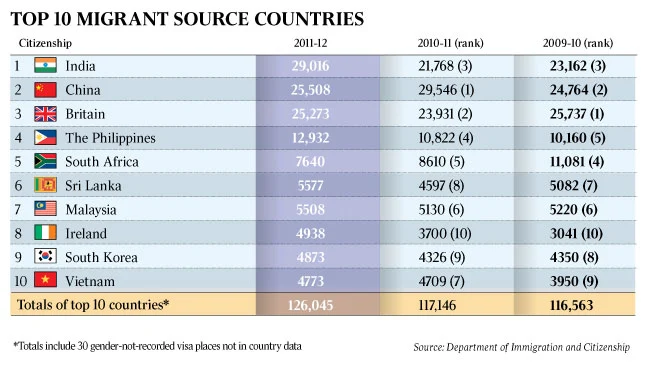
India continues to dominate as the leading source of immigrants to Australia, even as the country experiences its first decline in net overseas migration since reopening its borders post-COVID-19.
While migration trends reveal a decrease in overall numbers, the enduring prominence of Indian students and professionals underscores the importance of India-Australia migration ties.
Net Migration Declines, But Indian Presence Remains Strong
In the financial year 2023-24, Australia saw a drop in net overseas migration to 446,000, down from 536,000 the previous year. This 10% decline marks a notable shift in migration patterns, attributed in part to increased visa costs and stricter financial requirements for international students.
Migrant arrivals fell to 667,000, compared to 739,000 in 2022-23, reflecting a broader trend of decreased movement into the country.
Despite these challenges, India maintained its position as the top source of immigrants to Australia. A significant driver behind this trend is the influx of Indian international students pursuing higher education.
Read : Rare! Woman Finds Out Pimple on Forehead is Cancer After a Year in Australia
Although there was a decrease in student enrolments, with numbers dropping from 96,490 in March 2024 to 87,600 by June 2024, the total arrivals of Indian students exceeded pre-pandemic levels seen in 2018-19.
Read : Top Five Countries In the World Where People Choose to Migrate the Most
The Australian Bureau of Statistics (ABS) data highlights India’s crucial role in shaping Australia’s migration landscape. The country remains a critical partner for Australia’s education sector and workforce, with Indian students and professionals contributing significantly to various industries.
Impact of Visa Policy Changes on Migration
Australia’s recent policy changes, including a substantial increase in student visa fees and higher financial requirements, have had a considerable impact on migration figures.
Starting July 1, 2024, the Australian government raised student visa fees from AUD 710 to AUD 1,600, more than doubling the cost for prospective students. Additionally, the minimum savings required for student visas were increased, creating additional hurdles for international students, including those from India.
These policy shifts contributed to a 25% decline in the number of student visa holders, dropping from 278,000 in 2022-23 to 207,000 in 2023-24. The financial burden has deterred some potential students from pursuing education in Australia, leading to an overall reduction in arrivals.
However, Indian students have shown resilience in navigating these challenges. In the January-September 2023 period alone, over 122,000 Indian students enrolled in Australian institutions, reaffirming India’s status as a key contributor to the country’s international student population.
This figure underscores the enduring appeal of Australian education for Indian students, driven by opportunities for quality learning and global exposure.
Indian Departures and Future Migration Trends
While arrivals of Indian students and migrants remain robust, departures have also seen an upward trend. In 2023-24, migrant departures increased by 8%, rising from 204,000 to 221,000. Indian students accounted for a significant portion of these departures, with numbers climbing from 14,350 in March 2024 to 15,240 by June 2024.
The increase in departures reflects the cyclical nature of migration, as many students complete their studies and return to their home country or move elsewhere for better opportunities. However, it also highlights the challenges posed by changing visa policies and economic conditions, which influence the decision-making process of migrants.

Despite these factors, India’s strong cultural and educational ties with Australia continue to foster migration. Indian migrants, particularly students, contribute significantly to Australia’s economy and workforce, making them an integral part of the country’s social fabric.
India’s role as the leading source of immigrants to Australia remains steadfast, even amid shifting migration trends. The decline in net migration and the challenges posed by policy changes have not deterred Indian students and professionals from pursuing opportunities in Australia.
Their resilience and continued presence underscore the importance of the India-Australia migration corridor, which strengthens bilateral ties and enriches both nations.
As Australia navigates its post-pandemic migration landscape, India’s contribution will remain vital. The enduring appeal of Australian education, coupled with the strong Indian diaspora, ensures that this migration partnership will continue to thrive, shaping the future of both countries.