

Professor Nikku Madhusudhan, an astrophysicist and professor at Cambridge University, recently led a team of researchers in what is being hailed as one of the most significant discoveries in the search for extraterrestrial life. The breakthrough, which could change the course of astrobiology, was achieved using data from the James Webb Space Telescope (JWST).
Their work on the exoplanet K2-18b, located approximately 124 light-years from Earth, offers the strongest evidence yet that life could exist on a planet outside our solar system.
This discovery has not only captivated the scientific community but has also gone viral on social media, as people from all over the world have recognized the monumental nature of the research. But what exactly did the team find, and why is it so groundbreaking?
The Revolutionary Discovery on K2-18b
K2-18b is a “Hycean” planet, a term coined by Nikku Madhusudhan himself to describe a specific type of exoplanet that has a hydrogen-rich atmosphere and a potentially habitable ocean beneath. The significance of this discovery lies in the detection of two key sulfur-based molecules—dimethyl sulfide (DMS) and dimethyl disulfide (DMDS)—in the atmosphere of K2-18b.
These molecules, while not definitive proof of life, are associated with biological processes on Earth. On our planet, DMS and DMDS are primarily produced by marine phytoplankton and other microbial life forms.
As such, their presence in the atmosphere of an exoplanet situated 124 light-years away raises the tantalizing possibility that microbial life could exist on K2-18b.
However, as Professor Madhusudhan pointed out, these findings do not confirm the existence of life but rather represent the “strongest evidence yet” that life might be present on another world.
The team used the advanced capabilities of the JWST to analyze the atmosphere of K2-18b, providing detailed data that could eventually lead to even more groundbreaking discoveries.
Read : Man in Tesla Arrested After Bomb Threat at Agua Caliente Casino Targeting Coachella Festival
Madhusudhan and his team are now cautiously optimistic, acknowledging that while the results are promising, they must carry out further investigations to ensure that these molecules were not produced by unknown non-biological processes.
Read : “I am an alien. Yeah, I keep saying I’m an alien, but nobody believes me”: Elon Musk
The discovery aligns with earlier theoretical predictions about Hycean planets. According to Madhusudhan’s research, such planets could support life due to the combination of liquid water beneath the hydrogen-rich atmosphere and the possibility of energy sources that could fuel biological activity.
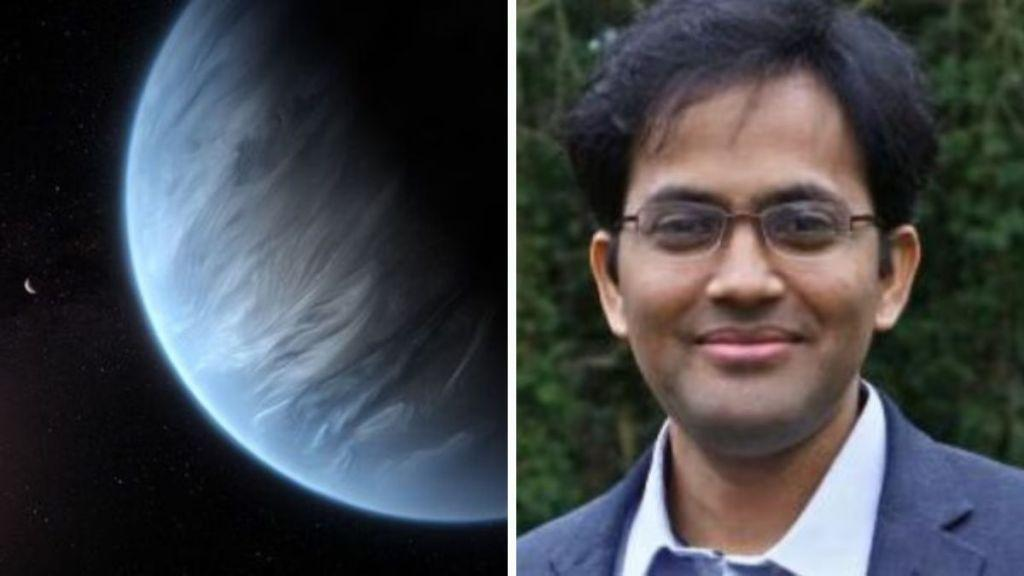
The detection of DMS and DMDS in the atmosphere is consistent with this idea, as these molecules are commonly associated with life processes on Earth. However, Madhusudhan cautioned that more research is necessary before any firm conclusions can be drawn, as the possibility of a “statistical fluke” or an alternative chemical process that could explain the findings still remains.
Who is Nikku Madhusudhan?
Nikku Madhusudhan’s journey to leading this groundbreaking research is a story of brilliance, dedication, and passion for uncovering the mysteries of the universe.
Born in India, Madhusudhan pursued his academic journey with distinction, earning a B.Tech degree from IIT-BHU before moving on to the Massachusetts Institute of Technology (MIT), where he completed his Master’s degree. He later pursued his Ph.D. in Physics, further solidifying his expertise in the field of astrophysics and exoplanetary science.
Madhusudhan is currently a professor of Astrophysics and Exoplanetary Science at the Institute of Astronomy at Cambridge University, where he leads the Hycean team. His research primarily focuses on exoplanets, their atmospheres, and their potential to support life.
The concept of Hycean planets, which Madhusudhan introduced, is a key part of his work, as it suggests that planets with hydrogen-rich atmospheres could harbor oceans beneath the surface—conditions that might be conducive to life.
His team’s work has pushed the boundaries of what we know about habitable exoplanets, and the recent discovery on K2-18b is a testament to the groundbreaking nature of his research.

Throughout his career, Madhusudhan has received several prestigious awards for his contributions to astrophysics, including the MERAC Prize in Theoretical Astrophysics (2019), the Pilkington Prize for Excellence in Teaching (2019), and the Young Scientist Medal in Astrophysics from the International Union for Pure and Applied Physics (IUPAP) in 2016.
His work has been widely recognized in the scientific community, and his contributions have led to significant advancements in the study of exoplanets and the search for alien life.
The recent discovery on K2-18b is a continuation of his life’s work in exploring the possibilities of life beyond Earth. His approach to astrobiology is unique in that it combines theoretical modeling with experimental observation, using advanced telescopes like the JWST to gather data that can confirm or refute hypotheses about the habitability of exoplanets.
Madhusudhan’s careful, methodical approach to science has garnered widespread admiration, and this latest breakthrough is a testament to his exceptional skills and foresight in the field.
The Search for Life Beyond Earth
The discovery made by Madhusudhan and his team represents a new frontier in the search for extraterrestrial life. K2-18b is located in the “habitable zone” of its star, meaning it orbits at a distance where conditions could be right for liquid water to exist—a key ingredient for life as we know it.
The detection of carbon dioxide and methane in the planet’s atmosphere, which had already been observed in earlier studies, further strengthened the hypothesis that K2-18b might harbor the conditions necessary for life.
The idea that there might be life on an exoplanet is not new, but the evidence for it has always been speculative. The challenge has always been detecting signs of life from such great distances, as the vastness of space makes it difficult to study planets outside our solar system in detail.

This is where advanced technologies like the JWST come into play. The JWST’s ability to analyze the chemical composition of exoplanet atmospheres at unprecedented levels of detail has revolutionized our understanding of planets beyond our solar system. The detection of DMS and DMDS on K2-18b is just the latest example of how powerful tools like the JWST are transforming the search for life in the universe.
While this discovery is groundbreaking, it is important to note that it is not definitive proof of life. As Madhusudhan himself stated, there is still a long way to go before we can say with certainty whether life exists on K2-18b or other exoplanets.
The team plans to conduct further studies and analyses to verify their findings and explore the potential for alternative explanations. The ultimate goal is to build a body of evidence that can conclusively show whether life exists on other worlds or if there is an entirely different process at work.
As technology continues to improve, the prospects for discovering alien life become increasingly promising. In the coming years, new telescopes and space missions will allow scientists to study even more distant exoplanets and refine their search for biosignatures.
The detection of DMS and DMDS on K2-18b is a significant step forward, but it is just the beginning. Future missions will likely focus on further investigating Hycean planets and other potential habitats for life beyond Earth.
The Global Reaction to the Discovery
The announcement of this discovery has made waves across the globe. Social media platforms have been buzzing with excitement, as people from all walks of life have expressed their admiration for Nikku Madhusudhan and his team.
Many people have highlighted the significance of the research, with some even claiming that the discovery represents a turning point in the search for alien life. Others have praised Madhusudhan’s leadership and scientific rigor, noting that his work has the potential to change our understanding of life in the universe.
In India, where Madhusudhan’s roots lie, the discovery has been met with immense pride. Many individuals have shared their admiration for the scientist’s achievements, celebrating his role in making such a significant contribution to science.
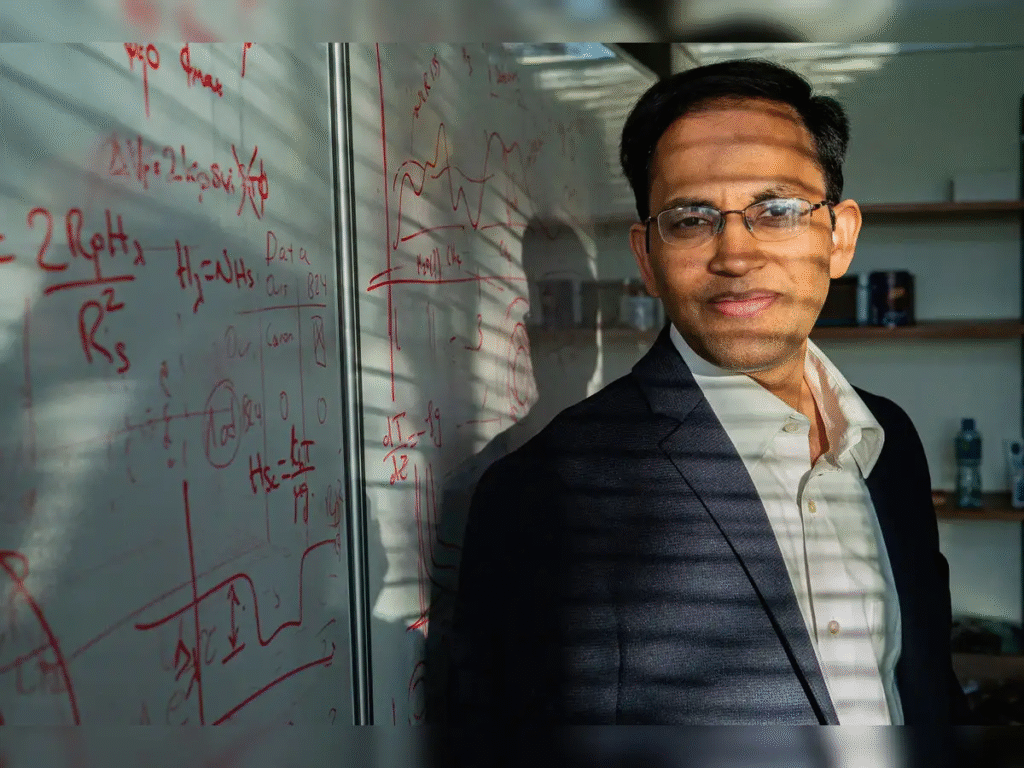
On social media platforms like X (formerly Twitter), people have lauded him for his groundbreaking work, with some noting that his achievements are a testament to the growing prominence of Indian-origin scientists on the global stage.
The discovery has also garnered attention in the scientific community, with researchers and institutions around the world recognizing the importance of the findings.
Many experts have applauded the careful and methodical approach taken by Madhusudhan and his team, acknowledging that their work could pave the way for future discoveries in the field of astrobiology.
The work of Nikku Madhusudhan and his team on K2-18b is a major milestone in the ongoing quest to understand whether life exists beyond Earth. The detection of potential biosignatures in the atmosphere of an exoplanet 124 light-years away marks the strongest evidence yet that life might exist elsewhere in the universe.
While further research is necessary, the discovery represents a significant leap forward in our understanding of the cosmos and the potential for life beyond our home planet. As technology continues to advance, the prospects for uncovering the mysteries of the universe—and perhaps finding evidence of alien life—are more promising than ever.
Nikku Madhusudhan’s work, along with the continued efforts of scientists worldwide, will likely continue to shape the future of space exploration and astrobiology, leading us one step closer to answering one of humanity’s most profound questions: Are we alone?