

A groundbreaking mathematical discovery has been made by an Indian-origin student at Pennsylvania State University, Divya Tyagi, who has solved a century-old problem in aerodynamics. Her breakthrough has significant implications for wind turbine design and energy efficiency, potentially revolutionizing the way wind energy is harnessed.
The problem, originally posed by British aerodynamicist Hermann Glauert, had puzzled experts for over 100 years. Tyagi’s innovative approach has provided a solution that could lead to major advancements in wind energy production and sustainability.
Breaking a Century-Old Mathematical Puzzle
Divya Tyagi, a master’s student in aerospace engineering at Pennsylvania State University, tackled a long-standing challenge in the field of aerodynamics. The problem, initially formulated by Hermann Glauert, focused on determining the optimal performance of wind turbines.
While Glauert’s work laid a foundation for understanding wind energy, it only considered the maximum power a turbine could generate. It did not account for factors such as the forces acting on the rotor or the bending of turbine blades under wind pressure.
By refining and expanding upon Glauert’s original model, Divya Tyagi created an addendum that identifies the ideal flow conditions for wind turbines. Her solution incorporates the calculus of variations, a mathematical method used to solve optimization problems.
This allows for a more precise determination of how wind turbines should be designed and positioned to maximize efficiency. Her findings have been published in Wind Energy Science, further validating the significance of her work.
Indian student Divya Tyagi at Penn State University has cracked a 100-year-old math problem, which will enable higher efficiency in wind turbines. pic.twitter.com/BYWSvVq11G
— Frontalforce 🇮🇳 (@FrontalForce) March 19, 2025
Divya Tyagi’s breakthrough represents a crucial step in improving the aerodynamics of wind turbines. By simplifying and enhancing Glauert’s model, she has made it more practical for modern applications, particularly in the field of renewable energy. Her work has the potential to redefine industry standards and inspire future research in wind energy and aerodynamics.
Impact on Wind Energy and Sustainability
One of the most remarkable aspects of Tyagi’s solution is its potential impact on wind energy production. Wind energy is a critical component of the global transition to renewable power sources, and optimizing turbine efficiency is essential for maximizing energy output and reducing costs. Even a small improvement in efficiency can have substantial economic and environmental benefits.
According to Divya Tyagi, increasing the power coefficient of a large wind turbine by just 1% could significantly enhance energy production. This improvement could be enough to power entire neighborhoods, making wind energy a more viable and sustainable option for communities around the world.

Her findings could lead to the development of next-generation wind turbines that are more efficient, cost-effective, and environmentally friendly. Her adviser, Professor Sven Schmitz of Penn State’s Department of Aerospace Engineering, emphasized the broader implications of Tyagi’s research.
He noted that her elegant solution would likely be incorporated into engineering curricula across the world, influencing how future engineers approach wind turbine design. By providing a deeper understanding of the forces at play in wind energy systems, Tyagi’s work paves the way for more advanced and effective turbine technology.
Beyond academia, her research holds promise for wind energy companies and policymakers. Governments and organizations focused on renewable energy could use her findings to improve infrastructure, optimize wind farms, and develop policies that encourage the adoption of more efficient turbine designs. Her contribution could play a crucial role in making wind energy a dominant source of power in the fight against climate change.
Recognition and Future Prospects
Divya Tyagi’s groundbreaking work has not gone unnoticed. She was awarded the prestigious Anthony E. Wolk Award for her thesis, recognizing her outstanding contribution to the field of aerospace engineering. This accolade underscores the importance of her research and the potential it holds for real-world applications.
Looking ahead, Tyagi’s work could serve as a foundation for further research in wind energy optimization. As the demand for renewable energy continues to grow, her insights will be invaluable in shaping the future of sustainable power generation.
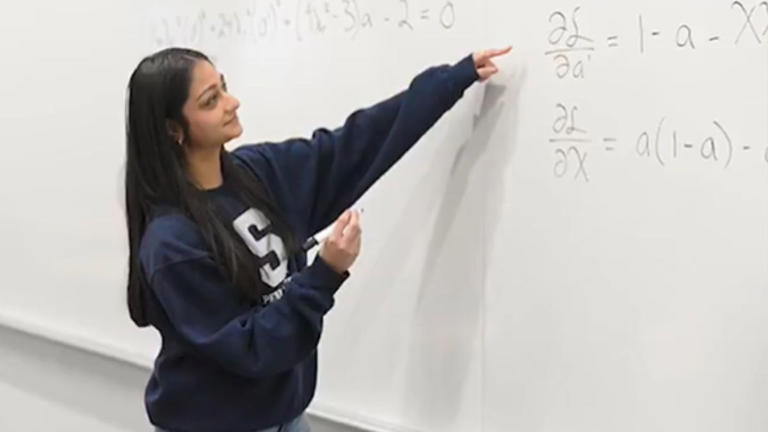
Her approach to solving complex mathematical problems could also inspire other researchers to apply similar methods to challenges in aerodynamics, fluid mechanics, and beyond. Divya Tyagi’s success story is a testament to the power of innovation, perseverance, and the pursuit of knowledge.
Her ability to solve a problem that had remained unsolved for over a century highlights the importance of fresh perspectives and interdisciplinary collaboration in scientific research. As wind energy technology advances, her contribution will likely play a key role in shaping the industry’s future.
Her discovery also serves as an inspiration to aspiring engineers and researchers around the world. It demonstrates that even the most complex and long-standing scientific challenges can be overcome with dedication and creativity.
As Divya Tyagi continues her academic and professional journey, the impact of her work will undoubtedly be felt across multiple disciplines, further solidifying her place as a trailblazer in the field of aerospace engineering and renewable energy.