
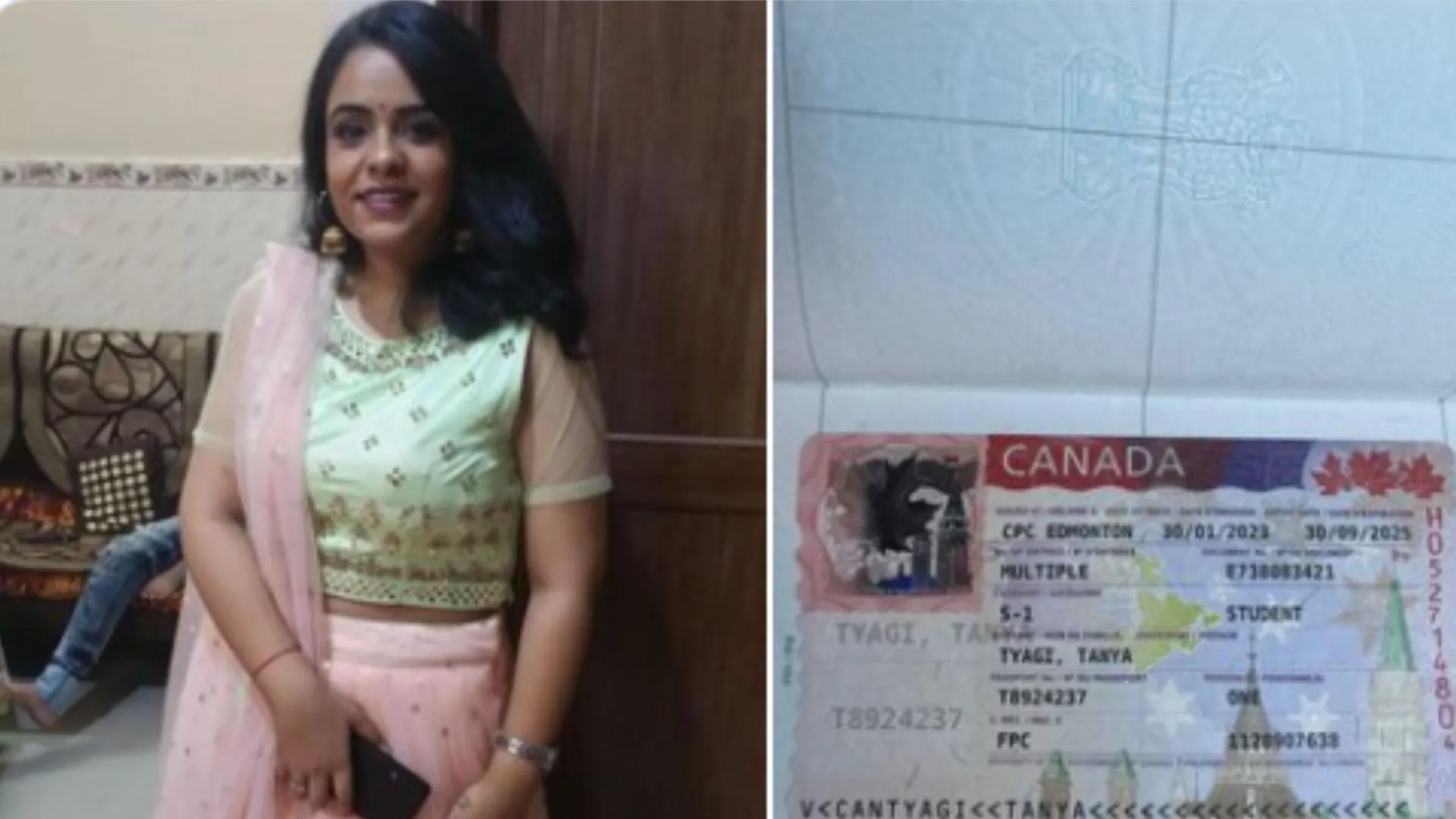
The untimely demise of an Indian student studying abroad is always a cause for concern and sorrow, stirring emotions across continents. Recently, the Indian diaspora, particularly those residing in Canada, was struck with grief upon learning about the sudden death of Tanya Tyagi, a student from Delhi enrolled at the University of Calgary.
While the exact cause of her death remains unclear, the incident has reignited conversations around the safety and well-being of international students, especially those who come from India to pursue higher education in foreign countries.
Sudden and Mysterious Death of Tanya Tyagi
Tanya Tyagi’s death was confirmed by the Consulate General of India in Vancouver via a statement posted on X (formerly Twitter) on Thursday. The statement read: “We are saddened by the sudden demise of Ms. Tanya Tyagi, an Indian student at the University of Calgary. The Consulate is in touch with the authorities and will provide all required assistance to the bereaved family. Our heartfelt condolences & prayers are with her family & friends of the deceased.”
The announcement came as a shock to the Indian community, both in Canada and back home in India. Tanya, originally from Delhi, had travelled to Canada to pursue her academic goals and future aspirations, as many Indian students do each year. However, her journey was cut short abruptly, and the reasons for her passing remain a mystery.
According to the consulate’s statement, they are in continuous contact with Canadian authorities to ascertain the exact cause of death. As of now, no official medical or police report has been released publicly that explains the circumstances under which she passed away. An unverified post on X suggested that Tanya might have died due to a heart attack, but no confirmation has been provided by the authorities to back up that claim.
We are saddened by the sudden demise of Ms. Tanya Tyagi, an Indian student at University of Calgary. The Consulate is in touch with the authorities and will provide all required assistance to the bereaved family. Our heartfelt condolences & prayers are with his family & friends…
— India in Vancouver (@cgivancouver) June 19, 2025
This lack of clarity has left friends, family members, and well-wishers in a state of confusion and distress. For a young and presumably healthy student to die so suddenly, without any known prior conditions, is both alarming and deeply tragic. Her death has once again underlined the uncertainties and vulnerabilities faced by students who live thousands of miles away from their homes.
Consulate Response and Community Support
Following the announcement, the Indian consulate in Vancouver has made it clear that it is working closely with the Canadian authorities to provide all possible assistance to Tanya’s grieving family. This includes helping in the repatriation of her body, liaising with the university, and offering logistical support during this difficult time. The consulate’s statement extended not just official condolences, but also empathy, acknowledging the deep loss felt by Tanya’s family and friends.
The death has sparked a wave of condolences and prayers across social media platforms. Indian student communities in Canada and several non-profit organizations that support international students have expressed solidarity with the Tyagi family. Some have called for more transparent updates from the authorities about the case, while others have shared their own experiences of medical emergencies, cultural isolation, or mental health challenges abroad.

Although Canada is generally considered one of the safer destinations for international students, incidents like these remind us of the fragility of life and the importance of having robust support systems in place. In many cases, students are left to fend for themselves when faced with medical emergencies or psychological stress, especially in foreign cultures where navigating healthcare and administrative processes can be daunting.
Read : Outrage! Indian Student Handcuffed, Pinned to Floor at Newark Airport Before Deportation
Moreover, in the absence of immediate family, the consulates and local Indian communities become crucial lifelines for young students. The proactive response by the Indian consulate in Tanya’s case reflects a commitment to safeguarding the interests of Indian citizens abroad, although there is still much to be done to enhance these protective measures.
Broader Concerns: A Pattern of Tragedy Among Indian Students Abroad
Tanya Tyagi’s case is not an isolated incident. It is the latest in a series of tragic stories involving Indian students abroad. Just a few months ago, in March this year, Sudiksha Konanki, a 20-year-old Indian citizen and permanent U.S. resident, went missing while on holiday in the Dominican Republic.
A student at the University of Pittsburgh, Sudiksha was last seen on the beach near her resort in Punta Cana on March 6. Despite an ongoing investigation involving the FBI, the U.S. State Department, and Dominican authorities, Sudiksha remains missing.
Konanki’s case highlights a different but equally harrowing challenge—disappearances and crimes targeting vulnerable students or tourists abroad. In her case, witnesses and CCTV footage indicate she may have gone missing during a walk along the beach early in the morning.
She was last seen wearing a brown two-piece swimsuit, large round earrings, and various bracelets and anklets. The lack of any leads or developments months later has only deepened the anguish of her family and community.

Both Tanya and Sudiksha’s stories reflect the high emotional and psychological toll on Indian families who send their children abroad in hopes of a better future. These incidents have underscored a growing demand for stronger safety mechanisms, better counseling services, and improved collaboration between Indian missions and foreign institutions.
The rise in such unfortunate events also calls into question the preparedness of students before they leave for international studies. While academic preparedness is often emphasized, emotional readiness, awareness about local healthcare systems, emergency contact networks, and general survival skills are often overlooked.
Another important aspect is the psychological toll that life abroad can impose on students, particularly those facing academic pressure, homesickness, financial constraints, or racial discrimination. While the cause of Tanya Tyagi’s death has not been officially linked to any of these factors, the broader ecosystem that Indian students enter when they study abroad must be scrutinized for its ability to support them holistically.
Governments, universities, and diaspora organizations need to work in tandem to create safer, more inclusive, and better-informed communities. Whether it is access to regular health check-ups, availability of mental health resources, or even simple orientation programs on navigating life in a new country, the support system must evolve in both scale and sensitivity.
The tragic and sudden death of Tanya Tyagi is a grim reminder of the fragility of life and the unique challenges faced by international students. While we await more details regarding the circumstances of her passing, the pain of her loss is already felt deeply across the Indian and Canadian student communities.
As investigations continue, it is imperative that such incidents prompt stronger institutional safeguards and more compassionate support structures. From medical and emotional support to emergency assistance and transparent communication, these elements should be standard for all international students, regardless of where they study.
Meanwhile, Tanya Tyagi’s family mourns an irreplaceable loss, far away from the place where their daughter once pursued her dreams. Their grief must not go unanswered. The community must stand with them, not just in condolence but in advocacy for safer and more responsive international student environments. Tanya’s life, though tragically short, should become a catalyst for deeper reflection and meaningful change.