
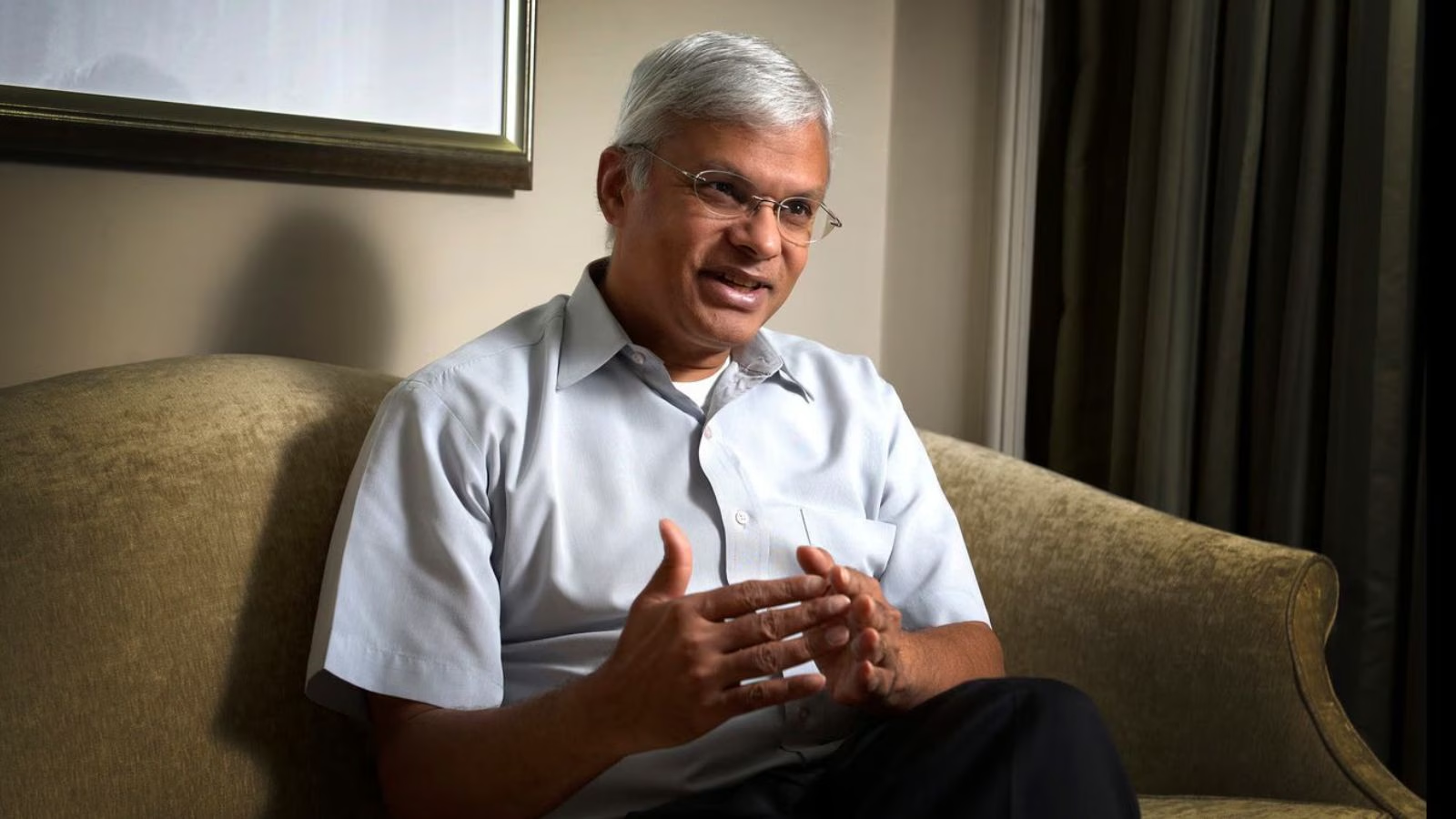
Ashley Tellis, one of the most respected names in American foreign policy and strategic affairs, has been arrested and charged with unlawfully retaining classified national defence information. The US Attorney’s Office for the Eastern District of Virginia announced that Tellis, 64, was taken into custody following an extensive federal investigation into his handling of sensitive government material. The case, which has sent shockwaves through diplomatic and academic circles in Washington and New Delhi alike, raises serious questions about security procedures, academic freedom, and the delicate balance between policy engagement and classified responsibility.
According to prosecutors, Ashley Tellis’s alleged violations fall under 18 USC § 793(e) — a statute within the Espionage Act that prohibits unauthorised possession, retention, or transmission of national defence documents. The charge, while not formally one of espionage, carries significant weight, potentially leading to up to ten years in prison and fines of up to $250,000. The government has underscored that the charges are allegations, and Tellis remains presumed innocent until proven guilty. Yet, the gravity of the accusations has placed one of America’s most esteemed policy thinkers at the centre of a high-stakes national security controversy.
The Arrest and Federal Charges Against Ashley Tellis
The announcement of Ashley Tellis’s arrest came from the office of US Attorney Lindsey Halligan, who described the alleged conduct as “a grave risk to the safety and security of our citizens.” Tellis was reportedly taken into custody over the weekend after investigators uncovered evidence suggesting that he had retained classified documents related to national defence matters without proper authorisation. According to officials familiar with the case, the investigation had been ongoing for several months, involving the Federal Bureau of Investigation (FBI) and the Department of Justice’s National Security Division.
The indictment accuses Ashley Tellis of removing restricted documents from secure government locations and maintaining them in unauthorised environments. Although prosecutors have not publicly disclosed the specific contents or classification level of the documents, sources suggest that they relate to sensitive areas of US foreign and defence policy, possibly including information pertaining to South Asia and China — regions in which Tellis has specialised throughout his career.
The legal basis for the charges, 18 USC § 793(e), is one of the key provisions in US national security law designed to prevent the mishandling of defence-related information. Under this statute, even unintentional retention of classified materials can constitute a crime if done without proper authorisation and if the materials could potentially harm US interests. This law has been applied in several high-profile cases, including those involving government officials, contractors, and defence analysts. However, it is rare for a scholar of Ashley Tellis’s stature to face such serious accusations.
Prosecutors are also examining reports that Ashley Tellis met with Chinese officials during professional and academic exchanges. While investigators have clarified that there is no evidence of espionage at this stage, they are scrutinising whether any of the meetings or communications may have involved discussions of sensitive topics covered by classified material. The investigation reportedly includes the review of electronic communications, travel records, and meeting logs from various policy events and conferences.
Ashley Tellis — the “India expert” worshipped by left-liberals — has finally been unmasked!
— Rohit (@Iam_Rohit_G) October 14, 2025
The same man who kept chanting “India has lost its primacy” was secretly leaking U.S. documents and cozying up to Chinese officials.
Now we know where his “insights” came from — not from… pic.twitter.com/CmUn6UdAuI
Following the arrest, Ashley Tellis was detained pending an initial court appearance in the Eastern District of Virginia. His legal team has yet to issue a formal statement, but colleagues at the Carnegie Endowment for International Peace — where Tellis serves as a senior fellow and the Tata Chair for Strategic Affairs — expressed shock at the development. The think tank has temporarily suspended him from active duties pending further clarification of the case.
A Distinguished Scholar and Architect of US-India Strategic Relations
Ashley J. Tellis’s career represents one of the most significant intellectual contributions to American foreign policy thinking on South Asia. Born in India and educated in both India and the United States, Ashley Tellis built a reputation as a scholar who bridged analytical rigour with real-world policy insight. Over the past three decades, he has been a central figure in shaping the dialogue between Washington and New Delhi, particularly in the context of security cooperation, nuclear strategy, and regional stability.
Ashley Tellis first gained prominence through his academic work at the RAND Corporation, where he served as a senior policy analyst and professor. His research focused on issues of nuclear deterrence, conventional balance in Asia, and the emerging power dynamics in the Indo-Pacific region. He later joined the US government, where his career reached new heights during the administration of President George W. Bush.
As a senior adviser to the Under Secretary of State for Political Affairs, Ashley Tellis was instrumental in the negotiation of the landmark US-India Civil Nuclear Agreement — a deal that transformed the strategic relationship between the two democracies. The agreement allowed for civilian nuclear cooperation despite India’s non-signatory status under the Nuclear Non-Proliferation Treaty (NPT), marking a turning point in bilateral ties. Tellis was widely credited with conceptualising and articulating the strategic rationale for the agreement, arguing that India’s rise as a responsible power aligned with US interests in maintaining balance and stability in Asia.

His tenure on the National Security Council as special assistant to the president and senior director for strategic planning and Southwest Asia further solidified his standing as a trusted voice on South Asia and China. In these roles, he was involved in high-level strategic assessments, defence cooperation frameworks, and policy development aimed at countering regional threats while promoting US-India defence collaboration.
Outside of government, Ashley Tellis continued to influence policy debates through his scholarship at the Carnegie Endowment for International Peace. His writings — including the influential works Striking Asymmetries: Nuclear Transitions in Southern Asia and Revising US Grand Strategy Toward China — have shaped the intellectual foundation for many contemporary policy decisions. He has also been a member of several prestigious organisations, including the Council on Foreign Relations and the International Institute for Strategic Studies, reflecting his deep integration into the global strategic community.
Given this background, the allegations against Ashley Tellis have sent ripples through both the academic and diplomatic establishments. Colleagues describe him as a meticulous researcher and dedicated public servant, making the charges particularly difficult for many to reconcile with his long record of professionalism and service.
Implications for US National Security and Academic Policy Networks
The arrest of Ashley Tellis raises broader questions about how classified information is managed and how experts in policy and academia navigate the boundary between open intellectual exchange and national security secrecy. Ashley Tellis, by virtue of his past government service, would have held security clearances granting him access to sensitive materials. Even after leaving government, former officials are required to adhere strictly to non-disclosure rules, particularly regarding documents and communications deemed classified under federal law.
The case highlights an enduring challenge in Washington’s policy community — the movement of experts between government service and the private or academic sectors. Think tanks, policy institutes, and research organisations often employ former officials whose experience grants them valuable insight into government operations. However, this revolving door also creates potential vulnerabilities, particularly if individuals retain access to restricted materials or inadvertently carry over sensitive knowledge into their subsequent work.
If the allegations against Ashley Tellis prove true, the case could prompt a reassessment of how classified information is tracked and secured after officials transition out of government. It may also lead to increased scrutiny of foreign policy scholars’ engagements with officials from other nations, especially those from strategic competitors such as China.
Prosecutors have reportedly focused part of their investigation on Tellis’s professional interactions with Chinese diplomats and scholars. Such meetings are common within the international policy community and are typically seen as part of legitimate dialogue aimed at mutual understanding. However, in the current geopolitical climate — marked by intensifying US-China rivalry and heightened concerns over intellectual espionage — even routine academic exchanges can attract suspicion. Investigators are said to be reviewing whether any information shared in these settings could have stemmed from classified sources, although no formal espionage charges have been filed.

The potential implications extend beyond Ashley Tellis himself. The think tank world, particularly institutions engaged in foreign policy analysis, may face new restrictions on how they handle sensitive materials or conduct international collaborations. For Washington’s India policy community, Tellis’s case could also cast an unexpected shadow over ongoing efforts to deepen strategic ties with New Delhi — a relationship in which he played a foundational role.
In India, the news has been received with a mix of surprise and caution. While the Indian government has not issued an official statement, media commentators have emphasised that Ashley Tellis, though of Indian origin, is a US citizen and operated entirely within the American policy system. Nonetheless, his deep association with India’s strategic community and his advocacy for stronger US-India cooperation make the case of particular interest to observers in both capitals.
For the United States, the incident underscores how sensitive and complex the management of classified information has become in an era of transnational engagement and globalised research. It also serves as a reminder that individuals at the highest levels of policy influence are not immune to legal scrutiny. As the legal proceedings unfold, they are likely to shed light on how the government interprets the boundaries between legitimate research and potential breaches of security protocol.
The case against Ashley Tellis thus represents more than an individual legal challenge. It encapsulates the tensions that define the modern intersection of academia, diplomacy, and national security. A man who once shaped the intellectual backbone of US-India strategic relations now finds himself confronting the full weight of the laws designed to protect the very system he helped build. Whether Ashley Tellis is ultimately found guilty or exonerated, his arrest will undoubtedly leave a lasting impact on how Washington’s policy elite manage information and maintain trust in an increasingly scrutinised security environment.