
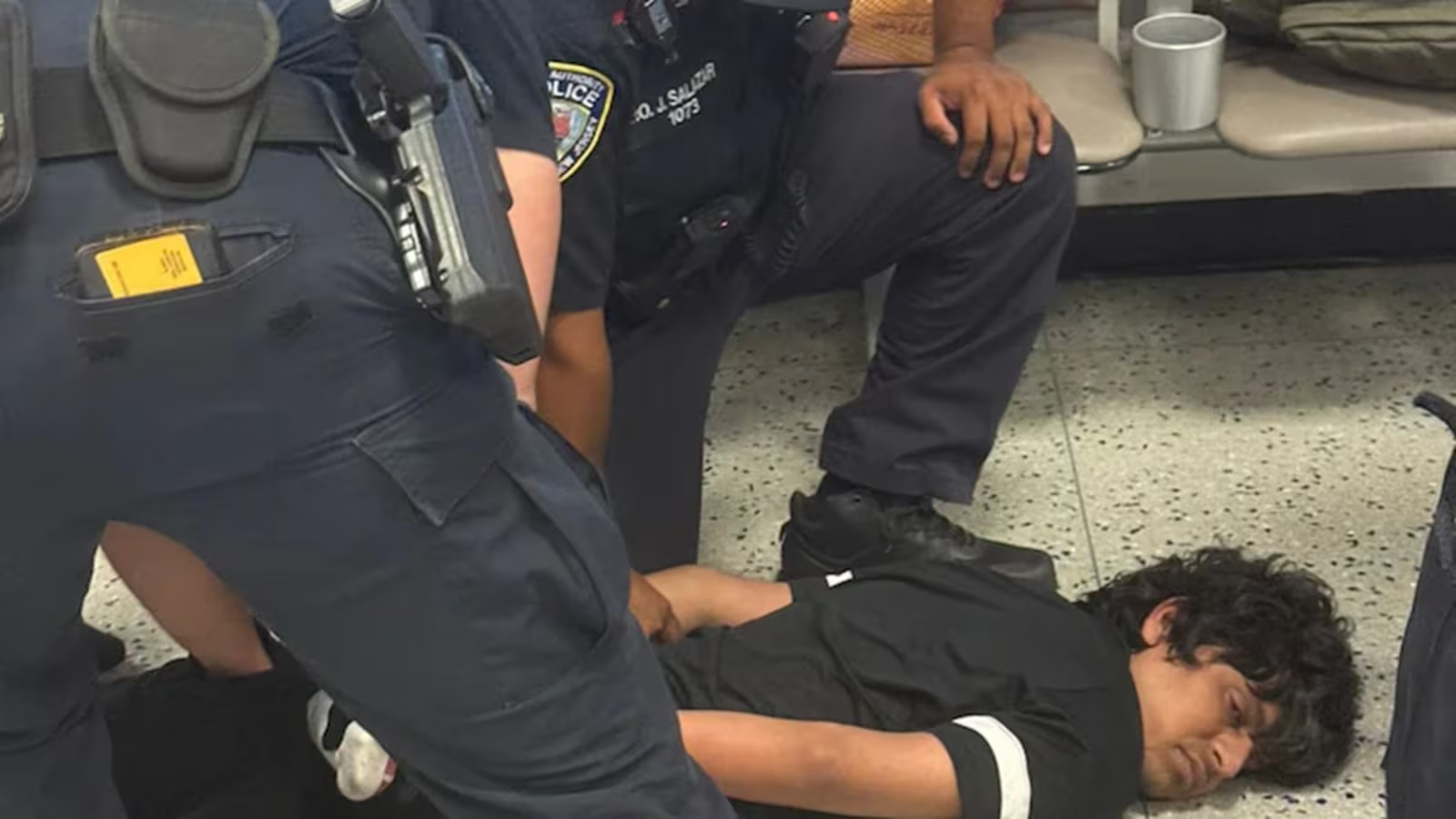
A recent incident at Newark Airport has sent shockwaves across the Indian diaspora and raised serious concerns about the treatment of international students arriving in the United States. An Indian student, who had just landed in the country, was pinned to the ground, handcuffed, and later deported, all while crying and pleading for help.
The harrowing scene was captured on video and shared on social media by Indian-American entrepreneur Kunal Jain, who was present at the airport during the incident. The visuals have triggered a wave of outrage and sparked a conversation about how non-citizens—especially students—are being treated at American ports of entry.
According to Jain, the student appeared to be speaking in Haryanavi, suggesting that he may have been from the northern Indian state of Haryana. The entrepreneur described the ordeal as a “human tragedy” and a matter that requires urgent attention from Indian authorities. The incident, Jain noted, is not an isolated one.
In his follow-up posts on social media, he claimed that several other students have faced similar situations in recent weeks, with many being deported on the same day of arrival simply because they failed to effectively explain their purpose for visiting the U.S. Jain stressed that these young individuals are not criminals—they are students who have often gone through the rigorous visa process only to be treated inhumanely at the final stage of their journey.
Indian Student Handcuffed, Pinned to Floor at Newark Airport
What makes this incident especially troubling is that it appears to be part of a larger trend. Jain’s claim that “every day 3-4 such cases are happening” points to a systemic issue that may be rooted in communication gaps, overly aggressive enforcement, or unclear immigration policies.
These students, according to Jain, board flights in India after receiving valid visas but find themselves unable to convincingly communicate the purpose of their visit to immigration officials upon landing in the United States. The failure to explain, whether due to language barriers, anxiety, or a lack of preparation, results in their swift deportation—often in handcuffs.
This practice of deporting students in such a humiliating and aggressive manner has raised ethical and legal questions. How is it that someone who holds a valid visa, issued after careful scrutiny by U.S. consular officials in India, can be denied entry in such a brutal fashion?
Read : 21-Year-Old Indian Student Poses As Official To Scam 78-Year-Old Woman in North Carolina, Arrested
The issue isn’t just administrative; it is one of dignity and human rights. To handcuff a student and pin him to the ground without evidence of any threat or wrongdoing is an extreme response that deserves scrutiny from both American civil liberties groups and Indian diplomatic channels.
I witnessed a young Indian student being deported from Newark Airport last night— handcuffed, crying, treated like a criminal. He came chasing dreams, not causing harm. As an NRI, I felt helpless and heartbroken. This is a human tragedy. @IndianEmbassyUS #immigrationraids pic.twitter.com/0cINhd0xU1
— Kunal Jain (@SONOFINDIA) June 8, 2025
The role of the Port Authority Police Department (PAPD), who were identified in the visuals shared by Jain, also comes under the spotlight. PAPD is responsible for the security and law enforcement of major transit hubs in the New York and New Jersey region, including airports. Their involvement in immigration enforcement, especially in a non-threatening case involving a student, raises further questions about protocol and proportionality.
Community Outrage and Diplomatic Ramifications
The Indian-American community has responded with outrage and concern. Many see the video as not just a one-off event but as a symbol of the anxiety and uncertainty faced by international students. Indian students are among the largest groups of international students in the U.S., contributing significantly to the academic and economic ecosystem.
These students often spend months preparing for life in a new country—academically, financially, and emotionally. For them to be sent back in tears, humiliated and handcuffed, undermines the very idea of fair treatment and international goodwill. Kunal Jain’s decision to record and share the video was not just an act of bearing witness, but a call to action.
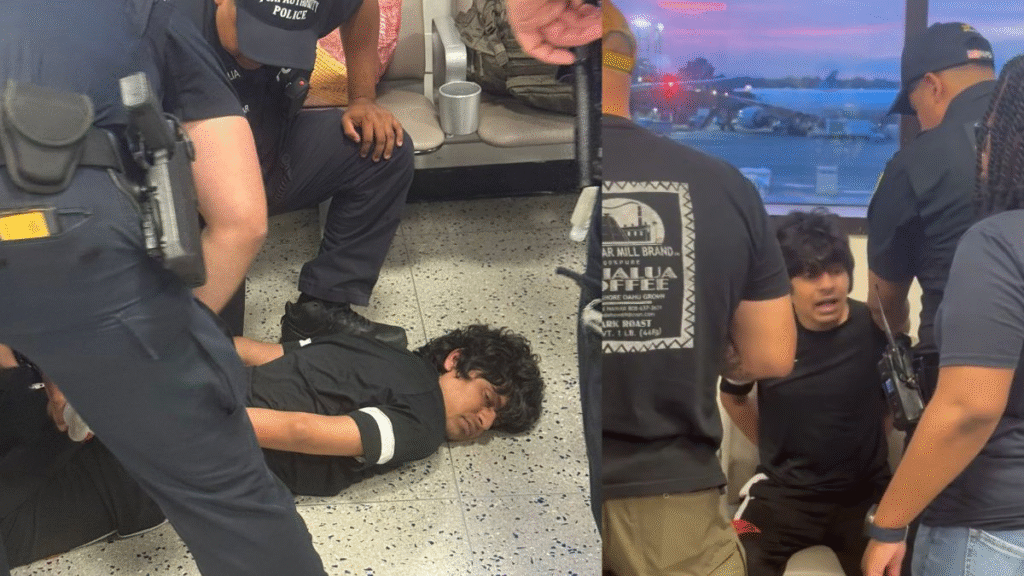
He appealed directly to the Indian Embassy in Washington, D.C., urging them to investigate the matter and offer legal or consular support to the affected individual. The video has since gone viral, and voices from both India and the U.S. have started asking tough questions. Why wasn’t the student offered a translator? Was he given a chance to contact legal representation? Was the Indian consulate informed about his deportation?
While U.S. Customs and Border Protection (CBP) has the final authority to admit or deny entry to travelers, the manner in which these decisions are executed has always been a subject of international diplomacy. The Indian government may now find itself under pressure to formally raise the issue with U.S. authorities to ensure that future travelers are not subjected to such degrading treatment.
Clearer communication channels between U.S. immigration authorities and Indian consulates, better preparedness among student travelers, and stronger support systems at airports may be required to prevent similar tragedies in the future.
Lessons to Learn and the Path Forward
This incident is a wake-up call for multiple stakeholders. For students, it underlines the importance of being thoroughly prepared to answer questions about their stay, purpose, university, and visa type. Many Indian students come from rural or non-English speaking backgrounds and may not be fully equipped to handle high-pressure immigration interviews.
Institutions and visa consultancies in India must do more to prepare these young individuals, not just for the academic journey ahead but also for the logistical and legal hurdles at the point of entry. For U.S. immigration officials, this is a moment for introspection.
The job of border protection is undeniably difficult and complex. However, professionalism and empathy must guide enforcement. Students who show valid documentation and no signs of malintent should be treated with dignity, even if there are questions about their documentation or intent. Resorting to physical restraint and public humiliation reflects poorly on a country that markets itself as a global education hub.

For the Indian government and its embassies, the priority should be to establish stronger mechanisms of support for its citizens abroad. A 24/7 consular hotline, better monitoring of such incidents, legal aid partnerships, and a public record of such deportations could bring transparency and accountability to the process. It is imperative that students are not left alone in foreign airports with no one to speak for them.
As of now, the identity of the student remains unknown, and no official statement has been issued by either U.S. immigration authorities or the Indian Embassy. But the emotional impact of the video shared by Kunal Jain is undeniable. The image of a young man, alone and in tears, being forcibly removed from a country he dreamed of building a future in, is one that will linger in public memory.
The incident also underscores a growing anxiety among aspiring students and their families in India. Stories of deportation, visa cancellations, and mistreatment are on the rise, leading many to question whether their dreams are worth the risk. This is not just a policy issue—it is a question of trust, reputation, and humanity.
In a world increasingly defined by migration, multiculturalism, and global talent flows, how we treat newcomers at our borders reflects who we are as a society. This young Indian student may never forget the trauma he endured that day, but perhaps, if justice and reforms follow, his painful experience can help prevent similar fates for others. The hope now is that the public outrage does not fade, and that both governments act to ensure such human tragedies do not become the norm.
Недропользование — это направление деятельности, связанный с изучением и использованием недр.
Оно включает поиск минерального сырья и их рациональное использование.
Эта отрасль регулируется законодательством, направленными на сохранение природного баланса.
Грамотный подход в недропользовании способствует экономическому росту.
оэрн