

In a groundbreaking and bold initiative aimed at curbing one of the most persistent and devastating crimes against wildlife, scientists in South Africa Inject Rhino Horns with Radioactive Isotopes. This pioneering effort, led by researchers at the University of the Witwatersrand in collaboration with nuclear energy experts and conservationists, marks a new chapter in the global battle against rhino poaching.
The project, named the Rhisotope Project, seeks to make rhino horns traceable through radiation detectors at airports and border checkpoints, turning one of the most targeted animal parts into a liability for traffickers.
This innovative method presents a potentially game-changing strategy in protecting the critically endangered rhinoceros population, especially in South Africa, which harbors the largest number of these majestic creatures. With rhino horn trafficking driving populations to the brink of extinction, the application of nuclear science to conservation has offered a ray of hope.
A New Approach: Radioactive Defense Against Poaching
The Rhisotope Project was officially launched following a successful pilot study in which radioactive isotopes were implanted into the horns of 20 rhinos at a sanctuary. The results were promising. The radioisotopes, although at low levels, were easily detectable using standard radiation detectors commonly installed at airports and border posts. This means that any illicit transportation of rhino horn could be swiftly identified, leading to interception and arrest of traffickers.
The method involves sedating the rhinos and carefully inserting calculated doses of radioactive isotopes into the keratin of their horns. The horns are also marked with an identification spray known as DataDot, which adds another layer of traceability.
Scientists from the Radiation and Health Physics Unit at the University of the Witwatersrand have rigorously tested the process, ensuring that the radioactive material poses no threat to the health of the rhinos. Professor James Larkin, a key figure in the project, confirmed that the procedure is both safe and effective. He emphasized that even horns with levels of radioactivity lower than those intended for widespread use triggered alarms during security scans.
Watch: South African scientists are inserting trace radioactive isotopes into rhino horns under the Rhisotope Project to deter poaching and track illegal trade using nuclear security systems pic.twitter.com/p2ybHp4bFk
— Reuters Science News (@ReutersScience) August 1, 2025
This new technique is not designed to harm humans either. The radioactive isotopes used are not dangerous to handlers or customs officials but are potent enough to alert nuclear security systems worldwide. Essentially, traffickers carrying radioactive rhino horn would be detected in the same way as someone smuggling nuclear material—a severe and immediate red flag for any border or airport security agency.
Conservation at a Crossroads: The Need for Urgent Innovation
Rhino poaching has become a symbol of the wider crisis in wildlife conservation. Once numbering around 500,000 at the beginning of the 20th century, rhino populations have plummeted to approximately 27,000 today. This catastrophic decline is almost entirely due to poaching, driven by demand for rhino horn in black markets across Asia, where it is wrongly believed to possess medicinal properties or serve as a status symbol.
South Africa, which is home to roughly 16,000 rhinos, continues to witness high rates of poaching. Each year, around 500 rhinos are killed in the country for their horns. These numbers reflect not only a conservation crisis but also a failure of existing protective measures to deter organized crime syndicates involved in the illegal wildlife trade.
Read : Rhino Kills Male Zebra at UK’s Colchester Zoo
In this context, the Rhisotope Project offers a vital new tool. Traditional conservation methods such as increased patrols, use of drones, and physical dehorning (removing the horn to make the rhino less of a target) have had limited success. While dehorning has helped in some regions, it is invasive, stressful for the animals, and not always effective since even the remaining horn stub can be valuable. Moreover, it needs to be repeated periodically as horns regrow.
Radioactive tagging, on the other hand, is a non-invasive method that doesn’t alter the rhino’s appearance or behavior. By making the horn a detectable contraband item, it shifts the risk-to-reward ratio for poachers. The mere possibility of being caught transporting radioactive material could discourage criminals and reduce the demand upstream in the black market supply chain.
From Trial to Transformation: Scaling the Project
Following the successful trial phase and the initial injection of five rhinos during the official launch, the Rhisotope Project aims to scale up dramatically. The long-term vision is to have all rhinos in South Africa, both in national parks and private reserves, tagged with radioactive isotopes. This ambitious goal will require cooperation from wildlife park owners, conservation authorities, and possibly international funding and support.
Private game reserve owners have been particularly encouraged to participate, given that their properties are often more vulnerable to poaching due to limited resources for surveillance and security. By adopting this new method, they can protect their animals more effectively and contribute to a nationwide network of radiologically tagged rhinos.
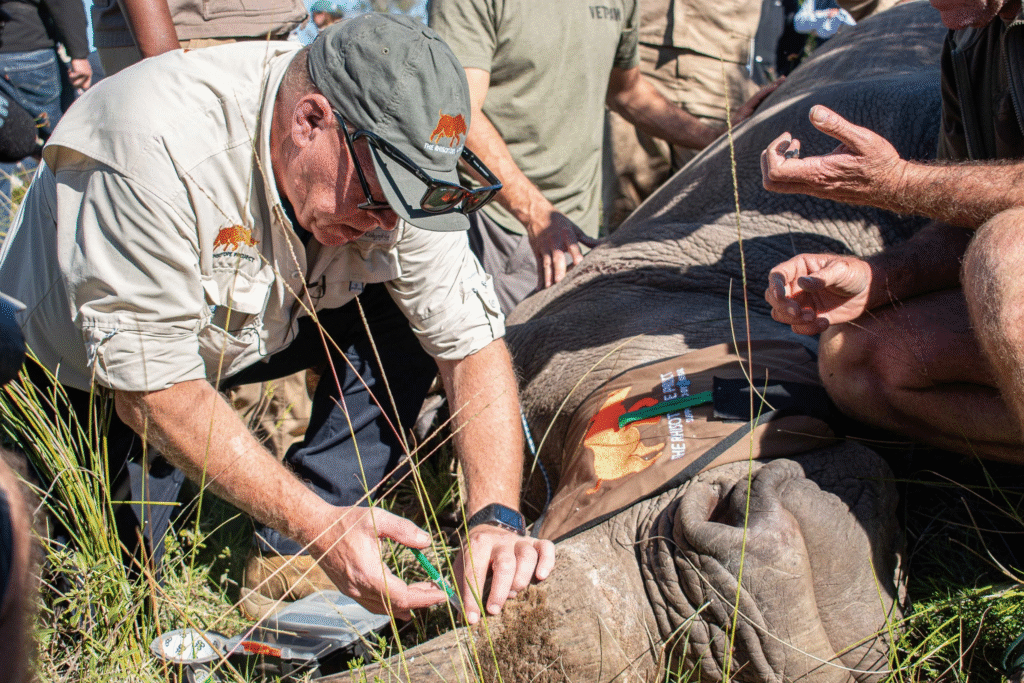
The logistics of scaling up are complex. Each rhino must be individually sedated, monitored, and injected by trained professionals. The isotopes need to be carefully measured and inserted in a way that ensures maximum detectability with minimum health risk. However, the scientific team behind the Rhisotope Project is confident that the infrastructure and expertise are in place to manage such an operation.
Internationally, the project has garnered attention as a novel blend of nuclear science and conservation. Experts believe that if proven successful in South Africa, the method could be adopted in other countries with rhino populations such as Namibia, Zimbabwe, and Kenya. Moreover, it opens up possibilities for applying similar techniques to other trafficked wildlife products like elephant ivory or pangolin scales.
The Rhisotope Project also highlights the need for interdisciplinary approaches in conservation. By integrating health physics, nuclear technology, and wildlife management, the initiative offers a template for future projects that can bridge the gap between science and environmental activism. It’s a potent reminder that innovation, when guided by compassion and rigorous research, can address even the most entrenched challenges.
In a world where illegal wildlife trafficking continues to threaten biodiversity and destabilize ecosystems, this project represents a rare and hopeful breakthrough. The road ahead will require sustained commitment, funding, and global cooperation, but the initial steps are deeply promising. For the rhinos of South Africa, a new shield has been forged—not of steel, but of science.