

In a development that has sent ripples through Australia’s political and activist communities, a senior constable with the New South Wales Police Force has been formally charged with assault in connection to an incident that left former Greens candidate Hannah Thomas with a serious eye injury. The alleged assault occurred during a pro-Palestine protest in Sydney’s southwest in late June, amid heightened tensions over global conflicts and domestic protest rights.
Hannah Thomas, a 35-year-old activist and one-time contender for the federal seat of Grayndler, has described the charges as a “vindication” for protesters who have faced what she calls a “war” on their right to demonstrate. This case not only highlights the volatile intersection of policing and political expression but also raises broader questions about accountability within law enforcement. As the officer’s court date approaches, the incident serves as a stark reminder of the human cost behind the headlines of public unrest.
The charges against the 33-year-old officer, who is attached to a specialist command in the South West Metropolitan Region, come after months of investigation into the events of June 27. NSW Police confirmed the development in a statement released on Tuesday, September 23, detailing that the senior constable has been issued a court attendance notice for assault occasioning actual bodily harm. He is scheduled to appear before Bankstown Local Court on November 18, 2025.
At this stage, the officer’s employment status remains under active review, with police indicating that he is being “managed in the workplace” pending the outcome of internal processes. This charge stems from a critical incident declaration triggered immediately after the protest, where questions arose over the use of force during arrests. The matter was referred to the NSW Police Professional Standards Command, underscoring the seriousness with which authorities are treating the allegations.
Hannah Thomas’s account of the incident paints a picture of chaos and perceived aggression. She alleges that during the scuffle, a male officer punched her in the face, specifically targeting her right eye. The injury was severe enough to require hospitalization and two subsequent surgeries, with her lawyer warning that the long-term impact on her vision could be permanent.
A police officer has been charged with assault over the arrest of former Greens candidate Hannah Thomas at a pro-Palestine protest at Belmore in June. @PaulKadak #nswpol pic.twitter.com/6aWVmHKVa6
— 7NEWS Sydney (@7NewsSydney) September 23, 2025
Body-worn camera footage from the event, which has been reviewed preliminarily by senior officers, reportedly shows the altercation in detail, though initial police statements downplayed any misconduct. Hannah Thomas was one of five protesters arrested that morning on charges including hindering or resisting police and refusing to comply with a move-on direction. However, all charges against her and her co-arrestees were later dropped, with a magistrate awarding her nearly A$22,000 in legal costs—far more than the A$5,000 to A$6,500 granted to the others—citing flaws in the prosecution’s case related to the protest’s legality.
The Protest: A Flashpoint in Sydney’s Pro-Palestine Movement
The demonstration that led to this confrontation was no isolated event but part of a larger wave of pro-Palestine activism sweeping Australia since the escalation of the Israel-Gaza conflict. On the early morning of June 27, around 60 protesters gathered outside the premises of SEC Plating, a manufacturing facility located on Lakemba Street in Belmore, a suburb in Sydney’s southwest.
The site’s selection was deliberate: demonstrators accused the company of producing components for F-35 fighter jets, which they claim are supplied to the Israel Defense Forces (IDF) and used in military operations in Gaza. SEC Plating has categorically denied these allegations, stating that their operations do not involve weapons manufacturing. Nonetheless, the protest tapped into widespread outrage over civilian casualties in the region, with participants chanting slogans calling for an end to what they described as “Israel’s genocide in Gaza.”
NSW Police were called to the scene after reports of an unauthorized assembly blocking access to the facility. Officers issued a move-on direction, ordering the group to disperse, but tensions escalated when some protesters refused to comply. What followed was a physical altercation involving dozens of individuals, during which police deployed to arrest non-compliant demonstrators.

Hannah Thomas, who was at the forefront of the group, found herself in the midst of the melee. As officers moved to detain her, she claims the punch landed without provocation, fracturing her orbital bone and causing significant trauma to her eye. A probationary constable involved in the arrest later recounted in court documents that a third officer—unidentified at the time—joined the effort, adding to the confusion. Police, in their initial release, described the event as a routine enforcement of public order laws, with one 35-year-old woman (Thomas) sustaining facial injuries that necessitated hospital treatment. No officers were reported injured.
This protest occurred against a backdrop of increasingly stringent regulations on demonstrations in New South Wales. Since October 2023, when the current phase of the Gaza conflict intensified, Australian authorities have grappled with balancing free speech and public safety. Pro-Palestine rallies have faced frequent disruptions, including road closures, permit denials, and the invocation of rarely used powers like those under the Law Enforcement (Powers and Responsibilities) Act 2002.
In Hannah Thomas’s case, one charge against her initially relied on emergency riot powers introduced after the 2005 Cronulla riots—a provision that Greens MP Sue Higginson publicly criticized as being applied “unlawfully or retrospectively.” The dropping of these charges two weeks before the officer’s indictment highlighted what critics see as overreach by police in labeling peaceful assemblies as threats.
The Belmore protest was emblematic of the grassroots energy driving Australia’s pro-Palestine movement. Hannah Thomas, drawing on her experience as a former Greens candidate, had been vocal in organizing such events, emphasizing the moral imperative to protest arms supplies to conflict zones. Yet, the incident has amplified voices within the activist community who argue that such gatherings are met with disproportionate force.
Reports from the scene described a scene of pushing and shoving, with protesters linking arms to form human chains around the facility’s gates. Police tactics, as revealed in later court filings, included instructions to show “zero tolerance” to any resistance, a directive that some legal experts now question for potentially encouraging excessive measures.
Legal Repercussions: Charges, Investigations, and Civil Claims
The legal fallout from the June 27 incident has unfolded in layers, beginning with Hannah Thomas’s arrest and evolving into a multifaceted probe that now implicates the charged officer directly. Immediately following the event, Assistant Commissioner Brett McFadden conducted a preliminary review of body-worn video and other evidence, publicly stating there was “no information at this stage that indicates any misconduct on behalf of any of my officers.”
This stance shifted as the investigation deepened, with the arrest classified as a critical incident due to the serious injury sustained. The Law Enforcement Conduct Commission (LECC) launched an independent inquiry into potential excessive force, a process that remains ongoing alongside the criminal proceedings. For Hannah Thomas, the journey through the courts has been both vindicating and arduous.
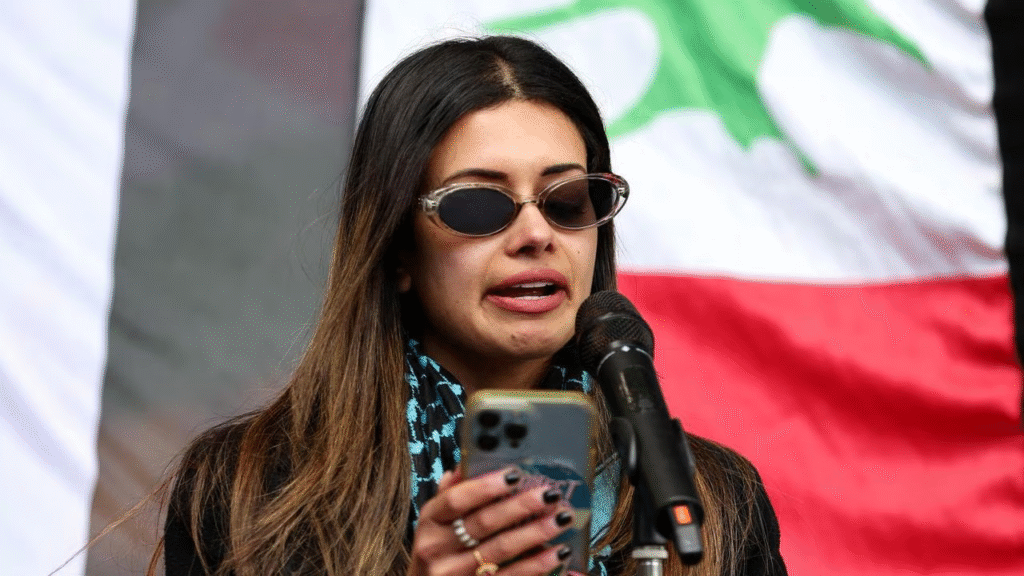
Charged initially with three counts, she pleaded not guilty in July, with her legal team arguing that the assembly was lawful and that police actions constituted an unlawful arrest. By early September, prosecutors withdrew all charges, conceding flaws in their case—particularly around the protest’s alleged unlawfulness. Magistrate George Breton awarded costs to the four affected protesters, noting the concession by NSW Police and the Office of the Director of Public Prosecutions. Thomas’s award of nearly A$22,000 reflects the intensity of her defense, covering expert witnesses and medical reports detailing her injuries.
Now, with the officer facing assault occasioning actual bodily harm—a mid-level offense carrying potential penalties of up to five years imprisonment—the focus turns to the criminal trial. Court documents suggest the prosecution will rely heavily on video evidence and witness statements from fellow officers and protesters. Hannah Thomas’s lawyer, Peter O’Brien, has expressed “real and stark concern” over the initial police response, which he says deflected blame onto protesters and delayed accountability.
O’Brien announced plans to file civil proceedings in the NSW Supreme Court against the state, citing malicious prosecution, assault and battery by police, malfeasance in public office, and abuse of process. Three other protesters are weighing similar suits, potentially broadening the case into a class-action challenge on protest rights.
The officer’s charge represents a rare instance of internal accountability in Australian policing. While NSW Police maintain a “zero tolerance” policy for misconduct, critics point to a pattern of deferred or lenient outcomes in protest-related incidents. The ongoing LECC investigation could recommend broader reforms, such as mandatory de-escalation training or limits on specialist commands’ deployment at demonstrations. As the November court date looms, all eyes will be on Bankstown Local Court, where the evidence could reshape narratives around police conduct in politically charged environments.
Broader Implications: Protest Rights Under Scrutiny in Australia
This case transcends the story of one injury, illuminating deeper fissures in Australia’s approach to dissent. Hannah Thomas has framed the charges as a “vindication for every person in this country who has protested for Palestine and been smeared for it,” pointing to a perceived campaign by politicians—particularly from the Labor Party—to curtail demonstrations.
Since the Gaza war’s outbreak, over 100 pro-Palestine events have been policed in Sydney alone, with reports of pepper spray, rubber bullets, and mass arrests drawing international scrutiny. Human rights groups like Amnesty International have warned that such tactics erode civil liberties, echoing concerns from the 2021 protests against coal mining where similar force was used. At its core, the incident underscores the tension between security and expression.
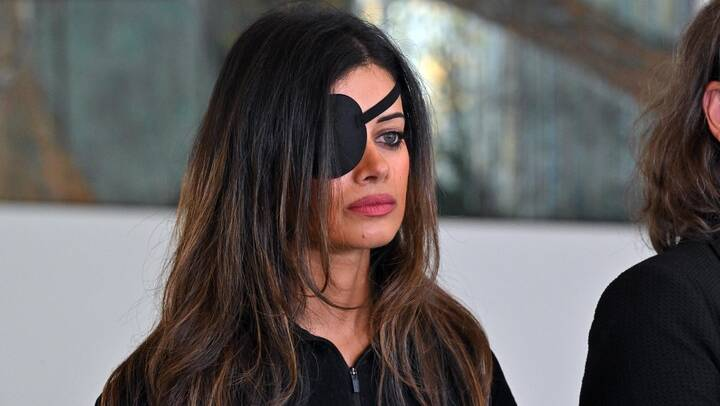
Protesters argue that targeting companies like SEC Plating is a legitimate exercise of free speech, aimed at disrupting supply chains to war zones. Police counter that unauthorized blockades pose public safety risks, justifying intervention. Yet, the dropping of charges against Hannah Thomas suggests that the legal basis for many arrests may be shaky, fueling calls for legislative review. Greens leaders, including Thomas’s former colleagues, have seized on the case to advocate for repealing anti-protest laws, with one MP labeling the emergency powers invocation as “reverse engineering evidence to justify assault.”
For law enforcement, the charges pose an internal reckoning. The senior constable’s suspension pending review highlights the Professional Standards Command’s role in maintaining trust, but it also exposes vulnerabilities in training for volatile scenarios. Broader societal impacts include heightened polarization: pro-Palestine advocates feel emboldened, while supporters of Israel decry the protests as disruptive. Thomas’s potential vision loss adds a poignant human element, transforming abstract debates into a tangible call for reform.
As Australia navigates these divides, the Hannah Thomas case stands as a litmus test. Will it lead to stricter oversight of police at protests, or reinforce crackdowns? With civil suits on the horizon and the LECC probe active, the coming months promise further revelations. In a nation priding itself on democratic freedoms, this incident reminds us that the right to protest is only as strong as the accountability enforcing it. For now, Hannah Thomas embodies resilience, turning personal trauma into a catalyst for change, ensuring that her story—and the voices it amplifies—cannot be easily silenced.
I’d have to examine with you here. Which is not one thing I usually do! I take pleasure in reading a post that may make folks think. Additionally, thanks for permitting me to comment!
When I initially commented I clicked the “Notify me when new comments are added” checkbox and now each time a comment is added I get several e-mails with the same comment. Is there any way you can remove people from that service? Many thanks!