
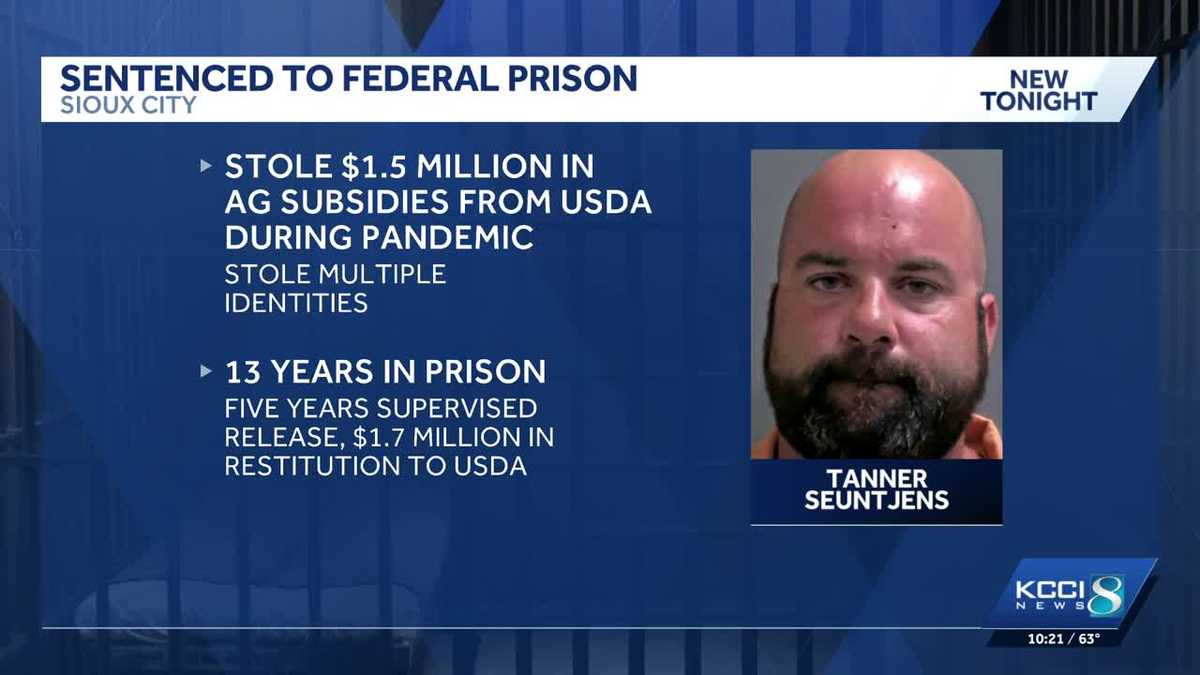
A complex and far-reaching fraud case involving an Iowa farmer has resulted in a lengthy federal prison sentence, bringing attention to the vulnerabilities within agricultural subsidy programs and the consequences of financial deception. Tanner Seuntjens, a 33-year-old farmer from Danbury, Iowa, was sentenced to 13 years in federal prison after pleading guilty to multiple charges, including theft of government funds, aggravated identity theft, crop insurance fraud, and stalking. The case spans several years and involves fraudulent claims exceeding $1.7 million, misuse of financial institutions, and disturbing actions targeting victims and witnesses.
The sentencing, handed down in early April by a federal judge in Sioux City, concludes an extensive investigation into Seuntjens’ activities, which included falsifying documents, impersonating individuals, and repeatedly violating legal orders. In addition to his prison term, he has been ordered to pay full restitution and will face supervised release following incarceration.
Fraudulent Schemes Targeting Federal Aid Programs
The central component of the case revolved around fraudulent claims submitted to federal agricultural assistance programs during the COVID-19 pandemic. Between June 2020 and June 2021, Seuntjens exploited the Coronavirus Food Assistance Program, a federal initiative designed to support farmers affected by market disruptions. He submitted multiple applications across different county offices, falsely claiming ownership of thousands of swine in order to qualify for substantial payments.
Investigators determined that these claims were entirely fabricated. To support his applications, Seuntjens forged signatures of other individuals and created false documentation, presenting himself as a legitimate beneficiary of the program. Officials responsible for verifying the applications were misled by the falsified records, allowing the payments to be processed. As a result, more than $1.5 million in federal funds were disbursed under false pretenses.
The fraudulent activity did not end with government aid programs. Seuntjens also engaged in deceptive financial practices involving a bank in South Dakota. Between March 2021 and April 2022, he manipulated transactions related to livestock and grain sales. Because he had pledged his accounts receivable as collateral for loans, certain payments required dual authorization. However, he circumvented this safeguard by forging the signature of a bank representative on at least 20 occasions.
Through this scheme, the bank was deprived of more than $400,000 in collateral it was entitled to receive. Instead of fulfilling his financial obligations, Seuntjens diverted the funds for personal and business use. Records indicate that the money was spent on farming expenses, personal travel, including trips to popular vacation destinations, transfers to family members, and large cash withdrawals.
Read : Allyson Felix Launches First-Ever Olympic Village Nursery for Athletes’ Kids at Paris Olympic 2024
Further compounding the financial misconduct, Tanner Seuntjens engaged in crop insurance fraud during 2022 and 2023. He deliberately underreported crop yields in order to receive insurance payouts he was not eligible for, resulting in an additional loss of approximately $175,000 to taxpayers. Authorities also found that he defrauded agricultural suppliers by selling property that was subject to legal claims and conducted transactions under third-party names to avoid financial accountability.
Escalation to Criminal Behavior and Witness Intimidation
Beyond financial crimes, the case took a more serious turn with evidence of harassment, intimidation, and violations of court orders. Seuntjens was found to have stalked one of the victims connected to his fraudulent activities, despite being under a no-contact order. This conduct significantly influenced the severity of his sentencing, as it demonstrated a disregard for legal boundaries and the safety of others.
Read : Michael Kelley Re-arrested in Connection with Murder of Kerry Farmer Michael Gaine
In a separate but related matter, authorities uncovered actions that further escalated concerns. Seuntjens was accused of assaulting a witness and taking steps to monitor their movements. In August 2025, he traveled to another state with the intent of planting a tracking device on the witness’s vehicle, again violating an active no-contact order. This deliberate act of surveillance raised serious legal and ethical concerns and added to the charges against him.
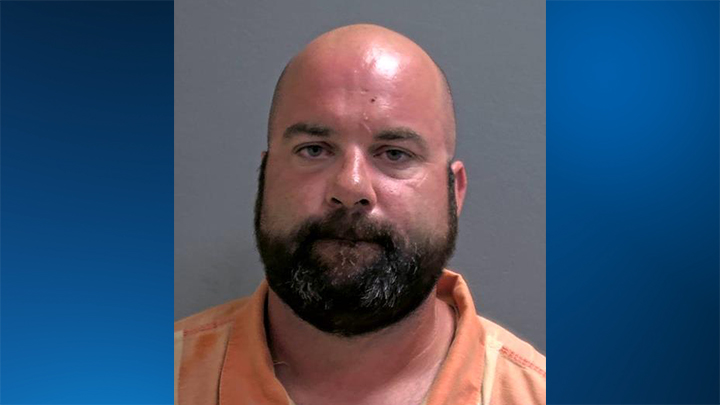
While in custody, Tanner Seuntjens continued to demonstrate noncompliant behavior. Reports indicated that he repeatedly attempted to contact minors, actions that were in direct violation of court restrictions. These repeated infractions led to a finding of contempt of court in March 2026, further complicating his legal standing and contributing to the overall judgment against him.
The combination of financial fraud and personal misconduct painted a picture of persistent criminal behavior that extended beyond isolated incidents. Authorities noted that his actions showed a pattern of manipulation, deception, and disregard for the law, ultimately justifying the significant prison sentence imposed.
Criminal History, Sentencing, and Broader Implications
Tanner Seuntjens’ criminal conduct was not limited to the offenses outlined in the federal case. His prior record included multiple legal issues that demonstrated a history of financial and behavioral violations. In 2020, he received a deferred judgment for a second-degree theft conviction. This was followed by a third-degree theft conviction in 2023, which involved an attempt to pay restitution with a bad check. Additionally, he pleaded guilty to several disorderly conduct charges in 2024 and 2025.
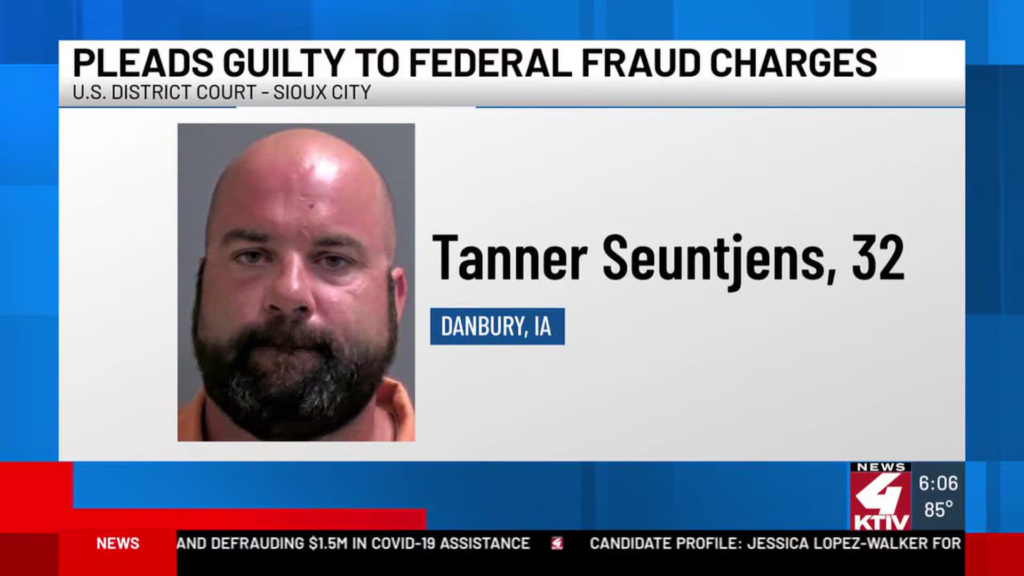
These prior offenses played a role in the sentencing decision, as they indicated a continued pattern of unlawful behavior rather than isolated mistakes. The court took into account not only the financial impact of his actions but also the repeated nature of his offenses and his failure to comply with previous legal consequences.
The 13-year sentence reflects the seriousness of the crimes and the cumulative impact on multiple victims, including government agencies, financial institutions, suppliers, and individuals. In addition to incarceration, Seuntjens has been ordered to repay $1.7 million in restitution to cover the losses incurred through his fraudulent activities. He will also serve a five-year term of supervised release following his prison sentence.
At the time of sentencing, he remained in federal custody, awaiting transfer to a designated correctional facility. The case has drawn attention to the need for stricter oversight and verification processes within federal aid programs, particularly those implemented during emergencies when funds are distributed rapidly.
The timing of the sentencing coincides with broader efforts by federal authorities to combat financial fraud. Just days before the conviction, the Department of Justice announced the formation of a specialized division focused on prosecuting fraud involving taxpayer funds. The initiative aims to strengthen enforcement mechanisms and hold individuals accountable for exploiting government programs.
The Seuntjens case underscores the challenges faced by oversight agencies in identifying and preventing fraud, especially in sectors where verification relies heavily on self-reported data. It also highlights the consequences of abusing systems designed to provide relief during times of crisis. The combination of financial deception, identity theft, and personal misconduct ultimately led to a substantial legal outcome, reinforcing the importance of accountability and enforcement in protecting public resources.