
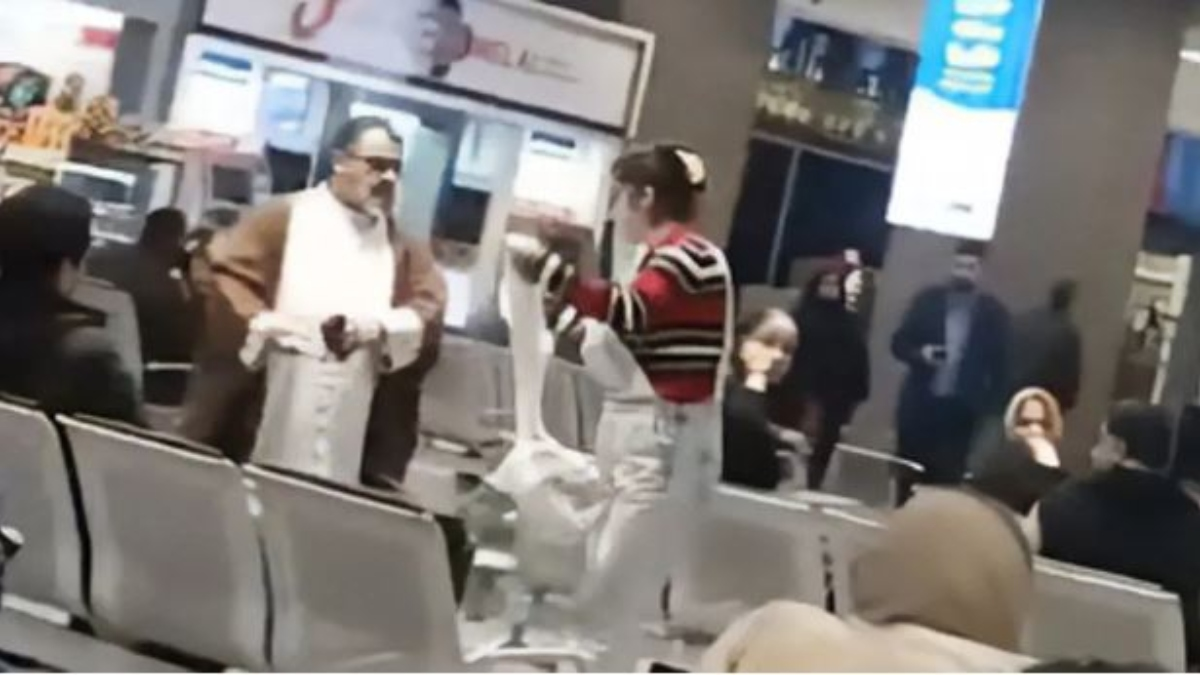
In a dramatic moment at Mehrabad Airport in Tehran, an Iranian woman made headlines and sparked global discussions when she snatched a cleric’s turban and used it to cover her head. The incident, captured on video and widely shared on social media, has become emblematic of the growing tensions and resistance against Iran’s strict dress code laws.
This bold act not only highlights the frustration of Iranian women but also underscores the ongoing struggles against gender-based restrictions in the country.
Iranian Woman Snatches Cleric’s Turban at Mehrabad Airport
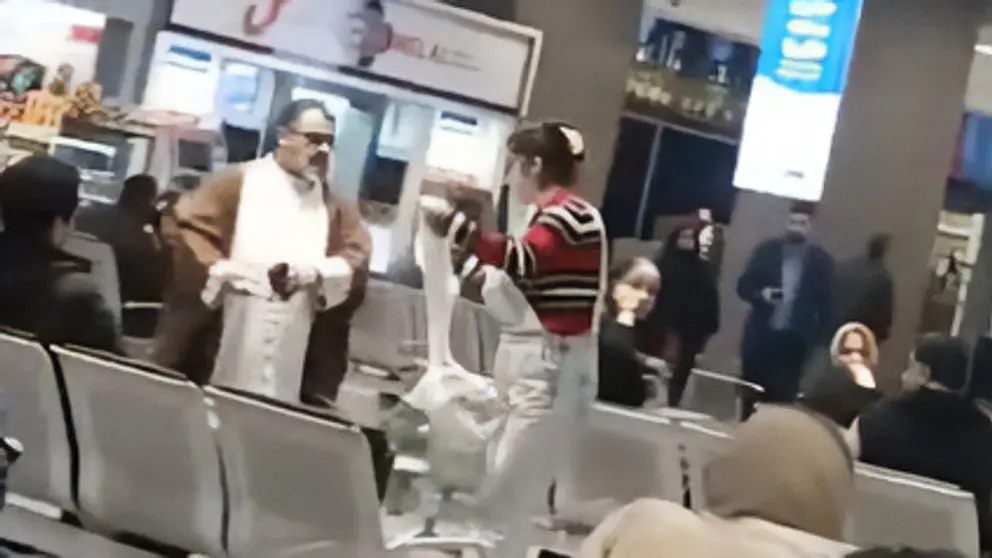
The video begins with an argument between the woman and the cleric, who reportedly advised her to adhere to the hijab mandate. In response, the woman forcibly removed the cleric’s turban, a significant symbol of religious authority in Iran.
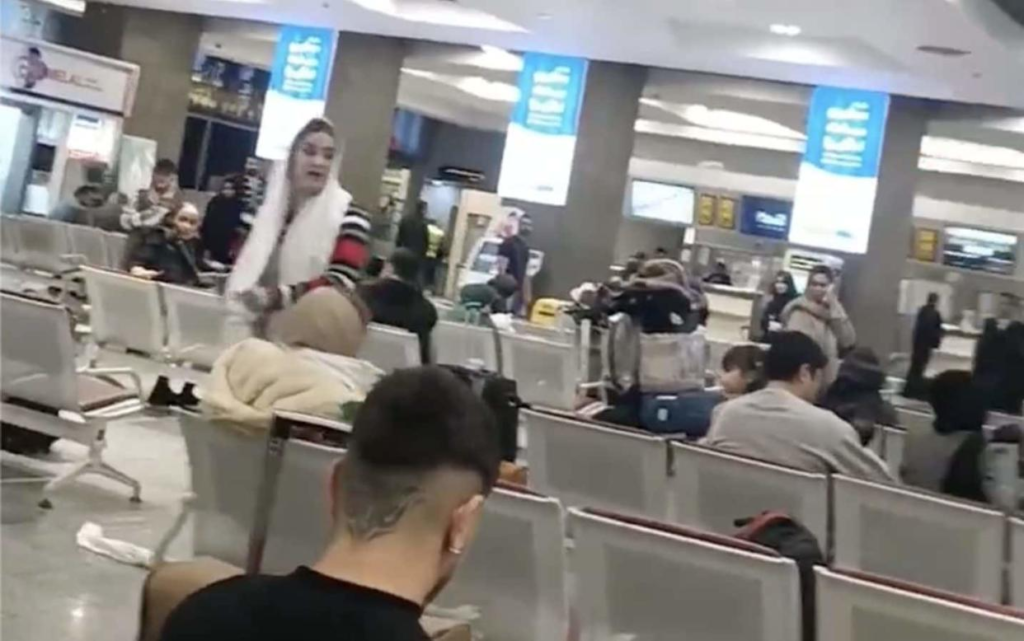
She then placed the turban on her head, covering herself in a manner that seemed both ironic and defiant. The confrontation unfolded in front of onlookers, many of whom appeared taken aback by the unexpected act.
Reports suggest that the woman began searching for her husband immediately after the altercation, leaving the cleric standing visibly shocked. While the video gained widespread attention on social media, its authenticity and context were questioned by Mashregh News, a pro-government outlet.
Read : Italian Journalist Cecilia Sala Arrested in Iran for Violating the Law
The publication claimed that the disagreement was not about the hijab but rather the woman’s alleged psychological issues. However, this narrative has been met with skepticism by those who view the incident as a symbol of defiance against Iran’s rigid dress codes.
A brave woman at Tehran’s Mehrabad Airport confronted a cleric harassing her for not wearing a hijab. In a bold act of defiance, she removed his turban and wore it like a scarf, turning oppression into resistance.
— Masih Alinejad 🏳️ (@AlinejadMasih) January 6, 2025
For years, clerics have claimed their turbans and robes are… pic.twitter.com/Mdj1c0b3Vo
Prominent women’s rights activist Masih Alinejad shared the video, emphasizing its significance. In her tweet, she wrote, “For years, clerics have claimed their turbans and robes are sacred and untouchable, but this woman’s protest shattered that myth.
Iranian women are exhausted and enraged by gender apartheid.” Her remarks resonated with many who see the act as a small but powerful pushback against years of repression.
The Larger Context of Hijab Mandates in Iran
Iran’s hijab laws have long been a contentious issue, sparking debates both within and outside the country. Since the 1979 Islamic Revolution, women in Iran have been legally required to wear the hijab in public.
The government’s enforcement of these rules, through entities like the morality police, has led to widespread fear and resentment among Iranian women. These laws go beyond headscarves, extending to clothing that must conform to strict Islamic codes, such as loose-fitting garments that obscure a woman’s shape.
The morality police have gained notoriety for their harsh methods of enforcing compliance. Women found violating dress codes are often stopped, reprimanded, fined, or even detained.
These interactions frequently escalate, leading to instances of physical and emotional abuse. The death of Mahsa Amini in 2022, after being taken into custody for an “improper” hijab, became a rallying cry for women’s rights in Iran and triggered nationwide protests.
In recent years, Iranian women have found creative ways to resist these restrictions. From symbolic acts like removing their hijabs in public to more dramatic gestures such as the airport confrontation, these acts of defiance signify a growing unwillingness to accept gender-based oppression.
The video from Mehrabad Airport fits into this larger pattern of protest, illustrating the lengths to which Iranian women will go to demand autonomy over their bodies and choices.
The Global Reaction and the Fight for Women’s Rights
The video of the woman snatching the cleric’s turban has elicited strong reactions worldwide. Activists and commentators have hailed her action as a courageous stand against the oppressive rules imposed on Iranian women.
The act of using a symbol of religious authority to make a statement against those very authorities has resonated deeply, becoming a metaphor for the broader struggle against Iran’s gender apartheid.
The incident also sheds light on the broader implications of Iran’s restrictive policies for women. Despite the government’s attempts to suppress dissent, the death of Mahsa Amini and subsequent protests have highlighted the resilience and determination of Iranian women.
The protests that erupted in 2022 saw women burning their hijabs, cutting their hair, and marching in the streets, often at great personal risk. These actions have inspired global solidarity, with protests and vigils held in support of Iranian women in cities around the world.
However, the road to equality remains fraught with challenges. The Iranian government has responded to protests with crackdowns, arrests, and intimidation tactics.
Human rights organizations have reported instances of violence against demonstrators, including the use of live ammunition and tear gas. Despite this, the resolve of Iranian women has only grown stronger, as evidenced by moments like the one at Mehrabad Airport.
This incident also raises important questions about the role of social media in amplifying acts of resistance. Platforms like Twitter and Instagram have become vital tools for activists, allowing them to share stories and galvanize support.
Videos like the one from Tehran Airport not only document acts of defiance but also serve as a reminder of the courage it takes to stand up against oppression.
The confrontation at Mehrabad Airport is more than just a viral video; it is a powerful symbol of resistance against the oppressive rules governing women’s lives in Iran.
By turning a cleric’s turban into a hijab, the woman not only challenged the authority of religious enforcers but also highlighted the absurdity of the strict dress codes. Her act serves as a reminder of the courage and determination of Iranian women, who continue to fight for their rights despite the risks.
As the world watches these moments of defiance, it becomes clear that the fight for gender equality in Iran is far from over. The bravery displayed by Iranian women inspires hope and demands action, reminding us all of the importance of standing against injustice in all its forms.