

In a groundbreaking revelation that redefines the known history of the United Arab Emirates, the Department of Culture and Tourism – Abu Dhabi (DCT Abu Dhabi) has announced the discovery of the first major Iron Age Cemetery Discovered in UAE’s Al Ain Region.
Unearthed in the Al Ain Region by the Archaeology Section of the Historic Environment Department, this 3,000-year-old necropolis contains more than a hundred tombs and is regarded as the most significant Iron Age funerary discovery in the UAE to date.
With a wide array of grave goods and the remains of ancient communities, the site offers a rare glimpse into a previously unknown chapter of Emirati heritage. For decades, the burial traditions of the Iron Age in the Arabian Peninsula have remained a mystery, leaving archaeologists with many unanswered questions about the people who lived and died during this important era.
This recent find marks a turning point in archaeological understanding and opens new avenues of research into the social and cultural lives of ancient inhabitants. Jaber Saleh Al Merri, Director of the Historic Environment Department, stated that this discovery “promises to transform our understanding of the ancient Emirates.” Through this find, Abu Dhabi is not only preserving its past but also illuminating the rich cultural narratives that define its historical identity.
A Glimpse Into the Lives of the Iron Age Communities
The newly discovered cemetery is remarkable not only for its size but also for the complexity and richness of its contents. Each tomb was constructed with a unique technique that involved digging a two-meter-deep shaft, then carving out an oval chamber for the burial.
Once the body and accompanying grave goods were placed inside, the chamber was sealed using mudbricks or stones, and the shaft was backfilled. Interestingly, these tombs had no surface markers, which explains why they remained hidden for thousands of years, despite the region being the focus of archaeological interest for over six decades.
Although many tombs were looted in antiquity, valuable artifacts managed to escape the hands of plunderers. Among these were delicate pieces of gold jewelry, intricately designed pottery, and personal adornments such as bead necklaces, bracelets, and rings. These objects reveal a society that placed significant importance on craftsmanship and material culture.
Read : UP’s Shahzadi Khan Faces Death Sentence After Child Died in Her Care in Abu Dhabi
Grave goods also included weapons and tools, such as copper-alloy spearheads, arrowheads with remnants of wood shafts, and even traces of the quivers that once held them. Spouted vessels, bowls, and small drinking cups suggest that ceremonial drinking might have played a role in funerary practices or daily life.
Of particular interest are the more personal items found in some tombs. Cosmetic containers made from shell, razors, and fine jewelry provide insight into the personal grooming habits and aesthetic values of Iron Age communities.
The presence of such diverse objects within burial chambers hints at complex societal beliefs regarding the afterlife and the importance of status and identity even after death.
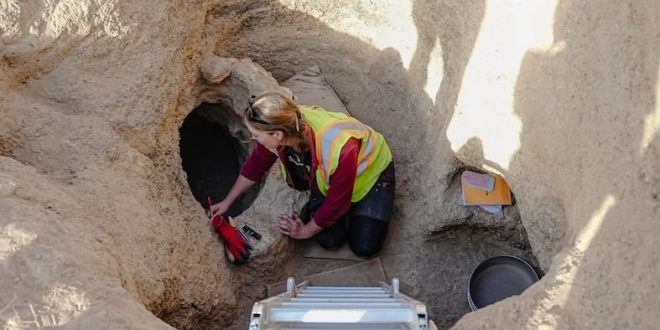
The human remains discovered within the cemetery were in a delicate and fragile condition. A team of forensic archaeologists, including an osteoarchaeologist, was on-site to ensure that all remains were handled with the utmost respect and care.
Future laboratory analysis of these remains is expected to yield valuable data concerning age, gender, health, and possibly even family relationships. Additionally, DNA testing may shed light on migration patterns and the genetic lineage of ancient populations in the Arabian Peninsula.
Cultural Significance and Historical Context of the Discovery
The importance of this find extends far beyond the physical boundaries of the site. It provides a critical piece in the puzzle of the UAE’s ancient past and enhances the understanding of Iron Age culture in the region. Prior to this, archaeologists had already uncovered Iron Age villages, temples, forts, and the ingenious falaj irrigation system in Al Ain.
However, the burial customs of the Iron Age had remained elusive, making this necropolis a key missing component in the region’s historical narrative.
The invention of the falaj, an underground aqueduct system developed around 3,000 years ago at the beginning of the Iron Age, revolutionized agriculture in the area and led to the creation of the oasis landscape that defines Al Ain today.
The discovery of this cemetery not only provides insight into the people who built and relied on the falaj, but also offers clues about the societal structures and cultural practices that accompanied this agricultural expansion.
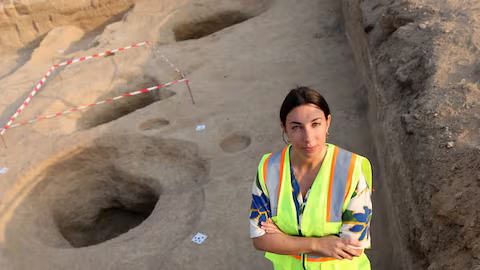
This discovery was made under the auspices of the Funerary Landscapes of Al Ain Project, an initiative launched in 2024 by DCT Abu Dhabi. The project was designed to investigate the growing number of prehistoric tombs discovered during archaeological monitoring of construction work in the region.
As part of this project, archaeologists aim to document and analyze the funerary practices of ancient communities, and this newly uncovered site is a testament to their efforts. Tatiana Valente, a field archaeologist working on the project, emphasized the importance of the find in bridging historical gaps.
“We know how people in the Bronze Age and Late Pre-Islamic period buried their dead,” she said, “but the Iron Age has always been a missing part of the puzzle.” With this find, researchers can now track the evolution of burial customs over millennia and gain a deeper understanding of how beliefs and traditions changed over time.
Preserving the Past, Shaping the Future
The discovery adds profound depth to the significance of the Cultural Sites of Al Ain, which were inscribed on the UNESCO World Heritage List in 2011 due to their outstanding universal value.
The new site provides additional context for understanding how early communities managed their environment, particularly in relation to water resources in a landscape defined by oases, deserts, and mountains.
As the best-preserved and most extensively documented Iron Age necropolis found in the UAE, the site has enormous educational and cultural potential.
It also reinforces Abu Dhabi’s commitment to heritage preservation and archaeological research. By combining scientific rigor with cultural stewardship, DCT Abu Dhabi is ensuring that the nation’s past remains an integral part of its present and future.

Ongoing excavation and analysis will likely yield even more revelations in the coming years. Every artifact, bone, and fragment unearthed contributes to a richer and more nuanced understanding of the human story in this part of the world.
Moreover, the discovery underscores the value of archaeological monitoring during modern construction, as it demonstrates how even small projects can lead to significant historical breakthroughs.
The cemetery is not just a burial site; it is a window into the soul of an ancient society. It speaks of people who lived, loved, worked, and passed away in a time long before modern borders were drawn.
It tells stories of artistry, resilience, belief, and innovation. It shows how the people of the Iron Age adapted to and shaped their environment, and how they commemorated their dead with reverence and respect.
By illuminating a previously obscure era, the Iron Age cemetery in Al Ain serves as a testament to the enduring richness of Emirati heritage.
It connects modern citizens with their distant ancestors and reminds us all that the land we walk on has been inhabited by communities with their own dreams, challenges, and customs for thousands of years. It is a remarkable chapter in a long and continuing story—one that DCT Abu Dhabi is helping to write, piece by piece, tomb by tomb.