
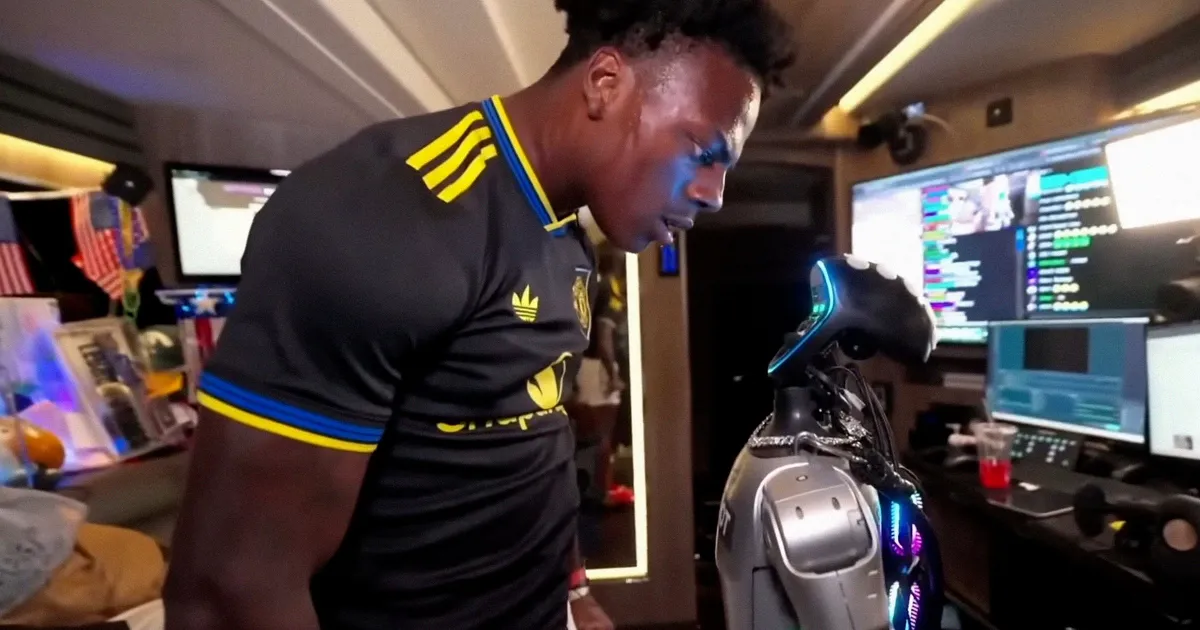
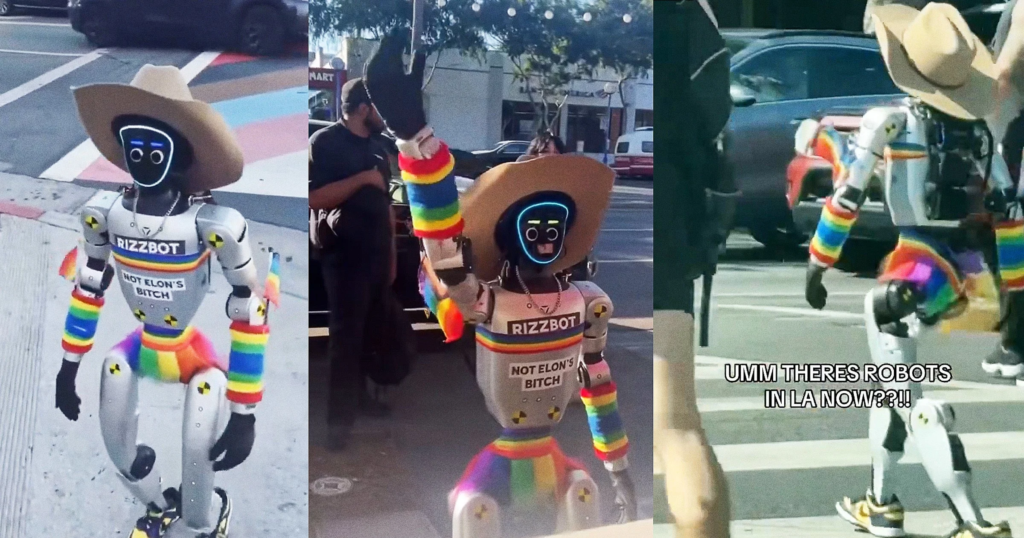
Earlier this year, a four-foot-tall humanoid robot wearing a cowboy hat and speaking fluent Gen Alpha slang unexpectedly became one of the most surreal viral sensations of 2025. Nicknamed “Jake the Rizzbot,” the Unitree G1 robot first gained attention roaming the streets of Austin, Texas, charming and confusing passersby with exaggerated swagger, oversized accessories, and algorithmically generated banter.
What began as a playful experiment in social robotics soon escalated into a much larger conversation about influencer behavior, accountability, and the legal status of advanced machines after the robot was allegedly assaulted during a livestream by popular YouTuber and streamer Darren Jason Watkins Jr., better known as IShowSpeed. The incident has now culminated in a $1 million lawsuit filed by the robot’s developer, Social Robotics, accusing Watkins Jr. of intentionally damaging the robot during a filmed confrontation.
The lawsuit has sparked widespread debate not only because of the personalities involved, but also due to the unusual nature of the victim: a robot that had recently gone viral for appearing publicly in rainbow attire in West Hollywood and “coming out” as gay as part of its performance persona. The case sits at the intersection of internet culture, performance art, emerging robotics, and legal responsibility in the age of livestreamed outrage.
From Viral Gimmick to Cultural Flashpoint
Jake the Rizzbot was never designed to be subtle. Developed by Social Robotics as a roaming, interactive experiment, the robot was programmed to engage strangers with exaggerated expressions, slang-heavy dialogue, and flamboyant aesthetics tailored for social media virality. Its cowboy hat, chain necklace, and confident strut quickly turned it into a recognizable character online. After its initial success in Austin, the robot relocated to California, where it appeared on the streets of West Hollywood dressed in rainbow-themed outfits, embracing an openly queer-coded identity that further amplified its viral reach.
This performative evolution transformed Rizzbot from a novelty into a cultural flashpoint. Clips of the robot interacting with pedestrians circulated widely, drawing praise, ridicule, and fascination in equal measure. For Social Robotics, the attention translated into tangible opportunities. According to the lawsuit, the robot was scheduled for high-profile appearances, including a co-hosting opportunity with YouTube megastar Jimmy “MrBeast” Donaldson and a planned appearance on CBS’ NFL Today Show.
These opportunities were framed as pivotal moments for the brand, with the lawsuit likening a MrBeast collaboration to the exposure of a Super Bowl commercial. It was against this backdrop of peak momentum that the encounter with IShowSpeed occurred. Watkins Jr., known for his loud, chaotic, and often theatrical streaming persona, encountered the robot during a livestream. Footage that later circulated online shows a verbal exchange escalating into physical contact. The streamer is seen punching the robot, placing it in a chokehold, and shoving it onto a sofa while shouting aggressively at the machine.
🚨🚨Social Robotics is reportedly gearing up to SUE— The popular streamer ISHOWSPEED after he allegedly WRECKED their cutting-edge humanoid robot, Rizzbot, After it played a soundclip of him saying something OUTRAGEOUS on his live stream.
— KeepRaqs (@RollaAnotha1) December 11, 2025
The staggering $1 MILLION lawsuit… pic.twitter.com/8Bdbq4kI2G
The confrontation was broadcast live to thousands of viewers, leaving little ambiguity about what took place. Social Robotics alleges that Watkins Jr. became “angry and agitated” during the interaction and that his actions constituted an intentional assault that permanently damaged the robot. An Austin Police Department report obtained by TechCrunch supports the claim that the robot was damaged without the owner’s implied consent, further strengthening the developer’s legal position.
The Lawsuit and the Question of Accountability
The lawsuit filed against Watkins Jr. seeks $1 million in monetary relief, citing not only the physical destruction of the robot but also the financial and reputational damage caused by the incident. According to the complaint, Rizzbot was rendered a total loss, forcing Social Robotics to cancel scheduled appearances and undermining months of carefully cultivated viral momentum. The robot reportedly required an entirely new body, with only its Nike sneakers and cowboy hat surviving the encounter.
Social Robotics’ legal team has emphasized that the livestreamed nature of the incident leaves little room for dispute. Joel Levine, the company’s lawyer, told TechCrunch that the availability of video evidence simplifies the factual basis of the case. Rather than debating what happened, the lawsuit focuses on responsibility and consequences. Levine stated that the company is seeking accountability, framing the case as a necessary response to the normalization of destructive behavior for online clout.
Read : Alarming! AI-Powered Robot Shoots YouTuber During Safety Experiment
The case raises broader questions about how the law treats damage to advanced robotic systems, especially those designed to interact publicly and performatively. While Rizzbot is legally considered property, its anthropomorphic design, interactive behavior, and cultivated persona blur the lines between object and character. The robot’s “identity,” including its queer-coded presentation, has also become part of the public discourse surrounding the incident, with some commentators framing the assault as symbolically charged even if the legal claim centers strictly on property damage.
Watkins Jr. has not publicly accepted responsibility for the incident, and some observers argue that his actions were part of a staged performance meant to entertain his audience. However, the lawsuit contends that intent to entertain does not excuse physical destruction, particularly when it results in substantial financial loss. The fact that the robot’s owner did not consent to the physical interaction, implied or otherwise, is central to the legal argument.
The livestream itself may prove to be a double-edged sword for the defense. While Watkins Jr.’s supporters may argue that his persona thrives on exaggerated theatrics, the unedited footage also captures the full extent of the interaction in real time. In an era where influencer content often pushes boundaries to capture attention, the case underscores the risks of confusing performance with permission.
Robots, Influencers, and the Future of Public Interaction
Beyond the immediate legal dispute, the Rizzbot incident highlights a rapidly evolving cultural landscape in which robots, influencers, and audiences intersect in unpredictable ways. Social robots are increasingly designed not just to perform tasks, but to entertain, provoke, and participate in public discourse. When these machines enter uncontrolled environments such as streets, livestreams, and influencer content, they become subject to the same volatile dynamics that govern human interactions online.
Read : Rare! Woman Gives Birth in Driverless Waymo Robotaxi En Route to UCSF Medical Center
The robot itself, speaking to TechCrunch after being rebuilt, leaned into its character with characteristic irreverence. It joked about receiving a “whole new body,” bragged about mastering its “rizz game,” and teased future appearances involving complex movements like twerking. While clearly part of a scripted persona, these comments illustrate how deeply Rizzbot is positioned as a media personality rather than a neutral piece of hardware.
This blending of robotics and entertainment complicates public expectations. On one hand, robots like Rizzbot are engineered to invite engagement, banter, and even confrontation. On the other, they represent significant financial investments and technical achievements that are vulnerable to damage when treated as props rather than protected assets. The lawsuit against Watkins Jr. may serve as a test case for how far influencer interactions with such machines can go before crossing legal boundaries.
For influencers, the incident is a cautionary tale about escalation. Livestreaming rewards immediacy and spectacle, often encouraging creators to push reactions further to hold viewer attention. Yet the permanence of livestreamed evidence also increases accountability. Actions performed in seconds can result in lasting legal and financial consequences, particularly when they involve third-party property.
For developers, the case may prompt reevaluation of how social robots are deployed in public spaces. As these machines become more lifelike and culturally expressive, questions about consent, safety, and protection will become increasingly important. The Rizzbot lawsuit suggests that novelty does not negate ownership rights, and that viral fame does not render a machine fair game for destruction.
As the legal proceedings move forward, the outcome may shape how future collaborations between robotics companies and online personalities are structured. Clear boundaries, contractual protections, and controlled environments may become standard as developers seek to harness influencer reach without exposing their creations to unnecessary risk. In the meantime, Jake the Rizzbot remains online, rebuilt and rebranded, continuing its carefully choreographed quest for virality while its creators pursue accountability through the courts.
F12betBR, curto demais essa plataforma! Sempre tem umas promoções boas e as odds são bem interessantes. Já fiz uma fezinha! Confere aqui: f12betbr